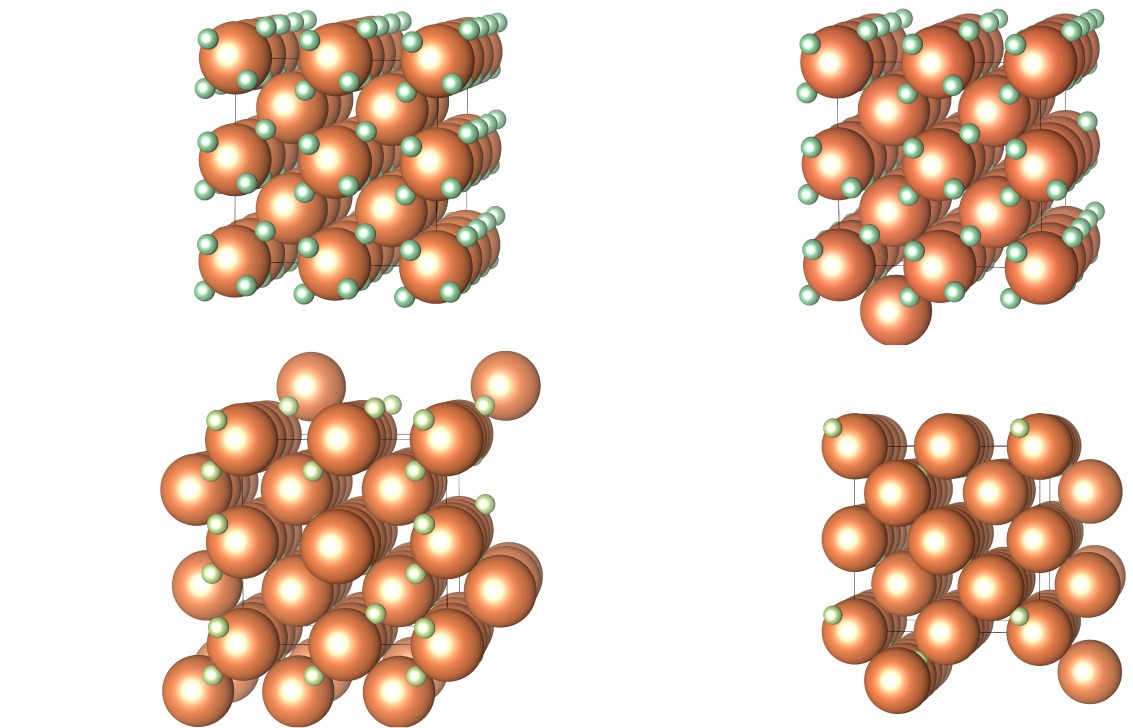
Key Takeaways & Executive Findings
- •• A non-invasive, real-time optical monitoring strategy for the state of hydrogen in MgH2 is proposed, combining DFT-based optical calculations with experimental reflectance measurements. • Strong linear correlations between SOH and optical parameters (reflectance at 1200 nm and 550 nm, refractive index at 250 nm) were established with R² > 0.99 and MAE < 0.05. • Reflectance at 940 nm decreases consistently with increasing hydrogen uptake, enabling direct optical quantification of hydrogen content. • The optical response is driven by band structure evolution and electron density redistribution, paving the way for spectroscopic SOH sensors in next-generation hydrogen energy systems.
Abstract
Accurate determination of the state of hydrogen (SOH) in solid-state hydrogen storage materials is essential not only for optimizing hydrogen release kinetics and enhancing storage efficiency but also for ensuring system safety in practical applications. While most existing studies have concentrated on thermodynamics and kinetics, direct monitoring of residual hydrogen content, a parameter of critical engineering relevance, has rarely been reported. This highlights the urgent need to realize online SOH detection through new physical properties. In this study, we propose a non-invasive, real-time SOH monitoring strategy for magnesium hydride (MgH2), based on optical properties and combining density functional theory (DFT)-based optical calculations with experimental validation. Using DFT, the optical properties of MgH2 and its dehydrogenated form (Mg) were systematically calculated across the infrared, visible, and ultraviolet spectral ranges. Theoretical results revealed strong linear correlations between SOH and specific optical parameters, such as reflectance at 1200 nm and 550 nm and refractive index at 250 nm, with the coefficient of determination exceeding 0.99 and mean absolute errors below 0.05. To validate these predictions, reflectance measurements were conducted at 940 nm, a wavelength identified as highly sensitive to hydrogenation, and a consistent decrease in reflectance with increasing hydrogen uptake was observed. The underlying mechanism was attributed to band structure evolution and electron density redistribution, supported by density of states analysis and Drude model interpretations. This work establishes a robust theoretical and experimental framework for optical SOH diagnostics, emphasizes the importance of residual hydrogen detection for advancing solid-state hydrogen storage from fundamental research toward practical engineering applications, and provides new insights into the design of intelligent, optically responsive hydrogen storage systems, paving the way for the development of spectroscopic SOH sensors in next-generation hydrogen energy technologies.
1. Introduction
Hydrogen energy, with its zero emissions and high energy density, is widely recognized as a promising solution to rising global energy demand and escalating environmental challenges [1–6]. As a clean and low-carbon energy carrier, hydrogen provides a viable alternative to fossil fuels, mitigating air pollution and enhancing ecological sustainability [7–10]. Furthermore, its storage capacity allows hydrogen to mitigate the intermittency of renewable sources such as solar and wind, thereby improving the reliability and resilience of modern power systems [11]. Among the various hydrogen storage technologies, solid-state storage based on metal hydrides stands out due to its high volumetric hydrogen density, intrinsic safety, and operational stability under ambient conditions [12–17].
Solid-state hydrogen storage technology demonstrates considerable potential for efficient hydrogen retention [18–23]. Nevertheless, several technical challenges remain unresolved [24–30]. Among them, one of the most critical investigated issues is the accurate assessment of the state of hydrogen (SOH) within storage materials. Precise SOH monitoring is essential, as it directly influences hydrogen release kinetics, storage capacity, system safety, and operational durability. Conventional SOH detection techniques, including pressure–composition–temperature (PCT) measurements [31] and mass flow monitoring, remain the most commonly employed methods. However, both approaches suffer from intrinsic limitations, including system complexity, response lag, and susceptibility to external disturbances.
While PCT testing can estimate the SOH by tracking variations in pressure, temperature, and hydrogen concentration, it lacks the capability for in situ or real-time monitoring, with measurement results often subject to significant feedback delays [32–34]. This limitation becomes especially critical during the dynamic cycling of hydrogen storage materials, where environmental fluctuations can compromise data accuracy and introduce substantial deviations [35]. In contrast, mass flow meters allow real-time hydrogen flow monitoring and indirectly reflect SOH variations. However, their performance degrades over repeated cycling, resulting in increased measurement errors and reduced reliability [36]. Additionally, the deployment of mass flow meters adds to system complexity.
Loading authentic research manuscript (Pages 1–5)...
Yuxuan Liu, Tingyan Wang, Man Shu, Jianghao Cai, Xiaotian Tang, Tongao Yao, Zhuoran Xu, Zhengyang Gao, Juan Chen, Weijie Yang (2025). Establishing optical indicators for the state of hydrogen in MgH2. Journal of Mineral Metallurgy and Materials Science. https://doi.org/10.1007/s12613-025-3284-6
Research & Educational Purpose Only:The translations, structured abstracts, analytical annotations, and data reports provided by SinoTechIntel are intended exclusively for academic research, internal corporate R&D, and educational benchmarking. They do not constitute formal engineering, chemical safety, legal, or professional advice.
Copyright & Intellectual Property Notice: Original copyright of the underlying source articles and experimental data remains with the respective authors, institutions, and original publishing journals. SinoTechIntel claims intellectual property only over its proprietary translations, analytical syntheses, and AEO structured enhancements in accordance with international fair use and academic citation principles.
Frequently Asked Questions
What is the state of hydrogen (SOH) in solid-state hydrogen storage materials?
SOH refers to the condition or content of hydrogen within a storage material, directly influencing release kinetics, storage capacity, system safety, and operational durability. Accurate SOH monitoring is essential for optimizing performance and ensuring safety in practical applications.
How does the proposed method monitor hydrogen content in MgH2?
The method combines density functional theory (DFT) calculations with experimental reflectance measurements. Strong linear correlations between SOH and specific optical parameters (e.g., reflectance at 1200 nm, 550 nm, and refractive index at 250 nm) were identified, and validation at 940 nm showed a consistent decrease in reflectance with increasing hydrogen uptake, enabling real-time, non-invasive monitoring.
What are the advantages of optical SOH monitoring compared to conventional PCT or mass flow methods?
Optical monitoring offers non-invasive, real-time detection without system complexity, response lag, or susceptibility to external disturbances that affect PCT and mass flow techniques. It allows in situ and dynamic tracking of SOH, improving reliability and enabling practical engineering applications.
Why is non-invasive SOH detection important for hydrogen storage systems?
Non-invasive detection allows continuous, online monitoring without interrupting hydrogen storage cycles, ensuring safety, optimizing release kinetics, and enhancing storage efficiency. It is critical for dynamic cycling environments where conventional methods suffer from delays or degradation.
What physical mechanism underlies the optical response of MgH2 to hydrogen uptake?
The mechanism is attributed to band structure evolution and electron density redistribution upon hydrogenation, as supported by density of states analysis and Drude model interpretations. These changes alter the material's optical constants, enabling optical indicators to quantify the state of hydrogen.
Related Technical Papers & Translations
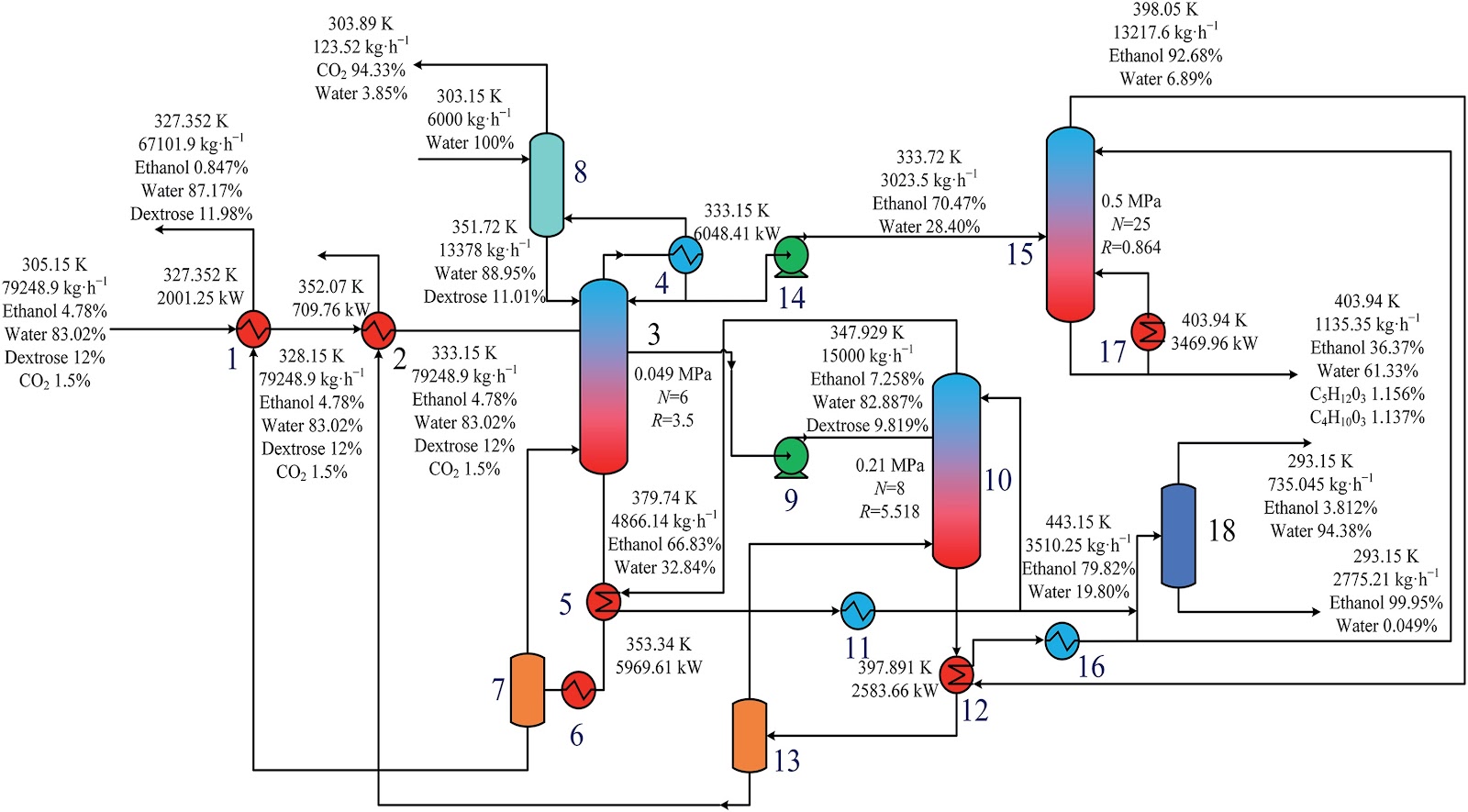
Design and optimization of a high-efficiency distillation process for cellulosic fuel ethanol integrated with thermal coupling and molecular sieve adsorption
To address the challenges of high energy consumption and prominent costs in the traditional three-columns distillation process for cellulosic fuel ethanol, a distillation—molecular sieve coupling separation process is proposed. This process integrates a three-column (crude distillation column, first distillation column, second distillation column) system with a 3A molecular sieve adsorption deep dehydration unit. A thermal coupling network is constructed via differential pressure design (steam from medium/high-pressure columns as mutual heat sources, reboiler liquid waste heat for feed preheating), and molecular sieve adsorption conditions are optimized. The study first performs a thermodynamic consistency test on the ethanol—water system, determines optimal non-random two-liquid (NRTL) model binary interaction parameters via experimental data regression for Aspen Plus simulation. Aiming at minimum total annual cost (TAC), Aspen Plus is used to optimize process parameters (theoretical tray number, feed location, reflux ratio, side-draw position, etc.). Economic analysis shows this process reduces CO2 emission costs by 27.56%, TAC by 15.58% (to 5.123 × 10⁶ USD·a-1), and increases ethanol purity to >99.6%, providing an effective solution for green, efficient separation.
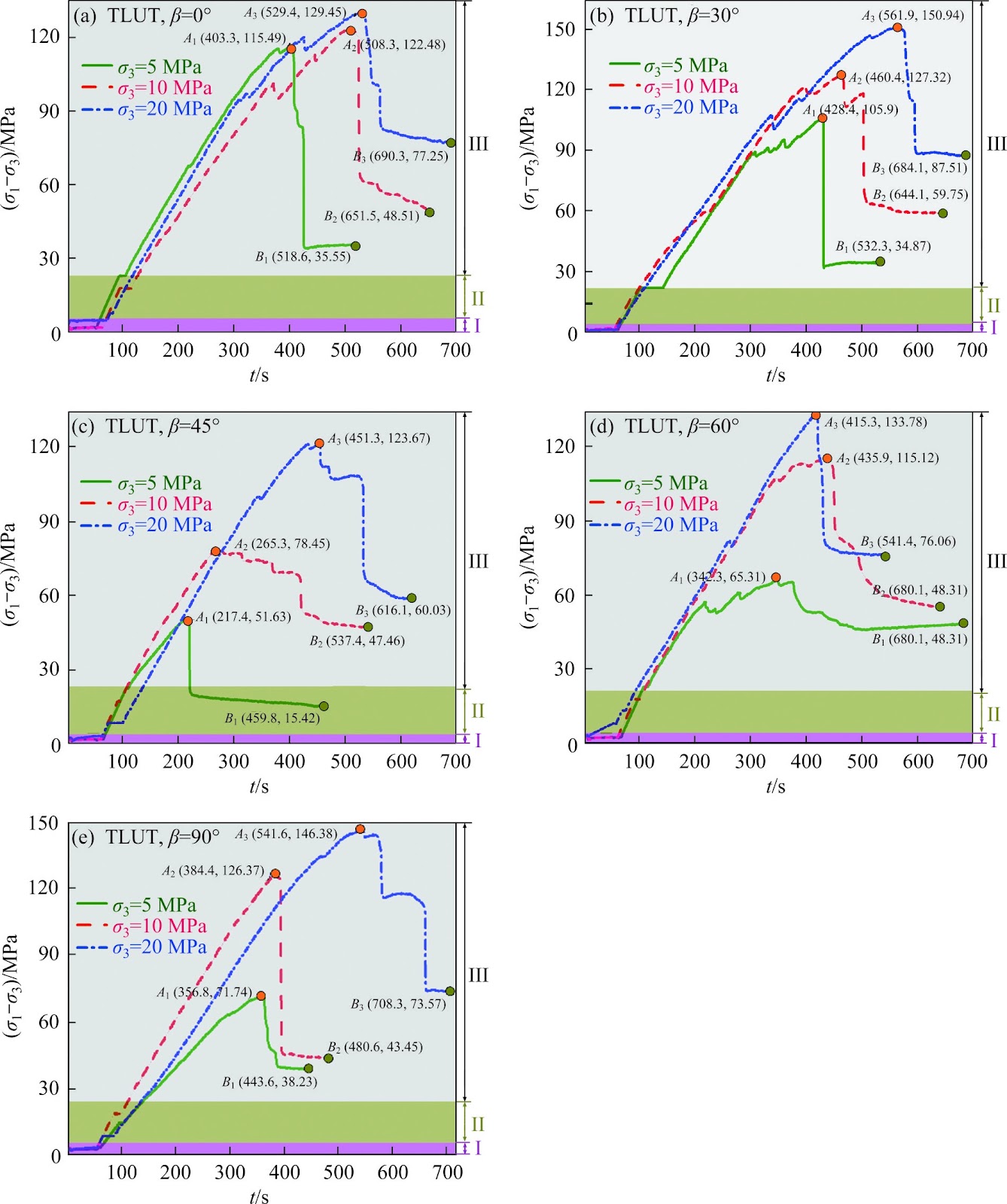
A cohesion loss model for determining residual strength of deep bedded sandstone
Rock residual strength, as an important input parameter, plays an indispensable role in proposing the reasonable and scientific scheme about stope design, underground tunnel excavation and stability evaluation of deep chambers. Therefore, previous residual strength models of rocks established were reviewed. And corresponding related problems were stated. Subsequently, starting from the effects of bedding and whole life-cycle evolution process, series of triaxial mechanical tests of deep bedded s
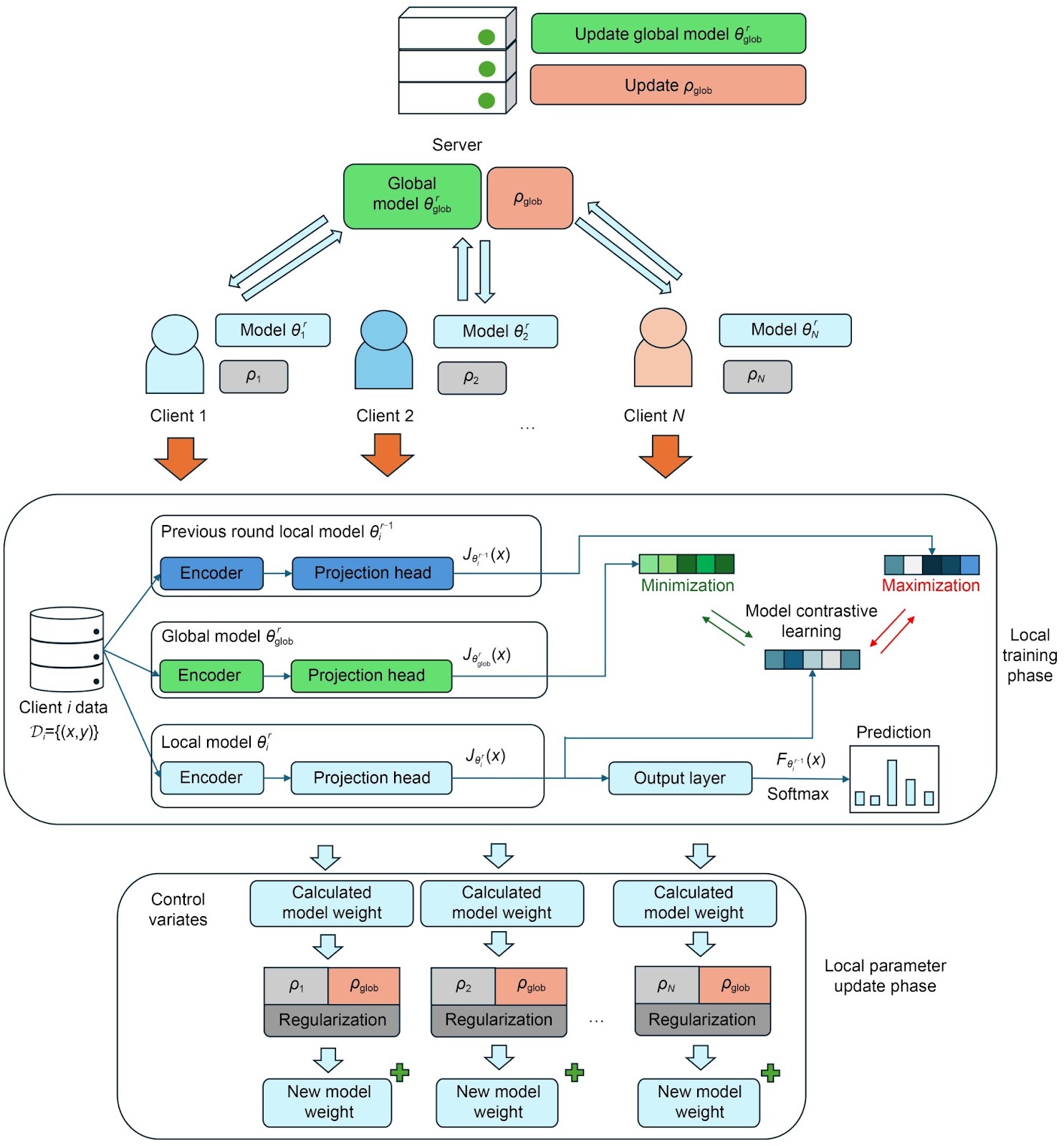
Federated model with contrastive learning and adaptive control variates for human activity recognition
Recent attention to privacy issues demands a communication-safe method for training human activity recognition (HAR) models on client activity data. Federated learning (FL) has become a compelling technique to facilitate model training between the server and clients while preserving data privacy. However, classical FL methods often assume independent and identically distributed (IID) data among clients. This assumption does not hold true in practical scenarios. Human activity in real-world scena