
Key Takeaways & Executive Findings
- •• Electrical explosion of wires (EEW) enables synthesis of MgH2–Al composites with core–shell structures that enhance hydrogen interaction characteristics. • The combination of mechanochemical milling, hydrogenation, and Mg–Al interface formation lowers the desorption activation energy from 161 ± 2 to 109 ± 1 kJ/mol. • A developed network of vacancies, dislocations, and increased microstrains is identified as the key microstructural feature enabling low-temperature hydrogen desorption. • Positron annihilation spectrometry (PAS) is applied to characterize defect structure evolution, connecting material processing to desorption performance.
Abstract
The current study presents a composite material based on magnesium hydride with the addition of aluminum, obtained by the method of electrical explosion of wires (EEW). The study demonstrated that the material has improved hydrogen interaction characteristics, which is associated with its core–shell structure, defect formation during milling, and the hydrogenation process. The combination of these factors contributes to a decrease in the activation energy of desorption from (161 ± 2) to (109 ± 1) kJ/mol, and consequently, to a reduction in operating temperatures. The data obtained are correlate with a model in which mechanochemical treatment and the formation of Mg–Al interfaces induce a developed network of vacancies, dislocations, and increased microstrains. Based on all of the above, a corresponding mechanism for low-temperature hydrogen desorption from the composite was described.
1. Introduction
The study of physical and chemical processes related to hydrogen storage materials is an integral part of addressing current issues in the field of hydrogen energy and many other areas of industry and science. Establishing patterns and comprehensively describing the mechanisms of hydrogen interaction with such materials is necessary from both a fundamental and applied perspective. The combination of solutions to these aspects and the uniqueness of approaches to the development of hydrogen storage materials with improved properties will be an important step towards the availability of technologies for the storage and transportation of hydrogen as an energy source [1–7].
One of the main factors affecting the interaction of hydrogen with materials is the state of their surface. Surface defects (dislocations, vacancies in surface layers, grain boundaries, steps, and fractures) serve as nucleation sites for the hydride phase of the material, i.e., they increase its reaction capacity with regard to hydrogen. At the same time, it should be noted that the accumulation of hydrogen induces new defects in the bulk of the material, which in turn provokes an increase in internal microstrains. In addition, hydrogen can accumulate in micro fractures, pores, vacancies, and their complexes, dislocations, etc. Each of these defects serves as a sort of hydrogen localization site.
The processes of hydrogen penetration and accumulation in materials cause the accumulation of hydrogen defects and contribute to phase transitions from metal to its hydride. All this leads to an increase in internal strains in the crystal lattice, fracturing, and further degradation [8]. A certain number of hydride-forming metals are used as materials for the extraction, purification, compression, and storage of hydrogen. Researchers around the world are focused on improving the interaction characteristics of materials with hydrogen by adding nanoscale catalysts. These contribute to the improvement of characteristics such as cyclic stability, hydrogen release temperature, process reversibility, sorption/desorption kinetics, etc. [9–17]. The study of these mechanisms in connection with improving the properties of hydrogen storage materials is a relevant area of science for the development of new metal hydride composites for use in hydrogen energy [18–40].
Loading authentic research manuscript (Pages 1–5)...
Alan Kenzhiyev, Viktor N. Kudiiarov, Roman S. Laptev, Roman R. Elman, Andrei V. Mostovshchikov (2025). Enhancing hydrogen desorption in magnesium hydride via nanosized aluminum catalysts synthesized by electrical explosion of wires: Part 2 – The role of formed defect structure. Journal of Mineral Metallurgy and Materials Science. https://doi.org/10.1007/s12613-025-3278-4
Research & Educational Purpose Only:The translations, structured abstracts, analytical annotations, and data reports provided by SinoTechIntel are intended exclusively for academic research, internal corporate R&D, and educational benchmarking. They do not constitute formal engineering, chemical safety, legal, or professional advice.
Copyright & Intellectual Property Notice: Original copyright of the underlying source articles and experimental data remains with the respective authors, institutions, and original publishing journals. SinoTechIntel claims intellectual property only over its proprietary translations, analytical syntheses, and AEO structured enhancements in accordance with international fair use and academic citation principles.
Frequently Asked Questions
What is the main result of this paper?
The study shows that a magnesium hydride composite with nanosized aluminum synthesized by electrical explosion of wires lowers the hydrogen desorption activation energy from 161 ± 2 to 109 ± 1 kJ/mol, enabling lower operating temperatures for hydrogen release.
How was the MgH2–Al composite synthesized?
The composite was produced using the electrical explosion of wires (EEW) method, followed by mechanochemical milling and hydrogenation, which together create a core–shell structure and a rich defect network.
What role do defects play in improving hydrogen desorption?
Defects such as vacancies, dislocations, and microstrains, formed during milling and at Mg–Al interfaces, act as pathways and nucleation sites that facilitate hydrogen diffusion and lower the energy barrier for desorption.
Why is positron annihilation spectrometry (PAS) used in this research?
PAS is used to characterize the type, concentration, and evolution of defects in the material during hydrogen sorption and desorption, allowing a direct correlation between the defect structure and the improved hydrogen storage performance.
What is the significance of this work for hydrogen storage applications?
It provides a scalable synthesis route and a mechanistic understanding of how engineered defect structures and Al catalysts can reduce the operating temperature for hydrogen desorption in magnesium hydride, advancing practical hydrogen storage technologies.
Related Technical Papers & Translations
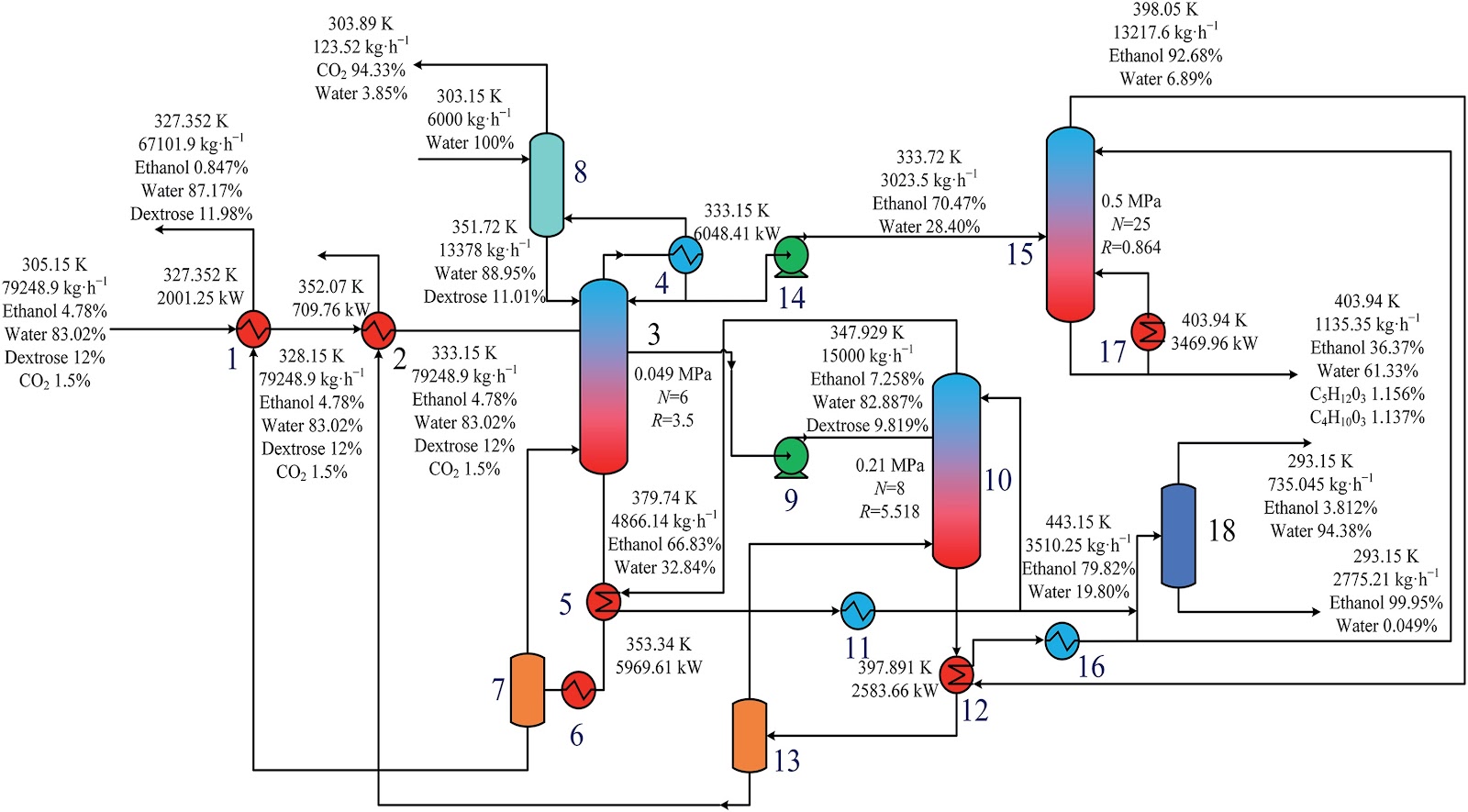
Design and optimization of a high-efficiency distillation process for cellulosic fuel ethanol integrated with thermal coupling and molecular sieve adsorption
To address the challenges of high energy consumption and prominent costs in the traditional three-columns distillation process for cellulosic fuel ethanol, a distillation—molecular sieve coupling separation process is proposed. This process integrates a three-column (crude distillation column, first distillation column, second distillation column) system with a 3A molecular sieve adsorption deep dehydration unit. A thermal coupling network is constructed via differential pressure design (steam from medium/high-pressure columns as mutual heat sources, reboiler liquid waste heat for feed preheating), and molecular sieve adsorption conditions are optimized. The study first performs a thermodynamic consistency test on the ethanol—water system, determines optimal non-random two-liquid (NRTL) model binary interaction parameters via experimental data regression for Aspen Plus simulation. Aiming at minimum total annual cost (TAC), Aspen Plus is used to optimize process parameters (theoretical tray number, feed location, reflux ratio, side-draw position, etc.). Economic analysis shows this process reduces CO2 emission costs by 27.56%, TAC by 15.58% (to 5.123 × 10⁶ USD·a-1), and increases ethanol purity to >99.6%, providing an effective solution for green, efficient separation.
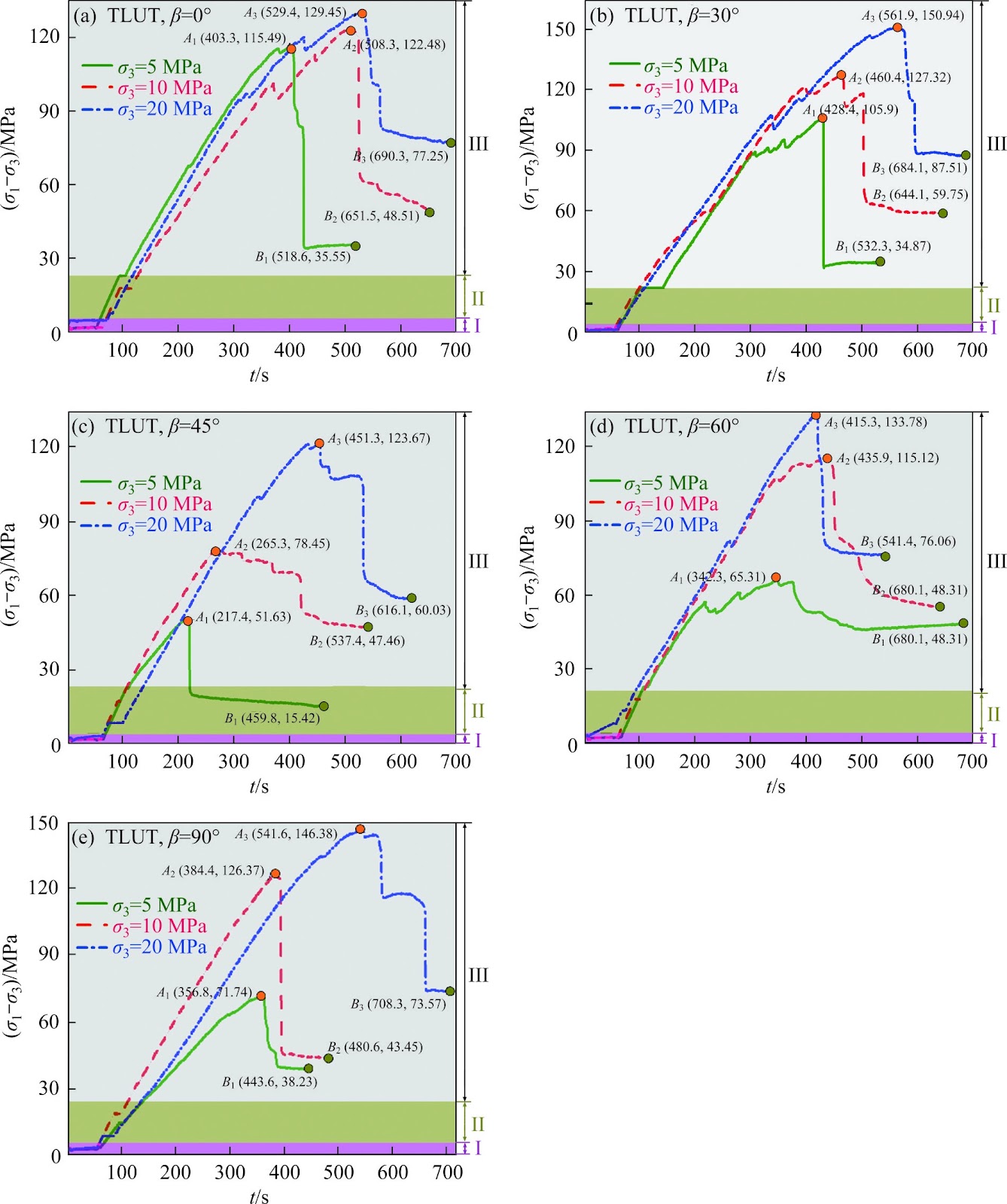
A cohesion loss model for determining residual strength of deep bedded sandstone
Rock residual strength, as an important input parameter, plays an indispensable role in proposing the reasonable and scientific scheme about stope design, underground tunnel excavation and stability evaluation of deep chambers. Therefore, previous residual strength models of rocks established were reviewed. And corresponding related problems were stated. Subsequently, starting from the effects of bedding and whole life-cycle evolution process, series of triaxial mechanical tests of deep bedded s
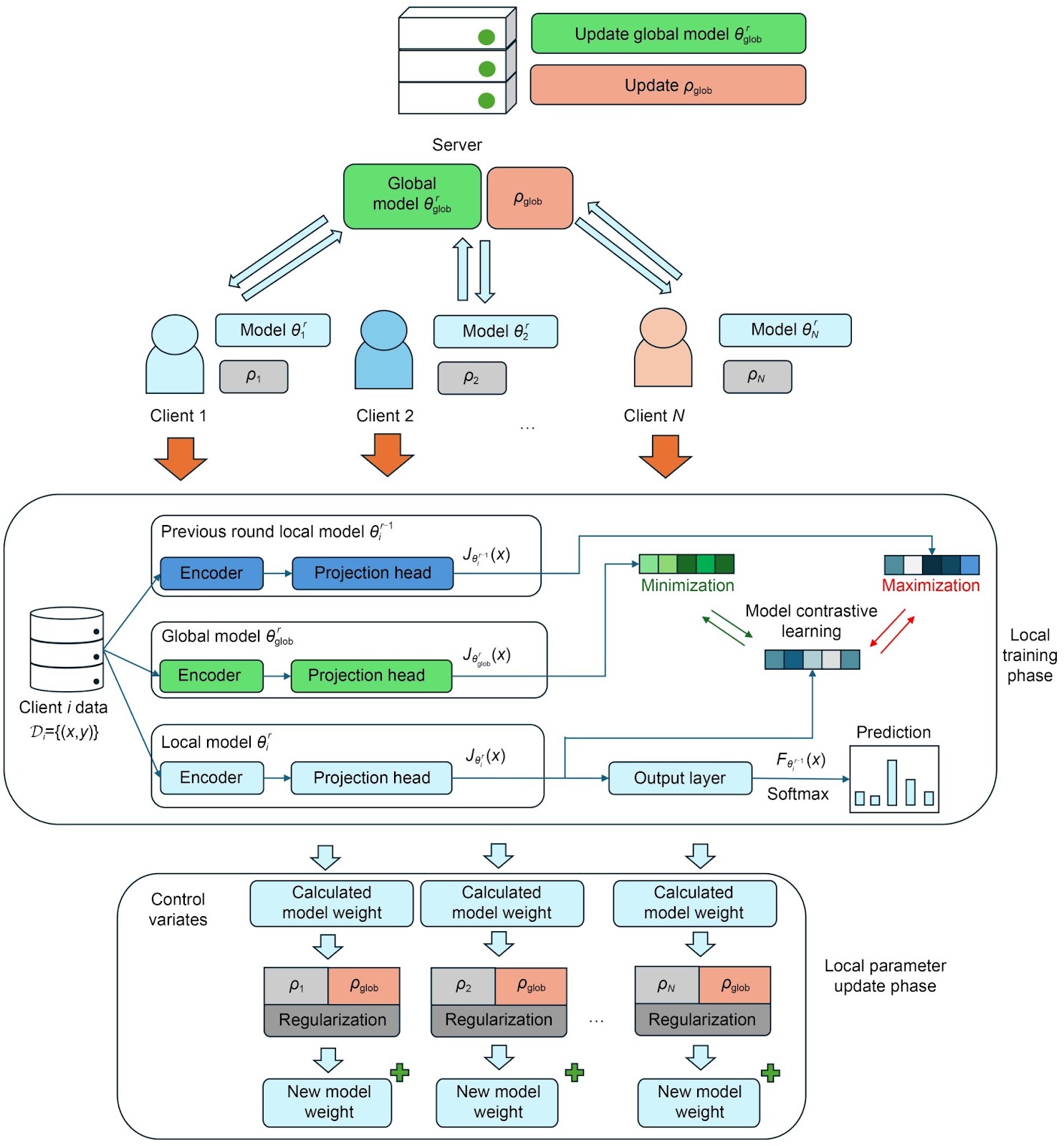
Federated model with contrastive learning and adaptive control variates for human activity recognition
Recent attention to privacy issues demands a communication-safe method for training human activity recognition (HAR) models on client activity data. Federated learning (FL) has become a compelling technique to facilitate model training between the server and clients while preserving data privacy. However, classical FL methods often assume independent and identically distributed (IID) data among clients. This assumption does not hold true in practical scenarios. Human activity in real-world scena