Key Takeaways & Executive Findings
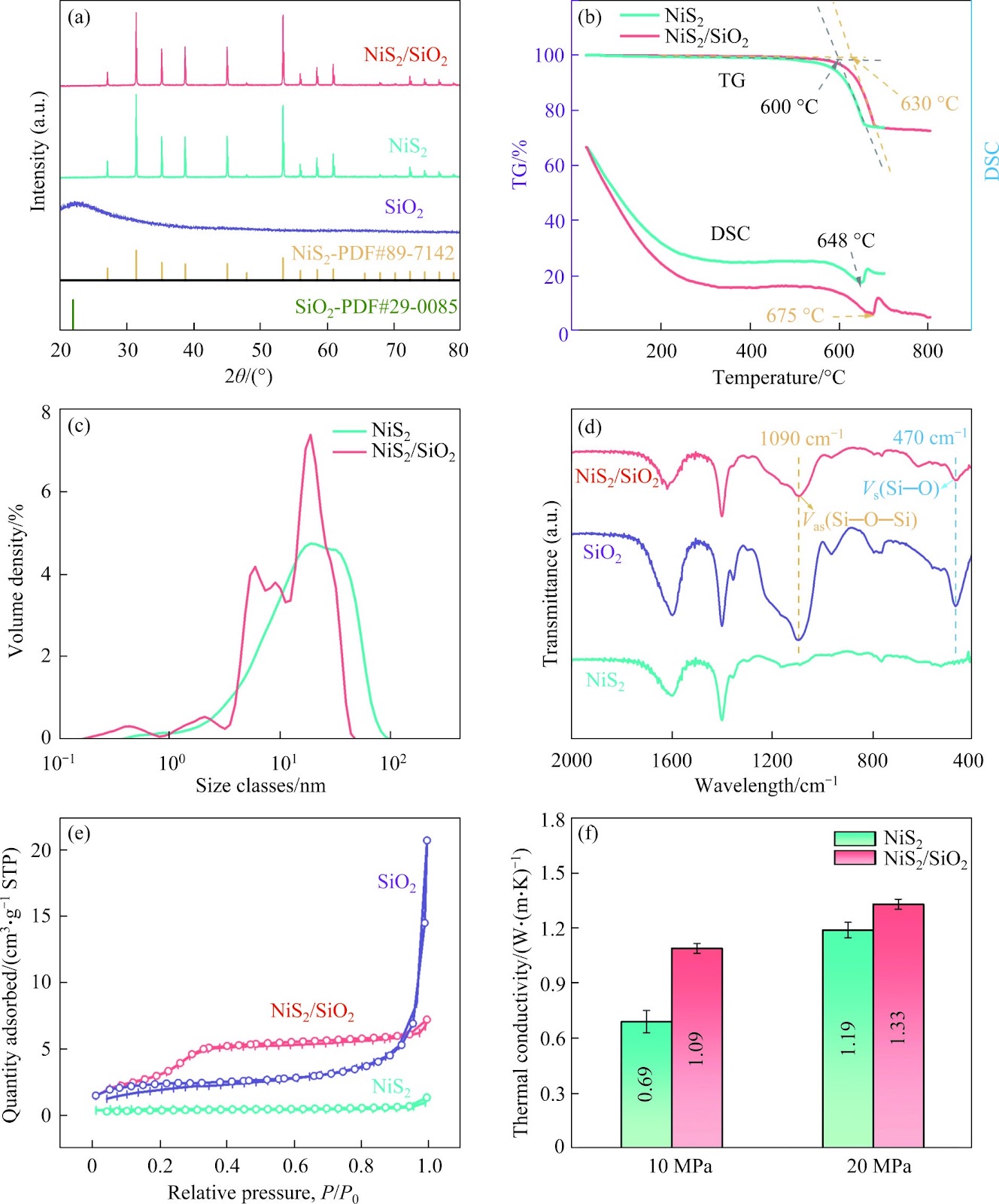
- •• NiS2/SiO2 composite cathodes achieve a stable discharge voltage at 200 mA/cm² and reduce activation time by nearly 20% compared to bare NiS2. • SiO2 doping raises the initial decomposition temperature of NiS2 by 30 °C, significantly improving thermal stability. • Spherical SiO2 acts as a filler and lubricant, enhancing the cold-pressing formability and thermal conductivity of NiS2 electrodes. • The NiS2/SiO2 composite is a promising cathode material for high-stability, fast-response thermal batteries in advanced weapon systems.
Abstract
As a cathode material for thermal batteries, NiS2 has a high theoretical capacity but low thermal stability. Besides, the poor formability of NiS2 powders also restricts the cathode performance of thermal batteries. In this paper, the novel NiS2/SiO2 composite material was developed by high temperature vulcanization to improve the thermal stability formability of NiS2. The good filling and lubrication of spherical SiO2 can improve the thermal conductivity of NiS2 electrode. The discharge test shows that the NiS2/SiO2 cathode has a stable discharge voltage at a current density of 200 mA/cm2, and the activation time is shortened by nearly 20% compared with the NiS2 cathode. In addition, due to the favorable thermal insulation protection of SiO2, the initial decomposition temperature of NiS2 is increased by 30 ℃ after the addition of SiO2. The incorporation of SiO2 not only effectively improves the thermal stability and electrochemical properties of NiS2, but also improves the cold pressing forming performance of the NiS2 powder. Therefore, the novel NiS2/SiO2 composite material is more suitable for thermal batteries with high stability and fast response, which is of great significance for improving the maneuverability and quality reliability of weapons and equipment.
1. Introduction
The thermal battery is a primary reserve power activated by an internal pyrotechnic source [1], using high-temperature molten salt as the electrolyte [2]. Due to its high output power, long storage life, rapid activation, and strong environmental adaptability [3], thermal battery has emerged as one of the remarkable chemical power sources for sophisticated weapons. The demands for thermal batteries in conventional weapons such as anti-aircraft guns and guided bombs are also increasing rapidly. The development of modern warfare not only puts forward the electrical properties of thermal batteries, such as high power and rapid activation, but also pays attention to higher requirement for the safety, stability, and reliability of thermal batteries.
Li-B alloy has been widely employed as a high-performance thermal battery anode material [4], primarily composed of LiB skeleton and high free Li load. The cathode has become one of the major factors restricting technological advances in the thermal batteries [5]. Currently, the cathode materials of thermal batteries mainly include FeS2, CoS2, oxides [6], halides [7, 8], etc. However, FeS2 has poor thermal stability and can decompose rapidly during activation, resulting in voltage spikes. The relatively high electrolyte solubility of FeS2 in molten salts typically results in lower active material utilization, especially at low current densities. CoS2 has some defects, such as expensive price, unstable properties and low discharge voltage (about 2.0 V) [9 −11]. Oxide cathode materials generally have considerable internal resistance and weak conductivity [12, 13]. Due to the short discharge duration, halides have not been widely used [14].
Against this background, NiS2 has attracted the attention of researchers, mainly due to its high thermal stability and discharge-specific capacity [15, 16]. However, the poor formability of NiS2 powder leads to the decrease of cathode quality, resulting in defects such as large internal resistance and long activation time of thermal battery. Therefore, improving the forming performance, thermal stability, and high temperature ionic conductivity of NiS2 powder has become a significant development trend of NiS2 cathode materials. SiO2 itself has the characteristics of high melting point, low thermal conductivity and high stability [17]. The inclusion of SiO2 embedded on the surface of the active material can play a role in thermal insulation and protection [18]. Alternatively, the SiO2 after high temperature heat treatment has high mechanical hardness [19], which may further break the sulfide during the mixing process to improve the particle size uniformity of the powder material. In the process of powder tabletting, SiO2 can act as a filler and a flow promoter [20], filling the gap between the active material particles.
Loading authentic research manuscript (Pages 1–5)...
SONG Ren-hong, HU Jing, LI Xiao, GUO Hao, ZHANG Wen, TIAN Qian-qiu, HU Wen-bin (2025). Enhancing formability of NiS2 cathode by SiO2 doping for high-performance thermal batteries. Journal of Central South University. https://doi.org/10.1007/s11771-025-5942-2
Research & Educational Purpose Only:The translations, structured abstracts, analytical annotations, and data reports provided by SinoTechIntel are intended exclusively for academic research, internal corporate R&D, and educational benchmarking. They do not constitute formal engineering, chemical safety, legal, or professional advice.
Copyright & Intellectual Property Notice: Original copyright of the underlying source articles and experimental data remains with the respective authors, institutions, and original publishing journals. SinoTechIntel claims intellectual property only over its proprietary translations, analytical syntheses, and AEO structured enhancements in accordance with international fair use and academic citation principles.
Frequently Asked Questions
What is the role of SiO2 in NiS2 thermal battery cathodes?
SiO2 doping acts as a filler and flow promoter, filling gaps between NiS2 active particles and improving powder formability, thermal conductivity, and thermal insulation protection, which enhances electrode stability.
How does SiO2 doping affect the discharge performance of NiS2 cathodes?
The NiS2/SiO2 cathode delivers a stable discharge voltage at 200 mA/cm² and shortens activation time by nearly 20% compared with pure NiS2.
What is the thermal stability improvement from SiO2 addition?
SiO2 raises the initial decomposition temperature of NiS2 by 30 °C, effectively enhancing thermal stability.
Why are thermal batteries important for weapons applications?
Thermal batteries offer high output power, long storage life, rapid activation, and strong environmental adaptability, making them critical power sources for sophisticated weapons.
What cathode materials are commonly used in thermal batteries?
Common cathode materials include FeS2, CoS2, oxides, halides, and NiS2, each with limitations; NiS2 has high thermal stability and specific capacity but suffers from poor formability.
Related Technical Papers & Translations
Design and optimization of a high-efficiency distillation process for cellulosic fuel ethanol integrated with thermal coupling and molecular sieve adsorption
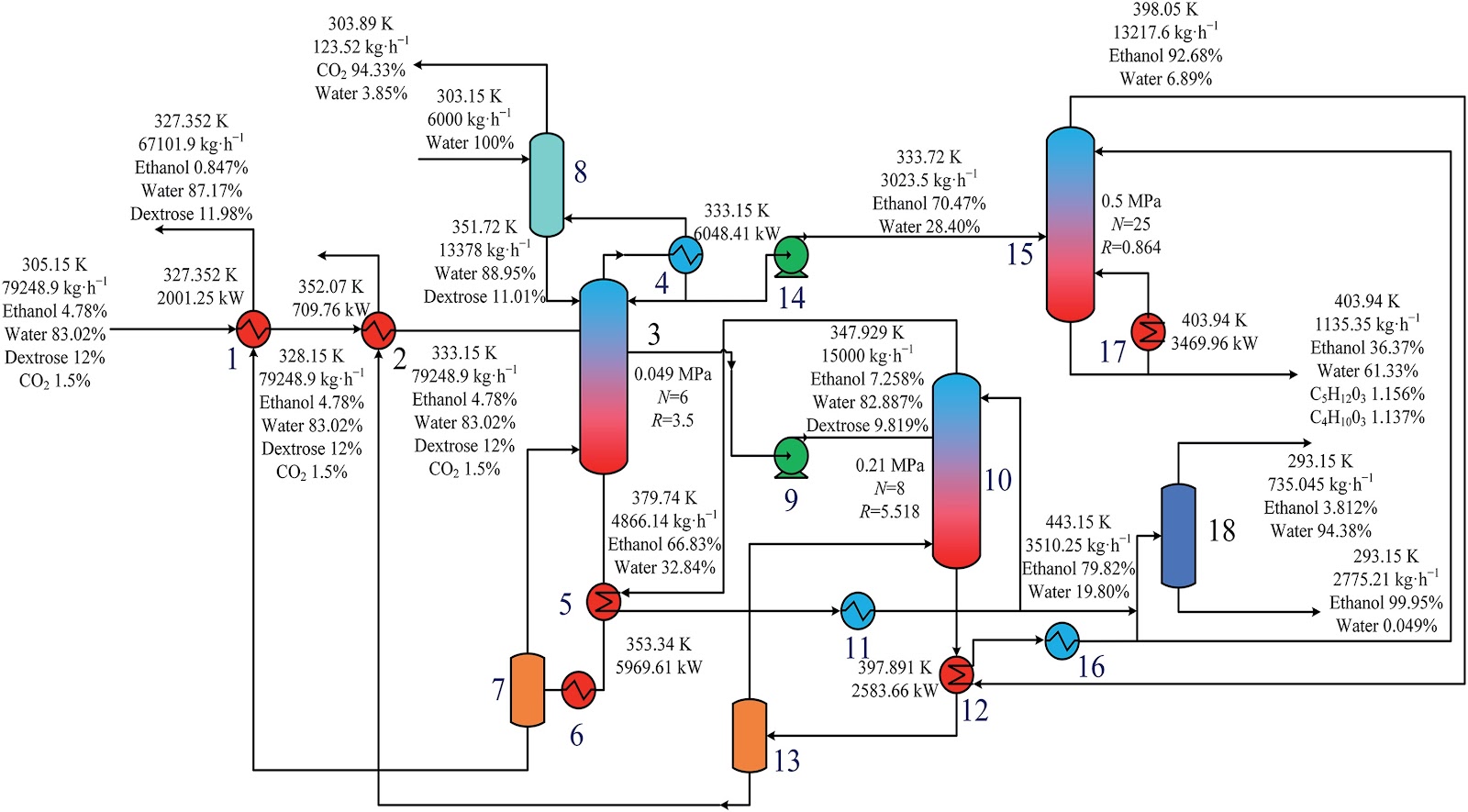
To address the challenges of high energy consumption and prominent costs in the traditional three-columns distillation process for cellulosic fuel ethanol, a distillation—molecular sieve coupling separation process is proposed. This process integrates a three-column (crude distillation column, first distillation column, second distillation column) system with a 3A molecular sieve adsorption deep dehydration unit. A thermal coupling network is constructed via differential pressure design (steam from medium/high-pressure columns as mutual heat sources, reboiler liquid waste heat for feed preheating), and molecular sieve adsorption conditions are optimized. The study first performs a thermodynamic consistency test on the ethanol—water system, determines optimal non-random two-liquid (NRTL) model binary interaction parameters via experimental data regression for Aspen Plus simulation. Aiming at minimum total annual cost (TAC), Aspen Plus is used to optimize process parameters (theoretical tray number, feed location, reflux ratio, side-draw position, etc.). Economic analysis shows this process reduces CO2 emission costs by 27.56%, TAC by 15.58% (to 5.123 × 10⁶ USD·a-1), and increases ethanol purity to >99.6%, providing an effective solution for green, efficient separation.
A cohesion loss model for determining residual strength of deep bedded sandstone
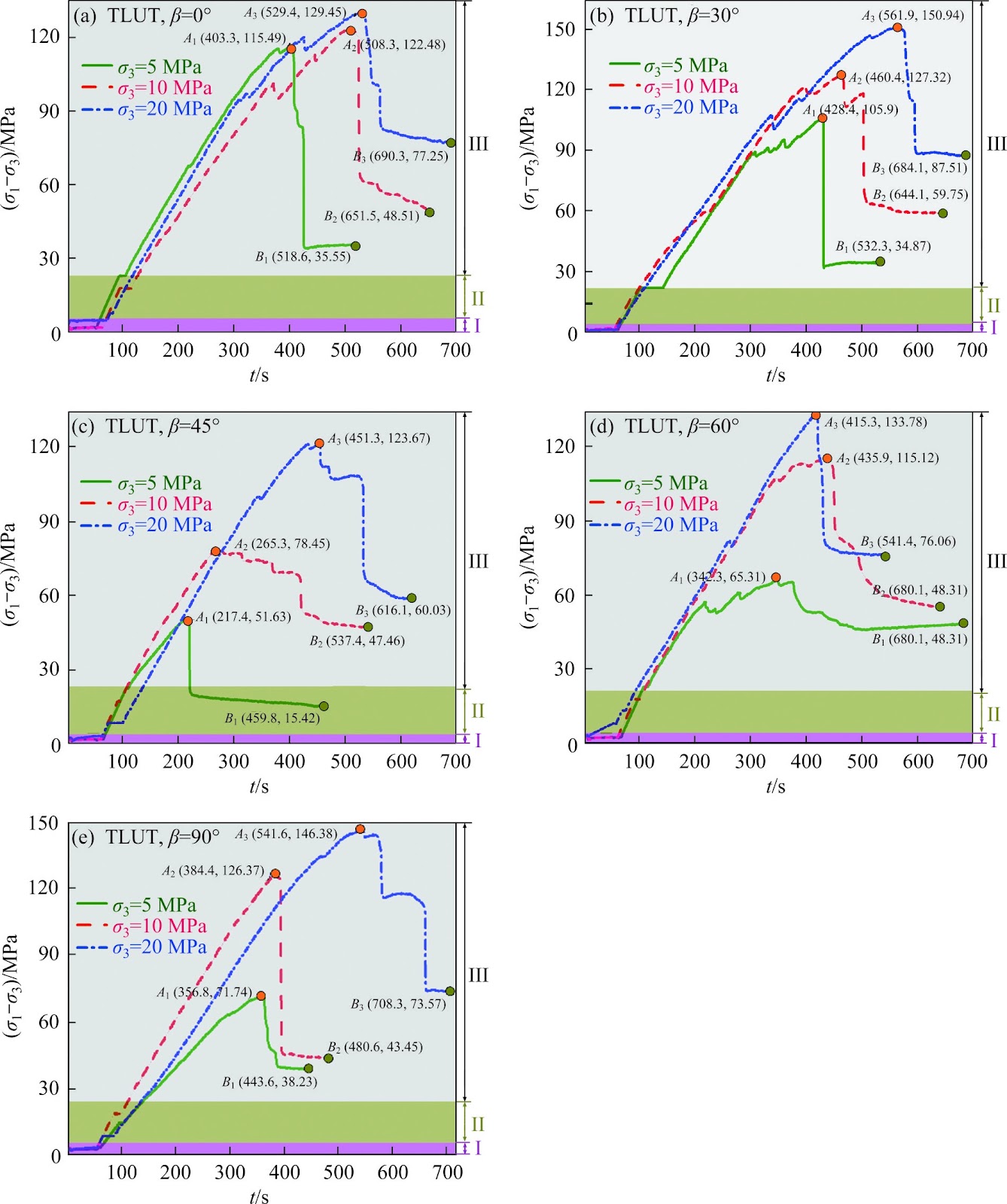
Rock residual strength, as an important input parameter, plays an indispensable role in proposing the reasonable and scientific scheme about stope design, underground tunnel excavation and stability evaluation of deep chambers. Therefore, previous residual strength models of rocks established were reviewed. And corresponding related problems were stated. Subsequently, starting from the effects of bedding and whole life-cycle evolution process, series of triaxial mechanical tests of deep bedded s
Federated model with contrastive learning and adaptive control variates for human activity recognition
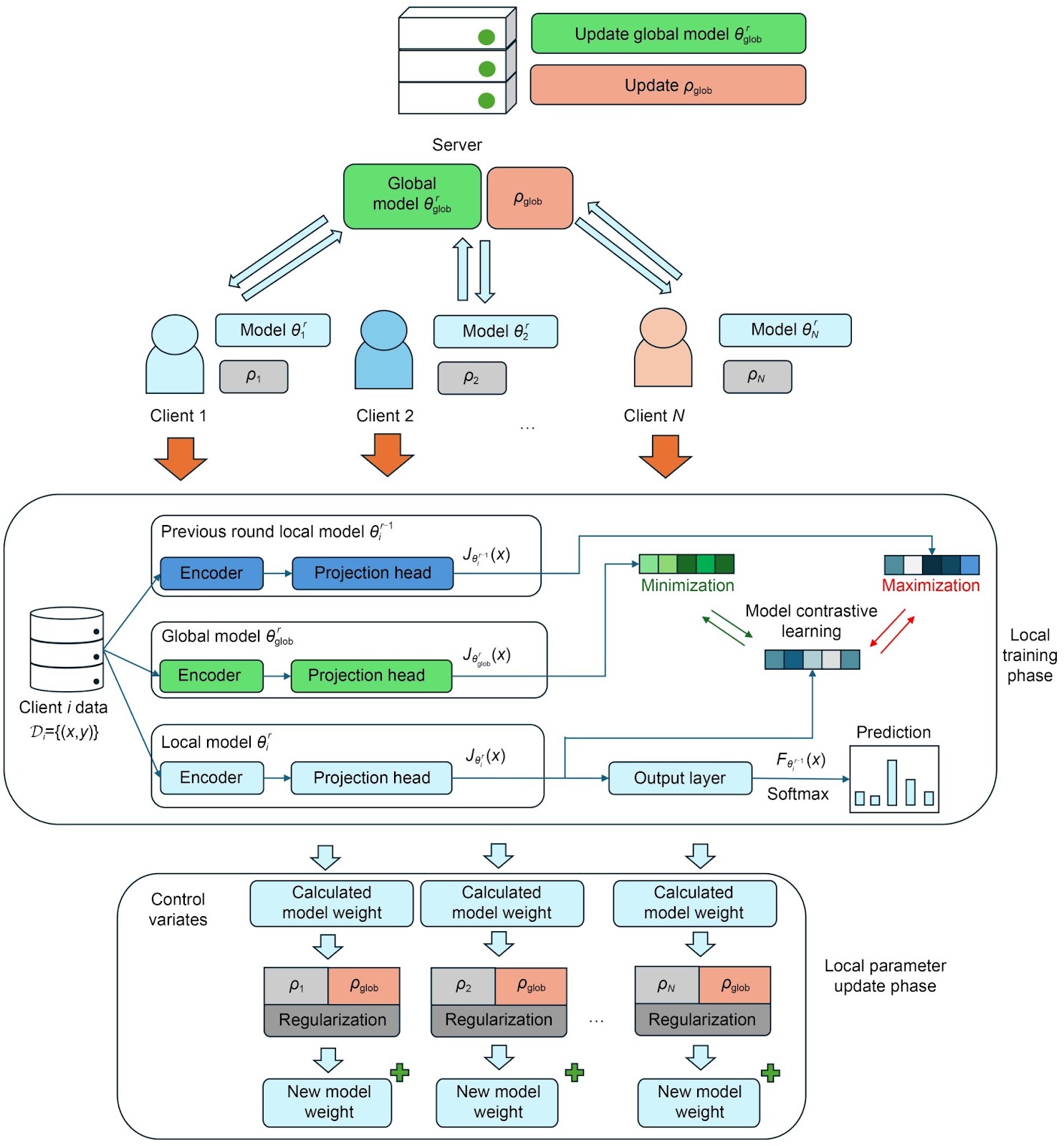
Recent attention to privacy issues demands a communication-safe method for training human activity recognition (HAR) models on client activity data. Federated learning (FL) has become a compelling technique to facilitate model training between the server and clients while preserving data privacy. However, classical FL methods often assume independent and identically distributed (IID) data among clients. This assumption does not hold true in practical scenarios. Human activity in real-world scena