Key Takeaways & Executive Findings
- •• Double glow plasma surface alloying enables controlled columnar crystal Ni coatings with enhanced adhesion. • Interface-pinning effects achieved via layer-by-layer and island growth mechanisms improve coating-substrate bonding. • Diffusion analysis reveals comparable primary and cross-diffusion coefficients, indicating Inconel718 re-sputtering involvement. • Coating withstands 200 thermal cycles without delamination, demonstrating exceptional adhesion performance.
Abstract
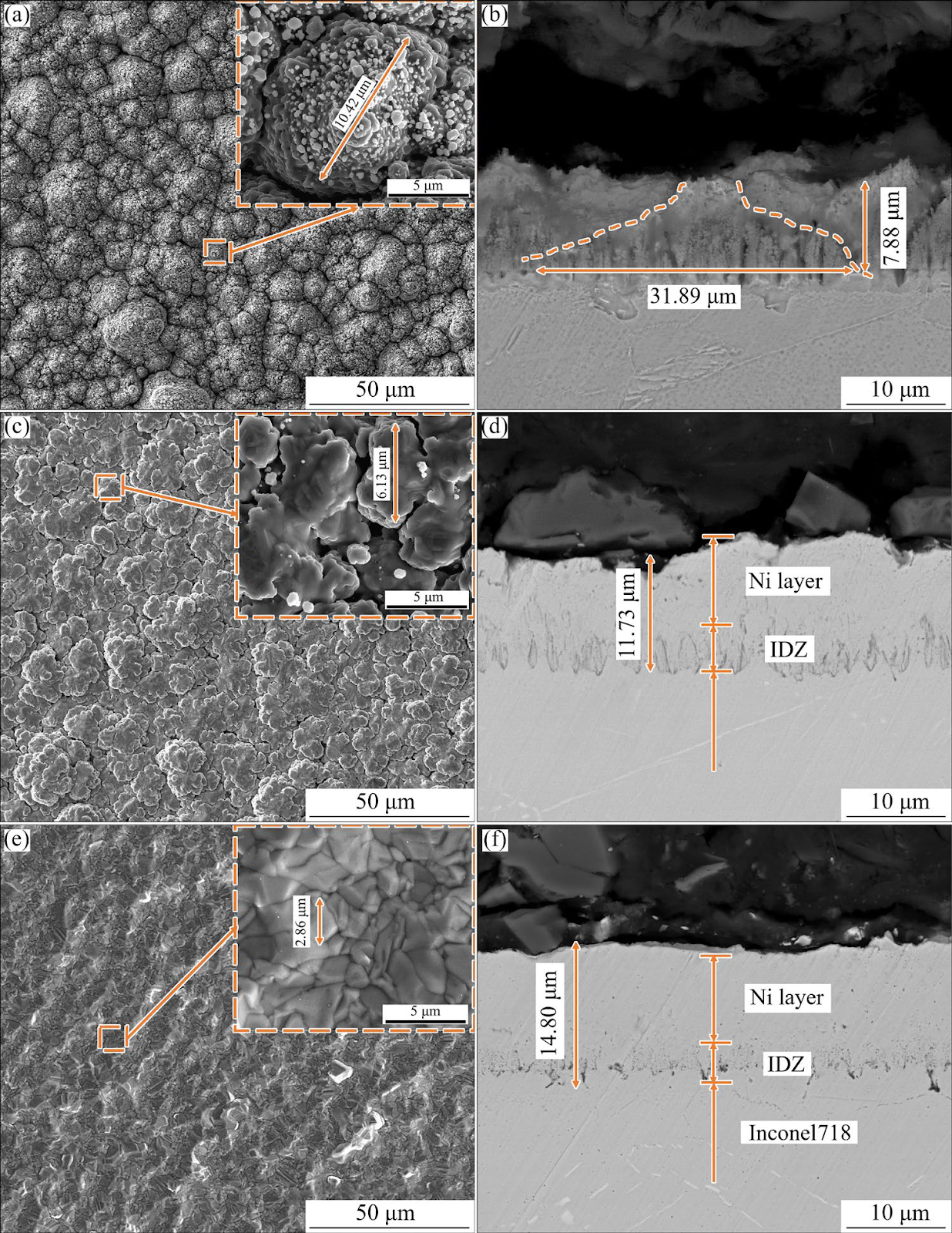
Double glow plasma surface alloying was utilized to synthesize a nickel coating with controlled columnar crystalline architecture. The deposition process was systematically regulated with a fixed source electrode bias of −990 V and precisely controlled deposition temperatures (750, 800, and 850 °C) through cathode bias modulation. Plasma characteristics were quantitatively analyzed through argon emission spectroscopy, enabling precise determination of electron density and temperature. Elemental interdiffusion behavior was comprehensively characterized using electron probe microanalysis, revealing significant interface-pinning effects achieved through strategic manipulation of layer-by-layer and island growth mechanisms. Critical analysis of diffusion coefficients demonstrated comparable magnitudes between the primary diffusion coefficients, along with their cross-diffusion coefficient, suggesting substantial involvement of Inconel718 re-sputtering phenomena in the diffusion dynamics. The coating exhibited exceptional adhesion performance, maintaining structural integrity through 200 rigorous thermal cycling tests without observable delamination.
1. Introduction
Inconel718, a nickel-based superalloy, exhibits superior creep resistance and high-temperature strength, making it indispensable for manufacturing critical elastic sealing components in aircraft engines [1−4]. However, these components are susceptible to fretting corrosion on primary sealing surfaces under operational conditions involving coupled fluid−structure interactions and mechanical vibrations [5,6]. The strategic deposition of a nickel-based coating has been shown to concurrently enhance surface oxidation resistance and inhibit γ'-phase (Ni3(Ti,Al)) coarsening, a microstructural degradation mechanism directly linked to high-temperature performance deterioration [7−9].
Current Ni coating deposition techniques predominantly rely on electroplating, cold spray, and magnetron sputtering processes [10−13]. CAVALIERE et al [14] systematically investigated particle velocity effects on crystallization dynamics in cold-sprayed Ni coatings, establishing critical process−structure relationships. GENG et al [15] employed magnetron-sputtered Ni coatings to elucidate high-temperature oxidation mechanisms. Nevertheless, these conventional methods consistently demonstrate two critical limitations: insufficient interfacial adhesion strength and mismatched coefficients of thermal expansion (CTE) with Inconel718 substrates. Under cyclic stress conditions during the service, such CTE incompatibilities promote interfacial delamination, a failure mode that catastrophically degrades sealing integrity and severely limits operational lifespan in aerospace applications.
Double glow plasma surface alloying (DGPSA) emerges as an advanced surface modification technology to address these challenges. Derived from ion nitriding principles, DGPSA incorporates a hollow-cathode effect that amplifies plasma density, thereby enhancing substrate wear resistance and corrosion protection capabilities [16]. As illustrated in Fig. 1, the DGPSA system operates through continuous bombardment of the source electrode (target) by
Loading authentic research manuscript (Pages 1–5)...
Shi-yu CUI, Hua-wei CHENG, Jun HUANG, Wen-ping LIANG, Luis Saucedo MORA, Joseph P. DOMBLESKY, Jun-ming LUO (2025). Enhancing adhesion in columnar crystal Ni coatings via interface-pinning structure optimization. SinoTechIntel Verified Research. https://doi.org/10.1016/S1003-6326(25)67027-0
Research & Educational Purpose Only:The translations, structured abstracts, analytical annotations, and data reports provided by SinoTechIntel are intended exclusively for academic research, internal corporate R&D, and educational benchmarking. They do not constitute formal engineering, chemical safety, legal, or professional advice.
Copyright & Intellectual Property Notice: Original copyright of the underlying source articles and experimental data remains with the respective authors, institutions, and original publishing journals. SinoTechIntel claims intellectual property only over its proprietary translations, analytical syntheses, and AEO structured enhancements in accordance with international fair use and academic citation principles.
Frequently Asked Questions
What is the main objective of the study?
The study aims to enhance adhesion in columnar crystal Ni coatings on Inconel718 substrates via interface-pinning structure optimization using double glow plasma surface alloying.
How was the Ni coating deposited?
The Ni coating was synthesized using double glow plasma surface alloying with a fixed source electrode bias of −990 V and controlled deposition temperatures (750, 800, and 850 °C) via cathode bias modulation.
What is the significance of interface-pinning in this context?
Interface-pinning effects, achieved through strategic manipulation of layer-by-layer and island growth mechanisms, significantly improve coating-substrate adhesion by promoting interdiffusion and mechanical interlocking.
How was the adhesion performance evaluated?
Adhesion performance was evaluated through 200 rigorous thermal cycling tests, and the coating maintained structural integrity without observable delamination.
What role does Inconel718 re-sputtering play in the diffusion dynamics?
The comparable magnitudes of primary and cross-diffusion coefficients suggest substantial involvement of Inconel718 re-sputtering phenomena, which contributes to the interdiffusion behavior and interface-pinning effects.
Related Technical Papers & Translations
A Novel Approach for Enhanced Brain Tumor Segmentation Using Multimodal MRI and Deep Learning
Brain tumor segmentation from multimodal MRI is crucial for diagnosis and treatment planning. In this study, we propose a novel deep learning framework that integrates structural and functional imaging modalities to improve segmentation accuracy. Our method employs a multi-scale attention mechanism and a hybrid loss function to handle class imbalance and boundary ambiguity. Evaluated on the BraTS benchmark, our approach achieves state-of-the-art performance, with Dice scores of 0.91, 0.87, and 0.84 for whole tumor, core, and enhancing tumor, respectively. Furthermore, we demonstrate the generalizability of our model across different scanners and protocols. Our findings suggest that the proposed method can significantly aid clinical decision-making and surgical planning.
Investigation of coupled acoustic and electrical responses and early warning approaches during re-loading of damaged coal
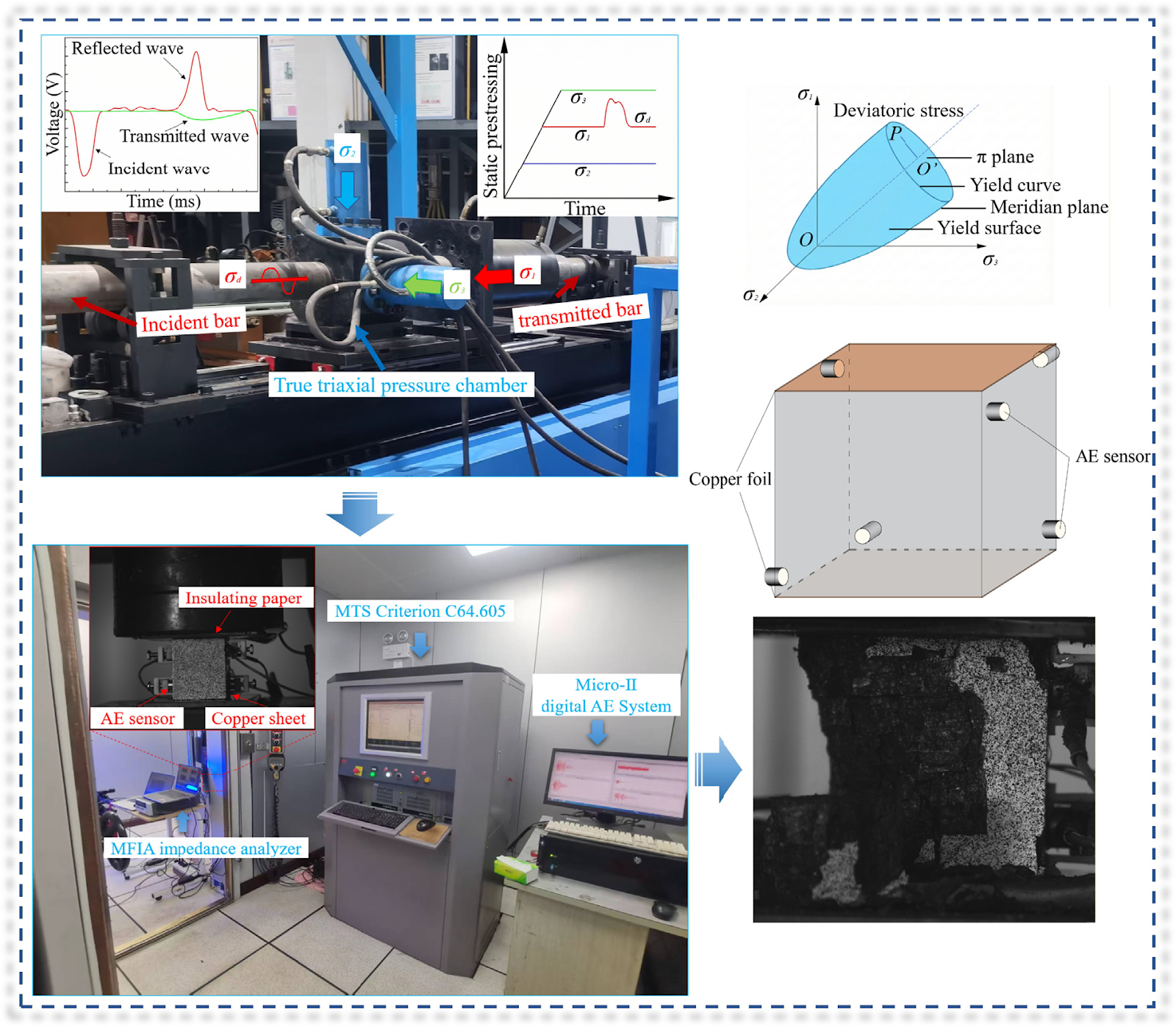
Initial damage from engineering disturbances in deep coal mining degrades mechanical properties and heightens dynamic-hazard risks, challenging conventional monitoring. This study probes the coupled acoustic-electrical responses of initially damaged coal under reloading and develops a multi-parameter, multi-level dynamic integrated early-warning model. Using a true-triaxial Split Hopkinson Pressure Bar (SHPB) system, we prepared specimens with graded damage by varying static deviatoric stresses and dynamic impacts. Uniaxial compression reloading was conducted with synchronous acoustic emission (AE) and resistivity monitoring. Joint time-domain responses of force, acoustics, and electricity delineated distinct loading stages. Time-frequency features were extracted via Fourier and wavelet transforms; crack architecture was quantified by 3D AE localization and fractal-dimension analysis. Initial damage markedly reduced load-bearing capacity. Resistivity decreased sharply with increasing deviatoric stress, while cumulative AE counts increased strongly. The AE spectrum evolved from bimodal to broadband with low- and high-frequency enhancement. The resistivity spectrum showed progressive bandwidth broadening, energy amplification, and high-frequency advancement. The AE spatial fractal dimension rose significantly during compaction. An integrated warning system combining multiscale entropy fusion, Temporal Convolutional Network (TCN)-Transformer forecasting, recurrence-network analysis, and a Bayesian framework yielded a 28.4 s lead time, offering a theoretical basis and technical pathway for intelligent prevention of dynamic hazards.
Influence of aggregate particle size on fracture behavior and energy evolution of cemented rockfill in the post-peak stage
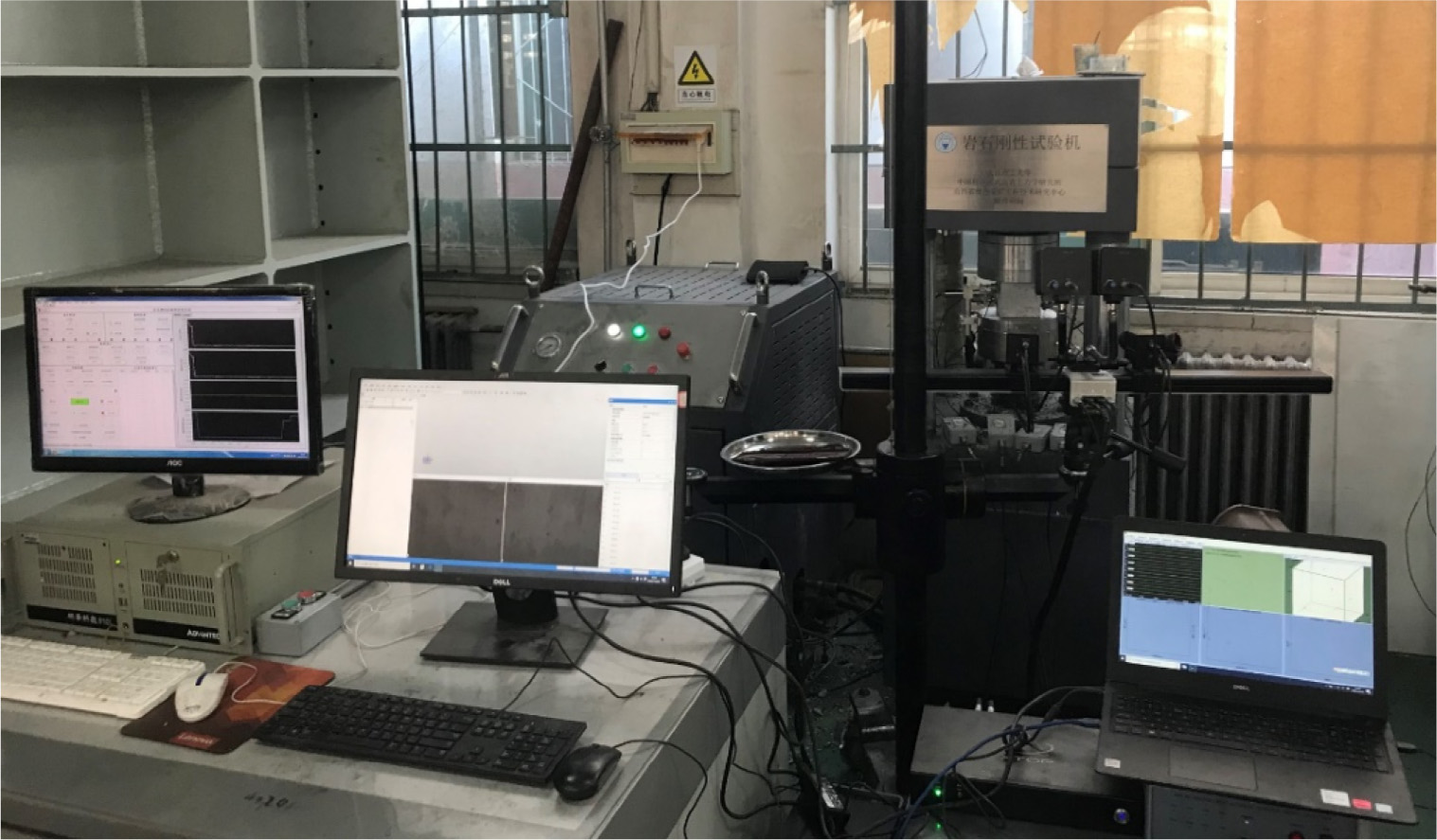
Cemented rockfill (CRF) combines structural support with sustainable reuse of coal-derived solid waste. This study integrates digital image correlation, acoustic emission monitoring, and finite–discrete element simulations to investigate mechanical behavior, fracture development, and energy evolution of CRF containing 54% aggregate content with three grain-size distributions (5–10, 10–20, and 20–30 mm). Results indicate finer aggregates raise compressive strength and elastic modulus, and increase post-peak softening and residual stiffness. Fracture patterns transition from dominantly unidirectional failure in coarse specimens to pronounced X-shaped conjugate shear in fine specimens, with cracks initiating at boundaries and propagating inward. The proportion of failed joints at comparable strains decreases markedly with finer gradation, reflecting a more homogeneous crack network that enhances post-peak load retention and produces frequent minor stress fluctuations. Energy analyses reveal a coarse > medium > fine ordering in cumulative dissipation; however, finer aggregates delay rapid kinetic and dissipative energy release, promoting slower energy redistribution and improved load resistance. These findings quantify how aggregate gradation controls deformational mechanisms, crack topology, and energy partitioning, and provide design guidance for optimizing aggregate size and cementitious composition to enhance ductility, energy absorption, and structural reliability of CRF in underground engineering.