Key Takeaways & Executive Findings
- •• Co-addition of CeO2 and benzotriazole significantly enhances the corrosion resistance of epoxy resin coatings on Q235 carbon steel. • The optimal coating composition (0.3% CeO2 and 20% BTA) provides superior long-term corrosion protection due to synergistic barrier and chemical effects. • Electrochemical tests (polarization and impedance) confirm improved corrosion performance, while XRD analysis reveals the formation of protective corrosion products. • The study offers a practical approach to developing high-performance epoxy coatings for marine and industrial applications.
Abstract
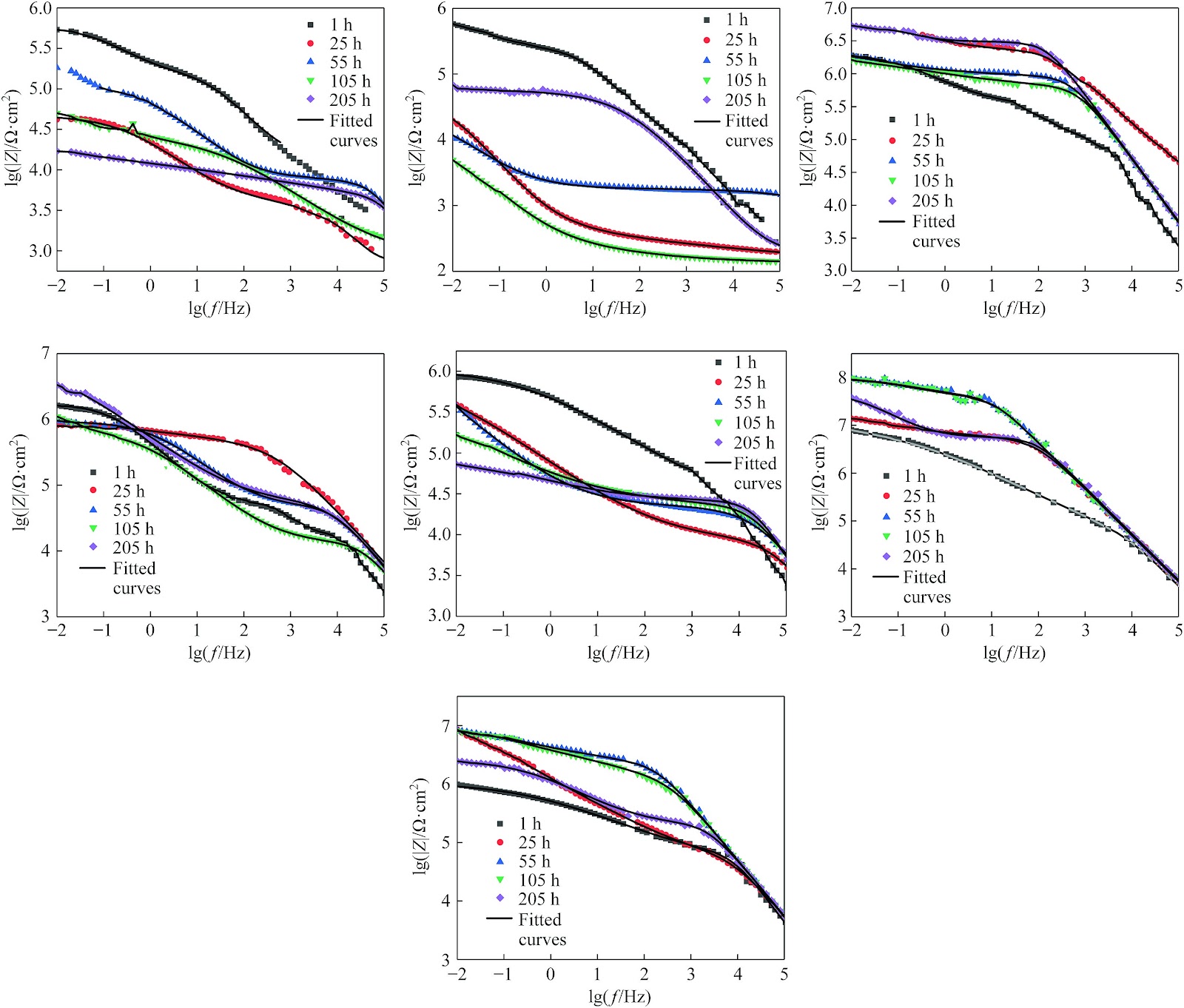
The use of fillers to enhance the corrosion protection of epoxy resins has been widely applied. In this work, cerium dioxide (CeO2) and benzotriazole (BTA) were introduced into an epoxy resin to enhance the corrosion resistance of Q235 carbon steel. Scanning electron microscopy results indicated that the CeO2 grains were rod-like and ellipsoidal in shape, and the distribution pattern of BTA was analyzed by energy dispersive spectroscope. The dynamic potential polarization curve proved the excellent corrosion resistance of the composite epoxy resin with CeO2 and BTA co-addition, and electrochemical impedance spectroscopy test analysis indicated the significantly enhanced long-term corrosion protection performance of the composite coating. And the optimal protective performance was provided by the coating containing 0.3% (mass) CeO2 and 20% (mass) BTA, which was attributed to the barrier performance of CeO2 particles and the chemical barrier effect of BTA. The formation of corrosion products was analyzed using X-ray diffraction. In addition, the corrosion resistance mechanism of the coating was also discussed in detail.
1. Introduction
Carbon steel is widely applied in marine facilities, transport pipelines, and power generation equipment because of its excellent mechanical properties, low price, and convenience in fabrication. However, it is sensitive to corrosion, which limits its application in most environments. Therefore, their pervasive use in industrial applications renders the improvement of corrosion resistance an important goal. There are several ways to protect carbon steel from corrosion, such as zinc dipping, anodic protection, cathodic protection, and coating. The coatings enhance the performance of the substrate in a number of aspects such as appearance, optical properties, wettability, corrosion resistance, and friction properties, among which polymer coatings such as polytetrafluoroethylene, polyurethane, epoxy resins, and ultra-high molecular weight polyethylene are of interest to researchers because of their low cost, ease of application to different substrates, low friction, and excellent corrosion protection properties. Epoxy resins are widely applied as coatings because of their excellent chemical inertness, adhesion, malleability, and corrosion resistance.
However, it is far from enough to only rely on pure epoxy resin to improve the corrosion resistance of the substrate, and various inorganic or organic fillers are applied to further improve the barrier performance of the corrosion medium. The addition of corrosion inhibitors to coatings is an effective way to improve the corrosion protection with the advantage of being efficient and cost-effective, among which organic and metal oxide corrosion inhibitors are widely applied in organic coatings to provide effective barriers and passive protection. To enhance the corrosion resistance to a much greater extent, the coaddition of organic and metal oxide corrosion inhibitors was a desirable alternative. For instance, the addition of p-toluenesulfonic acid (PTSA) and polypyrrole (PPy) embedded with manganese iron oxides endowed the epoxy resins with 99% corrosion inhibition efficiency, and the incorporation of PPy/Fe2O3 into the epoxy resin coating remarkably improved the electrochemical interaction between the corrosive substance and the metal substrate. Benzotriazole (BTA) is a green, effective, and common corrosion inhibitor. The combined action of BTA and other substances such as trimethylsiloxysilicate (TMS) and polydimethylsiloxane (PDMS) endows the coatings with enhanced anticorrosion performance and compensates for the lack of corrosion inhibition of BTA alone, and the incorporation of BTA-loaded mesoporous silica nanocontainers into phenolic resin enabled the coating to be self-healing. Cerium dioxide can act as a physical barrier to slow down the entry of corrosive media when introduced into the coating. As shown in Table 1, the epoxy coating modified by cerium dioxide (CeO2) composites resulted in a decrease in the corrosion current density values and an increase in the corrosion potential values, indicating a decrease in corrosion rate.
Loading authentic research manuscript (Pages 1–5)...
Xu Han, Ruijie Guo, Baolong Niu, Hong Yan (2024). Enhanced corrosion resistance of epoxy resin coating via addition of CeO2 and benzotriazole. Chinese Journal of Chemical Engineering. https://doi.org/10.1016/j_cjche_1448
Research & Educational Purpose Only:The translations, structured abstracts, analytical annotations, and data reports provided by SinoTechIntel are intended exclusively for academic research, internal corporate R&D, and educational benchmarking. They do not constitute formal engineering, chemical safety, legal, or professional advice.
Copyright & Intellectual Property Notice: Original copyright of the underlying source articles and experimental data remains with the respective authors, institutions, and original publishing journals. SinoTechIntel claims intellectual property only over its proprietary translations, analytical syntheses, and AEO structured enhancements in accordance with international fair use and academic citation principles.
Frequently Asked Questions
What is the optimal composition of CeO2 and BTA in the epoxy coating?
The optimal protective performance was achieved with a coating containing 0.3% (mass) CeO2 and 20% (mass) BTA.
How does the addition of CeO2 and BTA improve corrosion resistance?
CeO2 particles act as a physical barrier, while BTA provides a chemical barrier effect, together enhancing the long-term corrosion protection of the epoxy coating.
What methods were used to evaluate the corrosion resistance?
The corrosion resistance was evaluated using dynamic potential polarization curves and electrochemical impedance spectroscopy (EIS).
What is the significance of this study for industrial applications?
The study demonstrates a cost-effective and efficient method to enhance the corrosion protection of epoxy coatings, which is crucial for extending the service life of carbon steel in marine and industrial environments.
What was the role of X-ray diffraction in this study?
X-ray diffraction was used to analyze the formation of corrosion products, providing insights into the corrosion protection mechanism.
Related Technical Papers & Translations
Design and optimization of a high-efficiency distillation process for cellulosic fuel ethanol integrated with thermal coupling and molecular sieve adsorption
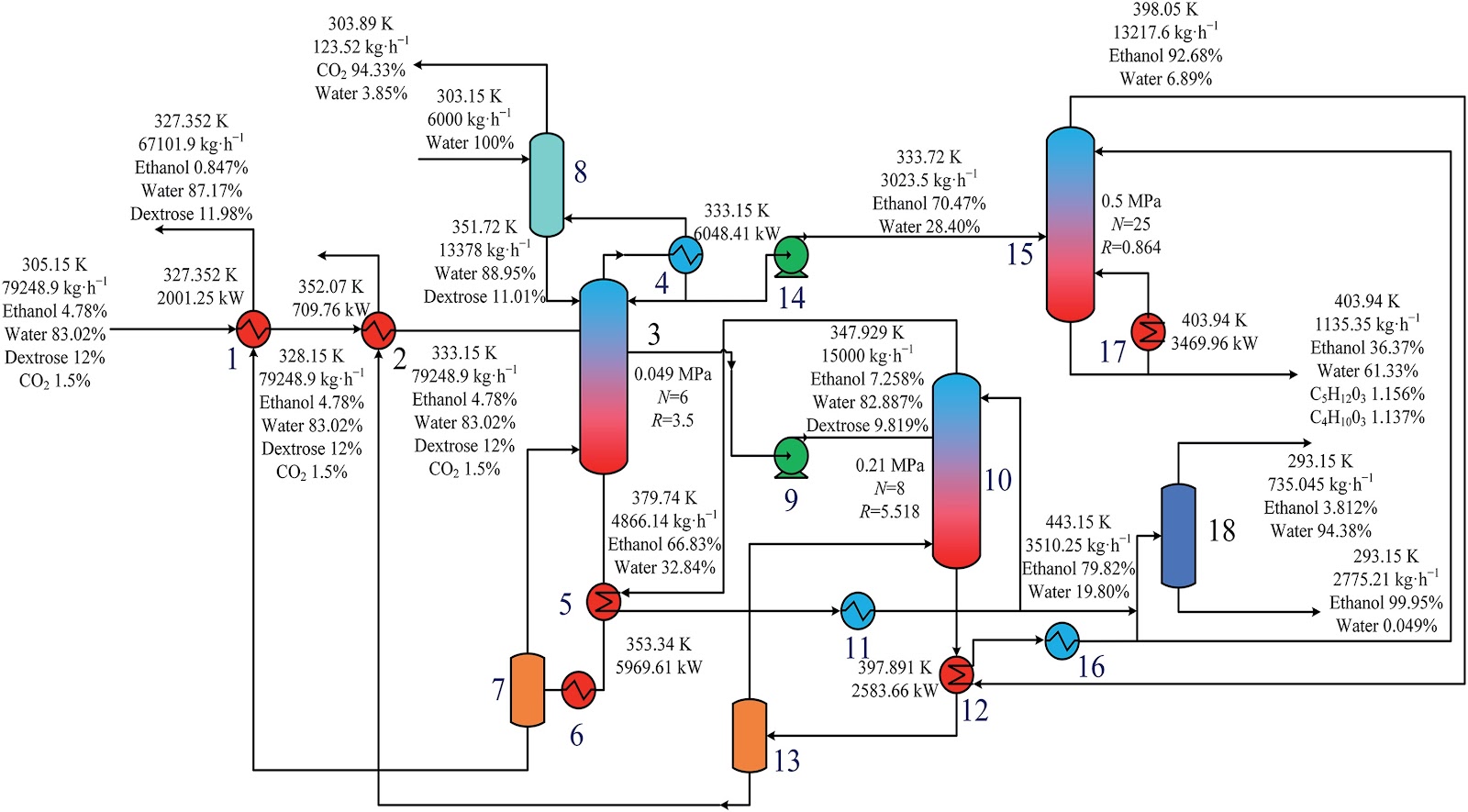
To address the challenges of high energy consumption and prominent costs in the traditional three-columns distillation process for cellulosic fuel ethanol, a distillation—molecular sieve coupling separation process is proposed. This process integrates a three-column (crude distillation column, first distillation column, second distillation column) system with a 3A molecular sieve adsorption deep dehydration unit. A thermal coupling network is constructed via differential pressure design (steam from medium/high-pressure columns as mutual heat sources, reboiler liquid waste heat for feed preheating), and molecular sieve adsorption conditions are optimized. The study first performs a thermodynamic consistency test on the ethanol—water system, determines optimal non-random two-liquid (NRTL) model binary interaction parameters via experimental data regression for Aspen Plus simulation. Aiming at minimum total annual cost (TAC), Aspen Plus is used to optimize process parameters (theoretical tray number, feed location, reflux ratio, side-draw position, etc.). Economic analysis shows this process reduces CO2 emission costs by 27.56%, TAC by 15.58% (to 5.123 × 10⁶ USD·a-1), and increases ethanol purity to >99.6%, providing an effective solution for green, efficient separation.
A cohesion loss model for determining residual strength of deep bedded sandstone
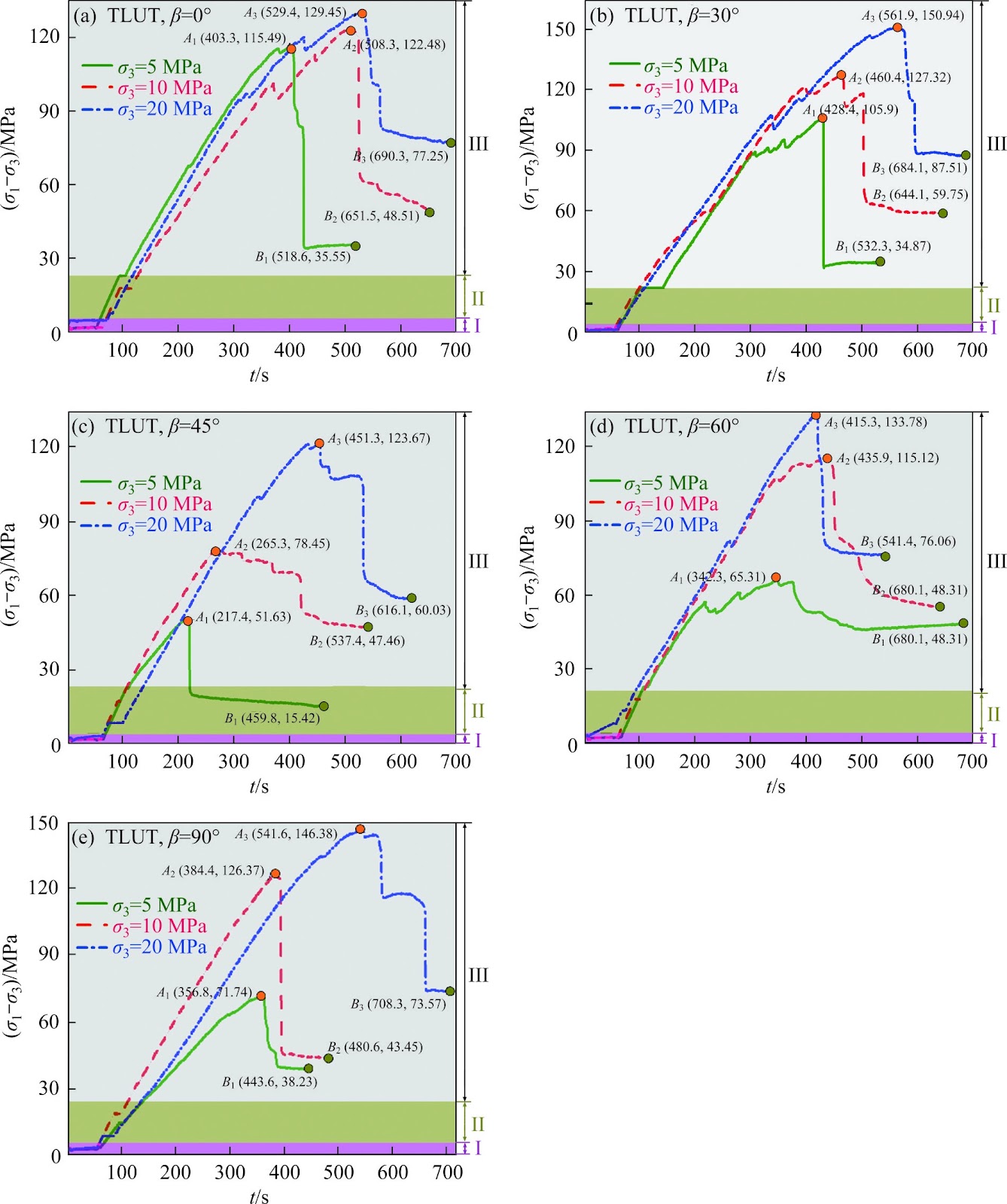
Rock residual strength, as an important input parameter, plays an indispensable role in proposing the reasonable and scientific scheme about stope design, underground tunnel excavation and stability evaluation of deep chambers. Therefore, previous residual strength models of rocks established were reviewed. And corresponding related problems were stated. Subsequently, starting from the effects of bedding and whole life-cycle evolution process, series of triaxial mechanical tests of deep bedded s
Federated model with contrastive learning and adaptive control variates for human activity recognition
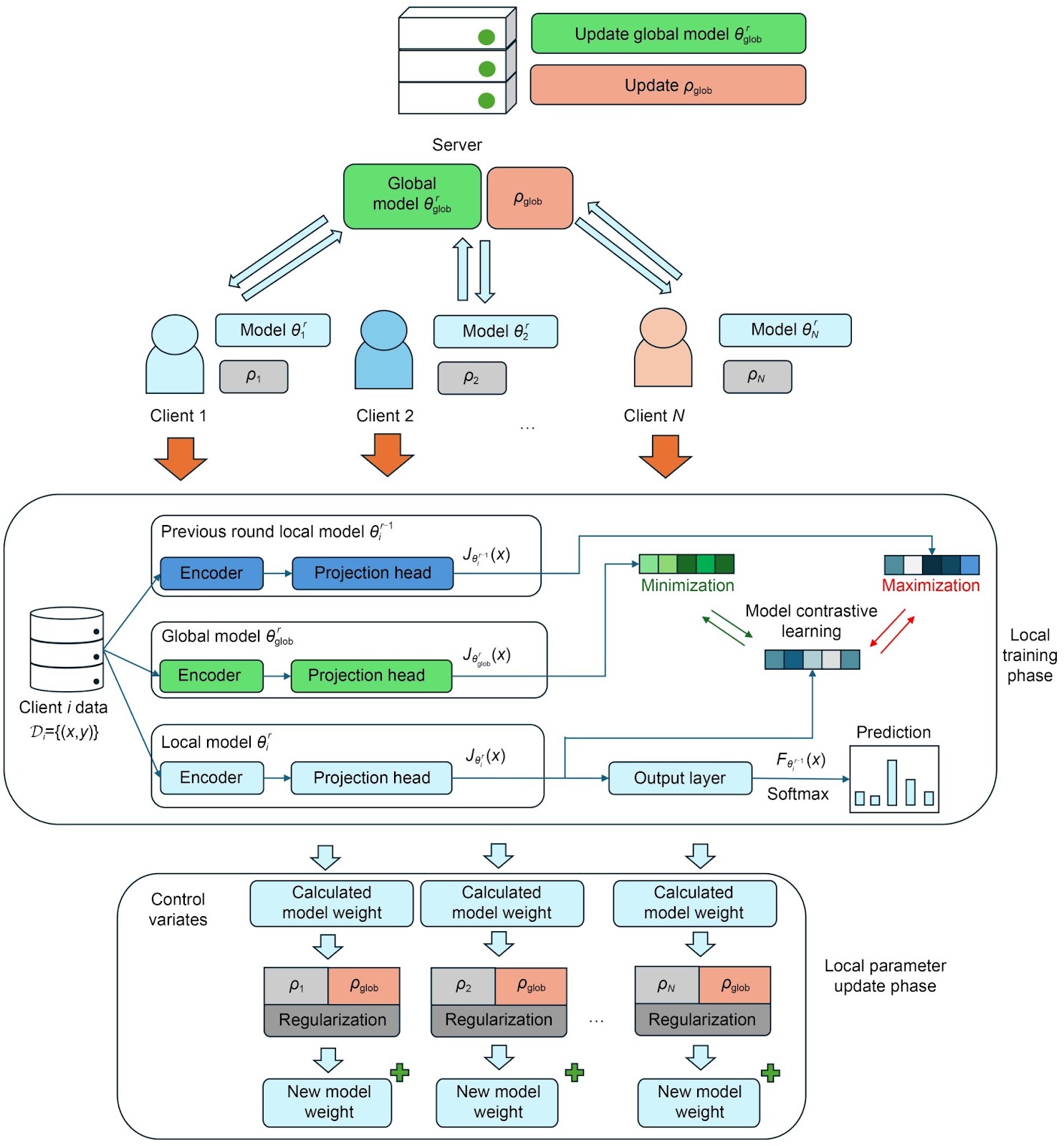
Recent attention to privacy issues demands a communication-safe method for training human activity recognition (HAR) models on client activity data. Federated learning (FL) has become a compelling technique to facilitate model training between the server and clients while preserving data privacy. However, classical FL methods often assume independent and identically distributed (IID) data among clients. This assumption does not hold true in practical scenarios. Human activity in real-world scena