Key Takeaways & Executive Findings
- •• Under low confining pressure (10 MPa), tensile cracking dominates, while higher confining pressures (30–70 MPa) promote shear cracking, indicating a transition in fracture mode. • Elastic energy and dissipated energy increase linearly with input energy, revealing an energy distribution mechanism that governs fracture mode transition in triaxial extension. • Peak energy storage capacity is more sensitive to confining pressure than elastic energy conversion capacity, highlighting the role of confinement in energy accumulation. • The findings provide a fundamental energy-based understanding of excavation-induced spalling and rockburst, aiding in the formulation of engineering disaster prevention measures.
Abstract
After excavation, some of the surrounding rock mass is in a state of triaxial extension, exhibiting tensile or shear fracture modes. To study the energy mechanism of tensile fracture turning to shear fracture, a series of triaxial extension tests were conducted on sandstone under confining pressures of 10, 30, 50 and 70 MPa. Elastic energy and dissipated energy were separated by single unloading, the input energy ut, elastic energy ue, and dissipated energy ud at different unloading stress levels were calculated by the integrating stress−strain curves. The results show that tensile cracks dominate fracture under lower confining pressure (10 MPa), and shear cracks play an increasingly important role in fracture as confining pressure increases (30, 50 and 70 MPa). Based on the phenomenon that ue and ud increase linearly with increasing ut, a possible energy distribution mechanism of fracture mode transition under triaxial extension was proposed. In addition, it was found that peak energy storage capacity is more sensitive to confining pressure compared to elastic energy conversion capacity.
1. Introduction
Numerous rock engineering projects indicate that the initial failure of surrounding rocks is often induced by tensile cracks [1, 2], and laboratory observation has also proven this [3−5]. The in-situ rock mass is initially in a stable stress state (σ1>σ2>σ3), and the elastic recovery caused by excavation unloading can lead to cracks in the rock mass, which is also the principle of some in-situ stress measurement methods [6−8]. As shown in Figure 1, under triaxial extension (σ1≈σ2>σ3), these unloading-induced cracks further propagate, forming spalling (see Figure 1(c)) or V-shaped notches (rockburst under high in-situ stress, see Figure 1(d)). Some in-situ observations indicate that the surrounding rock mass fails when the maximum tangential stress is much less than the uniaxial compressive strength of the rock [11, 12]. Therefore, considering the excavation stress path, true triaxial unloading tests were frequently conducted to study the mechanism behind this phenomenon. Although spalling and rockburst can be reproduced by conducting true triaxial compression tests, the maximum principal stress in the laboratory is still much greater than the in-situ maximum principal stress [13 −15]. So far, spalling and rockburst caused by excavation have not been well explained, and the underlying mechanisms still need further research.
In addition to true triaxial compression tests, the triaxial extension test (also known as the confined direct tension test) is often used to study the propagation of unloading-induced cracks under confining pressure. But previous researchers mainly focused on loading equipment improvement [16 −19], strength [20 −23], and fracture characteristics [24 −28]. The energy conversion characteristics in triaxial extension tests were rarely reported. HUANG et al [22] provided a preliminary explanation of the energy conversion characteristics of granite in triaxial extension tests, but the energy calculation is based on the elastic modulus. However, the elastic modulus is only a parameter used to roughly estimate the deformation characteristics of rocks, and it varies with the external forces on rocks. Sometimes, it is even used to evaluate rock damage [29]. For a certain rock, the elastic modulus is not a constant property to some extent, so the energy calculation method based on the elastic modulus may be unreasonable. In comparison, unloading can better separate dissipated energy and elastic energy. Hence, the energy distribution characteristics under triaxial extension need to be further explored.
In engineering, after excavation, the energy originally contained in the natural rock mass accumulates towards the excavation surface [30 −33]. The surrounding rock mass will fail when the energy tolerance limit is reached [34, 35]. In the laboratory, the testing machine inputs energy to the specimen, and then the specimen fails [36]. Energy dominates the mechanical behavior of rock. Therefore, studying the mechanism of rock failure from the perspective of energy can fundamentally understand the reasons for the instability of rock engineering, and provide an important reference for the formulation of engineering disaster prevention measures [37, 38].
Loading authentic research manuscript (Pages 1–5)...
MA Chun-de, TAN Guan-shuang, YANG Wen-yuan, KANG Zi-hao, ZHANG Gui-yin (2025). Energy dissipation characteristics of sandstone under triaxial extension with different confining pressures. Journal of Central South University. https://doi.org/10.1007/s11771-025-5974-7
Research & Educational Purpose Only:The translations, structured abstracts, analytical annotations, and data reports provided by SinoTechIntel are intended exclusively for academic research, internal corporate R&D, and educational benchmarking. They do not constitute formal engineering, chemical safety, legal, or professional advice.
Copyright & Intellectual Property Notice: Original copyright of the underlying source articles and experimental data remains with the respective authors, institutions, and original publishing journals. SinoTechIntel claims intellectual property only over its proprietary translations, analytical syntheses, and AEO structured enhancements in accordance with international fair use and academic citation principles.
Frequently Asked Questions
What is triaxial extension and why is it important in rock engineering?
Triaxial extension (σ1≈σ2>σ3) is a stress state that occurs in surrounding rock after excavation, where two principal stresses are equal and greater than the third. It is important because it simulates the conditions leading to spalling and rockburst, and helps researchers understand the transition from tensile to shear fracture modes under different confining pressures.
How were elastic energy and dissipated energy separated in this study?
Elastic energy and dissipated energy were separated using a single unloading method. The input energy, elastic energy, and dissipated energy at different unloading stress levels were calculated by integrating the stress-strain curves of sandstone specimens.
What are the main findings regarding fracture modes under different confining pressures?
At a lower confining pressure of 10 MPa, tensile cracks dominate the fracture process. As the confining pressure increases to 30, 50, and 70 MPa, shear cracks become increasingly important, indicating a clear transition from tensile to shear fracture modes with increasing confinement.
What is the significance of the linear relationship between elastic energy, dissipated energy, and input energy?
The observed linear increase of both elastic energy and dissipated energy with input energy suggests a possible energy distribution mechanism that governs the fracture mode transition during triaxial extension. This relationship provides a quantitative basis for predicting rock failure behavior.
Why is studying energy characteristics important for engineering practice?
Understanding energy storage and dissipation in rocks is fundamental to explaining excavation-induced instability, such as spalling and rockburst. It allows engineers to anticipate energy accumulation near excavation surfaces and formulate effective disaster prevention measures.
Related Technical Papers & Translations
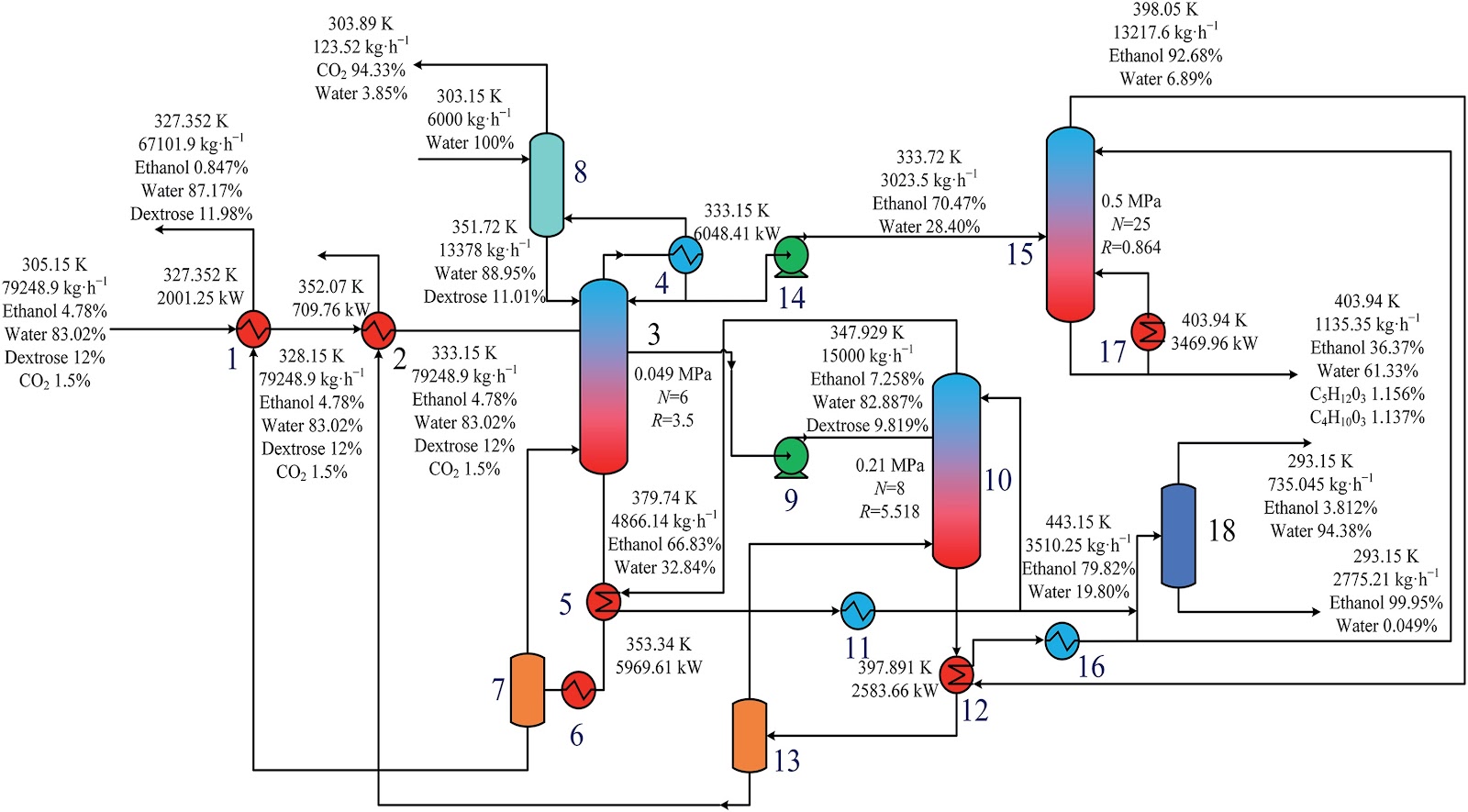
Design and optimization of a high-efficiency distillation process for cellulosic fuel ethanol integrated with thermal coupling and molecular sieve adsorption
To address the challenges of high energy consumption and prominent costs in the traditional three-columns distillation process for cellulosic fuel ethanol, a distillation—molecular sieve coupling separation process is proposed. This process integrates a three-column (crude distillation column, first distillation column, second distillation column) system with a 3A molecular sieve adsorption deep dehydration unit. A thermal coupling network is constructed via differential pressure design (steam from medium/high-pressure columns as mutual heat sources, reboiler liquid waste heat for feed preheating), and molecular sieve adsorption conditions are optimized. The study first performs a thermodynamic consistency test on the ethanol—water system, determines optimal non-random two-liquid (NRTL) model binary interaction parameters via experimental data regression for Aspen Plus simulation. Aiming at minimum total annual cost (TAC), Aspen Plus is used to optimize process parameters (theoretical tray number, feed location, reflux ratio, side-draw position, etc.). Economic analysis shows this process reduces CO2 emission costs by 27.56%, TAC by 15.58% (to 5.123 × 10⁶ USD·a-1), and increases ethanol purity to >99.6%, providing an effective solution for green, efficient separation.
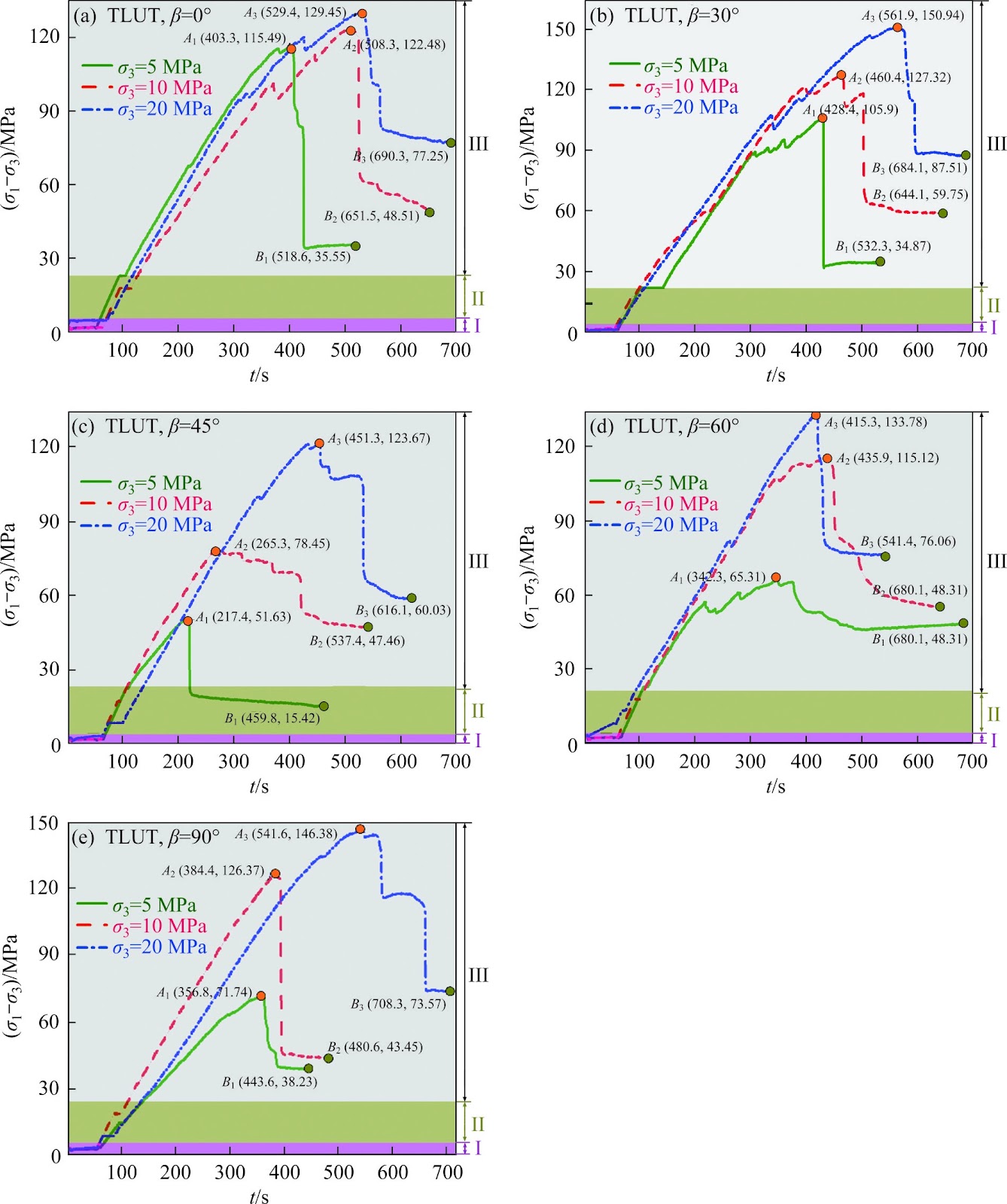
A cohesion loss model for determining residual strength of deep bedded sandstone
Rock residual strength, as an important input parameter, plays an indispensable role in proposing the reasonable and scientific scheme about stope design, underground tunnel excavation and stability evaluation of deep chambers. Therefore, previous residual strength models of rocks established were reviewed. And corresponding related problems were stated. Subsequently, starting from the effects of bedding and whole life-cycle evolution process, series of triaxial mechanical tests of deep bedded s
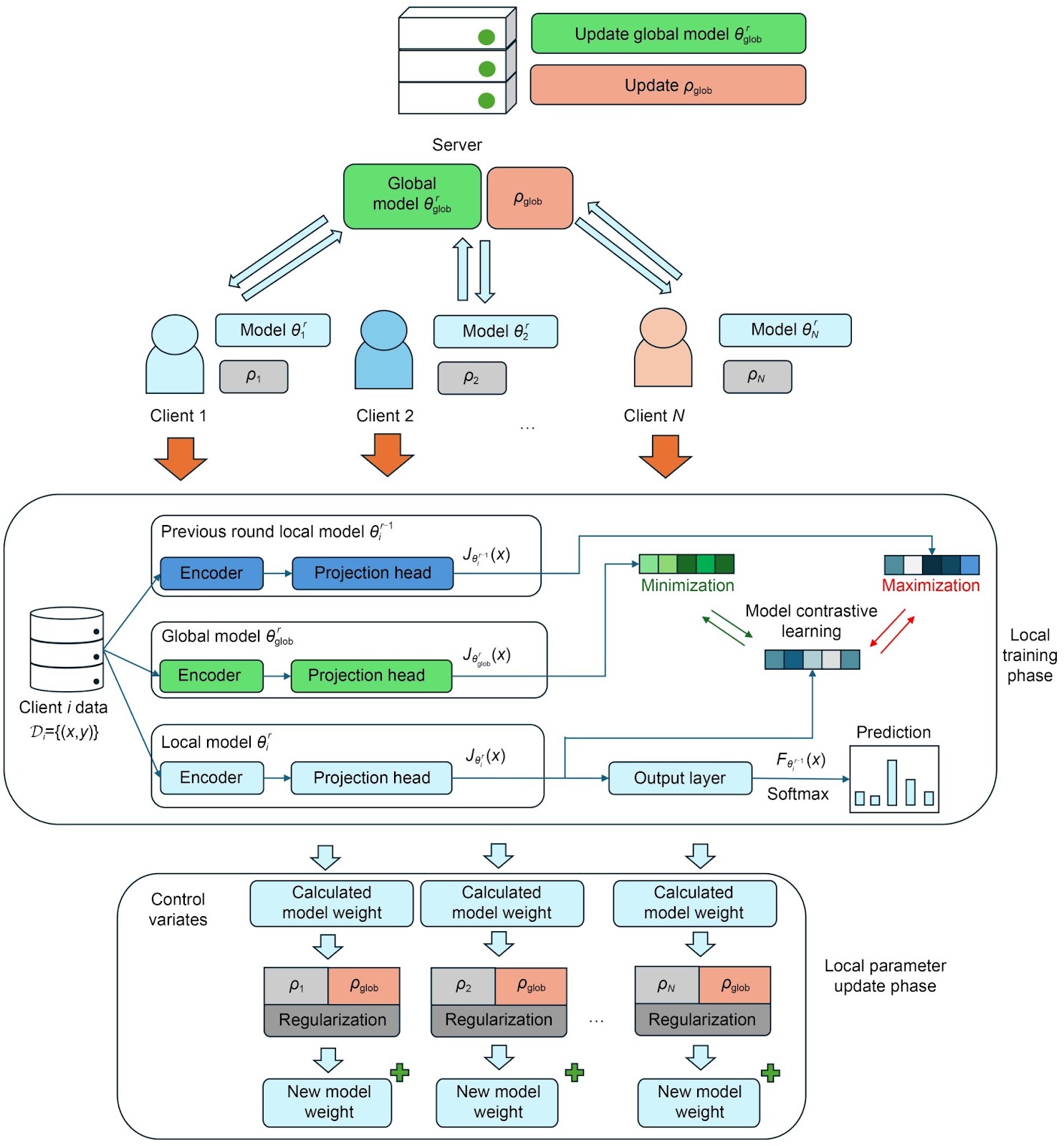
Federated model with contrastive learning and adaptive control variates for human activity recognition
Recent attention to privacy issues demands a communication-safe method for training human activity recognition (HAR) models on client activity data. Federated learning (FL) has become a compelling technique to facilitate model training between the server and clients while preserving data privacy. However, classical FL methods often assume independent and identically distributed (IID) data among clients. This assumption does not hold true in practical scenarios. Human activity in real-world scena