Key Takeaways & Executive Findings
- •• Direct use of sodium metavanadate from shale V-rich solutions bypasses the need for high-purity V2O5, reducing environmental impact and processing time. • Impurity migration analysis reveals that Al forms a separate slag phase with CaO, while Na volatilizes during reduction, preventing contamination of the alloy. • Iron content must be controlled (≤0.05 wt%) to avoid phase transitions (Al–V → Al–Fe → Fe–V) and ensure alloy uniformity. • The process yields a high-quality AlV65 alloy (66.56 wt% V, 33.14 wt% Al) with low impurity levels, offering a streamlined route for industrial Al–V alloy production.
Abstract
The use of Al–V alloys as intermediate additives is pivotal for producing high-performance Ti alloys. Traditionally, the synthesis of these alloys relies on high-purity V2O5, with sodium metavanadate as an essential intermediate in V2O5 production. This study explores an alternative approach utilizing sodium metavanadate directly, offering an aluminothermic process to alleviate the environmental impact and reduce the time required for V2O5 preparation. Al–V alloys are synthesized using sodium metavanadate derived from a shale V-rich solution, and the impurity-migration behaviors are comprehensively analyzed, specifically focusing on Fe, Al, and Na. The results reveal that Al interacts with CaO to form a slag phase that is different from the alloy, whereas Na undergoes a sequence of reductions (NaVO3 → Na2V2O5 → NaVO2 → Na) and volatilizes at 25–1200°C, thereby avoiding incorporation into the alloy. Fe, reduced by Al, enriches the alloy phase and induces a phase transition (Al–V → Al–Fe → Fe–V) in the presence of excess Fe. Sodium metavanadate (Fe ≤ 0.05wt%) derived from the shale V-rich solution enables the production of a uniform AlV65 alloy with 66.56wt% V, 33.14wt% Al, 0.08wt% Fe, 0.07wt% C, 0.02wt% N, and 0.12wt% O. These results establish a streamlined, efficient framework for the future preparation of Al–V alloys from shale V-rich solutions.
1. Introduction
V is an essential rare metal, recognized as a critical strategic resource on a global scale, and is extensively utilized across key industries, including iron and steel, nonferrous metals, chemical processing, nuclear energy, and energy storage. Furthermore, V is frequently incorporated into Ti alloys, particularly Al–V alloys, as it enhances the strength, flexibility, and plasticity of these materials [1–4]. Al–V alloys are predominantly employed in the military and aerospace sectors, with TC4 (Ti–6Al–4V) being the most widely used alloy [5–9]. The production of these alloys depends on the aluminothermic reduction process, which is generally classified into four methods: the aluminothermic, electro-aluminothermic, self-propagating, and microwave methods [10–12]. Among these, the aluminothermic method is the most well-established because of its simplicity and high vanadium yield, thereby serving as the primary method for industrial production [13].
Al–V alloys are currently synthesized utilizing 99.9wt% V2O5. Souza et al. [14] explored the process parameters for alloy production using 99.9wt% V2O5 and aluminum powder. Yee et al. [15] utilized aluminum powder with a purity exceeding 99.8wt% alongside V2O5 as raw materials for the preparation of Al–V alloys. Wang et al. [16] specified the use of V2O5 with a purity greater than 99.8wt%, Al exceeding 99.8wt%, and CaO greater than 98.5wt% for the synthesis of Al–V alloys. The production of high-purity V2O5 typically requires the removal of aluminum and iron impurities from the vanadium solution. This is a time-consuming process that requires additional steps to yield 99wt% pure V2O5. This phenomenon can be attributed to the incorporation of excess Al and Fe into the V precipitate, which adversely affects the purity of the resultant V2O5 [17–18]. Önal and Topkaya [19] carried out a re-precipitation process to convert Fe and Al into hematite and alumina respectively at a temperature ranging from 230 to 270°C. Luo et al. [20] employed phosphate ions to convert additional iron and aluminum impurities into complex precipitates, achieving reductions of 82.1wt% and 47.3wt% in the iron and aluminum levels, respectively. Shi et al. [21] used a two-stage method to selectively separate V and Al via crystallization and solvent extraction. The obtained V2O5 exhibited a purity of 98.39wt%. The aforementioned research revealed that eliminating aluminum and iron impurities is a crucial step in the production of high-purity V2O5 products.
Loading authentic research manuscript (Pages 1–5)...
Zihanyu Zhang, Yimin Zhang, Hong Liu, Nannan Xue, Pengcheng Hu, Wenbin Bo (2025). Efficient preparation of AlV65 alloy through aluminothermic reduction of sodium metavanadate precipitated from shale V-rich solution. Journal of Mineral Metallurgy and Materials Science. https://doi.org/10.1007/s12613-025-3141-7
Research & Educational Purpose Only:The translations, structured abstracts, analytical annotations, and data reports provided by SinoTechIntel are intended exclusively for academic research, internal corporate R&D, and educational benchmarking. They do not constitute formal engineering, chemical safety, legal, or professional advice.
Copyright & Intellectual Property Notice: Original copyright of the underlying source articles and experimental data remains with the respective authors, institutions, and original publishing journals. SinoTechIntel claims intellectual property only over its proprietary translations, analytical syntheses, and AEO structured enhancements in accordance with international fair use and academic citation principles.
Frequently Asked Questions
Why is sodium metavanadate used directly instead of high-purity V2O5?
Sodium metavanadate can be used directly in the aluminothermic reduction process, eliminating the need for multiple purification steps required to produce high-purity V2O5. This reduces processing time and environmental impact, making the production of Al-V alloys more efficient and sustainable.
How does the process control impurities like Fe and Na?
The process controls impurities through careful management of the reduction environment. Al interacts with CaO to form a separate slag phase, while Na volatilizes at 25–1200°C after a sequence of reductions, preventing incorporation into the alloy. Iron content must be kept below 0.05 wt% to avoid unwanted phase transitions.
What are the key advantages of this method for AlV65 production?
The key advantages include reduced environmental impact by avoiding NH3-N wastewater generation, lower cost by skipping high-purity V2O5 synthesis, and a shorter processing route. The method yields a uniform AlV65 alloy with high vanadium content and low impurities.
What is the significance of the AlV65 alloy composition?
AlV65 is a critical master alloy used in producing high-performance titanium alloys like Ti-6Al-4V. The obtained composition (66.56 wt% V, 33.14 wt% Al) meets industrial requirements, ensuring consistent quality and performance in aerospace and military applications.
What are the main challenges in the aluminothermic reduction of sodium metavanadate?
The main challenges include controlling the exothermic reaction, managing impurity migration (especially Fe and Na), and ensuring phase separation. The study shows that sodium volatilizes effectively and iron must be limited to prevent phase transitions that compromise alloy uniformity.
Related Technical Papers & Translations
Design and optimization of a high-efficiency distillation process for cellulosic fuel ethanol integrated with thermal coupling and molecular sieve adsorption
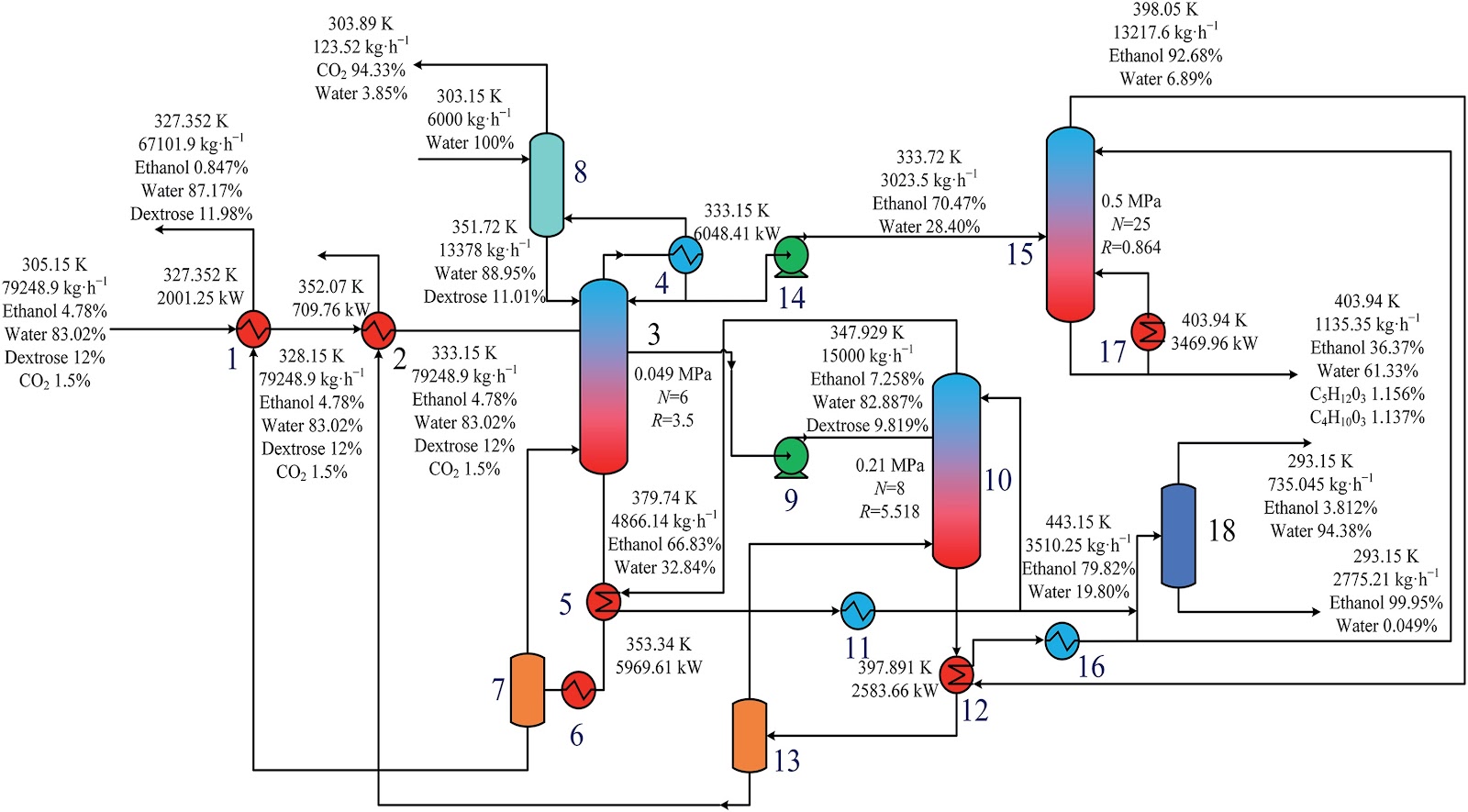
To address the challenges of high energy consumption and prominent costs in the traditional three-columns distillation process for cellulosic fuel ethanol, a distillation—molecular sieve coupling separation process is proposed. This process integrates a three-column (crude distillation column, first distillation column, second distillation column) system with a 3A molecular sieve adsorption deep dehydration unit. A thermal coupling network is constructed via differential pressure design (steam from medium/high-pressure columns as mutual heat sources, reboiler liquid waste heat for feed preheating), and molecular sieve adsorption conditions are optimized. The study first performs a thermodynamic consistency test on the ethanol—water system, determines optimal non-random two-liquid (NRTL) model binary interaction parameters via experimental data regression for Aspen Plus simulation. Aiming at minimum total annual cost (TAC), Aspen Plus is used to optimize process parameters (theoretical tray number, feed location, reflux ratio, side-draw position, etc.). Economic analysis shows this process reduces CO2 emission costs by 27.56%, TAC by 15.58% (to 5.123 × 10⁶ USD·a-1), and increases ethanol purity to >99.6%, providing an effective solution for green, efficient separation.
A cohesion loss model for determining residual strength of deep bedded sandstone
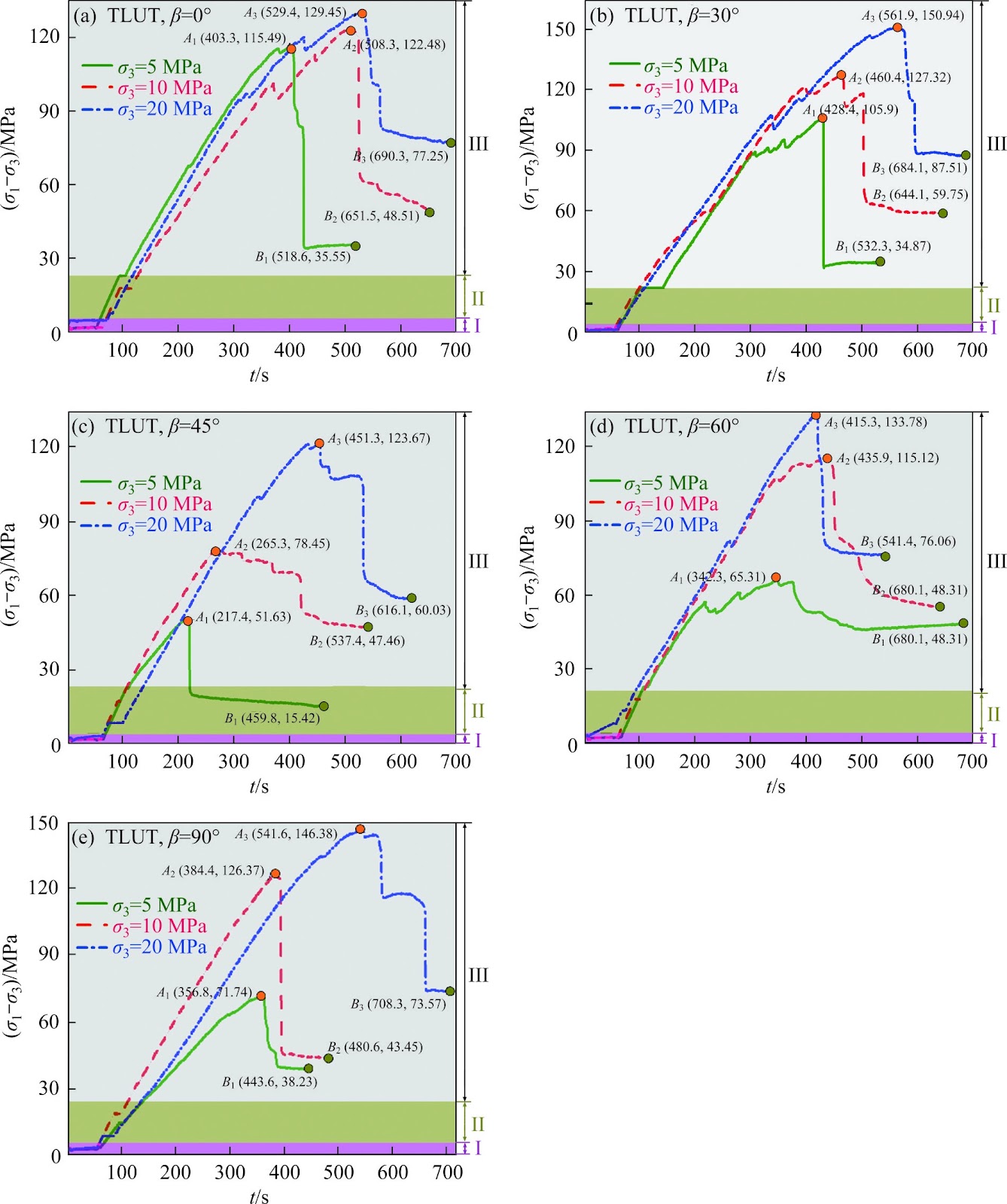
Rock residual strength, as an important input parameter, plays an indispensable role in proposing the reasonable and scientific scheme about stope design, underground tunnel excavation and stability evaluation of deep chambers. Therefore, previous residual strength models of rocks established were reviewed. And corresponding related problems were stated. Subsequently, starting from the effects of bedding and whole life-cycle evolution process, series of triaxial mechanical tests of deep bedded s
Federated model with contrastive learning and adaptive control variates for human activity recognition
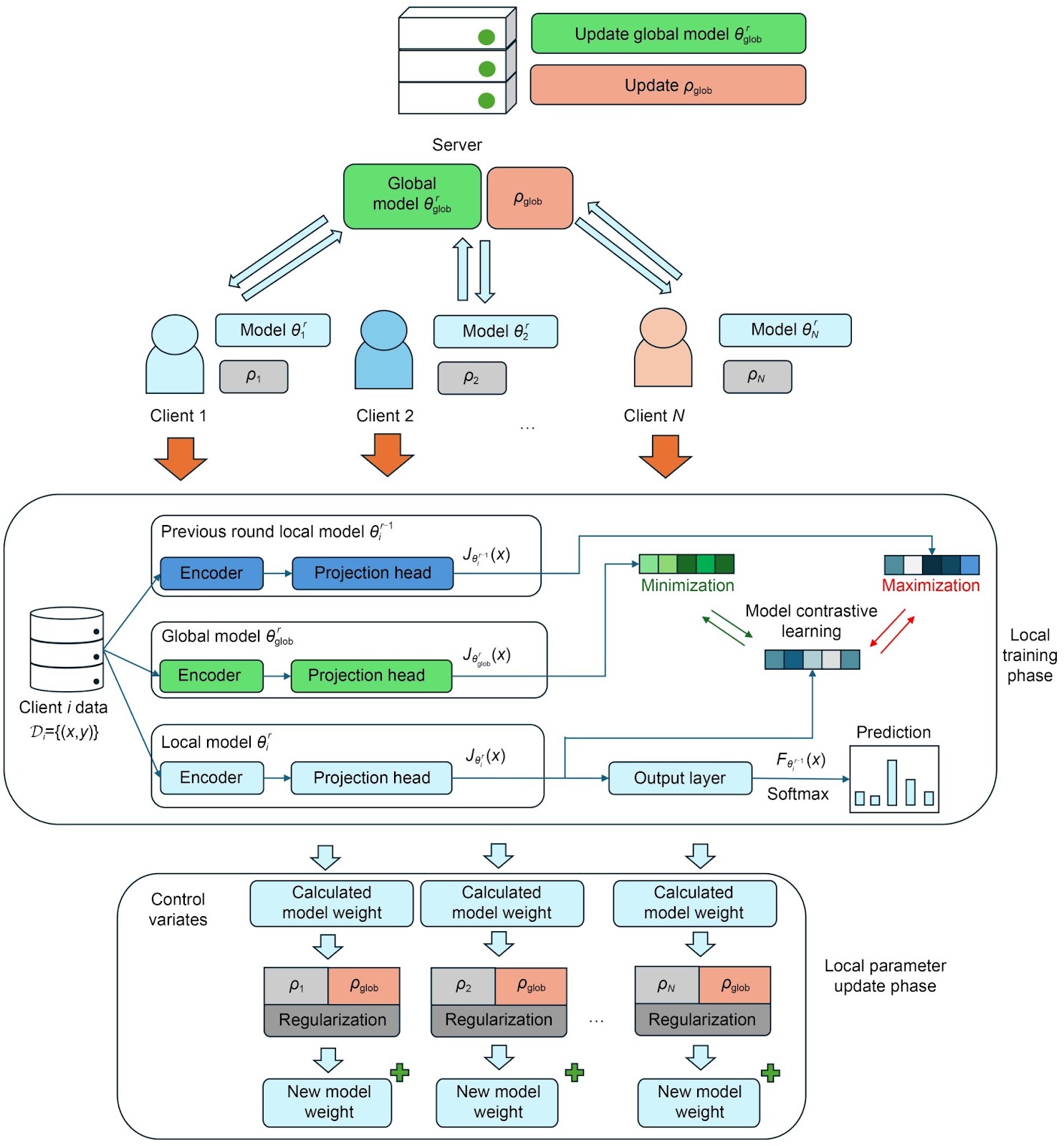
Recent attention to privacy issues demands a communication-safe method for training human activity recognition (HAR) models on client activity data. Federated learning (FL) has become a compelling technique to facilitate model training between the server and clients while preserving data privacy. However, classical FL methods often assume independent and identically distributed (IID) data among clients. This assumption does not hold true in practical scenarios. Human activity in real-world scena