Key Takeaways & Executive Findings
- •• Trace SO2 in flue gas significantly restrains CO2 absorption in piperazine-based amine absorbents, while promoting carbamate formation. • Aminoethyl-substituted piperazine absorbents exhibit enhanced SO2-resistance by favoring carbamate formation, whereas hydroxyethyl-substituted ones reduce resistance by promoting bicarbonate formation. • The study provides structure-activity relationships linking amine functional groups to SO2 resistance, guiding the design of more robust absorbents for industrial CO2 capture. • Findings highlight the need to consider trace SO2 in practical flue gas when evaluating amine absorbent performance, with implications for CCUS process efficiency.
Abstract
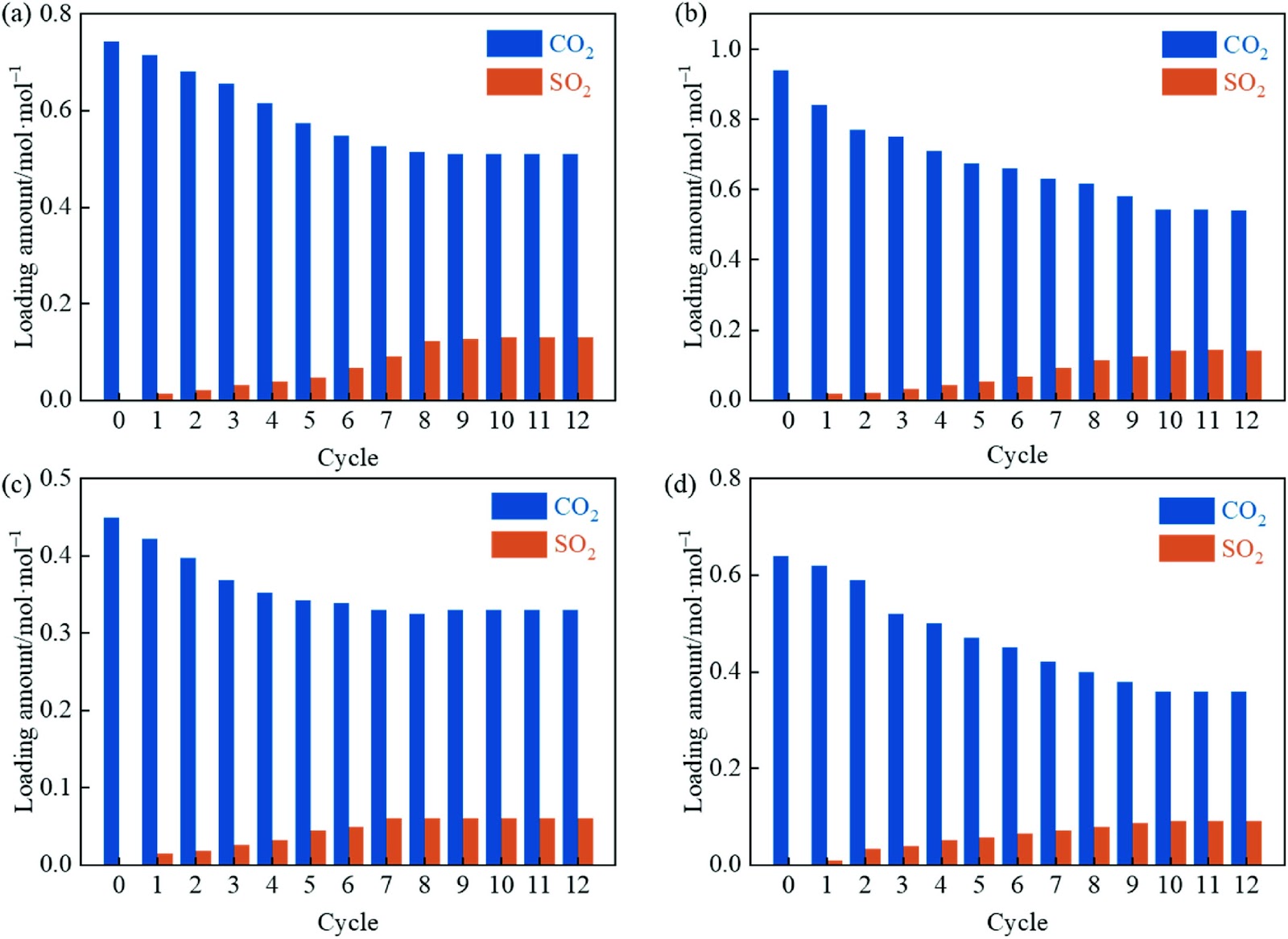
The effect of the presence of trace SO2 in industrial flue gas on the amine-scrubbing-based absorption process for CO2 capture has been a matter of concern. This study aimed to investigate the effect of trace SO2 on the CO2 capture process using piperazine-based amine absorbents, focusing on SO2-resistance capability, SO2/CO2 absorption selectivity, and cyclic stability. The presence of trace SO2 not only restrains CO2 absorption, but also promotes the formation of carbamate within the piperazine-based amine absorbents. Remarkably, the incorporation of aminoethyl group in piperazine-based amine absorbents can enhance the SO2-resistance capability by promoting the formation of carbamate, while piperazine-based amine absorbents with hydroxyethyl group can promote the formation of bicarbonate to reduce the SO2-resistance capability. The work offers valuable insights into the efficient application of novel amine absorbents for CO2 capture from practical industrial flue gas.
1. Introduction
Since the Industrial Revolution, the endless release of CO2 has contributed significantly to environmental degradation [1e3]. Particularly, industrial flue gas resulting from the combustion of fossil fuels stands out as the primary source of CO2 emissions [4,5]. Developing efficient carbon capture, utilization, and storage (CCUS) technologies to effectively reduce the flue gas CO2 emissions is a challenging task [6e8]. Of the various CCUS technologies, the amine scrubbing-based absorption technology stands out prominently due to its rapid absorption kinetics, high absorption capacity, and ease of operation [9e14]. In reality, the composition of flue gas is extremely complicated, especially in the case of coal-fired power plants, where it contains various components such as dust, NOx, SO2, H2O, and CO2 [15e17]. These components can significantly affect the capability of the amine absorbents during CO2 capture process. Despite the initial desulfurization and dust removal, there is still a trace amount of SO2 in the flue gas entering the CO2 capture stage [18e21]. Due to its higher acidity, the remaining trace SO2 can form stronger bonds with the amine absorbents [22,23]. For typical amine absorbents, the process of CO2 absorption usually takes place at pH value greater than 8, while the SO2 absorption can occur at pH value greater than 3 [24]. As a result, the effect of the presence of trace SO2 in the flue gas needs to be further investigated when utilizing amine absorbents for CO2 capture.
The effect of trace SO2 in the flue gas on the process of CO2 capture by solid-based absorption separation has been studied by various researches [18,25,26]. For instance, Fan et al. [27] conducted multi-cycle experiments to simulate the flue gas conditions (0.05% SO2/10% CO2/N2), it can be observed a rapid decrease in the absorption capacity of the amine-modified absorption for CO2 in the presence of trace SO2. Subsequently, the adsorption capacity stabilized at its lowest level as the system reached equilibrium for CO2 absorption. Unlike the absorption process, CO2 capture by amine absorbents relies primarily on chemical reactions that generate more stable carbamates and bicarbonates. Li et al. [28] conducted an experiment to determine the mass transfer coefficient of CO2 in ammonium hydroxide with various amounts of SO2. The results indicated a decreasing trend in the mass transfer coefficient of CO2 in ammonium hydroxide as the concentration of SO2 in the gas phase increased. Gao et al. [29] revealed that the introduction of SO2 can result in a reduction in the pH value and an increase in the viscosity of the monoethanolamine (MEA) solution. Moreover, it also leads to a reduction in both the overall reaction rate and mass transfer coefficient for CO2. These investigations provide some explanations for the reduced CO2 capture efficiency of amines caused by SO2. However, there is currently remains scarce with regard to the effect of the presence of SO2 on CO2 capture by amines, as well as the structure-activity relationships between the SO2-resistance capability of different amines [30].
Loading authentic research manuscript (Pages 1–5)...
Songtao Zheng, Yao Jiang, Shaojun Jia, Yan Wu, Peng Cui (2024). Effect of the presence of trace sulfur dioxide on piperazine-based amine absorbents for carbon dioxide capture. Chinese Journal of Chemical Engineering. https://doi.org/10.1016/j_cjche_144878613
Research & Educational Purpose Only:The translations, structured abstracts, analytical annotations, and data reports provided by SinoTechIntel are intended exclusively for academic research, internal corporate R&D, and educational benchmarking. They do not constitute formal engineering, chemical safety, legal, or professional advice.
Copyright & Intellectual Property Notice: Original copyright of the underlying source articles and experimental data remains with the respective authors, institutions, and original publishing journals. SinoTechIntel claims intellectual property only over its proprietary translations, analytical syntheses, and AEO structured enhancements in accordance with international fair use and academic citation principles.
Frequently Asked Questions
What is the effect of trace SO2 on piperazine-based amine absorbents for CO2 capture?
Trace SO2 in flue gas restrains CO2 absorption and promotes carbamate formation in piperazine-based amine absorbents, affecting their overall CO2 capture efficiency.
How does the presence of aminoethyl or hydroxyethyl groups influence SO2 resistance in piperazine-based absorbents?
Aminoethyl groups enhance SO2 resistance by promoting carbamate formation, while hydroxyethyl groups reduce resistance by promoting bicarbonate formation.
Why is it important to study the effect of trace SO2 on amine absorbents?
Industrial flue gas contains trace SO2 even after desulfurization, which can significantly impact the performance of amine absorbents used for CO2 capture, affecting the efficiency of CCUS technologies.
What are the key findings of this study for practical CO2 capture applications?
The study provides insights into the structure-activity relationships of piperazine-based absorbents, guiding the selection and design of more SO2-resistant amines for efficient CO2 capture from real flue gas.
What is the significance of the study in the context of carbon capture and storage?
The findings help optimize amine absorbent formulations to mitigate the negative impact of trace SO2, thereby improving the economic and operational viability of amine scrubbing for CO2 capture in industrial settings.
Related Technical Papers & Translations
Design and optimization of a high-efficiency distillation process for cellulosic fuel ethanol integrated with thermal coupling and molecular sieve adsorption
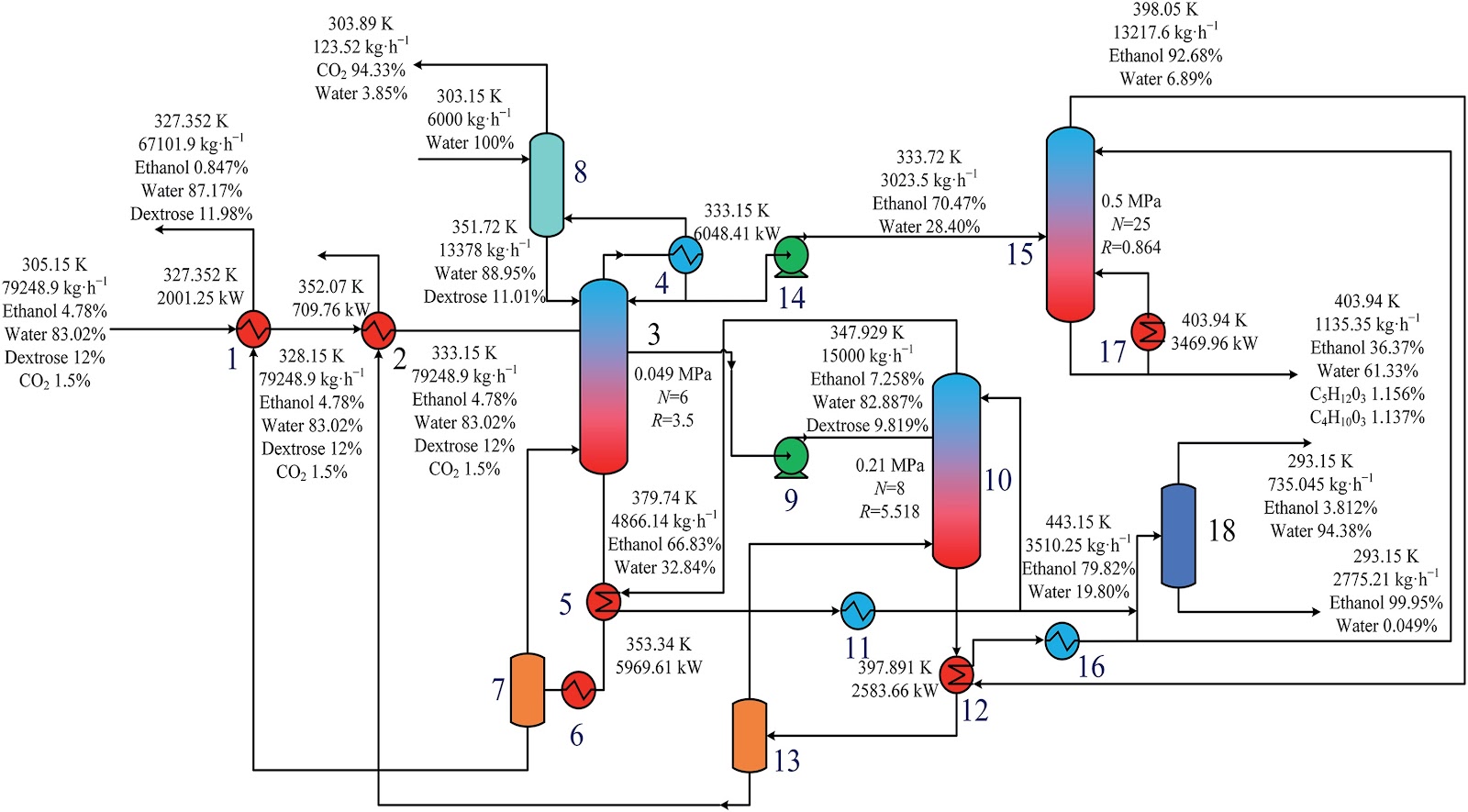
To address the challenges of high energy consumption and prominent costs in the traditional three-columns distillation process for cellulosic fuel ethanol, a distillation—molecular sieve coupling separation process is proposed. This process integrates a three-column (crude distillation column, first distillation column, second distillation column) system with a 3A molecular sieve adsorption deep dehydration unit. A thermal coupling network is constructed via differential pressure design (steam from medium/high-pressure columns as mutual heat sources, reboiler liquid waste heat for feed preheating), and molecular sieve adsorption conditions are optimized. The study first performs a thermodynamic consistency test on the ethanol—water system, determines optimal non-random two-liquid (NRTL) model binary interaction parameters via experimental data regression for Aspen Plus simulation. Aiming at minimum total annual cost (TAC), Aspen Plus is used to optimize process parameters (theoretical tray number, feed location, reflux ratio, side-draw position, etc.). Economic analysis shows this process reduces CO2 emission costs by 27.56%, TAC by 15.58% (to 5.123 × 10⁶ USD·a-1), and increases ethanol purity to >99.6%, providing an effective solution for green, efficient separation.
A cohesion loss model for determining residual strength of deep bedded sandstone
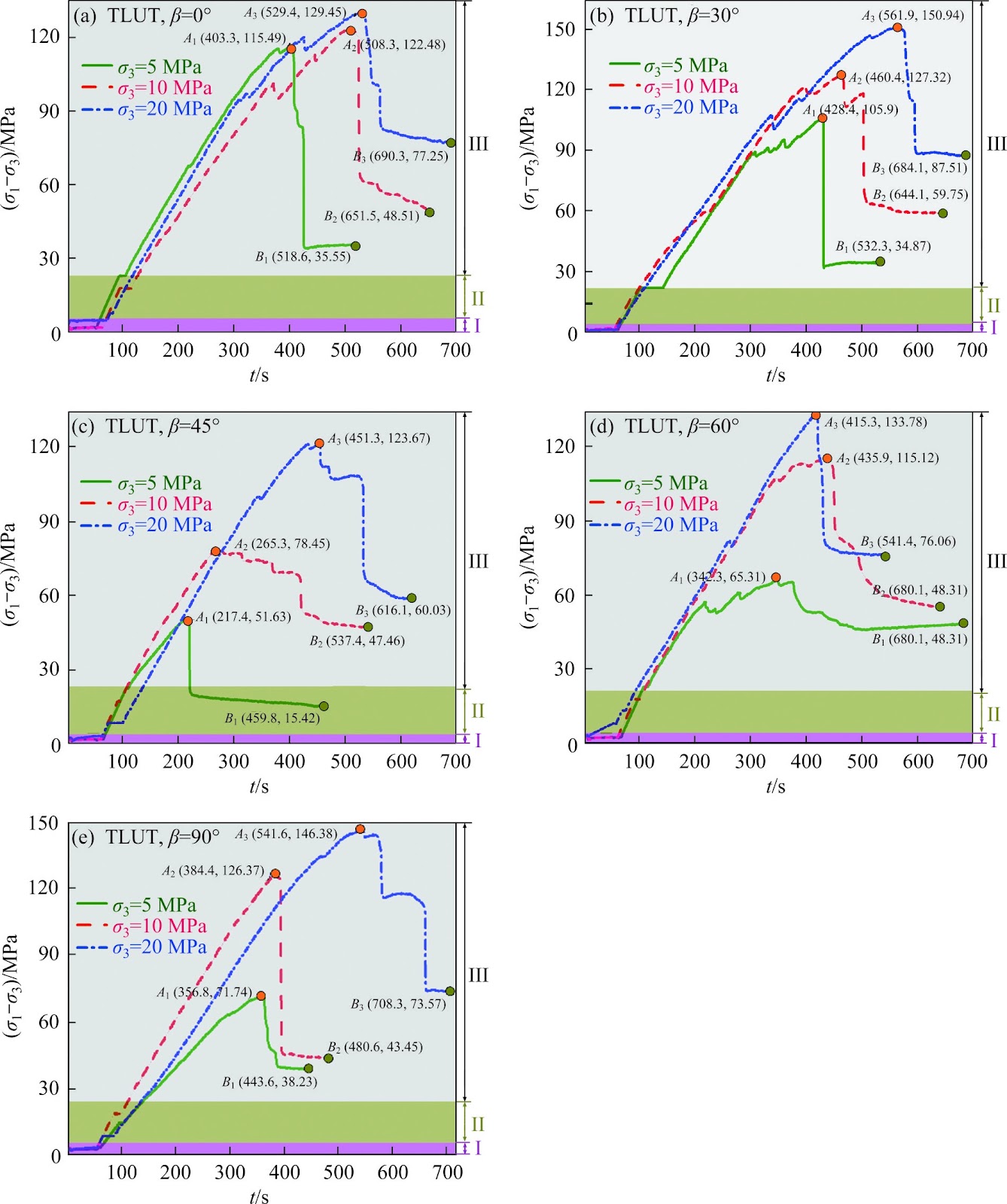
Rock residual strength, as an important input parameter, plays an indispensable role in proposing the reasonable and scientific scheme about stope design, underground tunnel excavation and stability evaluation of deep chambers. Therefore, previous residual strength models of rocks established were reviewed. And corresponding related problems were stated. Subsequently, starting from the effects of bedding and whole life-cycle evolution process, series of triaxial mechanical tests of deep bedded s
Federated model with contrastive learning and adaptive control variates for human activity recognition
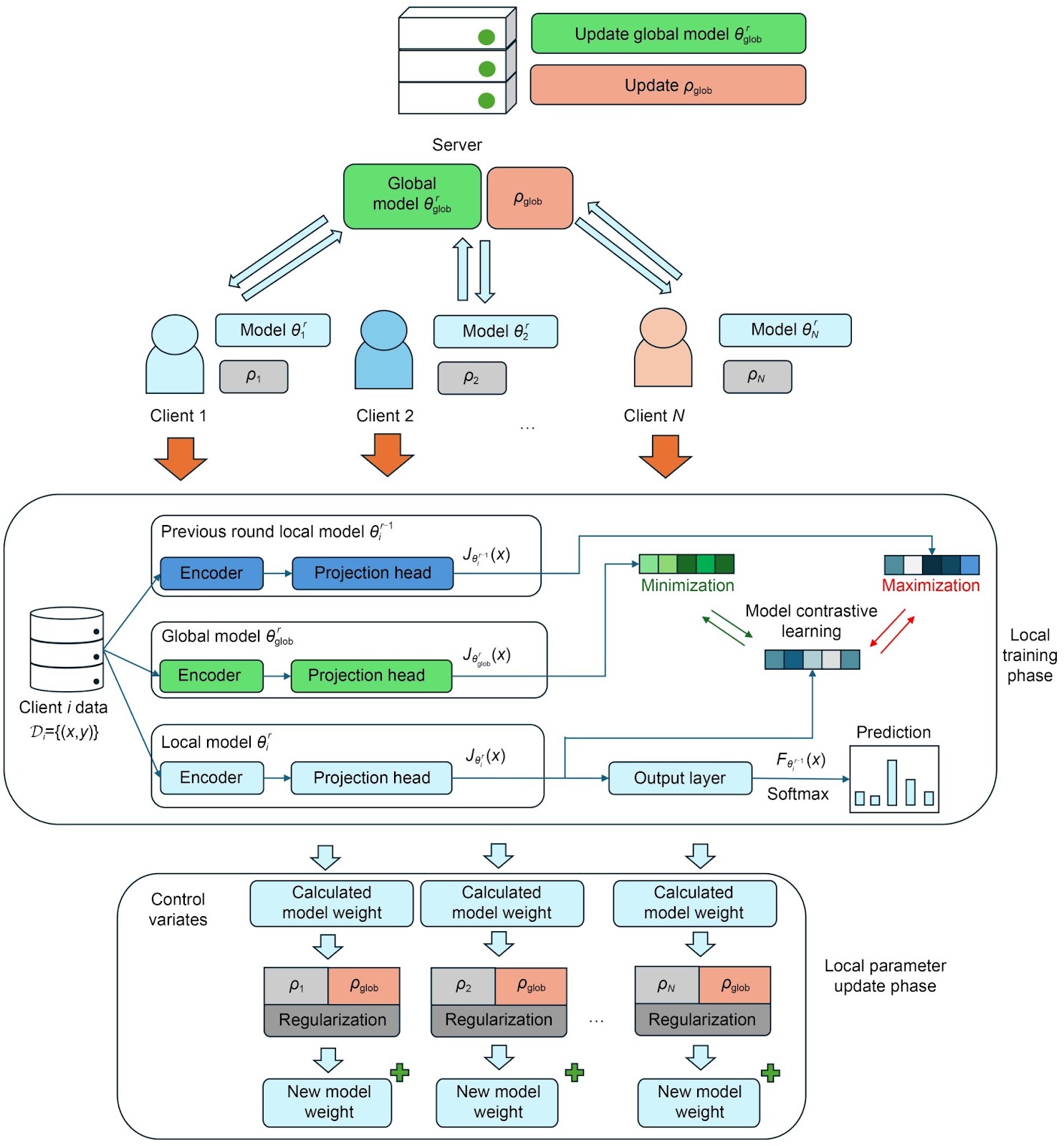
Recent attention to privacy issues demands a communication-safe method for training human activity recognition (HAR) models on client activity data. Federated learning (FL) has become a compelling technique to facilitate model training between the server and clients while preserving data privacy. However, classical FL methods often assume independent and identically distributed (IID) data among clients. This assumption does not hold true in practical scenarios. Human activity in real-world scena