Key Takeaways & Executive Findings
- •• Application of TSMF during electroslag remelting refines and disperses eutectic carbides in M2 high-speed steel, with effect becoming more pronounced as magnetic flux density increases. • TSMF homogenizes the temperature field and reduces local solidification time, inhibiting heterogeneous nucleation and growth of eutectic carbides. • EBSD analysis shows that increasing TSMF leads to more diverse and discontinuous carbide orientation, contributing to refined microstructure. • Maximum wear depth decreased by 26.2% and total wear volume by 20%, while hardness increased from HRC 49.9 to 55.4.
Abstract
65, 130, and 160 mT transverse static magnetic field (TSMF) were introduced into the electroslag remelting (ESR) process to investigate the evolution of eutectic carbide morphology and mechanical property of M2 high speed steel. The application of TSMF induces the homogenization of the temperature field and reduces local solidification time, thereby inhibiting the non-heterogeneous nucleation and the growth of eutectic carbides. According to the result of electron back scatter diffraction (EBSD), as TSMF is applied and magnetic flux density (MFD) increases, the orientation of carbides becomes increasingly diverse and discontinuous. The results indicate that the application of TSMF leads to the refinement and dispersion of carbides, with the effect becoming more pronounced as the MFD increases. It enhances the wear resistance and hardness of ingots. The wear resistance significantly improved, with the maximum wear depth decreasing by 26.2% (9.54 to 7.04 μm) and the total wear volume dropping by 20% (2.75 × 10^7 to 2.20 × 10^7 μm³). Concurrently, the material's hardness increased from HRC 49.9 to 55.4. The overall results reveal that the presence of TSMF is beneficial for eutectic carbide morphology, thus achieving considerable improvement in mechanical properties of M2 high-speed steel ingots.
1. Introduction
AISI M2 high-speed steel (HSS) is widely used in high-speed cutting tools due to its excellent toughness, wear resistance, and red hardness. These properties result from the incorporation of finely distributed carbides in the matrix. However, high carbon and alloying element content (over 15 wt%) often causes significant segregation and the formation of coarse, brittle eutectic carbides [1–2]. Boccalini and Goldenstein [3] observed that such carbides severely degrade the mechanical and service performance of M2 HSS. Therefore, controlling the morphology and size of eutectic carbides is essential for improving the overall properties of M2 HSS.
Numerous technological solutions have been proposed to address the issues of carbide coarsening and uneven distribution in HSS, including adjusting cooling rates [4], adding alloying elements [5], vacuum casting [2], additive manufacturing [6–7], cryogenic treatment [8–9], hot deformation [10], and heat treatment processes [11–12]. However, for large ingots, achieving rapid cooling is challenging. The addition of alloying elements may simultaneously reduce other properties; for example, while silicon can refine eutectic carbides, it also diminishes the red hardness of the steel [13]. Even though additively manufactured steels show high strength, their ductility is inferior to that of cast or forged steels, particularly in high-carbon steels [6,14]. Moreover, the high cost of additive manufacturing constrains large-scale industrial application. In addition, once large-scale network eutectic carbides form during solidification, they are difficult to eliminate or refine by hot deformation and heat treatment, severely impacting subsequent processing steps [15]. Therefore, it is preferable to control carbides during the carbide formation stage.
Enhancing the cooling rate during solidification is one of the most effective methods to reduce elemental segregation and modify carbides [16]. Due to the efficient heat dissipation of water-cooled molds, electroslag remelting (ESR) is considered effective in regulating segregation and microstructure in high-alloy steels such as M2 HSS. However, as the diameter of ESR ingots increases, the cooling capacity of water-cooled molds diminishes, leading to reduced cooling rates, increased melt pool depth, and prolonged solidification time [17], which may give rise to metallurgical quality concerns. To address these defects, researchers have studied the ESR process from multiple perspectives, including optimizing remelting parameters such as current optimization [18–19], slag composition adjustment [20], and vacuum melting [21]; improving equipment structures such as single-power-two-circuits ESR [22] and rotating electrodes [23–24]; investigating droplet behavior [25]; and optimizing alloy compositions through microalloying [26]. These studies have demonstrated that a relatively shallow and flat melt pool during ESR facilitates the refinement of microstructures and eutectic carbides. Recently, magnetically controlled electroslag remelting (MC-ESR) has been introduced [27], coupling an external magnetic field with remelting currents to further control solidification.
Loading authentic research manuscript (Pages 1–5)...
Mingliang Zhang, Zhonghao Sun, Zhibin Xia, Wenhao Lin, Bangfei Zhou, Zhe Shen, Biao Ding, Tianxiang Zheng, Qiang Li, Yunbo Zhong (2025). Effect of magnetic field on eutectic carbide morphology and mechanical properties in electroslag remelted M2 high-speed steel. Journal of Mineral Metallurgy and Materials Science. https://doi.org/10.1007/s12613-025-3200-0
Research & Educational Purpose Only:The translations, structured abstracts, analytical annotations, and data reports provided by SinoTechIntel are intended exclusively for academic research, internal corporate R&D, and educational benchmarking. They do not constitute formal engineering, chemical safety, legal, or professional advice.
Copyright & Intellectual Property Notice: Original copyright of the underlying source articles and experimental data remains with the respective authors, institutions, and original publishing journals. SinoTechIntel claims intellectual property only over its proprietary translations, analytical syntheses, and AEO structured enhancements in accordance with international fair use and academic citation principles.
Frequently Asked Questions
What is the effect of a transverse static magnetic field on M2 high-speed steel during electroslag remelting?
Applying a 65–160 mT transverse static magnetic field during electroslag remelting homogenizes the temperature field, reduces local solidification time, and refines and disperses eutectic carbides, improving wear resistance and hardness.
How does TSMF influence eutectic carbide morphology?
TSMF inhibits heterogeneous nucleation and growth of eutectic carbides. EBSD analysis shows that as magnetic flux density increases, carbide orientation becomes more diverse and discontinuous, resulting in finer, more dispersed carbides.
What mechanical property improvements were observed in this study?
The maximum wear depth decreased by 26.2% (from 9.54 to 7.04 μm), total wear volume dropped by 20% (from 2.75×10^7 to 2.20×10^7 μm³), and hardness increased from HRC 49.9 to 55.4.
Why is controlling eutectic carbides important for M2 high-speed steel?
M2 HSS has high carbon and alloying content, which can cause severe segregation and coarse, brittle eutectic carbides. These carbides degrade mechanical and service performance, so refining their morphology and size is essential.
What is magnetically controlled electroslag remelting (MC-ESR)?
MC-ESR is a technique that couples an external magnetic field with the remelting currents during electroslag remelting. It aims to control solidification and improve the microstructure and mechanical properties of ingots.
Related Technical Papers & Translations
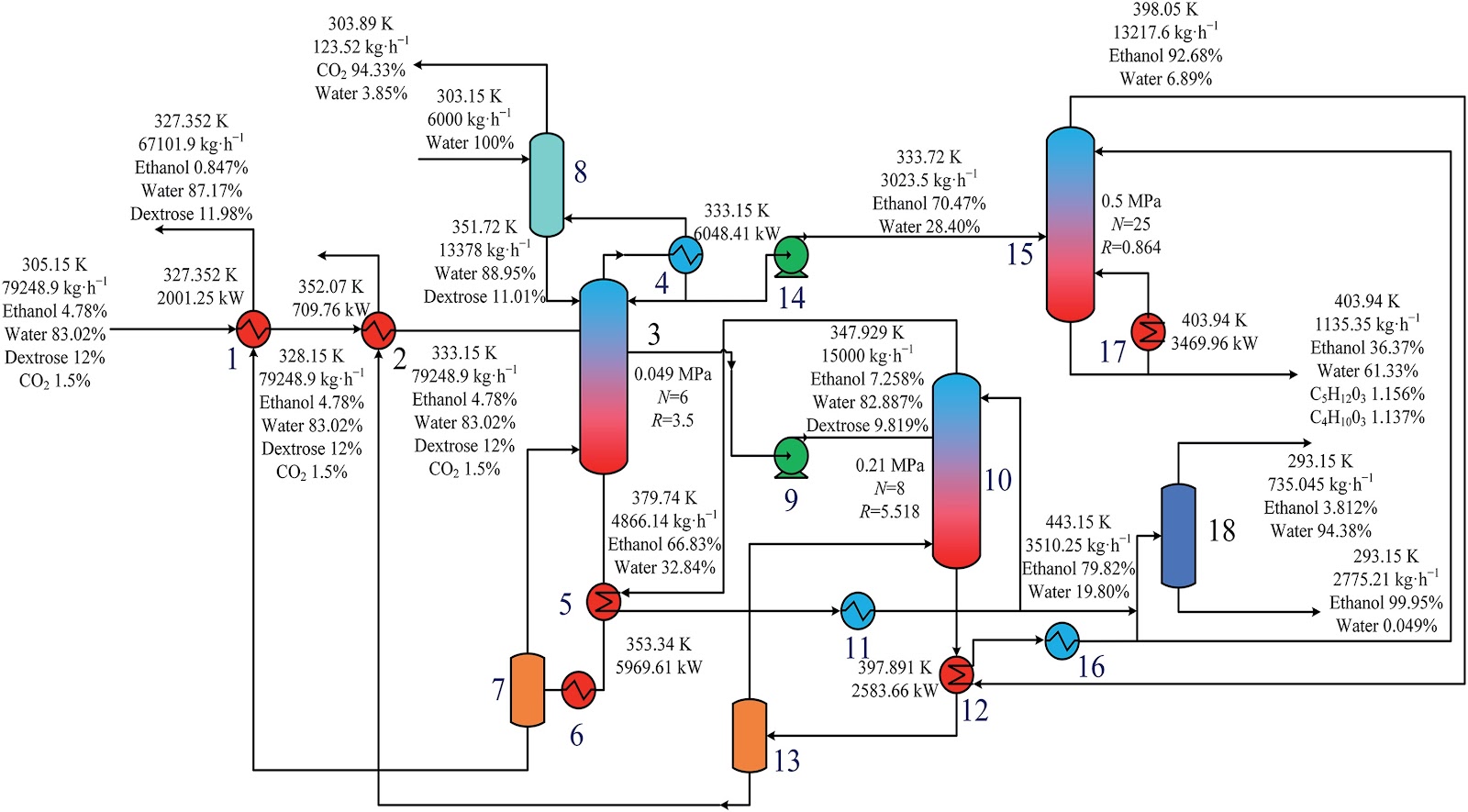
Design and optimization of a high-efficiency distillation process for cellulosic fuel ethanol integrated with thermal coupling and molecular sieve adsorption
To address the challenges of high energy consumption and prominent costs in the traditional three-columns distillation process for cellulosic fuel ethanol, a distillation—molecular sieve coupling separation process is proposed. This process integrates a three-column (crude distillation column, first distillation column, second distillation column) system with a 3A molecular sieve adsorption deep dehydration unit. A thermal coupling network is constructed via differential pressure design (steam from medium/high-pressure columns as mutual heat sources, reboiler liquid waste heat for feed preheating), and molecular sieve adsorption conditions are optimized. The study first performs a thermodynamic consistency test on the ethanol—water system, determines optimal non-random two-liquid (NRTL) model binary interaction parameters via experimental data regression for Aspen Plus simulation. Aiming at minimum total annual cost (TAC), Aspen Plus is used to optimize process parameters (theoretical tray number, feed location, reflux ratio, side-draw position, etc.). Economic analysis shows this process reduces CO2 emission costs by 27.56%, TAC by 15.58% (to 5.123 × 10⁶ USD·a-1), and increases ethanol purity to >99.6%, providing an effective solution for green, efficient separation.
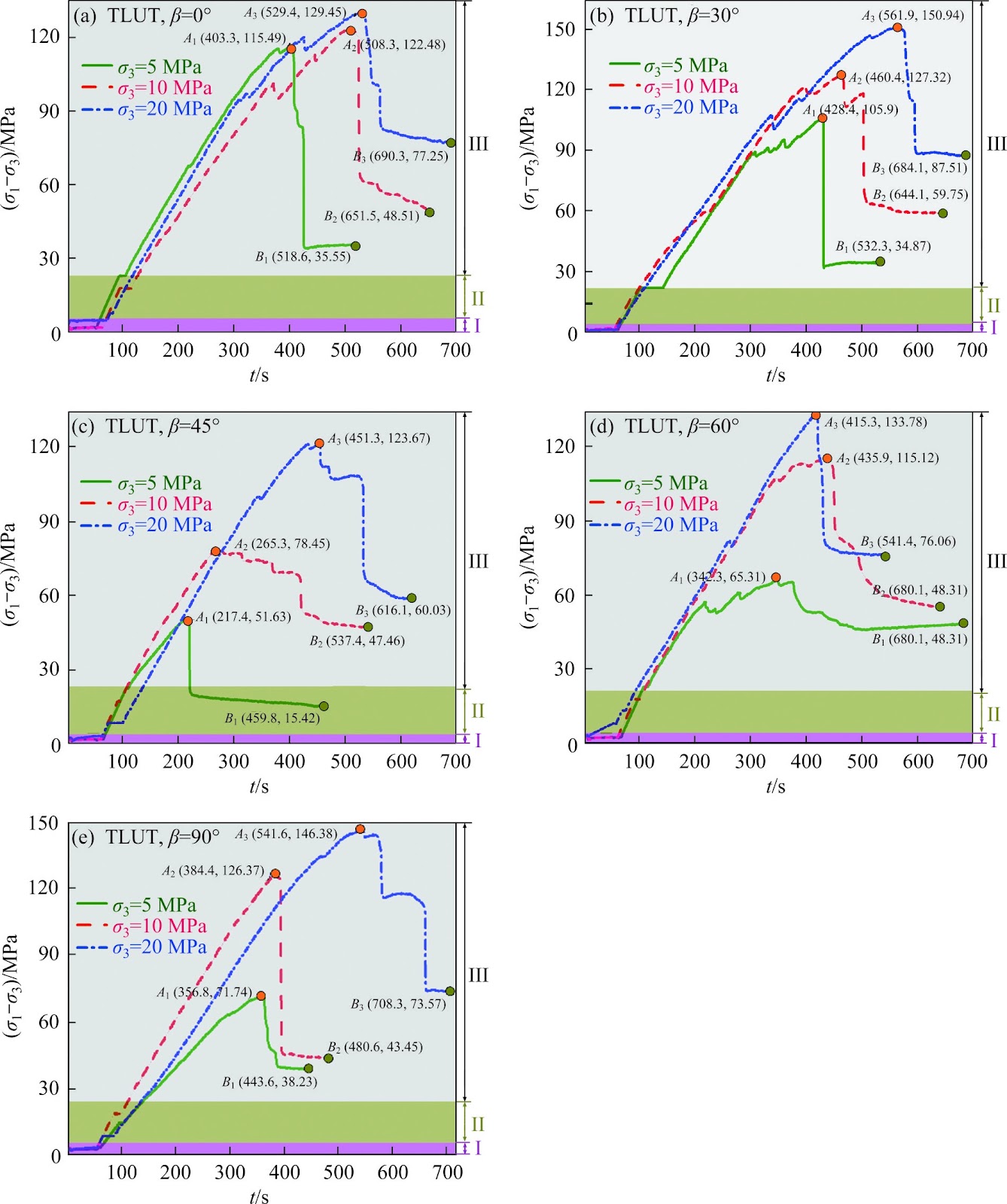
A cohesion loss model for determining residual strength of deep bedded sandstone
Rock residual strength, as an important input parameter, plays an indispensable role in proposing the reasonable and scientific scheme about stope design, underground tunnel excavation and stability evaluation of deep chambers. Therefore, previous residual strength models of rocks established were reviewed. And corresponding related problems were stated. Subsequently, starting from the effects of bedding and whole life-cycle evolution process, series of triaxial mechanical tests of deep bedded s
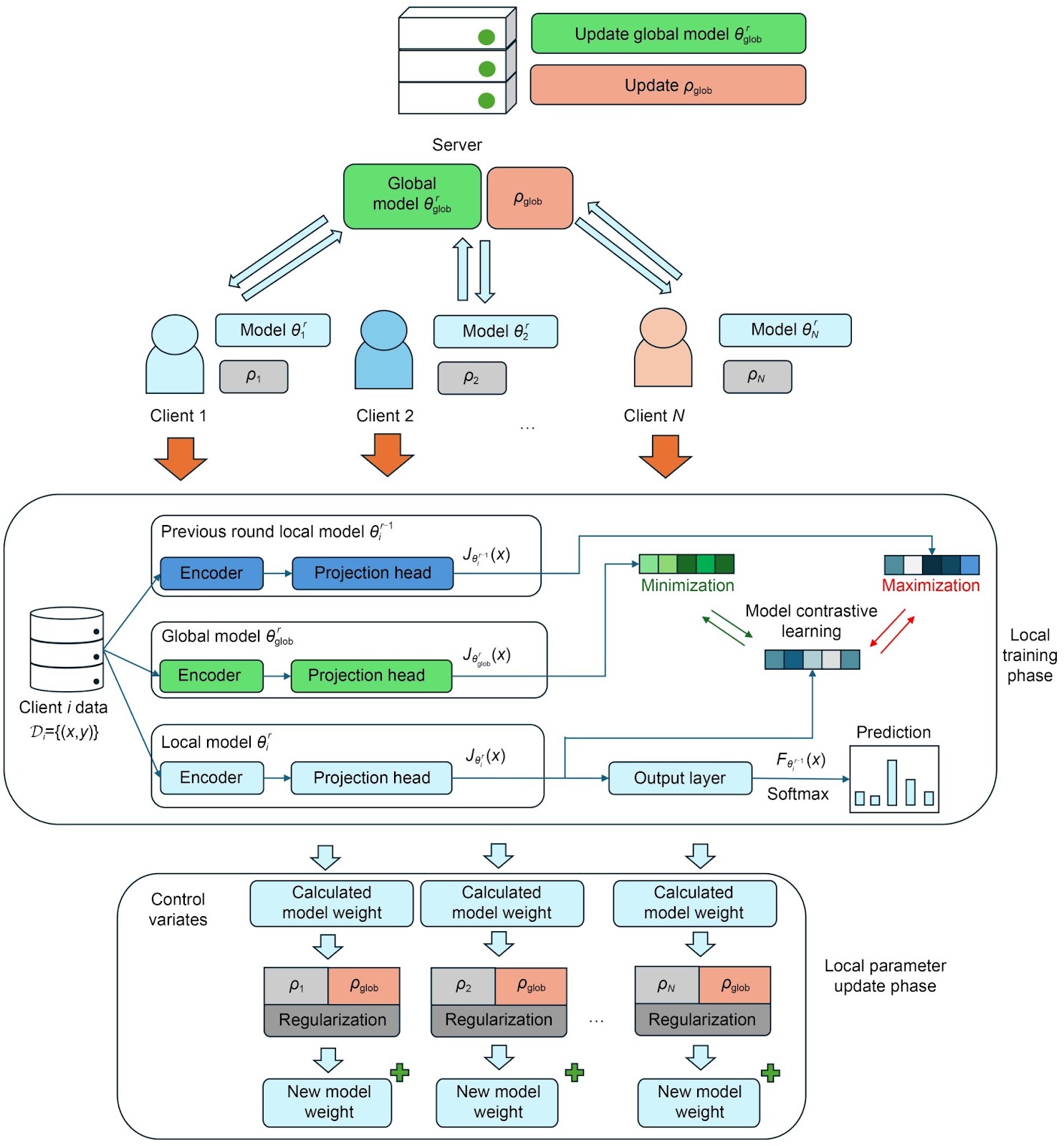
Federated model with contrastive learning and adaptive control variates for human activity recognition
Recent attention to privacy issues demands a communication-safe method for training human activity recognition (HAR) models on client activity data. Federated learning (FL) has become a compelling technique to facilitate model training between the server and clients while preserving data privacy. However, classical FL methods often assume independent and identically distributed (IID) data among clients. This assumption does not hold true in practical scenarios. Human activity in real-world scena