Key Takeaways & Executive Findings
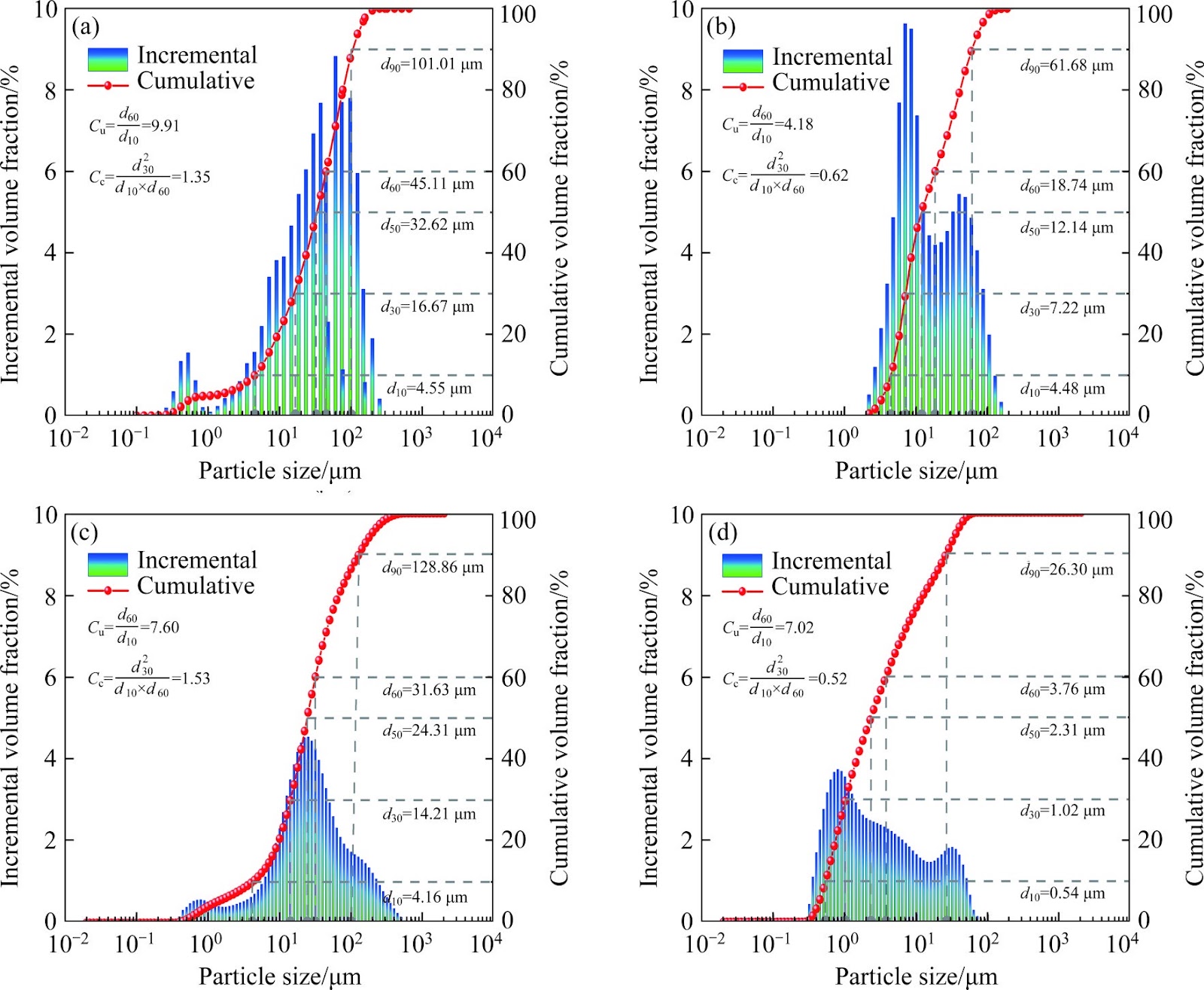
- •• Increasing curing age enhances the strength of all backfills, with 28-day strengths exceeding 1.342 MPa. • The combination of 50% blast furnace slag with 50% cement yields the best mechanical performance (maximum strength 6.129 MPa). • Blast furnace slag significantly improves the energy index at peak stress, while magnesium slag shows a lesser effect. • Sharp changes in the energy consumption ratio serve as a reliable criterion for predicting backfill destabilization and failure, providing guidance for mine filling applications.
Abstract
Utilizing mine solid waste as a partial cement substitute (CS) to develop new cementitious materials is a significant technological innovation that will decrease the expenses associated with filling mining. To realize the resource utilization of magnesium slag (MS) and blast furnace slag (BFS), the effects of different contents of MS and BFS as partial CSs on the deformation and energy characteristics of cemented tailings backfill on different curing ages (3, 7, and 28 d) were discussed. Meanwhile, the destabilization failure energy criterion of the backfill was established from the direction of energy change. The results show that the strength of all backfills increased with increasing curing age, and the strengths of the backfills exceeded 1.342 MPa on day 28. The backfill with 50% BFS+50% cement has the best performance in mechanical properties (the maximum strength can reach 6.129 MPa) and is the best choice among these CS combinations. The trend in peak strain and elastic modulus of the backfill with increasing curing age may vary depending on the CS combination. The energy index at peak stress of the backfill with BFS as a partial CS was significantly higher than that of the backfill under other CS combinations. In contrast, the enhancement of the energy index when MS was used as a partial CS was not as significant as BFS. Sharp changes in the energy consumption ratio after continuous smooth changes can be used as a criterion for destabilization and failure of the backfill. The research results can provide guidance for the application of MS and BFS as partial CSs in mine filling.
1. Introduction
Against the background of the continuous acceleration of global industrialization, the demand for mineral resources shows a continuously growing trend, which, of course, results in a corresponding increase in the frequency of mining operations [1−3]. In this process, the treatment and utilization of tailings have become an indispensable and complex link, which is extremely important for the operation of mining enterprises and the sustainable development of society [4, 5]. Traditional tailings treatment methods, such as natural stockpiling or simple landfill, often have drawbacks such as large footprints and serious environmental pollution, which is contrary to the concept of sustainable development [6−8]. The emergence of cemented tailings filling technology provides an effective solution for tailings treatment. This technology not only realizes the resource utilization of tailings but also improves the safety and stability of mines by mixing tailings with cementitious materials and then filling them into the mining airspace [9, 10]. As an effective tailings treatment method, the cemented tailings filling technology can not only solve the problem of land occupation by tailings accumulation but also can be utilized as engineering materials to realize the recycling of resources [11−15]. However, traditional cemented tailings backfill mainly relies on cement as the cementitious material, which not only increases the cost of mine filling but also may lead to the cement hydration that will have some impact on the underground environment. Therefore, finding suitable cement substitutes (CSs) to reduce the filling cost and minimize the environmental impact has become a hot topic in the field of mine filling.
A key constraint to the widespread use of this filling technology is the choice of cementitious materials and the cost of using them. Cement, as a traditional cementitious material, plays an important role in cemented tailings backfill, but its high price and increasing environmental problems such as resource consumption, carbon emissions, and pollution in the production process, make it urgent to find alternative materials [16−19]. In the mining and metallurgical industry, a large number of industrial wastes such as magnesium slag (MS) and blast furnace slag (BFS) are generated, which not only occupy va
Loading authentic research manuscript (Pages 1–5)...
YANG Jian, YANG Xiao-bing, YAN Ze-peng, YIN Sheng-hua, ZHANG Xi-zhi, QI Yao-bin (2025). Effect of magnesium slag and blast furnace slag as partial cement substitutes on properties of cemented tailings backfill. Journal of Central South University. https://doi.org/10.1007/s11771-025-6004-5
Research & Educational Purpose Only:The translations, structured abstracts, analytical annotations, and data reports provided by SinoTechIntel are intended exclusively for academic research, internal corporate R&D, and educational benchmarking. They do not constitute formal engineering, chemical safety, legal, or professional advice.
Copyright & Intellectual Property Notice: Original copyright of the underlying source articles and experimental data remains with the respective authors, institutions, and original publishing journals. SinoTechIntel claims intellectual property only over its proprietary translations, analytical syntheses, and AEO structured enhancements in accordance with international fair use and academic citation principles.
Frequently Asked Questions
What is the effect of magnesium slag and blast furnace slag as part of cement substitutes in cemented tailings backfill?
The study found that both magnesium slag (MS) and blast furnace slag (BFS) can be used as partial cement substitutes in cemented tailings backfill. The strengths of all backfills increased with curing age, and the backfill with 50% BFS and 50% cement achieved the highest mechanical strength (up to 6.129 MPa at 28 days), demonstrating that these industrial slags can effectively reduce cement usage while maintaining or improving performance.
Which cement substitute combination provides the best mechanical performance?
The combination of 50% blast furnace slag (BFS) and 50% cement exhibited the best mechanical properties, with a maximum unconfined compressive strength of 6.129 MPa at 28 days of curing. This outperformed other combinations, making it the optimal choice among the tested cement substitute blends.
How does curing age influence the strength and energy characteristics of the backfill?
Curing age significantly affects the backfill properties. The compressive strength of all backfill mixtures increased with curing age from 3 to 28 days, with 28-day strengths exceeding 1.342 MPa. The peaks in strain and elastic modulus trends varied depending on the cement substitute combination, indicating that the hydration and microstructure development evolve over time.
How is the energy consumption ratio used to predict backfill failure?
The study established a destabilization failure energy criterion based on the energy consumption ratio. A sharp change in the energy consumption ratio after a period of smooth changes indicates imminent destabilization and failure of the backfill. This provides a valuable tool for monitoring and predicting the stability of backfill structures in mining applications.
What are the environmental and economic benefits of using magnesium slag and blast furnace slag in mine filling?
Using magnesium slag (MS) and blast furnace slag (BFS) as partial cement substitutes reduces the cost of mine filling by decreasing cement consumption, which is both expensive and environmentally detrimental due to carbon emissions. Additionally, it promotes the resource utilization of industrial solid wastes, minimizing land occupation and environmental pollution, thus contributing to sustainable mining practices.
Related Technical Papers & Translations
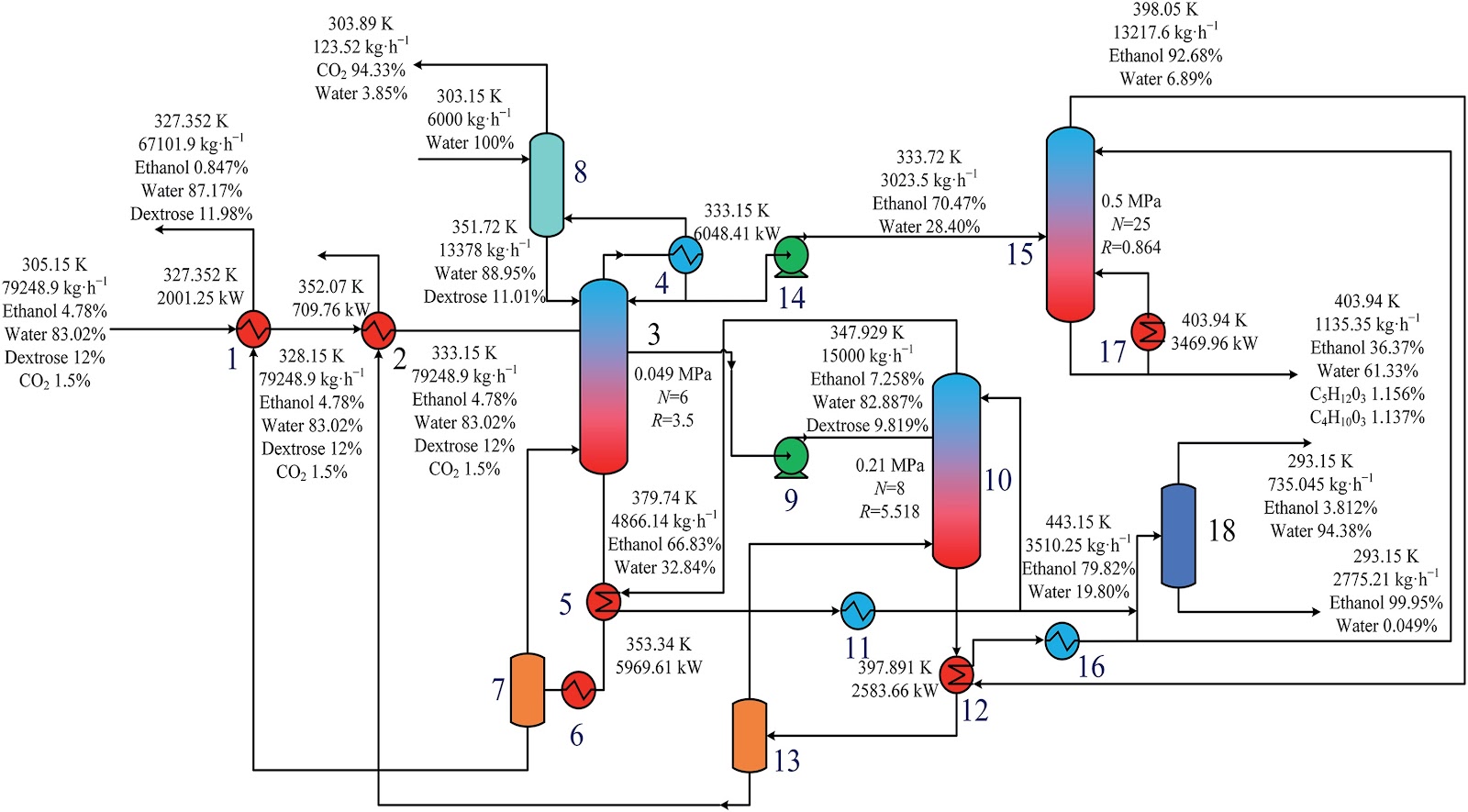
Design and optimization of a high-efficiency distillation process for cellulosic fuel ethanol integrated with thermal coupling and molecular sieve adsorption
To address the challenges of high energy consumption and prominent costs in the traditional three-columns distillation process for cellulosic fuel ethanol, a distillation—molecular sieve coupling separation process is proposed. This process integrates a three-column (crude distillation column, first distillation column, second distillation column) system with a 3A molecular sieve adsorption deep dehydration unit. A thermal coupling network is constructed via differential pressure design (steam from medium/high-pressure columns as mutual heat sources, reboiler liquid waste heat for feed preheating), and molecular sieve adsorption conditions are optimized. The study first performs a thermodynamic consistency test on the ethanol—water system, determines optimal non-random two-liquid (NRTL) model binary interaction parameters via experimental data regression for Aspen Plus simulation. Aiming at minimum total annual cost (TAC), Aspen Plus is used to optimize process parameters (theoretical tray number, feed location, reflux ratio, side-draw position, etc.). Economic analysis shows this process reduces CO2 emission costs by 27.56%, TAC by 15.58% (to 5.123 × 10⁶ USD·a-1), and increases ethanol purity to >99.6%, providing an effective solution for green, efficient separation.
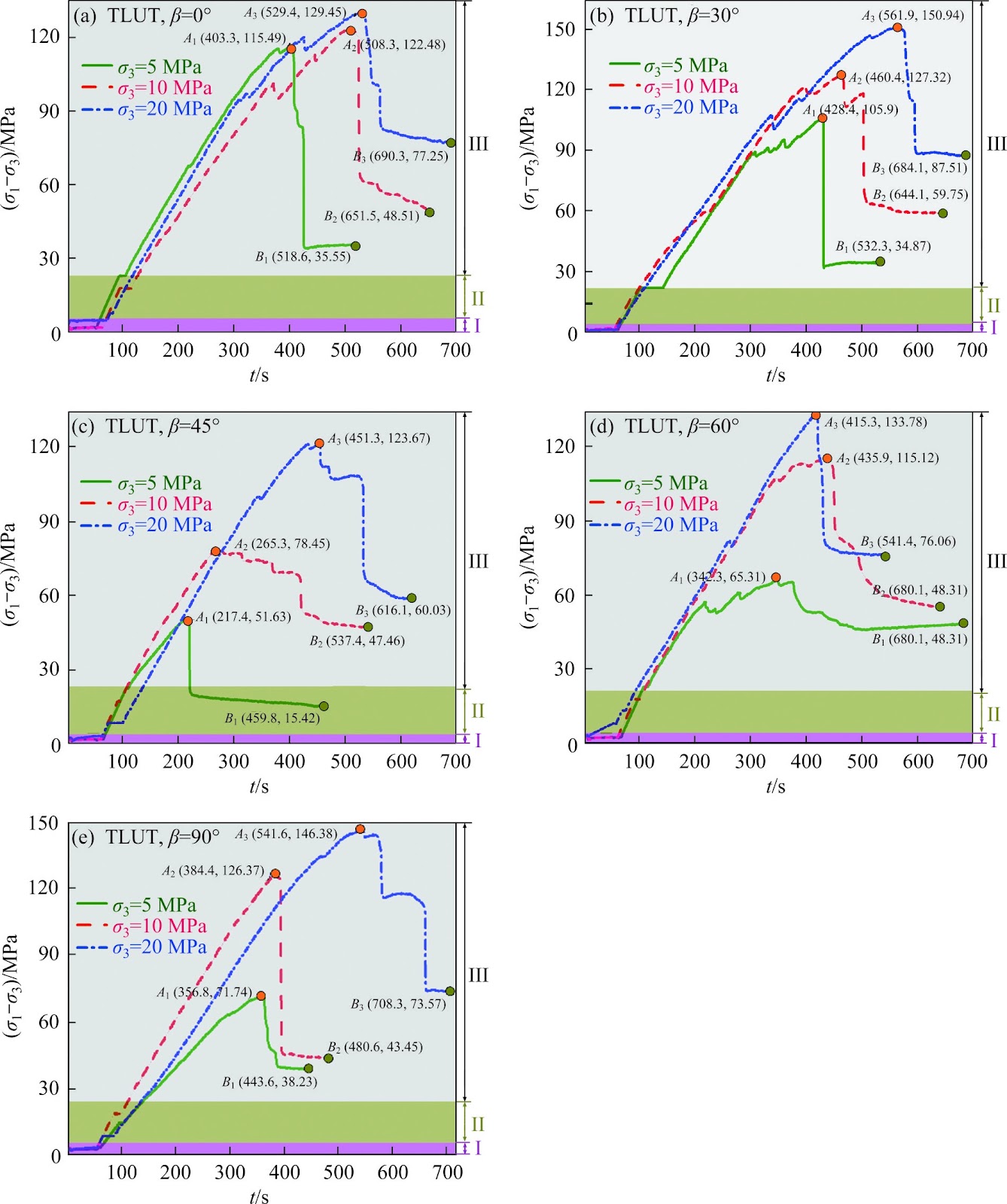
A cohesion loss model for determining residual strength of deep bedded sandstone
Rock residual strength, as an important input parameter, plays an indispensable role in proposing the reasonable and scientific scheme about stope design, underground tunnel excavation and stability evaluation of deep chambers. Therefore, previous residual strength models of rocks established were reviewed. And corresponding related problems were stated. Subsequently, starting from the effects of bedding and whole life-cycle evolution process, series of triaxial mechanical tests of deep bedded s
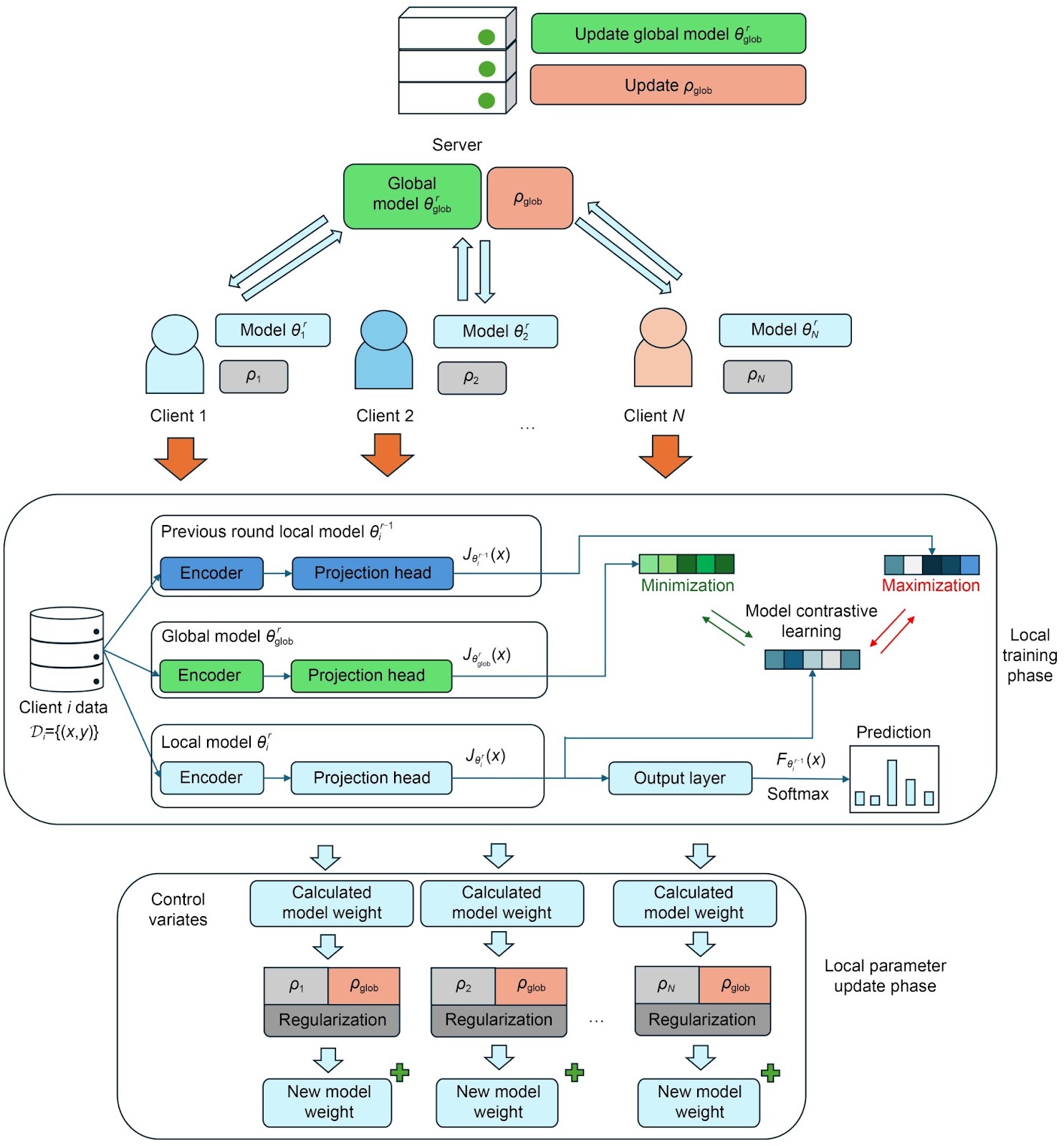
Federated model with contrastive learning and adaptive control variates for human activity recognition
Recent attention to privacy issues demands a communication-safe method for training human activity recognition (HAR) models on client activity data. Federated learning (FL) has become a compelling technique to facilitate model training between the server and clients while preserving data privacy. However, classical FL methods often assume independent and identically distributed (IID) data among clients. This assumption does not hold true in practical scenarios. Human activity in real-world scena