Key Takeaways & Executive Findings
- •• Cu2+ activates cassiterite flotation by forming Cu–O bonds and promoting OHA adsorption, enhancing recovery. • Cu2+ depresses calcite flotation by consuming OHA through precipitation and complexation, reducing collector availability. • The study provides a mechanistic model for Cu2+ interaction with OHA on mineral surfaces, aiding in selective flotation. • Findings are crucial for optimizing cassiterite flotation in the presence of unavoidable metal ions, improving tin recovery efficiency.
Abstract
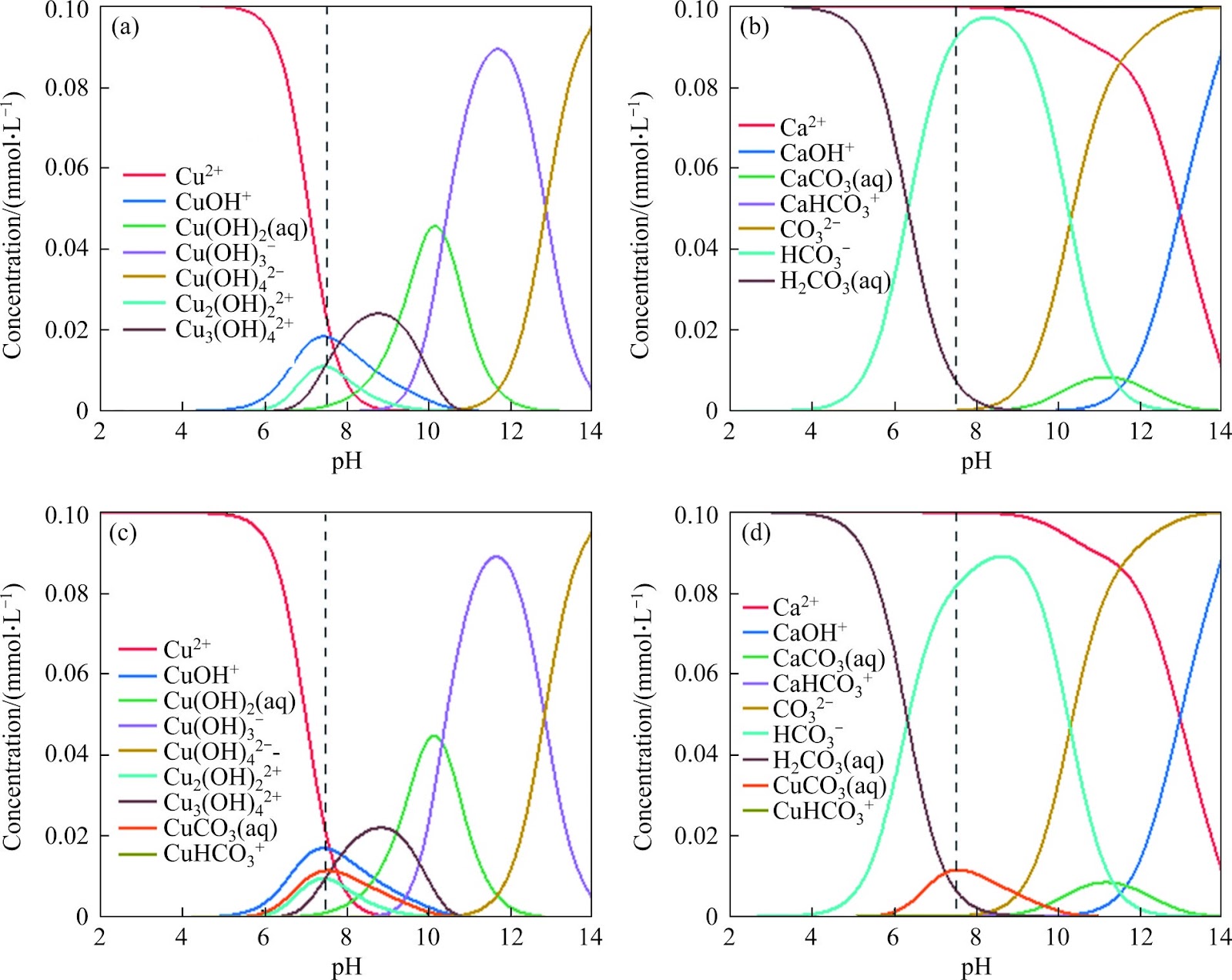
In this study, the effect of Cu2+ on the cassiterite and calcite flotation using octanohydroxamic acid (OHA) as collector was investigated through flotation tests, solution reaction tests and calculation, zeta potential measurements, XPS analysis and residual reagent concentration measurements. Results indicated that Cu2+ played an activation role on cassiterite flotation but a depression role on calcite flotation. The copper cations were adsorbed on the cassiterite surface by forming a Cu―O bond, and the pre-adsorbed copper cations and the OHA-Cu complexes promoted the adsorption of OHA on the cassiterite surface. Thus, cassiterite flotation was activated. The dissolved HCO3− in the calcite pulp underwent a double hydrolysis reaction with copper cations (Cu2+, CuOH+, Cu2(OH)2 2+ and Cu3(OH)4 2+) to form CuCO3. Some copper cations were adsorbed on the calcite surface as well, but some adsorbed Cu2+ on the calcite surface was desorbed by bonding with OHA, and most of OHA was consumed by Cu2+, basic copper carbonate and copper hydroxide. The residual OHA in the pulp was not sufficient for flotation, so calcite flotation was depressed. Finally, a model of the reaction mechanism of Cu2+ and OHA on the cassiterite and calcite surfaces was established.
1. Introduction
Tin is widely used in photovoltaic, semiconductor, new energy vehicles and other emerging industries; with the rapid development of these industries, the world’s demand for tin is growing [1−3]. Cassiterite is the most valuable mineral for tin production, and it is mainly distributed in pegmatite veins, quartz veins and sulphide mineral veins. In China, cassiterite is often embedded with sulphide minerals such as galena, sphalerite, chalcopyrite, pyrite and pyrrhotite [4]. In general, flotation is used to recover sulphide minerals, and gravity separation-flotation is carried out to recover cassiterite from the tailings of the sulphide ores [5−8]. In the process of sulphide mineral flotation, Pb2+, Zn2+, Cu2+, Fe3+ and other metal ions will inevitably enter the pulp due to the wear of grinding media, dissolution of minerals and the use of flotation reagents [9, 10], which will have a certain impact on subsequent cassiterite flotation. Therefore, it is necessary to clarify the effect of inevitable metal ions on cassiterite flotation and its underlying mechanism in order to improve the recovery efficiency of cassiterite.
Close attention must be paid to the effect of metal ions on the flotation behaviour of target minerals, but the influence of metal ions on gangue minerals cannot be ignored. The effects and mechanism of metal ions on the cassiterite surface during flotation have been reported in many studies. TIAN et al [11, 12] systematically investigated the mechanism of Pb2+, Fe3+ and benzohydroxamic acid (BHA) metal ion complexes in enhancing cassiterite flotation. BHA molecules can form two coordination bonds with one Pb ion adsorbed on the cassiterite surface [13]. BHA anions can react with Fe atoms adsorbed on the cassiterite surface to form BHA-Fe complexes [14], thereby improving the hydrophobicity of the cassiterite surface. MA et al [15] found that the use of copper-based grinding media increased Cu ions in pulp, and the Cu components were adsorbed on the cassiterite surface and promoted the adsorption of BHA, thereby enhancing the flotation of cassiterite. REN et al [16] revealed the depression mechanism of Ca2+, Mg2+ and Fe3+ in fine cassiterite flotation using octanohydroxamic acid (OHA) as the collector that Ca2+, Mg2+ and Fe3+ in the flotation pulp produced new sites including CaOH+, MgOH+ and Fe(OH)3 on the cassiterite surface, and the additional species decreased the recovery of cassiterite. The studies above focused on the activation or depression of metal ions on the cassiterite surface, but little attention has been paid to the effect of metal ions on gangue mineral surfaces (e.g. calcite, fluorite and quartz) in cassiterite flotation. GONG et al [17] found that the Cu2+ consumed styrene phosphonic acid (SPA) in the flotation pulp, but the adsorption of SPA on cassiterite was not obviously decreased. Thus, the flotation of cassiterite was unaffected, but fluorite was depressed. SUN et al [18] confirmed that Cu2+ can react with soluble starch (SS) to form a C...
Loading authentic research manuscript (Pages 1–5)...
LI Wei, LONG Yong-quan, HUANG Yan, ZHANG Nian, JIAO Fen, ZHANG Zheng-quan, LIN Xiang (2025). Effect of Cu2+ on the cassiterite and calcite flotation using octanohydroxamic acid as collector. Journal of Central South University. https://doi.org/10.1007/s11771-025-6127-8
Research & Educational Purpose Only:The translations, structured abstracts, analytical annotations, and data reports provided by SinoTechIntel are intended exclusively for academic research, internal corporate R&D, and educational benchmarking. They do not constitute formal engineering, chemical safety, legal, or professional advice.
Copyright & Intellectual Property Notice: Original copyright of the underlying source articles and experimental data remains with the respective authors, institutions, and original publishing journals. SinoTechIntel claims intellectual property only over its proprietary translations, analytical syntheses, and AEO structured enhancements in accordance with international fair use and academic citation principles.
Frequently Asked Questions
What is the effect of Cu2+ on cassiterite flotation?
Cu2+ acts as an activator for cassiterite flotation. It adsorbs on the cassiterite surface via Cu–O bonds, and the pre-adsorbed copper cations and OHA-Cu complexes promote the adsorption of OHA, thereby enhancing the hydrophobicity and flotation recovery of cassiterite.
How does Cu2+ affect calcite flotation?
Cu2+ acts as a depressant for calcite flotation. It reacts with dissolved HCO3− to form CuCO3 and also consumes OHA through complexation and precipitation, reducing the residual OHA concentration in the pulp, which is insufficient for effective calcite flotation.
What is the role of octanohydroxamic acid (OHA) in this study?
OHA is used as a collector in the flotation of cassiterite and calcite. Its adsorption on mineral surfaces is influenced by the presence of Cu2+, which either enhances (on cassiterite) or reduces (on calcite) its effectiveness.
What methods were used to investigate the mechanism?
The study employed flotation tests, solution reaction tests and calculations, zeta potential measurements, XPS analysis, and residual reagent concentration measurements to elucidate the interaction mechanisms of Cu2+ and OHA on cassiterite and calcite surfaces.
Why is this research important for tin production?
Cassiterite is the primary mineral for tin production, and its flotation can be affected by unavoidable metal ions like Cu2+. Understanding these effects helps optimize flotation processes, improving tin recovery efficiency and economic viability.
Related Technical Papers & Translations
Direct Repair of the Crystal Structure and Coating Surface of Spent LiFePO4 Materials Enables Superfast Li-Ion Migration
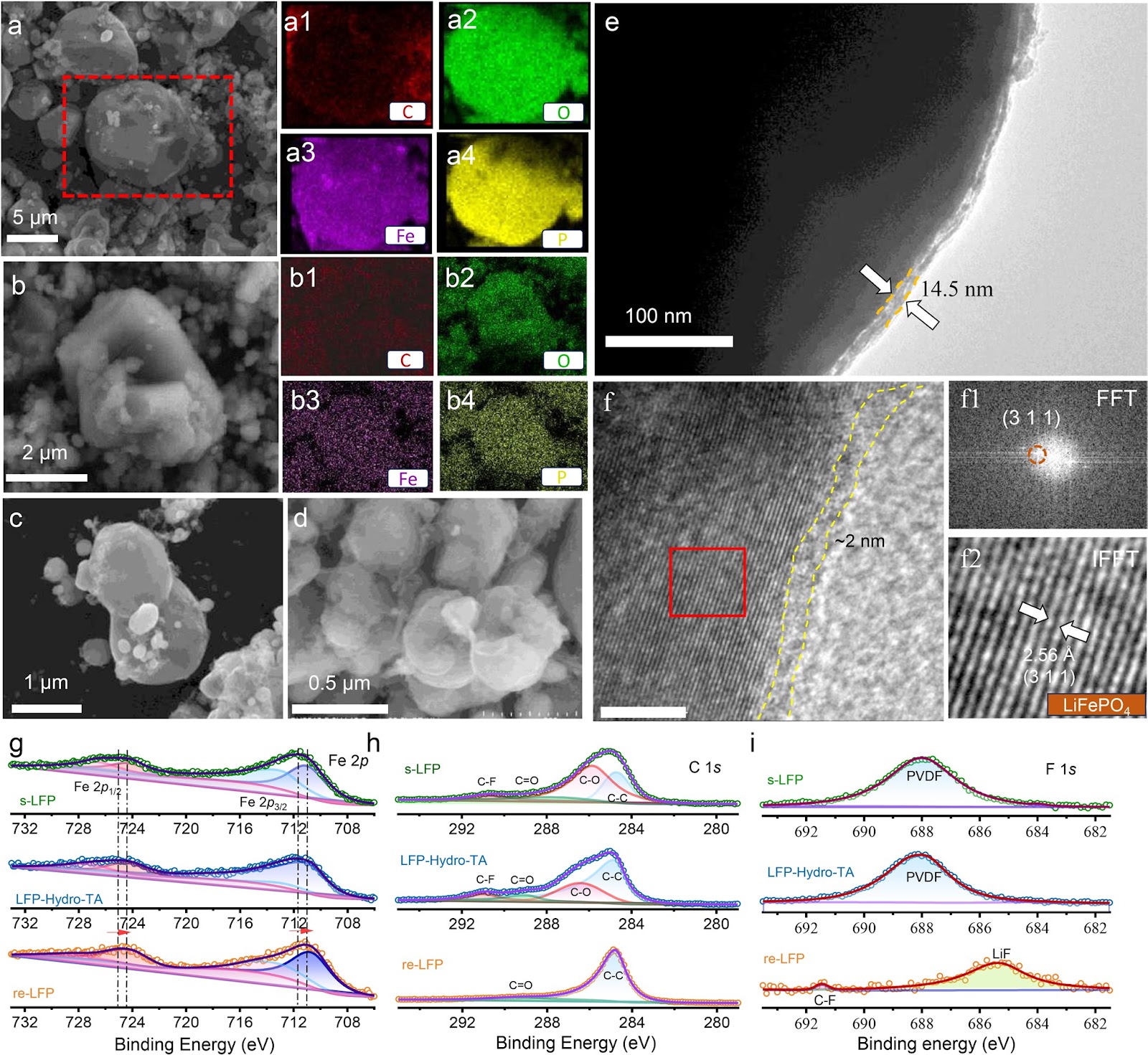
The rapid accumulation of spent LiFePO4 (LFP) cathodes from retired lithium-ion batteries necessitates the development of effective and environmental-friendly recycling strategies. In this context, direct regeneration has emerged as a promising approach for reclaiming LFP cathode materials, offering a streamlined pathway to restore their electrochemical functionality. We report an integrated regeneration protocol that simultaneously repairs the degraded crystal structure and reconstructs the damaged carbon coating in spent LFP. The regenerated cathode material had superfast lithium-ion diffusion kinetics and a stable cathode–electrolyte interface, giving a remarkable rate capability with specific capacities of 122 mAh g−1 at 5C and 106 mAh g−1 at 10C (1C = 170 mA g−1). It also maintained capacities of 110.7 mAh g−1 (5C) and 84.1 mAh g−1 (10C) after 400 cycles. It could be used in harsh environments and could be stably cycled at subzero temperatures (−10 and −20 °C) and in solid-state electrolyte batteries. Life cycle assessment combined with economic evaluation using the EverBatt model reveals that this direct regeneration approach has high economic and environmental benefits.
Oxide Semiconductor for Advanced Memory Architectures: Atomic Layer Deposition, Key Requirement and Challenges
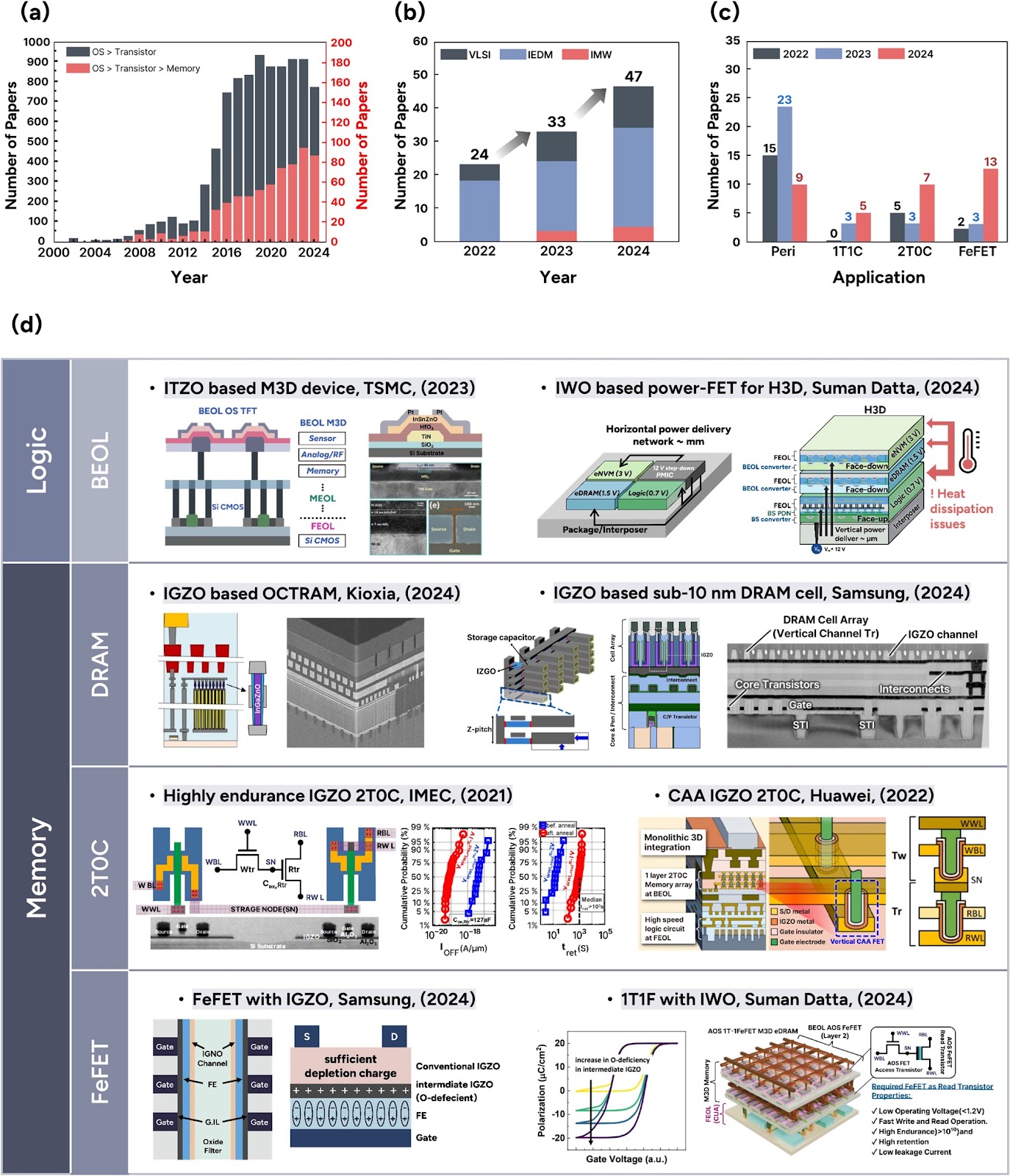
Oxide semiconductors (OSs), introduced by the Hosono group in the early 2000s, have evolved from display backplane materials to promising candidates for advanced memory and logic devices. The exceptionally low leakage current of OSs and compatibility with three-dimensional (3D) architectures have recently sparked renewed interest in their use in semiconductor applications. This review begins by exploring the unique material properties of OSs, which fundamentally originate from their distinct electronic band structure. Subsequently, we focus on atomic layer deposition (ALD), a core technique for growing excellent OS films, covering both basic and advanced processes compatible with 3D scaling. The basic surface reaction mechanisms—adsorption and reaction—and their roles in film growth are introduced. Furthermore, material design strategies, such as cation selection, crystallinity control, anion doping, and heterostructure engineering, are discussed. We also highlight challenges in memory applications, including contact resistance, hydrogen instability, and lack of p-type materials, and discuss the feasibility of ALD-grown OSs as potential solutions. Lastly, we provide an outlook on the role of ALD-grown OSs in memory technologies. This review bridges material fundamentals and device-level requirements, offering a comprehensive perspective on the potential of ALD-driven OSs for next-generation semiconductor memory devices.
Laser powder bed fusion of biodegradable Zn-4Cu alloy: Processing, microstructure and properties
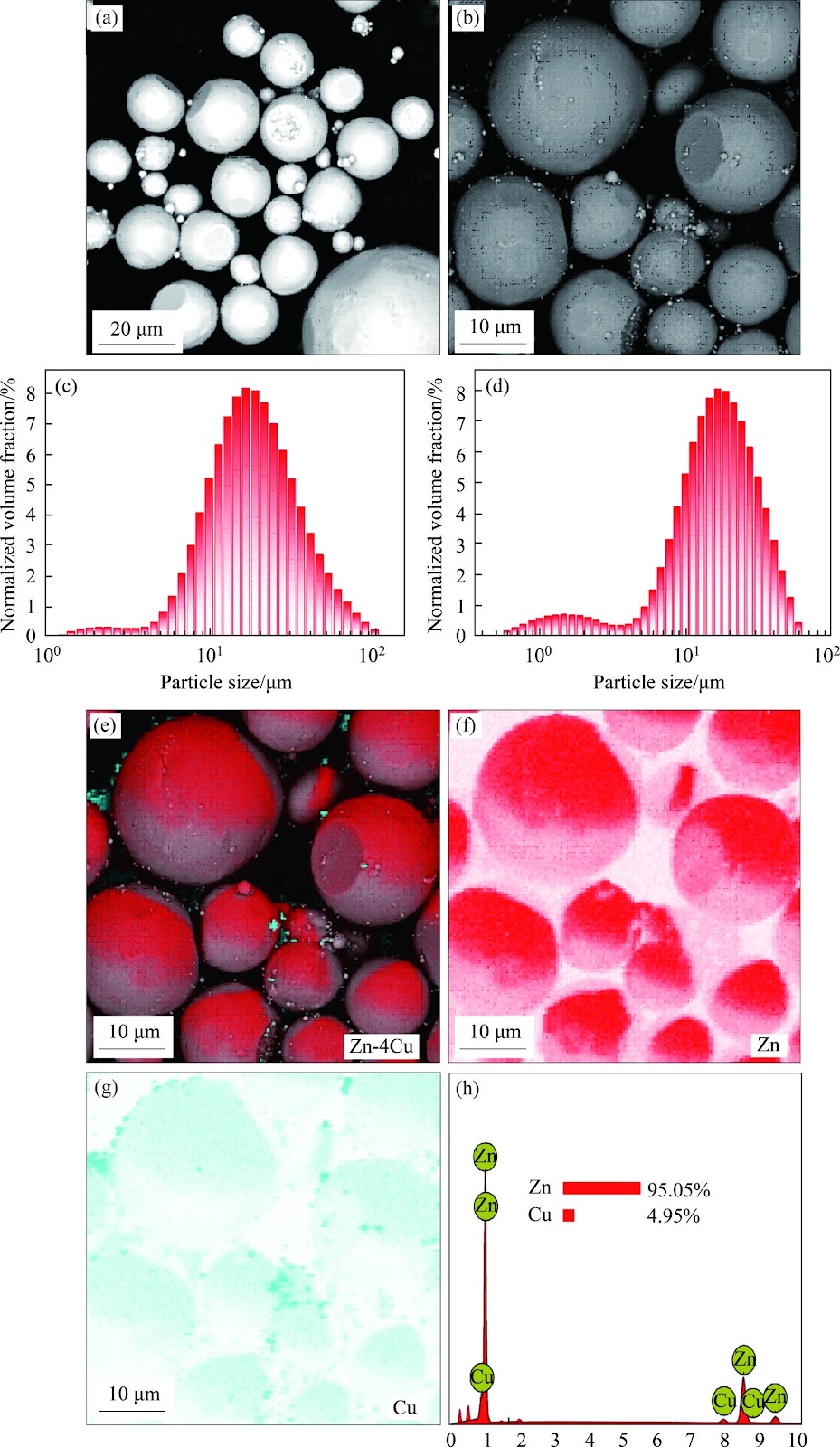
Zn's natural degradability and biocompatibility make it a promising candidate for implants, however, its mechanical properties remain insufficient for bone applications. In this study, the performance of Zn was enhanced by developing Zn-Cu alloys via laser powder bed fusion (LPBF). Optimal LPBF parameters for forming stable tracks were achieved by adjusting laser power and scanning speed. Under optimized conditions of 100 W and 100 mm/s, high-density (99.58%) Zn-Cu alloys with improved hardness (68.2HV) and yield strength (160 MPa) were achieved. These improvements are attributed to solid solution strengthening, segregation strengthening, and grain refinement. The Zn-Cu alloys also demonstrated favorable degradation behavior, with a rate of 0.16 mm/year. This degradation is primarily driven by micro-galvanic corrosion between the CuZn5 phase and Zn matrix, along with refined grains and increased grain boundary density. This work demonstrates a viable strategy for fabricating Zn-based implants with enhanced structural integrity and mechanical performance via LPBF.