Key Takeaways & Executive Findings
- •• Ce addition significantly improves hydrogen absorption kinetics; Ti0.98Zr0.02Mn1.5Cr0.05V0.43Fe0.09Ce0.02 reaches 90% of its maximum capacity in 137 s at 293 K. • Hydrogen storage capacity first increases and then decreases with Ce content, reaching a peak of 1.85 wt% at x = 0.04. • Thermodynamic analysis shows that Ce improves storage capacity mainly by increasing the enthalpy of hydrogen absorption. • Microstructural benefits include lattice expansion of the C14 Laves phase and a Ce-induced deoxidization effect, enhancing absorption kinetics.
Abstract
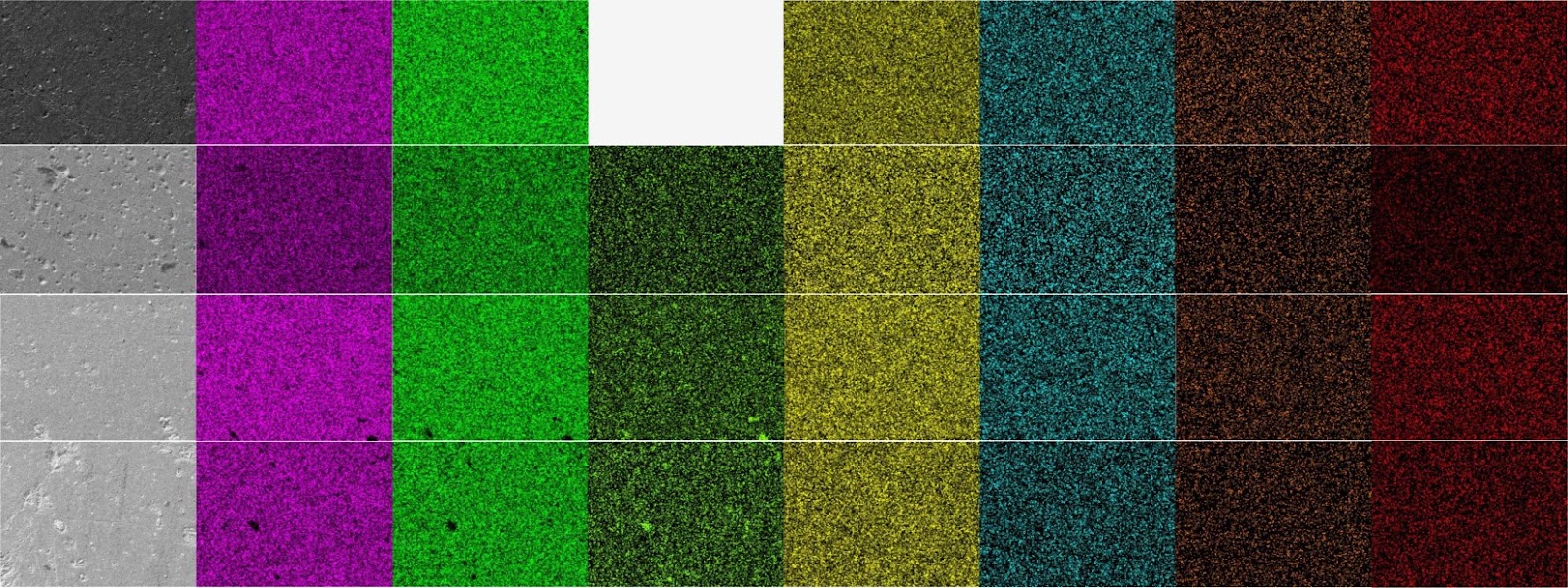
This study investigates the effect of Ce content on the hydrogen storage properties of Ti0.98Zr0.02Mn1.5Cr0.05V0.43Fe0.09Cex (x = 0, 0.02, 0.04, and 0.06, at%) alloys. Microstructural analysis of these alloys revealed dendritic microstructures without the segregation of chemical elements, with the C14 Laves phase identified as the dominant phase. After two activation cycles at 4 MPa and 293 K, the alloys exhibited excellent hydrogen absorption properties. The addition of Ce significantly improved the kinetics of the alloys. At x = 0.02, the hydrogen absorption capacity reached 90% of its maximum within 137 s at 293 K. Pressure–composition–temperature curves indicated that hydrogen absorption capacity initially increased first and then decreased with increasing Ce content, reaching a maximum value of 1.85wt% at x = 0.04. Thermodynamic results demonstrated that the enthalpy and entropy of hydrogen absorption followed a similar trend, which was consistent with the variation in hydrogen storage capacity. Thus, the improvement in hydrogen absorption capacity due to the addition of Ce is attributed to the increase in enthalpy. The increase of the lattice constant in the C14 Laves phase and the deoxidization effect of Ce are expected to be beneficial for the improvement of hydrogen absorption kinetics.
1. Introduction
Hydrogen has emerged as a new generation of clean energy carriers because of its high energy density, recyclability, and zero carbon emissions [1–5]. However, its low volumetric density (0.0899 g/L) and the tendency of gaseous hydrogen to leak render efficient and safe storage essential [6]. Developing solid hydrogen storage alloys is a promising solution, as they can absorb and desorb hydrogen at moderate temperatures and pressures with high volumetric density (higher than that of liquid H2) and appropriate gravimetric density [7]. Among various solid hydrogen storage alloys, TiMn2-based alloys have garnered significant attention because of their rapid hydrogen absorption/desorption kinetics at room temperature and high volumetric hydrogen storage density. TiMn2-based alloys have been applied in outdoor portable power sources, hydrogen fuel cell bicycles, fixed hydrogen storage systems, and other fields, demonstrating promising development and market potential [8].
TiMn2-based alloys are AB2-type intermetallic compounds with C14 Laves phase structures. Generally, the A-side consists of elements that form stable hydrides, including Ti and other substituted elements such as Zr and Sc. The B-side includes elements that do not easily form hydrides but exhibit hydrogen catalytic activity, including the main Mn element and other substituted elements such as Cr, V, Fe, and Ni. By adjusting the ratio of elements on the A and B sides, the hydrogen storage properties of these alloys can be optimized [9–10].
Element substitution on the A-side primarily affects the hydrogen storage capacity. Kandavel et al. [11] improved the hydrogen storage properties of Ti1.1CrMn alloys by replacing Ti with Zr, increasing capacity from 1.9 wt% to 2.2 wt%. Substitution of elements on the B-side affects activation behavior, kinetics, and cycling performance. Zhou et al. [12] reported that Cr substitution in Ti0.95Zr0.05Mn1.8−yCryV0.2 alloys improves pressure hysteresis and cycling stability. Vanadium substitution can also lower plateau pressure and hysteresis, as demonstrated by Tu et al. [13]. These studies illustrate the potential of multi-element substitution to tailor hydrogen storage performance.
Loading authentic research manuscript (Pages 1–5)...
Wenjiao Zhou, Tongyue Li, Anjia Zhang, Yaheng Zhao, Qichen Tang, Xiping Song (2025). Effect of Ce element on hydrogen storage property of TiMn2-based alloys. Journal of Mineral Metallurgy and Materials Science. https://doi.org/10.1007/s12613-025-3211-x
Research & Educational Purpose Only:The translations, structured abstracts, analytical annotations, and data reports provided by SinoTechIntel are intended exclusively for academic research, internal corporate R&D, and educational benchmarking. They do not constitute formal engineering, chemical safety, legal, or professional advice.
Copyright & Intellectual Property Notice: Original copyright of the underlying source articles and experimental data remains with the respective authors, institutions, and original publishing journals. SinoTechIntel claims intellectual property only over its proprietary translations, analytical syntheses, and AEO structured enhancements in accordance with international fair use and academic citation principles.
Frequently Asked Questions
What is the effect of Ce addition on TiMn2-based alloys?
Ce addition significantly improves hydrogen absorption kinetics. With x = 0.02, the Ti0.98Zr0.02Mn1.5Cr0.05V0.43Fe0.09Cex alloy reaches 90% of its maximum hydrogen absorption capacity within 137 s at 293 K. The improvement is attributed to an increase in lattice constant and a deoxidization effect.
Which alloy composition achieved the highest hydrogen storage capacity?
The alloy with x = 0.04, i.e., Ti0.98Zr0.02Mn1.5Cr0.05V0.43Fe0.09Ce0.04, achieved the maximum hydrogen storage capacity of 1.85 wt% at 293 K.
How does Ce affect the thermodynamics of hydrogen absorption?
Ce addition increases the enthalpy of hydrogen absorption, which is the primary reason for the improved hydrogen storage capacity. The enthalpy and entropy of hydrogen absorption followed a similar trend, consistent with the variation in storage capacity.
What is the dominant phase in the Ce-containing TiMn2-based alloys?
The C14 Laves phase is the dominant phase. Microstructural analysis revealed dendritic microstructures without segregation of chemical elements in these alloys.
Why are TiMn2-based alloys promising for solid-state hydrogen storage?
TiMn2-based alloys offer rapid hydrogen absorption/desorption kinetics at room temperature and high volumetric hydrogen storage density, making them suitable for applications such as outdoor portable power sources, hydrogen fuel cell bicycles, and fixed hydrogen storage systems.
Related Technical Papers & Translations

Design and optimization of a high-efficiency distillation process for cellulosic fuel ethanol integrated with thermal coupling and molecular sieve adsorption
To address the challenges of high energy consumption and prominent costs in the traditional three-columns distillation process for cellulosic fuel ethanol, a distillation—molecular sieve coupling separation process is proposed. This process integrates a three-column (crude distillation column, first distillation column, second distillation column) system with a 3A molecular sieve adsorption deep dehydration unit. A thermal coupling network is constructed via differential pressure design (steam from medium/high-pressure columns as mutual heat sources, reboiler liquid waste heat for feed preheating), and molecular sieve adsorption conditions are optimized. The study first performs a thermodynamic consistency test on the ethanol—water system, determines optimal non-random two-liquid (NRTL) model binary interaction parameters via experimental data regression for Aspen Plus simulation. Aiming at minimum total annual cost (TAC), Aspen Plus is used to optimize process parameters (theoretical tray number, feed location, reflux ratio, side-draw position, etc.). Economic analysis shows this process reduces CO2 emission costs by 27.56%, TAC by 15.58% (to 5.123 × 10⁶ USD·a-1), and increases ethanol purity to >99.6%, providing an effective solution for green, efficient separation.

A cohesion loss model for determining residual strength of deep bedded sandstone
Rock residual strength, as an important input parameter, plays an indispensable role in proposing the reasonable and scientific scheme about stope design, underground tunnel excavation and stability evaluation of deep chambers. Therefore, previous residual strength models of rocks established were reviewed. And corresponding related problems were stated. Subsequently, starting from the effects of bedding and whole life-cycle evolution process, series of triaxial mechanical tests of deep bedded s

Federated model with contrastive learning and adaptive control variates for human activity recognition
Recent attention to privacy issues demands a communication-safe method for training human activity recognition (HAR) models on client activity data. Federated learning (FL) has become a compelling technique to facilitate model training between the server and clients while preserving data privacy. However, classical FL methods often assume independent and identically distributed (IID) data among clients. This assumption does not hold true in practical scenarios. Human activity in real-world scena