Key Takeaways & Executive Findings
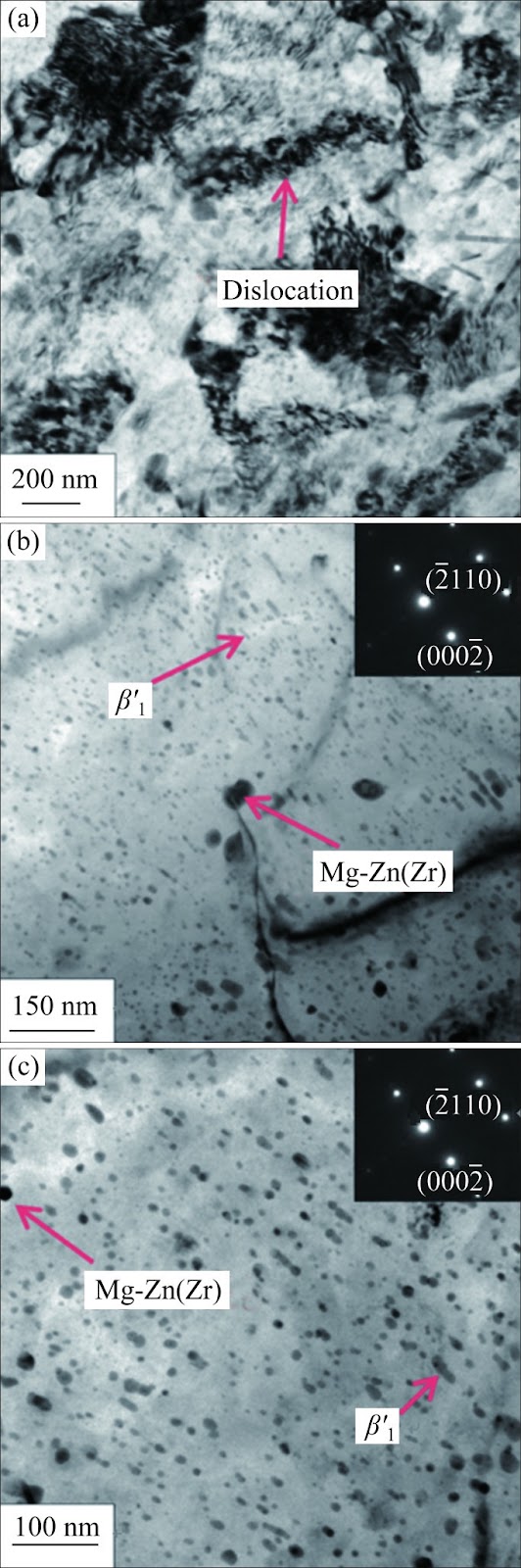
- •• At a high strain rate of 3000 s⁻¹, β′1 precipitates in ZK60-T6 alloy undergo instantaneous partial dissolution and spheroidization within only 160 μs, evidenced by TEM observations. • Rod-shaped β′1 phases (average 48.5 nm length, 9.8 nm diameter) transform into spherical particles with an average diameter of 8.8 nm after dynamic loading, indicating significant morphological evolution. • The thermodynamic driving force for dissolution is enhanced by larger lattice distortion energy in the deformed β′1 phase compared to the Mg matrix, increasing the free energy difference between precipitate and matrix. • Accelerated Zn diffusion due to adiabatic temperature rise, high dislocation/vacancy density, and deviatoric stresses kinetically promote dissolution, contributing to hardness increase via solid solution strengthening, dislocation strengthening, and second-phase particle strengthening.
Abstract
The commercial ZK60 magnesium alloy with extruded state experienced aging heat treatment (T6) was dynamically loaded at strain rate of 3000 s−1 by means of the split Hopkinson pressure bar (SHPB) in this paper. Transmission electron microscopy (TEM) observations showed that the precipitated β′1 phases partially dissolved (spheroidized) with blurred interfaces within 160 μs at 3000 s−1. The average length and diameter of the rod-shaped β′1 phase particles were 48.5 and 9.8 nm after the T6 heat treatment; while the average diameter of the spherical β′1 phases changed to 8.8 nm after loading. The deformed β′1 phase generated larger lattice distortion energy than Mg matrix under high strain rate loading. Therefore, the difference of free energy (the driving force of dissolution) between the β′1 phase and the matrix increased, making the instantaneous dissolution of the β′1 phase thermodynamically feasible. The dissolution (spheroidization) of the β′1 phase particles was kinetically promoted because the diffusion rate of the solute Zn atoms was accelerated by combined actions of adiabatic temperature rise, high density of dislocations (vacancies) and high deviatoric stresses during high strain rate loading. The increase in hardness of ZK60-T6 alloy could be attributed to solid solution strengthening, dislocation strengthening and second phase particle strengthening.
1. Introduction
Magnesium (Mg) stands out as one of the lightest structural metals globally, boasting a high specific strength. When compared at equal volumes, it is approximately 30% lighter than aluminum and a remarkable 75% lighter than steel [1, 2]. These unique properties render Mg a preferred material for applications in both the automotive and aerospace industries [3−5]. The research and application of magnesium alloys have garnered extensive attention across various sectors and disciplines [6, 7]. Nowadays, Mg alloys are widely used in aerospace, transportation and biomedical fields with the continuous development of lightweight alloys [8−10].
ZK60 alloy is a classic wrought magnesium alloy with extensive applications. Numerous studies have been conducted on the static precipitation of second-phase particles during the aging process of ZK60 magnesium alloy. The precipitation sequence is well-documented [11−13] as follows: SSSS → G.P. zones → β′1 → β′2 → β, where SSSS denotes the supersaturated solid solution, G.P. zones are disk-shaped and semi-coherent with the matrix, β′1 adopts a rod-like morphology, and β′2 is disk-shaped. The mechanical properties of ZK60 magnesium alloy can be enhanced through heat treatment. The β′1 phase serves as the primary phase for aging strengthening [14] and exerts a significant influence on the mechanical properties of the alloy. Several studies [15, 16] have indicated that during the extrusion process, the second phase particles underwent spheroidization and partial dissolution within the matrix, leading to an enhancement in strength and a reduction in plasticity of the ZK60 alloy. However, the majority of current research efforts have focused on phase transformations under static or quasi-static loading conditions, with limited studies exploring the behavior under high strain rate loadings.
In practical engineering applications, Mg alloys are inevitably exposed to impact loads [17]. The deformations of pure metals and their alloys are complicated and highly nonlinear under high strain rate loadings (strain rate > 10^2 s⁻¹).
Loading authentic research manuscript (Pages 1–5)...
LIU Yue-yang, YANG Yang, HU Li-xiang, CHEN Yi, KE Yu-bin, LI Dan, WEI Shao-hong, XU Wen-lin, CHEN Xiang (2025). Dynamic instantaneous dissolution of the precipitates in aged Mg-Zn-Zr alloy at high strain rate. Journal of Central South University. https://doi.org/10.1007/s11771-025-5983-6
Research & Educational Purpose Only:The translations, structured abstracts, analytical annotations, and data reports provided by SinoTechIntel are intended exclusively for academic research, internal corporate R&D, and educational benchmarking. They do not constitute formal engineering, chemical safety, legal, or professional advice.
Copyright & Intellectual Property Notice: Original copyright of the underlying source articles and experimental data remains with the respective authors, institutions, and original publishing journals. SinoTechIntel claims intellectual property only over its proprietary translations, analytical syntheses, and AEO structured enhancements in accordance with international fair use and academic citation principles.
Frequently Asked Questions
What is the main finding of this study?
The study reveals that β′1 precipitates in aged ZK60 magnesium alloy undergo instantaneous partial dissolution and spheroidization within 160 μs when subjected to a high strain rate of 3000 s⁻¹, driven by thermodynamic and kinetic mechanisms.
How was the high strain rate loading applied?
The dynamic loading was applied using a split Hopkinson pressure bar (SHPB) at a strain rate of 3000 s⁻¹ on extruded and T6-aged ZK60 magnesium alloy specimens.
What are the mechanisms behind the precipitate dissolution?
The dissolution is thermodynamically driven by increased free energy difference due to larger lattice distortion energy in the deformed β′1 phase, and kinetically promoted by accelerated Zn diffusion from adiabatic temperature rise, high dislocation density, and high deviatoric stresses.
How does this affect the hardness of the alloy?
The hardness increase in the ZK60-T6 alloy after dynamic loading is attributed to solid solution strengthening, dislocation strengthening, and second-phase particle strengthening resulting from the dissolution and spheroidization processes.
What is the significance of this research?
This study fills a gap in understanding phase transformations under high strain rate loading, providing insights for optimizing magnesium alloys for impact-resistant engineering applications in aerospace and automotive industries.
Related Technical Papers & Translations
Design and optimization of a high-efficiency distillation process for cellulosic fuel ethanol integrated with thermal coupling and molecular sieve adsorption
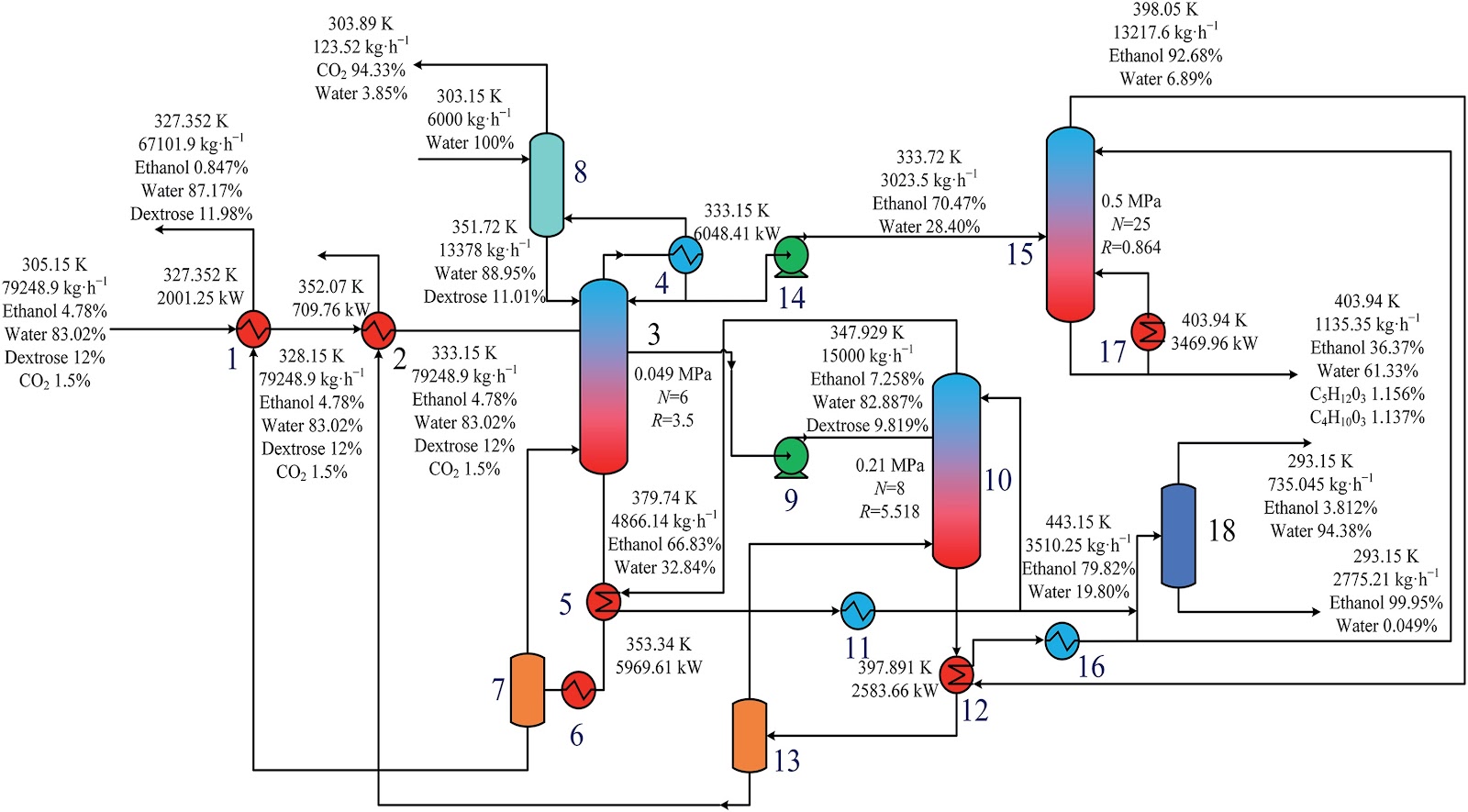
To address the challenges of high energy consumption and prominent costs in the traditional three-columns distillation process for cellulosic fuel ethanol, a distillation—molecular sieve coupling separation process is proposed. This process integrates a three-column (crude distillation column, first distillation column, second distillation column) system with a 3A molecular sieve adsorption deep dehydration unit. A thermal coupling network is constructed via differential pressure design (steam from medium/high-pressure columns as mutual heat sources, reboiler liquid waste heat for feed preheating), and molecular sieve adsorption conditions are optimized. The study first performs a thermodynamic consistency test on the ethanol—water system, determines optimal non-random two-liquid (NRTL) model binary interaction parameters via experimental data regression for Aspen Plus simulation. Aiming at minimum total annual cost (TAC), Aspen Plus is used to optimize process parameters (theoretical tray number, feed location, reflux ratio, side-draw position, etc.). Economic analysis shows this process reduces CO2 emission costs by 27.56%, TAC by 15.58% (to 5.123 × 10⁶ USD·a-1), and increases ethanol purity to >99.6%, providing an effective solution for green, efficient separation.
A cohesion loss model for determining residual strength of deep bedded sandstone
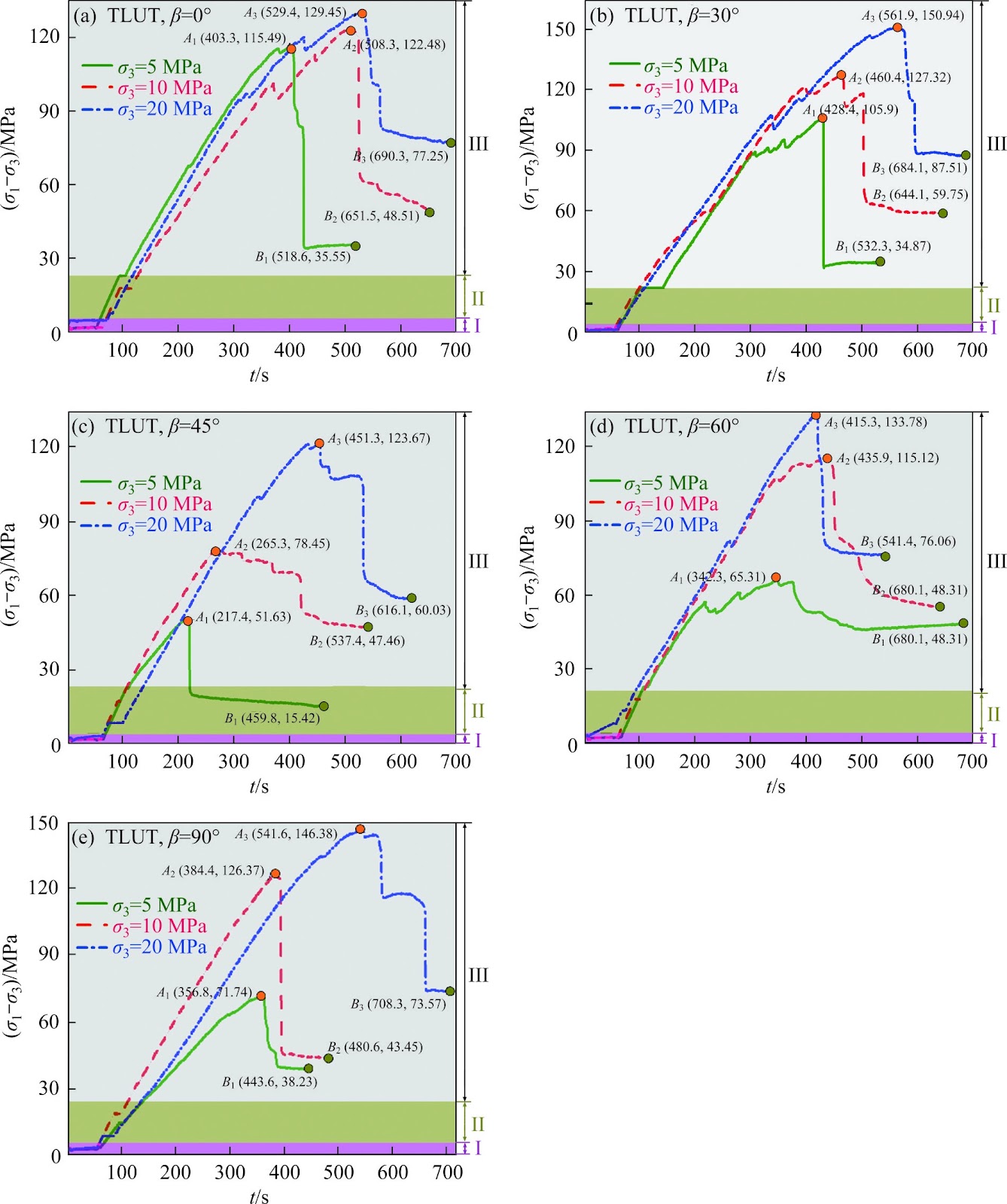
Rock residual strength, as an important input parameter, plays an indispensable role in proposing the reasonable and scientific scheme about stope design, underground tunnel excavation and stability evaluation of deep chambers. Therefore, previous residual strength models of rocks established were reviewed. And corresponding related problems were stated. Subsequently, starting from the effects of bedding and whole life-cycle evolution process, series of triaxial mechanical tests of deep bedded s
Federated model with contrastive learning and adaptive control variates for human activity recognition
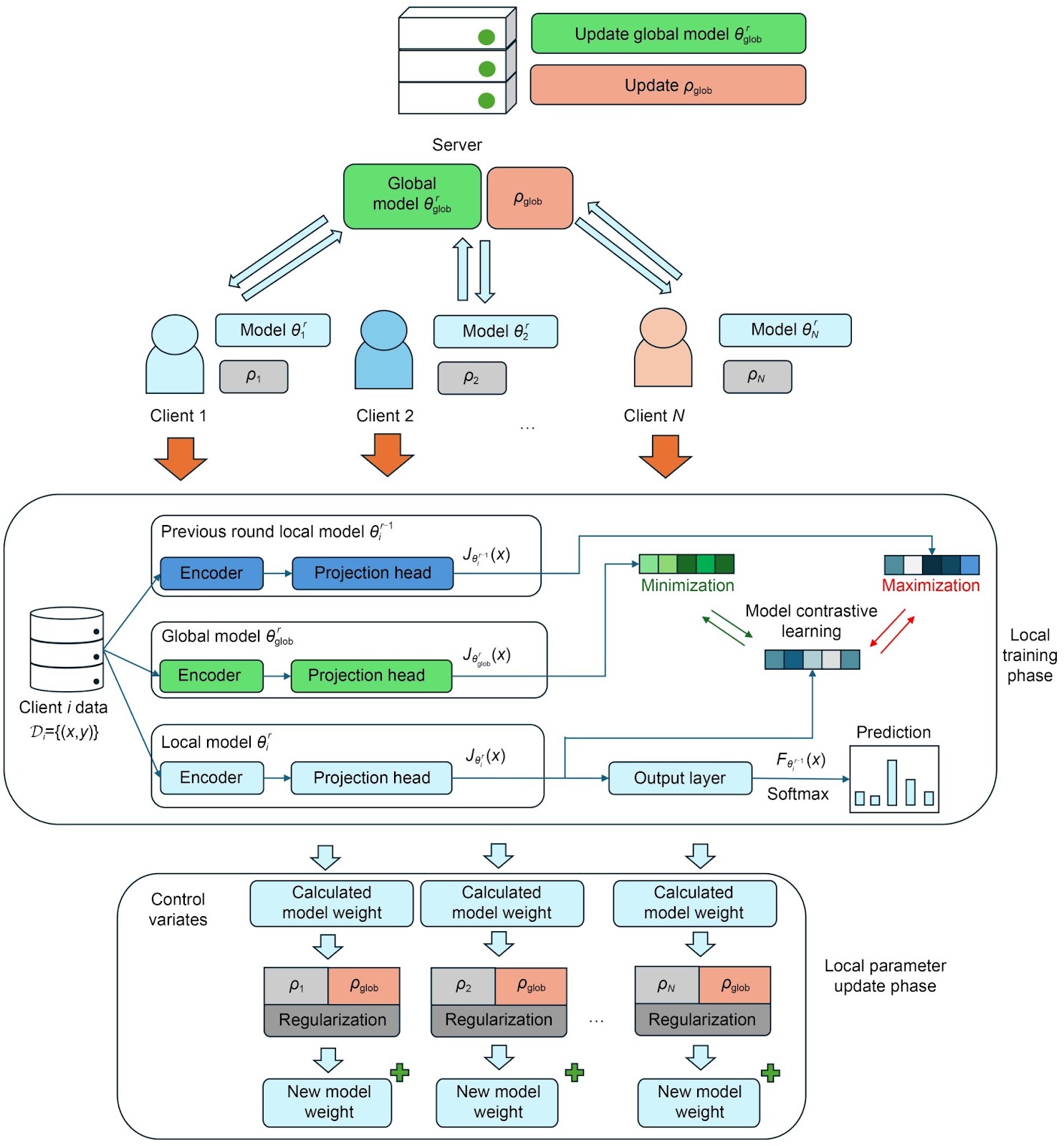
Recent attention to privacy issues demands a communication-safe method for training human activity recognition (HAR) models on client activity data. Federated learning (FL) has become a compelling technique to facilitate model training between the server and clients while preserving data privacy. However, classical FL methods often assume independent and identically distributed (IID) data among clients. This assumption does not hold true in practical scenarios. Human activity in real-world scena