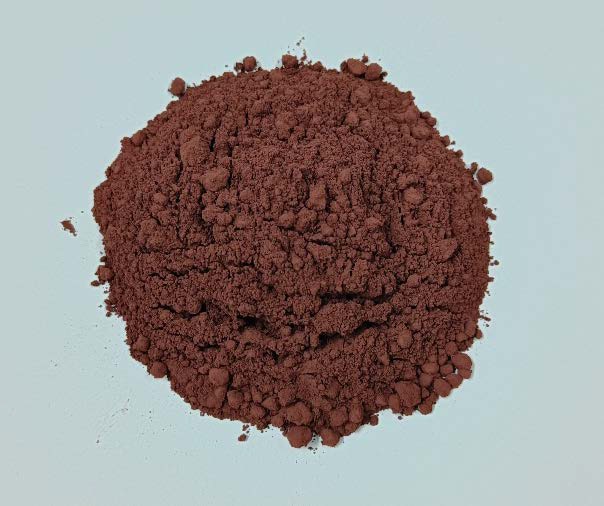
Key Takeaways & Executive Findings
- •• Achieved 99.58% gold recovery from low-concentration thiosulfate leaching solution using a novel activated carbon-coated titanium electrode (Ti@AC), outperforming existing methods by 30–80%. • The Ti@AC electrode demonstrated exceptional stability in ten consecutive 200 L pilot-scale tests, maintaining >98% recovery and producing 20.23 g of gold. • The porous activated carbon structure enhances adsorption of Au(S2O3)3−2, while low charge transfer resistance enables efficient electroreduction to metallic gold (Au0). • The study offers a cost-effective, industrially scalable strategy for direct reduction of low-concentration precious metal ions, overcoming barriers to thiosulfate gold extraction commercialization.
Abstract
Thiosulfate gold extraction technology has gained considerable interest owing to its environmental compatibility and broad applicability to diverse ore types. However, the lack of efficient methods to recover Au(S2O3)3−2 from leaching solutions has hindered its industrial implementation. To address this challenge, this study used a thiosulfate leaching solution from quartz-type gold ores to design an activated carbon-coated titanium electrode (Ti@AC) with a porous surface structure. This electrode facilitated the direct reduction of low-concentration Au(S2O3)3−2 to metallic gold (Au0) in solution, achieving a gold recovery of 99.58%, surpassing other recovery methods from the leaching solution by 30%‒80%. After ten consecutive 200 L pilot-scale tests, the Ti@AC electrode demonstrated remarkable stability, consistently maintaining a recovery >98% and yielding 20.23 g of gold. The porous architecture of the activated carbon (AC) promoted the adsorption of low-concentration Au(S2O3)3−2, while its low charge transfer resistance facilitated the efficient conversion of Au(S2O3)3−2 to Au0. Moreover, the reduction reaction generated a concentration gradient near the cathode, promoting the diffusion of Au(S2O3)3−2 toward the electrode and ensuring an efficient recovery process. This study provides a feasible strategy for the direct reduction of low-concentration precious metal ions to monomers with high recovery and low costs, which is promising for industrial applications.
1. Introduction
Gold, a strategic resource critical to maintaining national financial and economic stability [1], is extensively utilized in vital sectors, including electronics, healthcare, aerospace, and catalytic chemistry [2–4]. Although cyanide-based extraction remains the predominant industrial gold recovery method because of its technical maturity [5–6], the use of cyanide poses significant environmental risks. Furthermore, the prevalence of cyanide-refractory ores, including carbonaceous deposits, continues to increase [7–8], exacerbating the limitations of conventional approaches. Consequently, environmentally benign and adaptable gold extraction technologies must be developed to ensure the sustainable development and technological modernization of the gold industry [9].
In recent years, cyanide alternatives, such as thioureas, halogens, thiocyanates, and thiosulfates, have been extensively investigated [10‒12]. Thiosulfate leaching is one of the most promising alternatives for industrial adoption because of its nontoxic nature, environmental compatibility, and efficiency in gold extraction from cyanide-refractory ores [13–14]. Current strategies for recovering low-concentration Au(S2O3)3−2 from thiosulfate leaching solutions include adsorption [15], cementation [16], solvent extraction [17], and electrodeposition [18]. However, Au(S2O3)3−2 exhibits a larger ionic radius and higher charge density than Au(CN)2−, resulting in poor adsorption efficiency on activated carbon (AC) even after surface modification [19–20]. Ion-exchange resins are limited by their low selectivity and interference from competing ions [21–22]. Cementation processes that utilize reactive metals, such as zinc and iron, to displace gold often suffer from copper co-deposition, leading to product contamination and substantial cementation reagent consumption [23]. Solvent extraction requires costly organic solvents and high-concentration Au(S2O3)3−2 solutions, which significantly increase recovery costs. Although electrodeposition is widely applied for metal recovery [24], its efficiency decreases in low-concentration Au(S2O3)3−2 solutions with a high impurity ion content.
The use of a pulsed voltage to accelerate metal recovery and reduce the product impurities that prevent the co-deposition of other metals during electrodeposition has been explored to enhance the electrodeposition method [25–26]. However, precise voltage control and the use of small Au(S2O3)3−2 reduction overpotentials are required, which necessitates a higher gold concentration in the solution and a prolonged recovery time. Another strategy involves the incorporation of an adsorbent or reducing material, such as MoS2 [27–28], on the electrode surface to reduce the electrodeposition voltage and achieve selective gold recovery [29]. However, the high cost associated with MoS2 synthesis renders this approach impractical for industrial applications. Research has also focused on the use of carbon materials on the electrode surface, which enables the recovery of Au(S2O3)3−2 from low-concentration simulated solutions [30–31]. However, using prepared carbon materials is costly, and its effectiveness in leaching
Loading authentic research manuscript (Pages 1–5)...
Yong Zeng, Xiyuan Che, Lei Zhang, Peng Chen, Shaoxian Song, Deshou Wang, Feifei Jia (2025). Direct recovery of low-concentration Au(S2O3)3−2 from pregnant leach solution using an activated carbon-coated titanium electrode. Journal of Mineral Metallurgy and Materials Science. https://doi.org/10.1007/s12613-025-3328-y
Research & Educational Purpose Only:The translations, structured abstracts, analytical annotations, and data reports provided by SinoTechIntel are intended exclusively for academic research, internal corporate R&D, and educational benchmarking. They do not constitute formal engineering, chemical safety, legal, or professional advice.
Copyright & Intellectual Property Notice: Original copyright of the underlying source articles and experimental data remains with the respective authors, institutions, and original publishing journals. SinoTechIntel claims intellectual property only over its proprietary translations, analytical syntheses, and AEO structured enhancements in accordance with international fair use and academic citation principles.
Frequently Asked Questions
What is the main innovation of this study?
The development of an activated carbon-coated titanium electrode (Ti@AC) that enables direct electroreduction of low-concentration Au(S2O3)3−2 from thiosulfate leaching solutions, achieving 99.58% gold recovery with excellent stability in pilot-scale tests.
How does the Ti@AC electrode improve gold recovery?
The porous activated carbon layer enhances adsorption of gold-thiosulfate complexes, while its low charge transfer resistance facilitates efficient reduction to metallic gold. The concentration gradient near the cathode promotes diffusion of gold species to the electrode surface.
What are the advantages over traditional methods?
Compared to adsorption, cementation, solvent extraction, and conventional electrodeposition, the Ti@AC electrode offers higher recovery (30–80% improvement), lower cost, and better stability, making it suitable for industrial applications.
Was the process validated at scale?
Yes, ten consecutive 200 L pilot-scale tests demonstrated consistent >98% gold recovery and yielded 20.23 g of gold, confirming industrial feasibility.
What are the environmental benefits?
Thiosulfate leaching is nontoxic and environmentally compatible, and the direct recovery method reduces reagent consumption and waste, supporting sustainable gold extraction.
Related Technical Papers & Translations
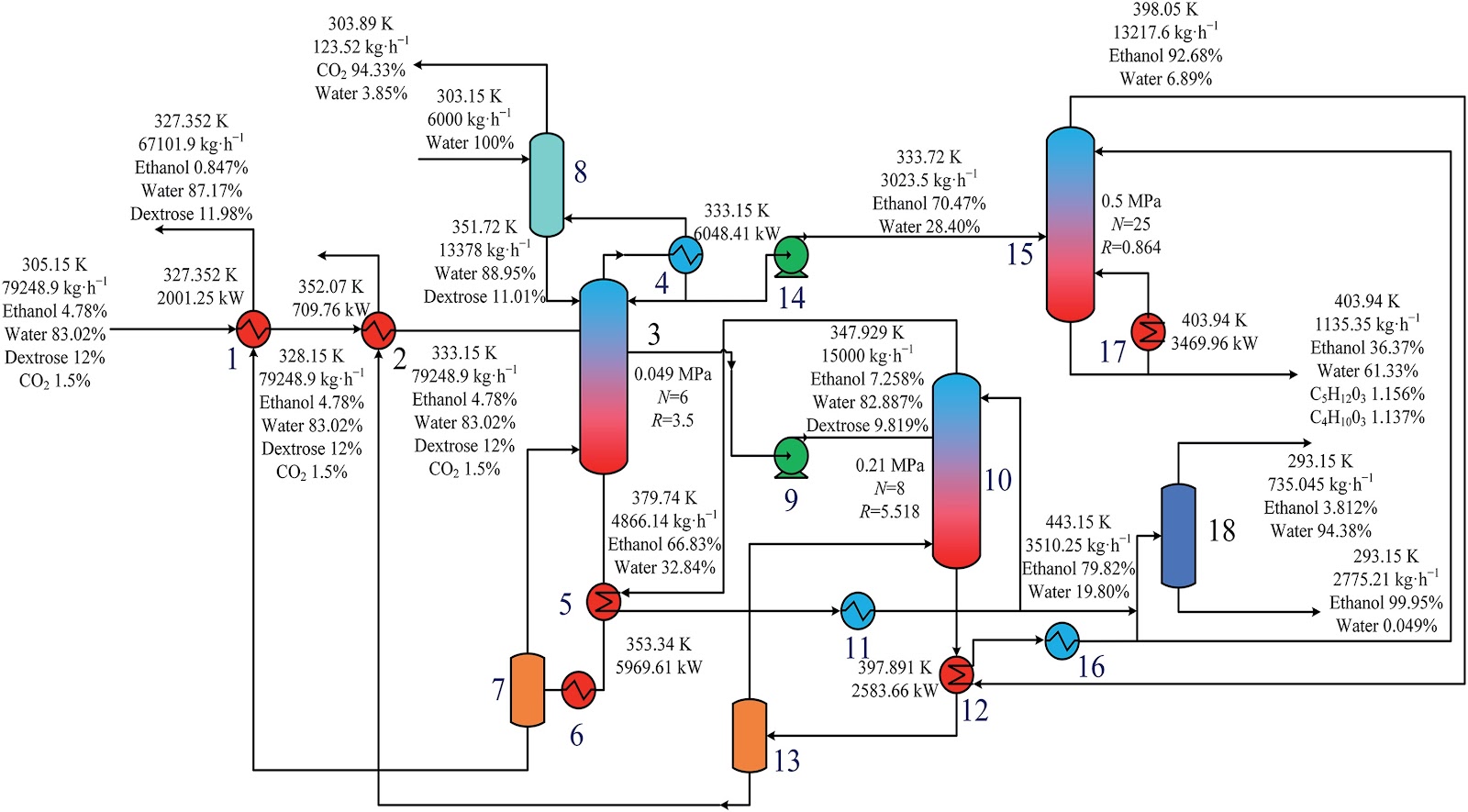
Design and optimization of a high-efficiency distillation process for cellulosic fuel ethanol integrated with thermal coupling and molecular sieve adsorption
To address the challenges of high energy consumption and prominent costs in the traditional three-columns distillation process for cellulosic fuel ethanol, a distillation—molecular sieve coupling separation process is proposed. This process integrates a three-column (crude distillation column, first distillation column, second distillation column) system with a 3A molecular sieve adsorption deep dehydration unit. A thermal coupling network is constructed via differential pressure design (steam from medium/high-pressure columns as mutual heat sources, reboiler liquid waste heat for feed preheating), and molecular sieve adsorption conditions are optimized. The study first performs a thermodynamic consistency test on the ethanol—water system, determines optimal non-random two-liquid (NRTL) model binary interaction parameters via experimental data regression for Aspen Plus simulation. Aiming at minimum total annual cost (TAC), Aspen Plus is used to optimize process parameters (theoretical tray number, feed location, reflux ratio, side-draw position, etc.). Economic analysis shows this process reduces CO2 emission costs by 27.56%, TAC by 15.58% (to 5.123 × 10⁶ USD·a-1), and increases ethanol purity to >99.6%, providing an effective solution for green, efficient separation.
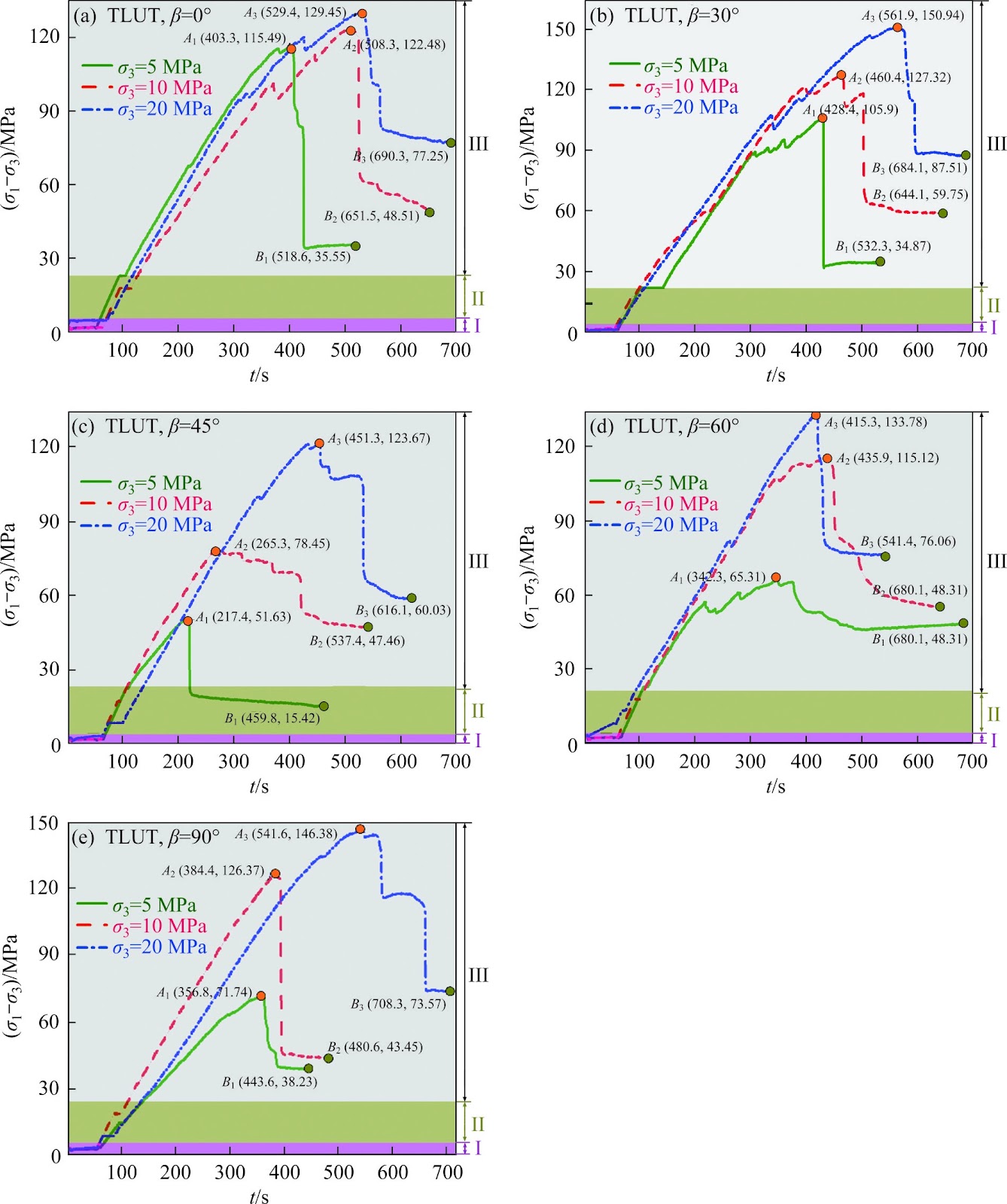
A cohesion loss model for determining residual strength of deep bedded sandstone
Rock residual strength, as an important input parameter, plays an indispensable role in proposing the reasonable and scientific scheme about stope design, underground tunnel excavation and stability evaluation of deep chambers. Therefore, previous residual strength models of rocks established were reviewed. And corresponding related problems were stated. Subsequently, starting from the effects of bedding and whole life-cycle evolution process, series of triaxial mechanical tests of deep bedded s
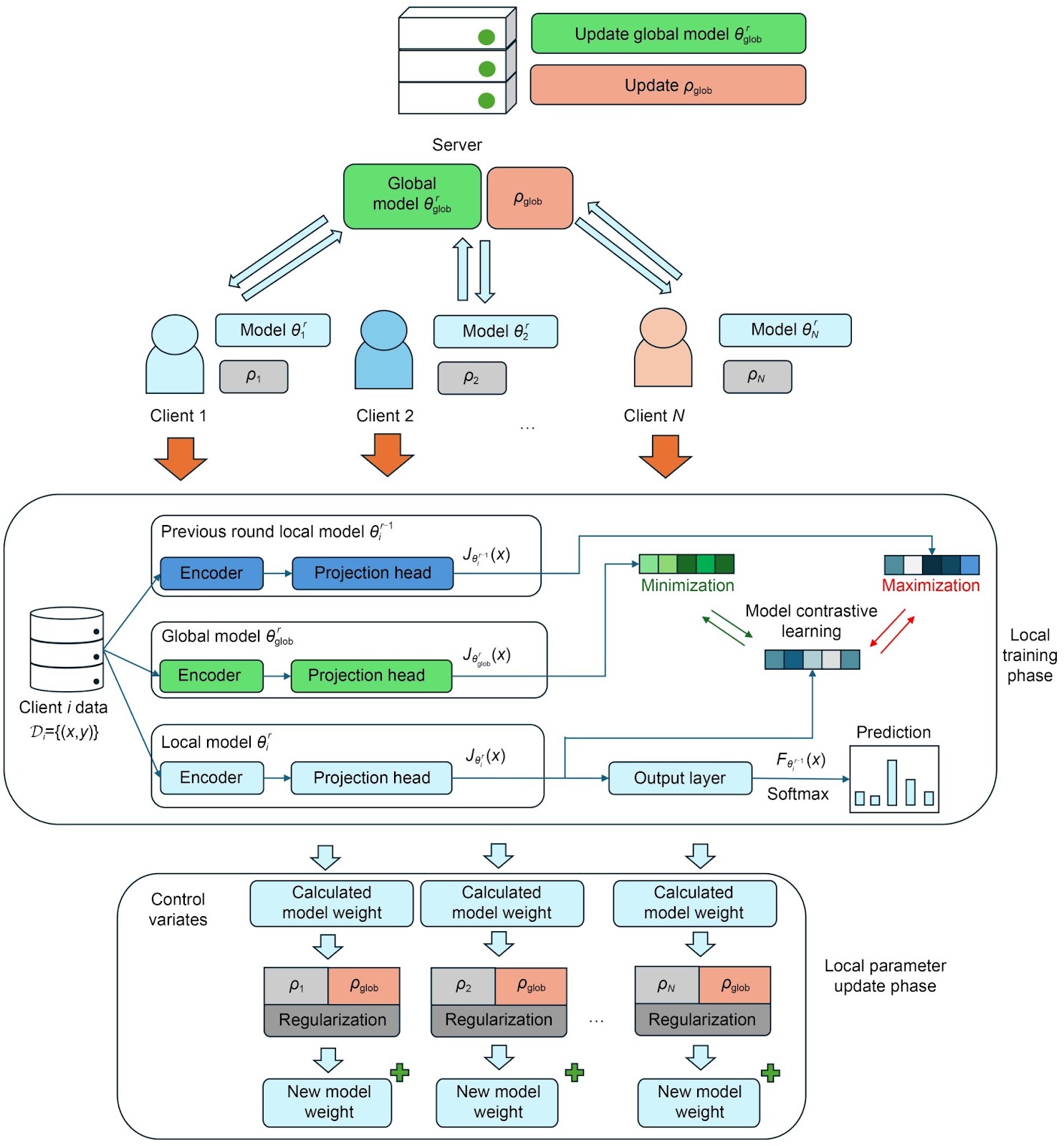
Federated model with contrastive learning and adaptive control variates for human activity recognition
Recent attention to privacy issues demands a communication-safe method for training human activity recognition (HAR) models on client activity data. Federated learning (FL) has become a compelling technique to facilitate model training between the server and clients while preserving data privacy. However, classical FL methods often assume independent and identically distributed (IID) data among clients. This assumption does not hold true in practical scenarios. Human activity in real-world scena