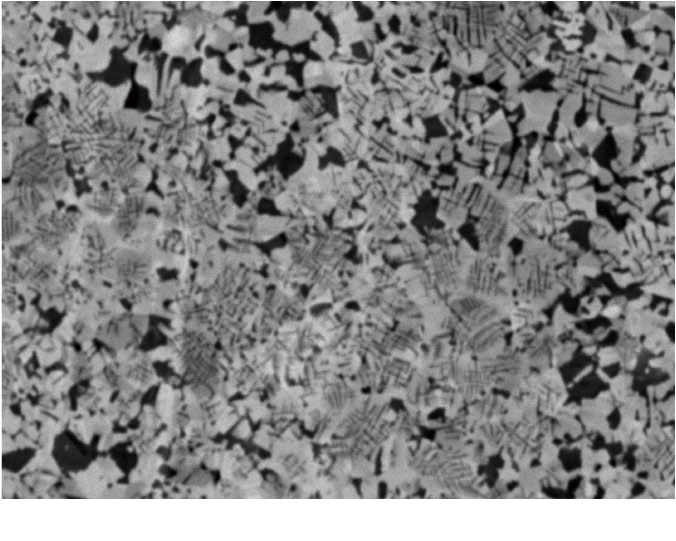
Key Takeaways & Executive Findings
- •• Developed a novel Co–30Ni–10Al–5V–4Ta–12Cr superalloy with a stable γ/γ′ two-phase structure and high Cr content for enhanced oxidation resistance. • Achieved a high γ′ solvus temperature of 1139°C, low density of 8.48 g/cm3, minimal γ/γ′ lattice misfit of +0.28%, and high compressive yield strength of 651 MPa at 800°C. • Demonstrated excellent oxidation resistance with a weight gain of 6.5 mg/cm3 after 200 h at 1000°C, attributed to a complex oxide scale including outer and inner mixed oxide layers. • Utilized the CALPHAD method for thermodynamic design and phase stability assessment, proving its effectiveness in optimizing high-Cr Co-based superalloys.
Abstract
Enhancing the oxidation resistance of Co-based superalloys by adding a high content of Cr, while simultaneously ensuring the stability of the γ/γ′ phases, presents a significant challenge. This study evaluated the alloying potential of Co–30Ni–10Al–5V–4Ta using the CALPHAD method, revealing promising characteristics. The developed Co–30Ni–10Al–5V–4Ta–12Cr alloy characterized by high Cr content and γ/γ′ two-phase structure, demonstrating high γ′ solvus temperature of 1139°C, low density of 8.48 g/cm3, minimal γ/γ′ lattice misfit of +0.28%, high compressive yield strength of 651 MPa at 800°C, and excellent oxidation resistance with a weight gain of 6.5 mg/cm3 after 200 h at 1000°C. Examination of the oxidation behavior at 1000°C revealed an oxide layer consisting of a porous outer CoO, NiO, and V3O4 (CNV) oxide and a denser inner mixed oxide layer comprising CoO, NiO, and V3O4 (CNV) oxide, Al2O3, Cr2O3, CoO, and NiO (CNAC) oxide, and TaO2, CoO, and NiO (CNT) oxide.
1. Introduction
In the preceding decade, there has been a growing interest in the advancement of Co-based superalloys, largely fueled by the need for improved materials in aviation and power generation [1–2]. In 2006, a significant advancement was achieved by Professor Ishida of Japan, who introduced a Co–Al–W-based superalloy exhibiting a dual-phase γ and γ′ microstructural configuration [3]. This breakthrough established γ′ phase-strengthened Co-based superalloys as strong contenders for future applications requiring high-temperature structural performance. Recent years have witnessed significant progress in the exploration of novel Co-based superalloys, extending beyond Co–Al–W/Mo/V-based [3–9], notable systems including Co–Ti-based [10–13], Co–V–Nb/Ta-based [14–16], Co–W–Ga/Ge-based [17–18], and so on. These developments have substantially enriched the research landscape and the potential for innovation within the Co-based superalloy field.
The incorporation of Cr into Co-based superalloys is well-acknowledged for its role in enhancing oxidation resistance. Research conducted by Li et al. [19] has demonstrated that while the presence of Cr can destabilize the γ/γ′ microstructure, it concurrently provides oxidation resistance levels comparable to those found in commercial Ni-based superalloys. Numerous investigations have focused on elucidating the mechanisms behind Cr oxide formation and its influence on oxidation resistance in Co-based systems, aiming to identify the optimal Cr concentration necessary for enhanced performance [20–23]. Furthermore, the incorporation of Cr affects various material properties, including precipitate morphology and lattice parameter misfit. Yan et al. [20] noted that Cr alloying can destabilize the γ/γ′ structure by promoting the formation of topologically close-packed (TCP) phases, whereas the addition of Ni serves to expand the γ/γ′ phase region, thereby aiding in the restoration of the γ/γ′ microstructure. In a systematic study, Povstugar et al. [24] analyzed the effects of increasing Cr levels in Co–Al–W alloys, concluding that Cr reduces the lattice misfit between the γ and γ′ phases. Collectively, these studies indicate that while the incorporation of Cr significantly improves oxidation resistance and overall service performance, it poses substantial challenges to maintaining the stability of the γ/γ′ two-phase microstructure. Consequently, optimizing Co-based superalloys with high Cr content is critically important.
In 2019, Chen et al. [5] reported a novel category of W-free Co-based superalloys, namely, Co–Al–V-based superalloys. Among these, the Co–30Ni–10Al–5V–4Ta alloy was notable for its extensive γ/γ′ two-phase region, a high γ′ solvus temperature of 1172°C, and a relatively low density of 8.70 g/cm3. These findings underscore the considerable potential of such alloys to serve as the next generation of advanced superalloy. This study aims to alloy the Co–30Ni–10Al–5V–4Ta base alloy with Cr to minimize the γ/γ′ lattice misfit and improve oxidation resistance. However, the addition of Cr could promote the formation of TCP phases, necessitating a thorough assessment of the alloying potential and phase stability of the base alloy.
Recent research has highlighted the effectiveness of the CALPHAD method for thermodynamic calculations, aiding in the efficient composition design and performance optimization.
Loading authentic research manuscript (Pages 1–5)...
Xiang Yu, Yuechao Chen, Yong Lu, Yihui Guo, Jinbin Zhang, Yixiong Huang, Yupeng Zhang, Jiajia Han, Cuiping Wang, Xingjun Liu (2025). Development and characterization of a high-Cr-content Co–Ni–Al–V–Ta–Cr superalloy: Microstructure, mechanical properties and oxidation resistance. Journal of Mineral Metallurgy and Materials Science. https://doi.org/10.1007/s12613-025-3229-0
Research & Educational Purpose Only:The translations, structured abstracts, analytical annotations, and data reports provided by SinoTechIntel are intended exclusively for academic research, internal corporate R&D, and educational benchmarking. They do not constitute formal engineering, chemical safety, legal, or professional advice.
Copyright & Intellectual Property Notice: Original copyright of the underlying source articles and experimental data remains with the respective authors, institutions, and original publishing journals. SinoTechIntel claims intellectual property only over its proprietary translations, analytical syntheses, and AEO structured enhancements in accordance with international fair use and academic citation principles.
Frequently Asked Questions
What is the key innovation of this Co-based superalloy?
The Co–30Ni–10Al–5V–4Ta–12Cr superalloy combines a high Cr content with a stable γ/γ′ two-phase microstructure, achieving a superior balance of high-temperature mechanical properties and oxidation resistance.
How was the alloy composition designed?
The CALPHAD method was used to evaluate the alloying potential of the base Co–30Ni–10Al–5V–4Ta alloy, allowing for thermodynamic optimization and phase stability assessment before experimental development.
What are the mechanical properties at high temperature?
The alloy exhibits a compressive yield strength of 651 MPa at 800°C, a high γ′ solvus temperature of 1139°C, low density of 8.48 g/cm3, and minimal γ/γ′ lattice misfit of +0.28%.
What is the oxidation resistance performance?
After 200 hours at 1000°C, the alloy shows a weight gain of 6.5 mg/cm3, indicating excellent oxidation resistance due to the formation of a complex oxide scale consisting of porous outer and denser inner mixed oxide layers.
Why is chromium addition challenging in Co-based superalloys?
While Cr significantly improves oxidation resistance, it can destabilize the γ/γ′ phases and promote the formation of topologically close-packed (TCP) phases. Careful alloying and thermodynamic design are needed to mitigate these effects, as demonstrated in this study.
Related Technical Papers & Translations
Design and optimization of a high-efficiency distillation process for cellulosic fuel ethanol integrated with thermal coupling and molecular sieve adsorption
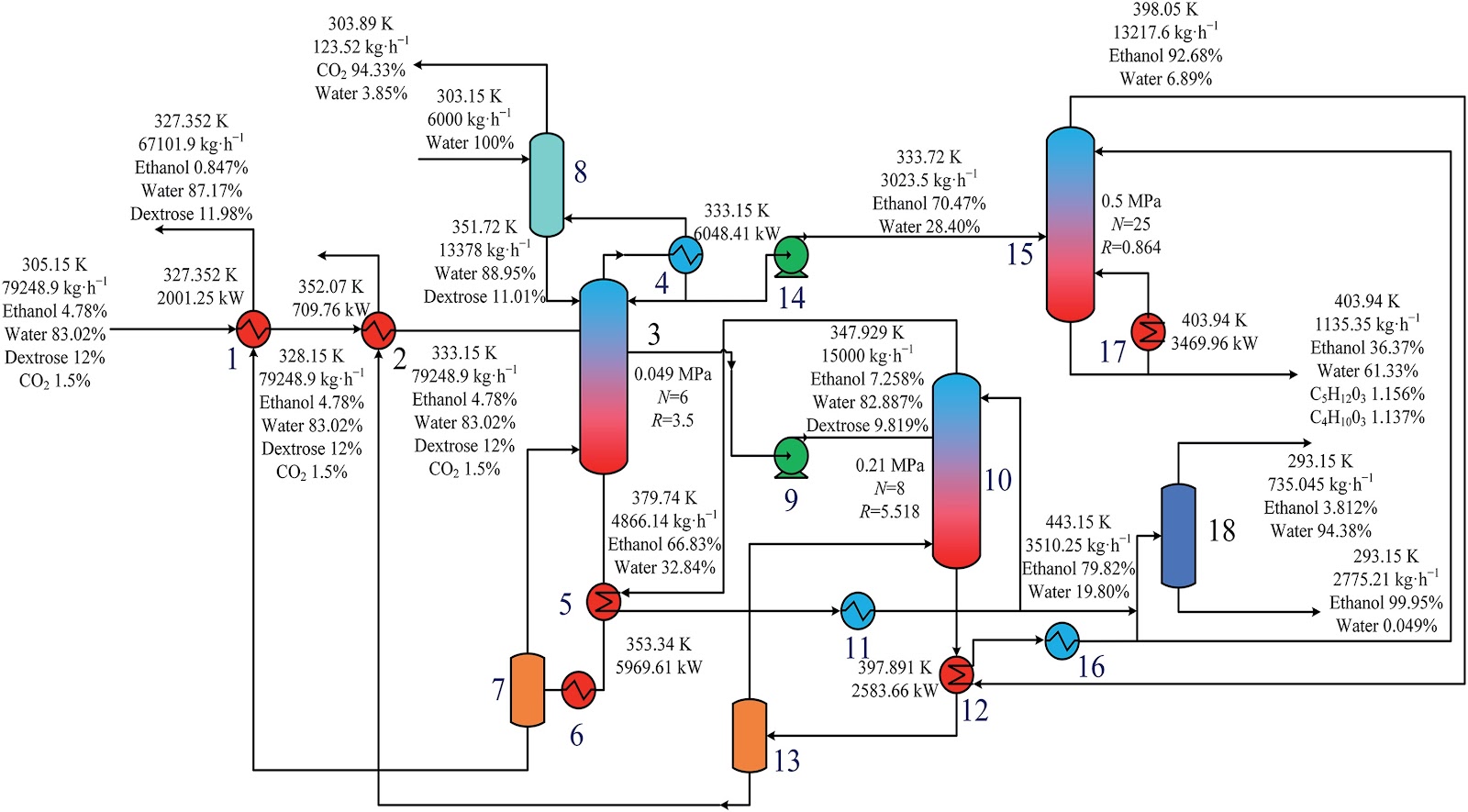
To address the challenges of high energy consumption and prominent costs in the traditional three-columns distillation process for cellulosic fuel ethanol, a distillation—molecular sieve coupling separation process is proposed. This process integrates a three-column (crude distillation column, first distillation column, second distillation column) system with a 3A molecular sieve adsorption deep dehydration unit. A thermal coupling network is constructed via differential pressure design (steam from medium/high-pressure columns as mutual heat sources, reboiler liquid waste heat for feed preheating), and molecular sieve adsorption conditions are optimized. The study first performs a thermodynamic consistency test on the ethanol—water system, determines optimal non-random two-liquid (NRTL) model binary interaction parameters via experimental data regression for Aspen Plus simulation. Aiming at minimum total annual cost (TAC), Aspen Plus is used to optimize process parameters (theoretical tray number, feed location, reflux ratio, side-draw position, etc.). Economic analysis shows this process reduces CO2 emission costs by 27.56%, TAC by 15.58% (to 5.123 × 10⁶ USD·a-1), and increases ethanol purity to >99.6%, providing an effective solution for green, efficient separation.
A cohesion loss model for determining residual strength of deep bedded sandstone
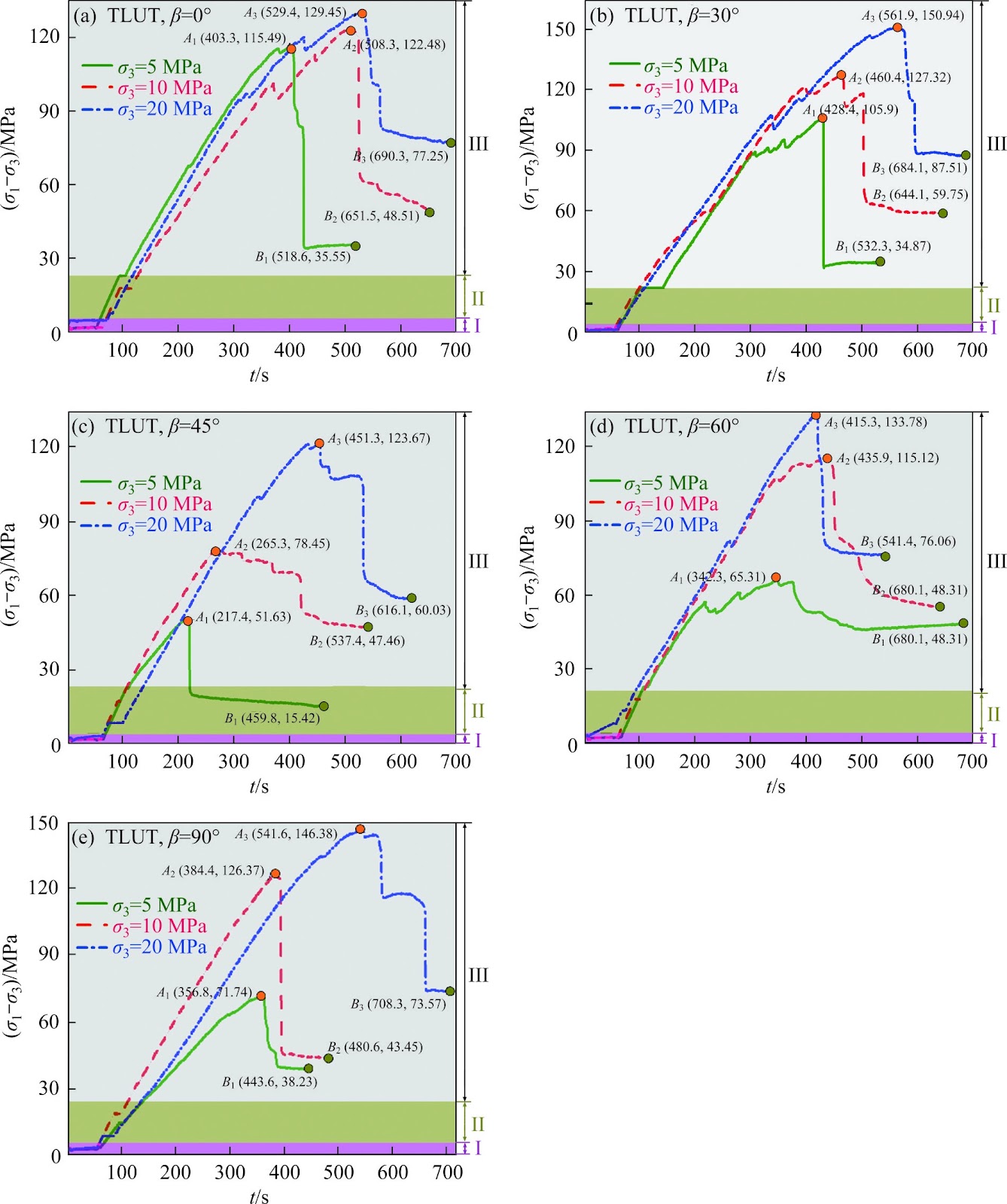
Rock residual strength, as an important input parameter, plays an indispensable role in proposing the reasonable and scientific scheme about stope design, underground tunnel excavation and stability evaluation of deep chambers. Therefore, previous residual strength models of rocks established were reviewed. And corresponding related problems were stated. Subsequently, starting from the effects of bedding and whole life-cycle evolution process, series of triaxial mechanical tests of deep bedded s
Federated model with contrastive learning and adaptive control variates for human activity recognition
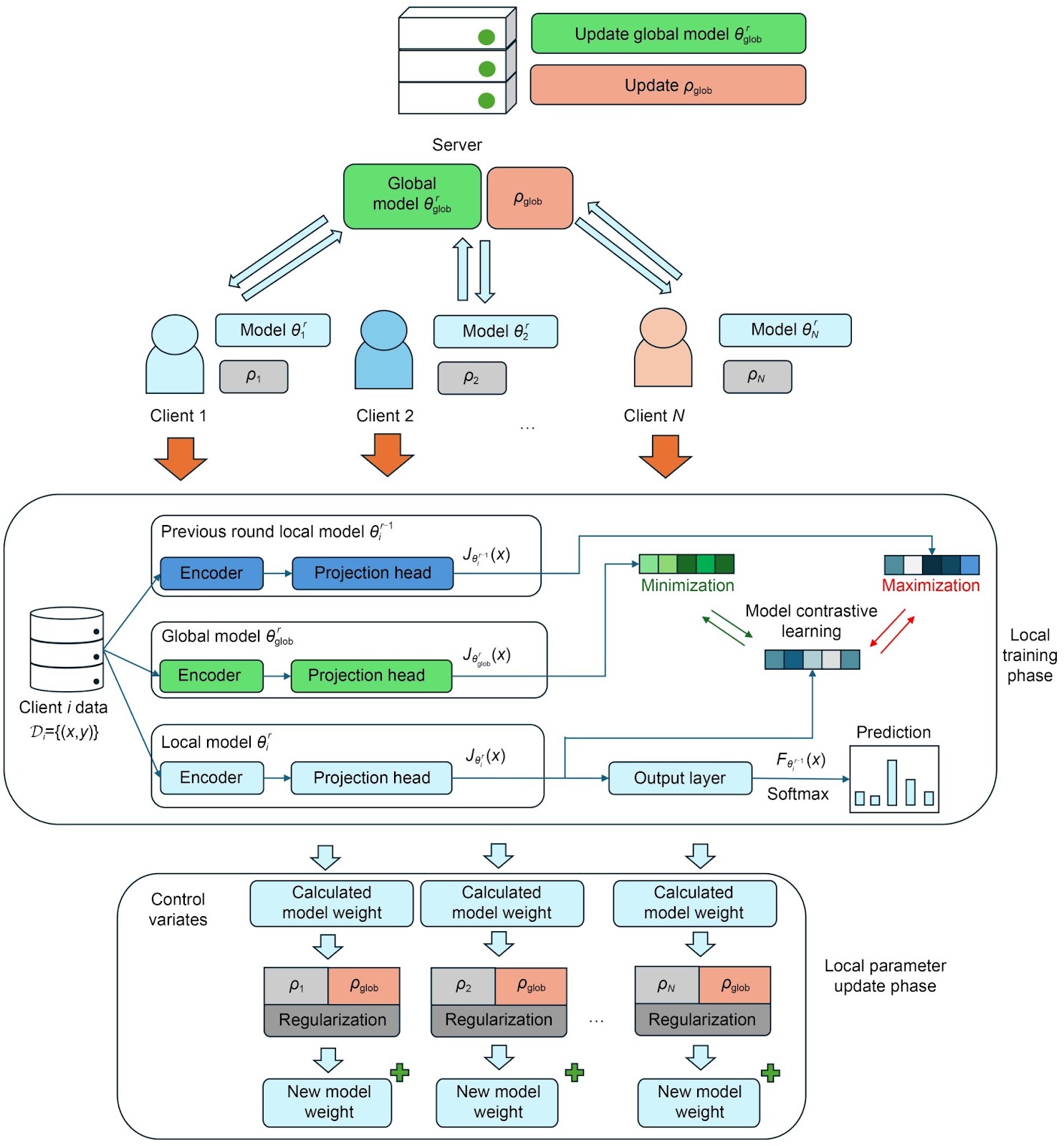
Recent attention to privacy issues demands a communication-safe method for training human activity recognition (HAR) models on client activity data. Federated learning (FL) has become a compelling technique to facilitate model training between the server and clients while preserving data privacy. However, classical FL methods often assume independent and identically distributed (IID) data among clients. This assumption does not hold true in practical scenarios. Human activity in real-world scena