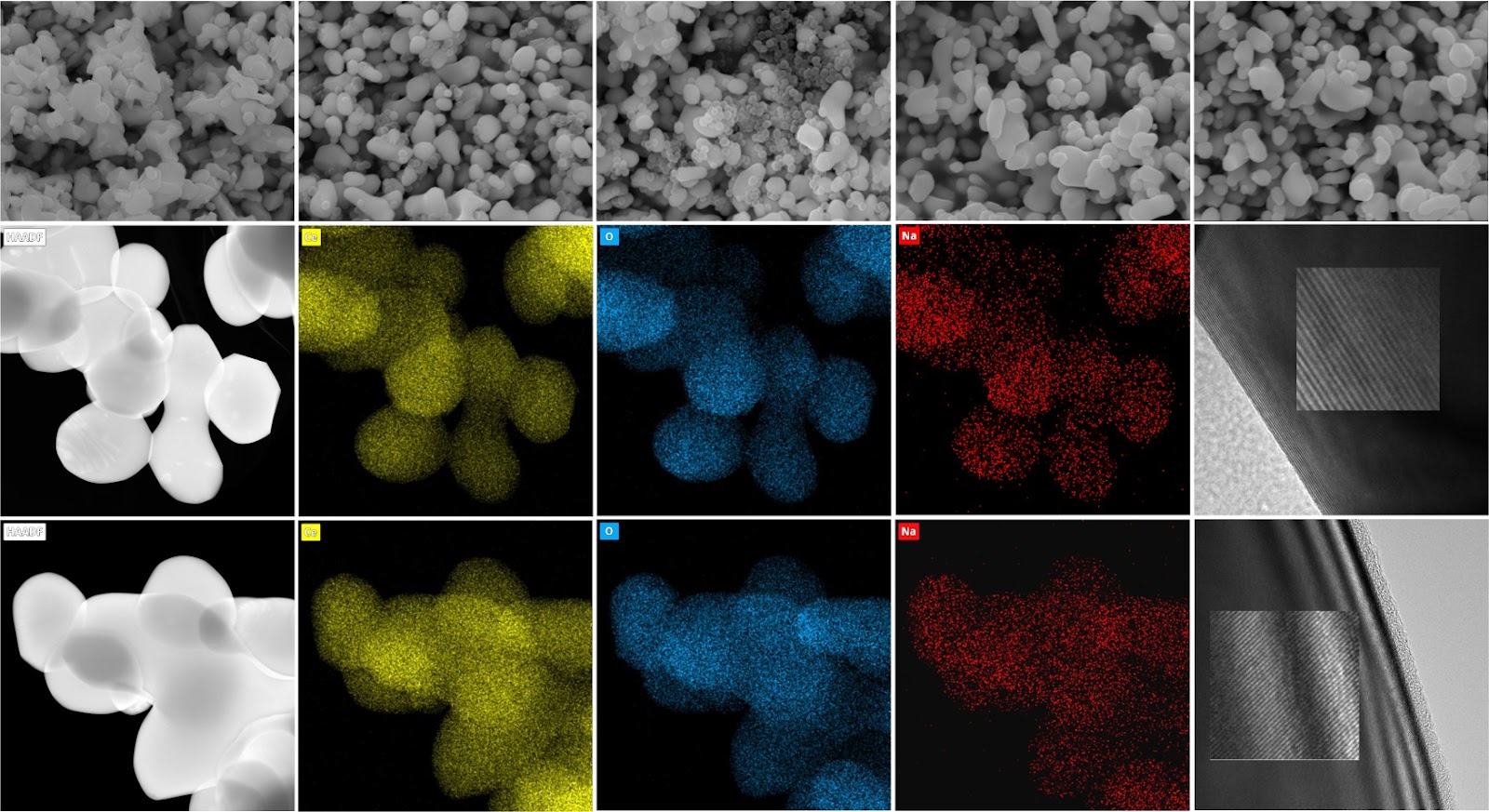
Key Takeaways & Executive Findings
- •• Na doping in CeO2 lowers the oxygen-vacancy formation energy, facilitating faster ionic transport. • A Na doping concentration of 0.15 molar ratio (0.15NDC) yields the highest oxygen-vacancy concentration and peak ionic conductivity. • 0.15NDC-based SOFCs achieve maximum power densities of 208 and 778 mW·cm−2 at 550°C depending on the fabrication method (ceramic vs. dry-pressing). • Moderate Na doping is a promising strategy for developing high-performance low-temperature SOFC electrolytes, whereas excessive dopant is detrimental.
Abstract
Na-doped CeO2 (NDC) electrolytes with 0.05, 0.10, 0.15, and 0.20 molar ratios of Na ions (0.05NDC, 0.1NDC, 0.15NDC, and 0.2NDC) were synthesized and systematically evaluated for low-temperature solid oxide fuel cell (SOFC) applications. Density functional theory (DFT) calculations reveal that Na doping lowers the oxygen-vacancy formation energy. Structural analysis confirms progressive lattice expansion in NDCs and a maximum oxygen-vacancy concentration in 0.15NDC, while incomplete incorporation of Na in 0.2NDC yields residual Na2CO3. Conductivity studies demonstrate negligible electronic conductivity and a peak ionic conductivity in 0.15NDC, suggesting that moderate Na doping enhances ionic transport, whereas excessive dopant is detrimental. Two 0.15NDC-based SOFCs are fabricated by ceramic and dry-pressing methods, and their maximum power densities at 550°C are 208 and 778 mW·cm−2, respectively, indicating the rapid ionic transport of the 0.15NDC electrolyte. These results demonstrate that Na doping is an effective route for developing advanced low-temperature SOFC electrolytes.
1. Introduction
In the pursuit of efficient and sustainable energy conversion technologies, solid oxide fuel cells (SOFCs) have emerged as promising candidates for future energy systems due to their high efficiency, low emissions, and versatile fuel adaptability [1]. The electrolyte, a core component of SOFCs, conducts oxide ions and maintains electrical insulation between the electrodes, thereby playing a crucial role in determining the overall performance and efficiency of the SOFCs [2]. Developing an electrolyte with high ionic conductivity, low electronic conductivity, and good chemical stability is essential for advancing SOFC technology [3]. At present, Y2O3-stabilized ZrO2 (YSZ) is the most widely used electrolyte because of its high ionic conductivity, excellent stability at high temperatures, and extremely low electronic conductivity under reducing conditions. However, YSZ electrolyte requires high temperatures above 750°C to achieve sufficient ionic conductivity for high-power SOFC operation [4–5], which adversely affect the sealing processes and durability of SOFCs, thereby hindering the commercialization of SOFCs.
To address this challenge, research in the past decades has focused on developing alternative electrolytes based on CeO2, Bi2O3, LaGaO3, BaCeO3, and BaZrO3 [6–9]. Among these oxides, CeO2 has attracted the most attention because its ionic conductivity surpasses that of YSZ in the intermediate-temperature range (550–750°C) [10–11]. Various approaches have been proposed to reduce the ohmic resistance of CeO2-based electrolytes, such as thin-film, doping, and compositing methods [12–14]. Among these, cation doping is particularly effective because it introduces oxygen defects in the fluorite structure of CeO2, increasing the concentration of oxygen vacancies for faster oxygen ion transport [15–17]. A series of doped-CeO2 electrolytes have been developed using Sm3+, Gd3+, La3+, Y3+, Yb3+, Nd3+, Pr3+, and Eu3+ dopants [17–19]. Subsequent studies explored co-doping, such as Sm3+/Y3+ and Sm3+/Nd3+, to promote oxygen-vacancy generation in CeO2 [20–21], while tri-doping has also been studied to tailor the structural, electrical, and thermal properties of CeO2 for improved stability and reduced electronic mobility [22–25].
These studies reveal a clear preference for using trivalent cations (Ln3+) to substitute Ce4+ in CeO2 when developing new electrolytes, rather than divalent or monovalent cations [15–24,26]. This is primarily because substituting Ce4+ with divalent cations (such as Ca2+ and Sr2+) and monovalent cations (Na+ and K+) tends to cause defect association in the CeO2 lattice. Strong coulombic interaction between divalent/monovalent ions and oxygen vacancies can immobilize these vacancies, thereby reducing ionic mobility [27–28]. In contrast, the substitution of a Ce4+ with a Ln3+ introduces 0.5 oxygen vacancy in accordance with the charge balance mechanism, which is conducive to forming lower defect association energy in CeO2 [29]. Moreover, the introduction of lower-valence cations may promote the reduction from Ce4+ to Ce3+, which increases the electronic conductivity of CeO2-based electrolytes and thus leads to current leakage of SOFCs [30]. In contrast, Ln3+ doping can inhibit the transition from Ce4+ to Ce3+ under reducing atmosphere, suppressing the n-type electronic conduction [31]. Consequently, divalent and monovalent cations are generally considered less suitable for CeO2-based electrolyte design.
Loading authentic research manuscript (Pages 1–5)...
Qi An, Ruyi Hou, Xinchao Mei, Muhammad Afzal, Wenjing Dong, Baoyuan Wang, Xunying Wang, Chen Xia (2025). Developing sodium-doped ceria-based electrolytes for low-temperature solid oxide fuel cells. Journal of Mineral Metallurgy and Materials Science. https://doi.org/10.1007/s12613-025-3337-x
Research & Educational Purpose Only:The translations, structured abstracts, analytical annotations, and data reports provided by SinoTechIntel are intended exclusively for academic research, internal corporate R&D, and educational benchmarking. They do not constitute formal engineering, chemical safety, legal, or professional advice.
Copyright & Intellectual Property Notice: Original copyright of the underlying source articles and experimental data remains with the respective authors, institutions, and original publishing journals. SinoTechIntel claims intellectual property only over its proprietary translations, analytical syntheses, and AEO structured enhancements in accordance with international fair use and academic citation principles.
Frequently Asked Questions
What is the optimal Na doping concentration in ceria-based electrolytes?
The study found that 0.15NDC (15% Na molar ratio) exhibits the maximum oxygen-vacancy concentration and peak ionic conductivity, leading to the best SOFC performance among the tested compositions.
How does Na doping affect oxygen vacancy formation energy?
Density functional theory (DFT) calculations revealed that Na doping lowers the oxygen-vacancy formation energy, which promotes the creation of oxygen vacancies and enhances ionic transport.
What are the maximum power densities achieved with 0.15NDC-based SOFCs?
Two 0.15NDC-based SOFCs fabricated by ceramic and dry-pressing methods achieved maximum power densities of 208 and 778 mW·cm−2 at 550°C, respectively, demonstrating rapid ionic transport.
Why is trivalent doping typically preferred over monovalent doping in CeO2 electrolytes?
Trivalent cations (Ln3+) introduce 0.5 oxygen vacancy per substitution without causing strong defect association or excessive electronic conductivity, whereas monovalent/divalent doping can immobilize vacancies and promote Ce4+ reduction, leading to current leakage.
What is the significance of this research for low-temperature SOFC development?
The study demonstrates that moderate Na doping is an effective route to develop advanced low-temperature SOFC electrolytes with high ionic conductivity and performance, offering a new strategy beyond conventional trivalent doping.
Related Technical Papers & Translations
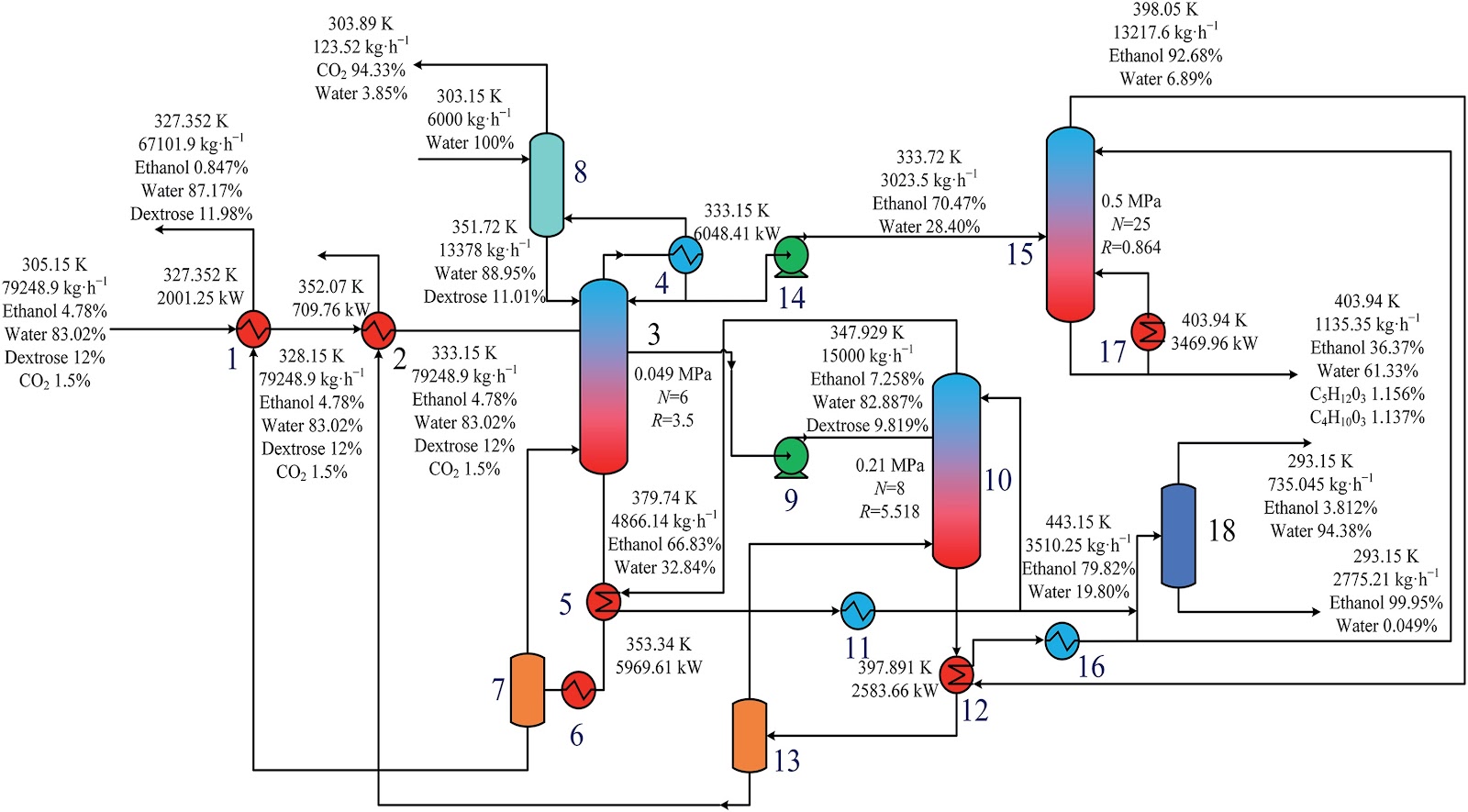
Design and optimization of a high-efficiency distillation process for cellulosic fuel ethanol integrated with thermal coupling and molecular sieve adsorption
To address the challenges of high energy consumption and prominent costs in the traditional three-columns distillation process for cellulosic fuel ethanol, a distillation—molecular sieve coupling separation process is proposed. This process integrates a three-column (crude distillation column, first distillation column, second distillation column) system with a 3A molecular sieve adsorption deep dehydration unit. A thermal coupling network is constructed via differential pressure design (steam from medium/high-pressure columns as mutual heat sources, reboiler liquid waste heat for feed preheating), and molecular sieve adsorption conditions are optimized. The study first performs a thermodynamic consistency test on the ethanol—water system, determines optimal non-random two-liquid (NRTL) model binary interaction parameters via experimental data regression for Aspen Plus simulation. Aiming at minimum total annual cost (TAC), Aspen Plus is used to optimize process parameters (theoretical tray number, feed location, reflux ratio, side-draw position, etc.). Economic analysis shows this process reduces CO2 emission costs by 27.56%, TAC by 15.58% (to 5.123 × 10⁶ USD·a-1), and increases ethanol purity to >99.6%, providing an effective solution for green, efficient separation.
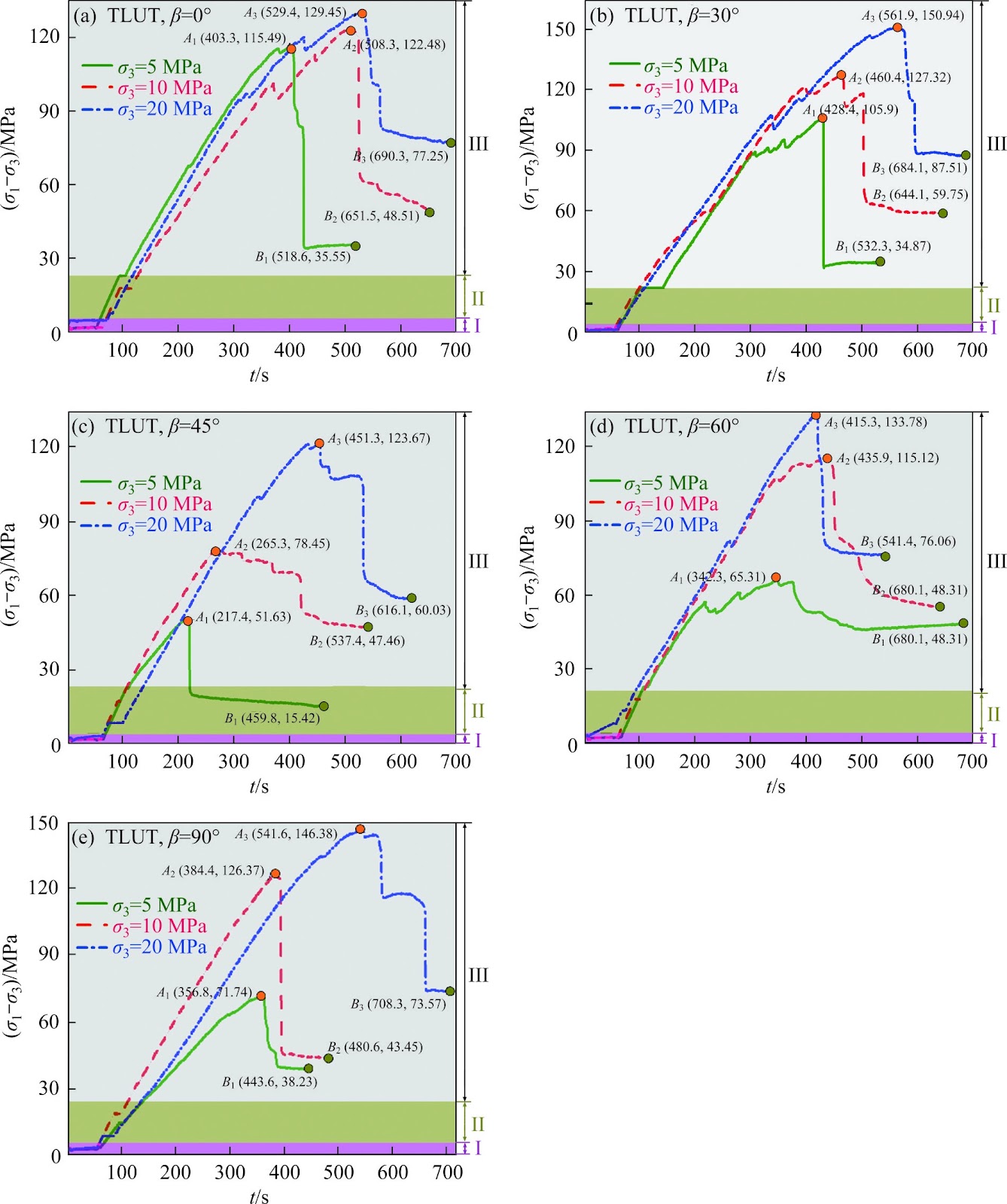
A cohesion loss model for determining residual strength of deep bedded sandstone
Rock residual strength, as an important input parameter, plays an indispensable role in proposing the reasonable and scientific scheme about stope design, underground tunnel excavation and stability evaluation of deep chambers. Therefore, previous residual strength models of rocks established were reviewed. And corresponding related problems were stated. Subsequently, starting from the effects of bedding and whole life-cycle evolution process, series of triaxial mechanical tests of deep bedded s
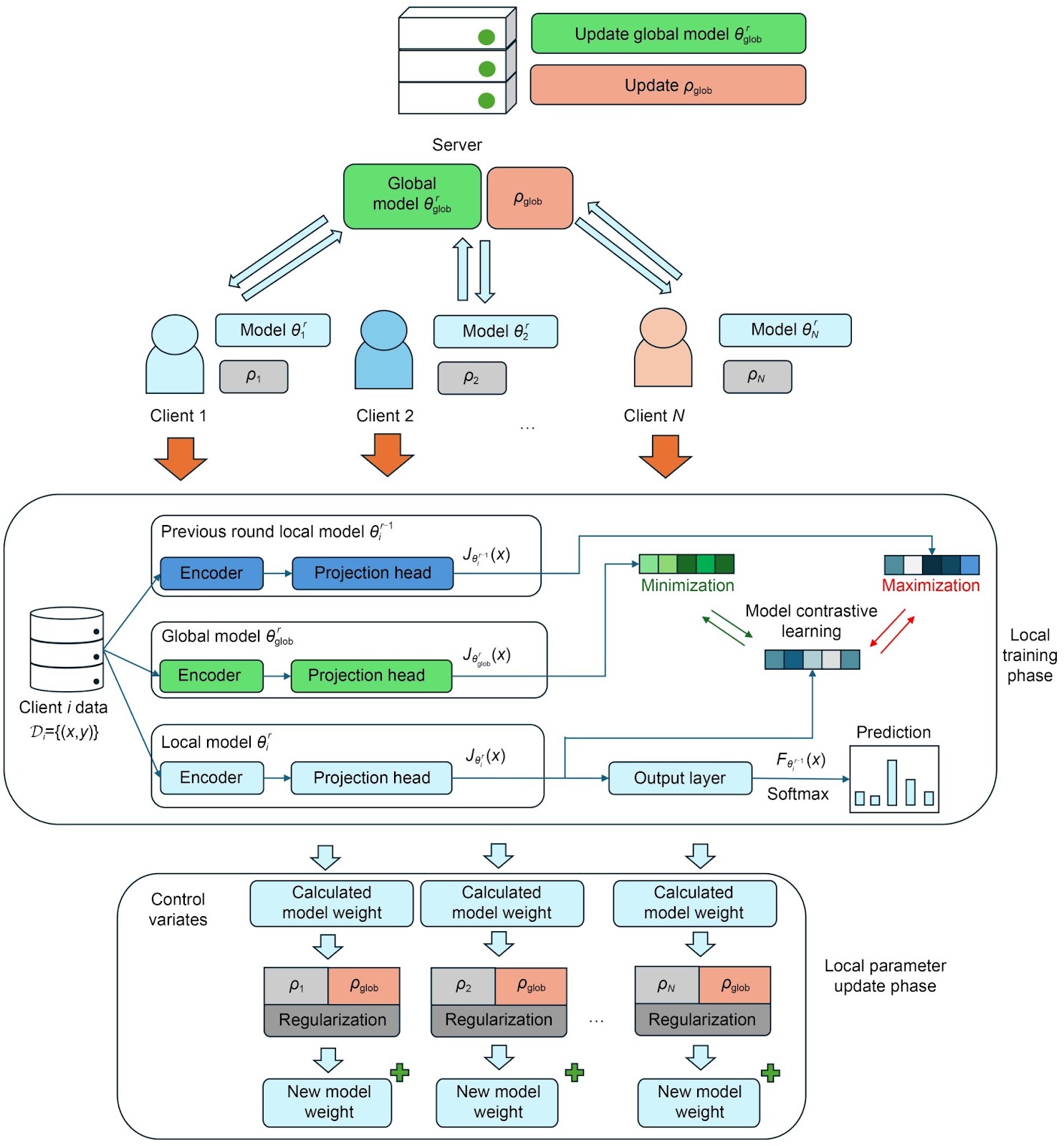
Federated model with contrastive learning and adaptive control variates for human activity recognition
Recent attention to privacy issues demands a communication-safe method for training human activity recognition (HAR) models on client activity data. Federated learning (FL) has become a compelling technique to facilitate model training between the server and clients while preserving data privacy. However, classical FL methods often assume independent and identically distributed (IID) data among clients. This assumption does not hold true in practical scenarios. Human activity in real-world scena