Key Takeaways & Executive Findings
- •• Isotope exchange technique enables direct measurement of the interfacial nitrogen reaction rate constant in molten iron under CO2–CO–Ar atmospheres, eliminating interference from liquid and gas phase mass transfer. • The interfacial reaction rate constant kc exhibits a strong dependence on the activities of surface-active elements O, C, and S, following a site-blocking type expression: kc = 4.35×10⁻⁶/(1+14.25aO +0.25aC +6.50aS)². • CO2 injection in steelmaking enhances nitrogen removal by generating CO gas that increases stirring intensity and improves kinetic conditions at the melt–gas interface. • The derived kinetic relationship provides a quantitative foundation for modeling denitrification in CO2 bottom-blowing converter processes, enabling optimized process design.
Abstract
The application of CO2 in the steelmaking process has yielded promising results, demonstrating a certain capability for nitrogen removal. To accurately determine the kinetic parameters of nitrogen reactions at the iron melt interface under CO2 injection conditions, an isotope exchange technique was employed. This technique was used to monitor the evolution of the nitrogen isotopic composition during the reaction between a 28N2–30N2–CO2–CO–Ar gas mixture and an iron melt of controlled composition. The kinetic parameters of nitrogen were subsequently calculated for various CO2/CO ratios. Furthermore, the dissociation rate determining model was applied to establish the relationship between the interfacial reaction rate constant (kc) and the activity of surfactive elements (O, C, and S) in molten iron (aO, aC, and aS), expressed as .
1. Introduction
To achieve global temperature control targets, carbon dioxide capture and utilization represent a critical pathway for the steel industry to reduce its carbon emissions. Jin et al. [1] investigated the feasibility of CO2 injection in the steelmaking process and found that it could decarburize the molten steel and facilitate the smelting process. Zhu et al. [2–7] proposed a novel converter process using CO2 to replace a portion of the top-blown O2 and all of the bottom-blown N2/Ar, enabling CO2–O2 mixed injection steelmaking. The endothermic reactions that occur upon CO2 injection into molten steel suppress iron evaporation. Compared to pure oxygen injection, CO2 reacts with elements in the steel to form CO. This gas generation enhances stirring intensity, improves kinetic conditions, and promotes nitrogen removal from the molten steel [5]. Nitrogen has both beneficial and detrimental effects in steel. It can serve as an alloying element to enhance steel properties [8–13]; conversely, it can be considered an impurity that degrades performance [14–16]. Therefore, determining the nitrogen–liquid iron interfacial reaction rate constant and identifying its influencing factors are of paramount importance.
However, the interfacial dissolution and reaction behavior between CO2–CO–Ar gas mixtures and nitrogen in molten steel remains unclear. To establish a kinetic model for denitrification using CO2 as a bottom blowing gas, the relationship between the gas mixture composition and the melt composition must be elucidated. In traditional research methods, such as the Sieverts’ technique [17] used to study nitrogen absorption and desorption rates, the effects of diffusion in both the liquid and gas phases are significant and cannot be neglected. In this study, the isotope exchange technique was employed to measure the interfacial reaction rate constant. A key advantage of this method is that the influences of liquid phase and gas phase mass transfer on the interfacial reaction rate can be disregarded once equilibrium is established. The isotopic exchange of diatomic molecules, including oxygen, hydrogen, and nitrogen, has been extensively described in previous studies. Klier et al. [18] proposed a theory describing isotopic exchange reactions in systems containing oxygen molecules and oxides, based on an examination of the behavior of 18O18O, 16O16O, and 18O16O. Bouwmeester’s team [19] developed a stochastic model for surface-limited oxygen isotope exchange in closed gas systems. Boreskov’s team [20–21] investigated the isotope exchange of molecular nitrogen over various metals and nitrides.
Byrne and Belton [22] and Glaws and Fruehan [23–24] introduced isotope gas exchange technique into the kinetics of metallurgical reaction. They investigated the dissociation rate of N2 on high-purity liquid iron and iron–sulfur alloys using the 15N–14N exchange reaction. Notably, Byrne and Belton observed that the rate constant exhibits a functional dependence on the reciprocal of the surfactive element concentration, a finding consistent with that reported by Pelke and Elliott [25]. These findings are considered compelling evidence that the absorption rate of nitrogen is governed by its dissociation rate. Ono et al. [26] reported that in Fe–O systems with an oxygen content exceeding 150 ppm, the nitrogen absorption rate is also controlled by its dissociation rate. This behavior was similarly observed in Fe–S–O systems by Han et al. [27]. This phenomenon originates from the surface active nature of oxygen and sulfur, which can be explained by the site-blocking model [22–24,26–27]. The model assumes that surface chemical reactions can only proceed at accessible active sites that are not occupied by other species. The adsorption of atoms, molecules, or ions on these active sites blocks them, preventing reactant molecules from approaching and reacting, thereby leading to a reduction in the overall reaction rate.
The fundamental kinetic parameters for nitrogen reactions remain undetermined when CO2 is employed as a bottom-blowing gas in converters. Thus, in
Loading authentic research manuscript (Pages 1–5)...
Zhongzi Chen, Yuewen Fan, Xiaojun Hu, Kuochih Chou (2025). Determination of interfacial reaction rate constant of nitrogen between N2–CO2–CO–Ar and molten iron using isotope exchange technique. Journal of Mineral Metallurgy and Materials Science. https://doi.org/10.1007/s12613-025-3319-z
Research & Educational Purpose Only:The translations, structured abstracts, analytical annotations, and data reports provided by SinoTechIntel are intended exclusively for academic research, internal corporate R&D, and educational benchmarking. They do not constitute formal engineering, chemical safety, legal, or professional advice.
Copyright & Intellectual Property Notice: Original copyright of the underlying source articles and experimental data remains with the respective authors, institutions, and original publishing journals. SinoTechIntel claims intellectual property only over its proprietary translations, analytical syntheses, and AEO structured enhancements in accordance with international fair use and academic citation principles.
Frequently Asked Questions
What is the isotope exchange technique used for in this study?
The isotope exchange technique is used to measure the interfacial reaction rate constant of nitrogen between N2–CO2–CO–Ar gas mixtures and molten iron. It allows accurate determination of kinetic parameters without interference from liquid-phase or gas-phase mass transfer once equilibrium is established.
How does CO2 injection promote nitrogen removal in steelmaking?
CO2 reacts with elements in molten steel to form CO gas, which enhances stirring intensity and improves kinetic conditions. This promotes nitrogen removal from the molten steel while also suppressing iron evaporation due to endothermic reactions.
Which elements influence the interfacial reaction rate constant for nitrogen in molten iron?
The interfacial reaction rate constant is significantly affected by the activities of surface-active elements, specifically oxygen (O), carbon (C), and sulfur (S). These elements block active sites on the melt surface, reducing the rate of nitrogen dissociation and absorption.
What is the site-blocking model in the context of nitrogen absorption in steel?
The site-blocking model assumes that surface chemical reactions occur only at unoccupied active sites. Adsorption of surface-active species like oxygen and sulfur blocks these sites, preventing nitrogen molecules from approaching and reacting, thereby lowering the overall reaction rate.
What is the practical significance of the derived rate constant expression?
The expression kc = 4.35×10⁻⁶/(1+14.25aO +0.25aC +6.50aS)² provides a quantitative relationship for the interfacial reaction rate constant as a function of melt composition. This is essential for developing kinetic models to predict and optimize denitrification in CO2 bottom-blowing converter processes.
Related Technical Papers & Translations
Design and optimization of a high-efficiency distillation process for cellulosic fuel ethanol integrated with thermal coupling and molecular sieve adsorption
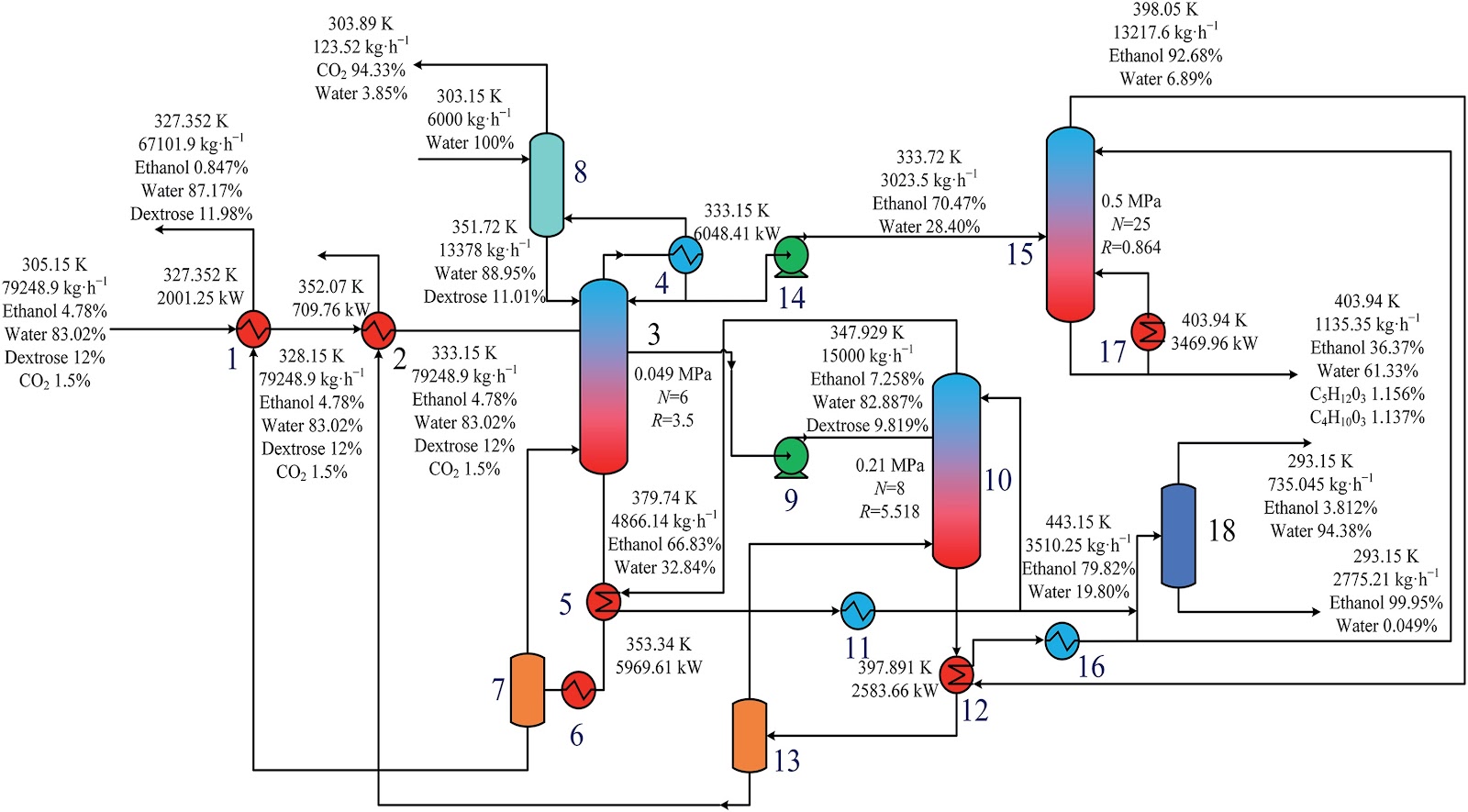
To address the challenges of high energy consumption and prominent costs in the traditional three-columns distillation process for cellulosic fuel ethanol, a distillation—molecular sieve coupling separation process is proposed. This process integrates a three-column (crude distillation column, first distillation column, second distillation column) system with a 3A molecular sieve adsorption deep dehydration unit. A thermal coupling network is constructed via differential pressure design (steam from medium/high-pressure columns as mutual heat sources, reboiler liquid waste heat for feed preheating), and molecular sieve adsorption conditions are optimized. The study first performs a thermodynamic consistency test on the ethanol—water system, determines optimal non-random two-liquid (NRTL) model binary interaction parameters via experimental data regression for Aspen Plus simulation. Aiming at minimum total annual cost (TAC), Aspen Plus is used to optimize process parameters (theoretical tray number, feed location, reflux ratio, side-draw position, etc.). Economic analysis shows this process reduces CO2 emission costs by 27.56%, TAC by 15.58% (to 5.123 × 10⁶ USD·a-1), and increases ethanol purity to >99.6%, providing an effective solution for green, efficient separation.
A cohesion loss model for determining residual strength of deep bedded sandstone
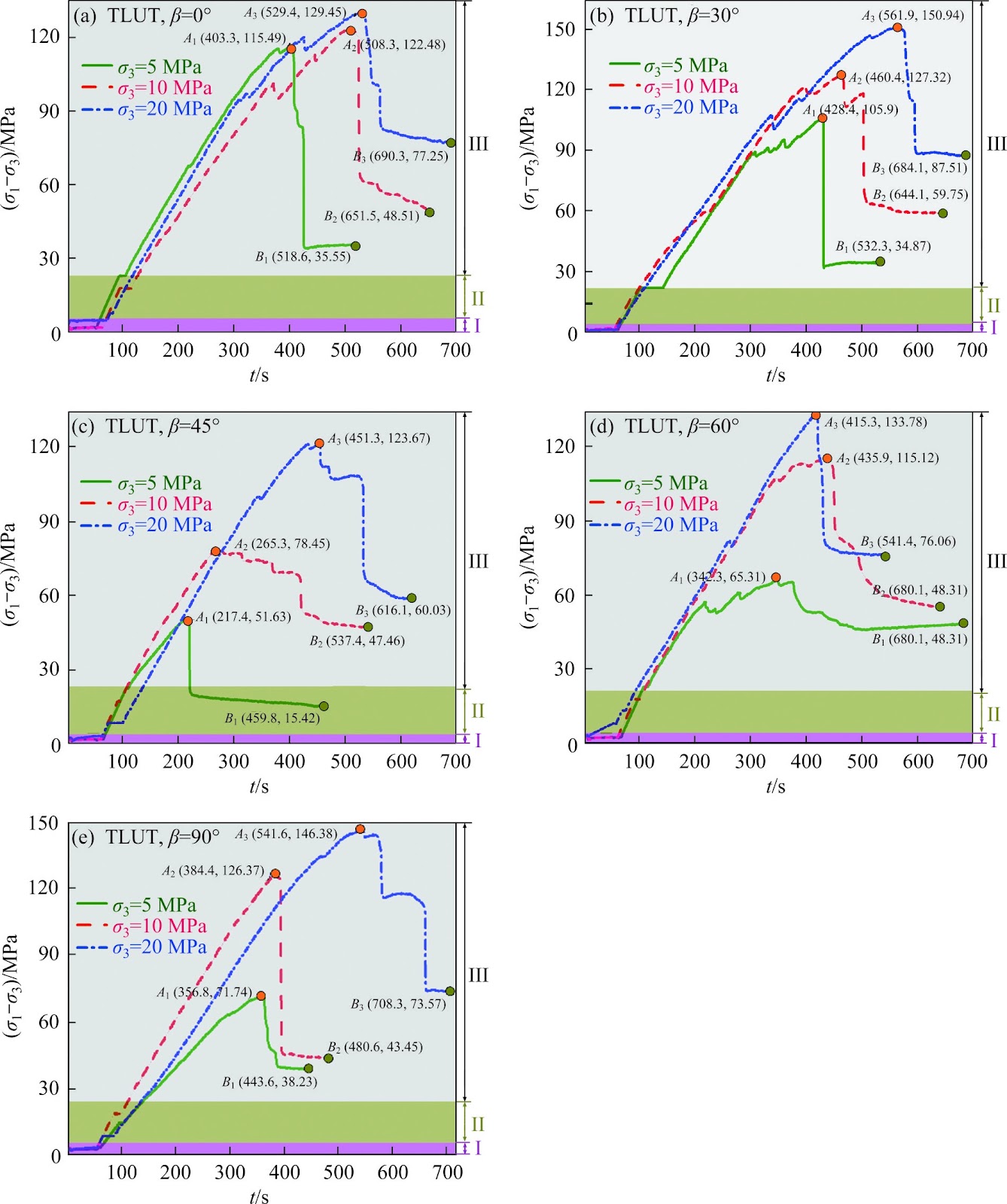
Rock residual strength, as an important input parameter, plays an indispensable role in proposing the reasonable and scientific scheme about stope design, underground tunnel excavation and stability evaluation of deep chambers. Therefore, previous residual strength models of rocks established were reviewed. And corresponding related problems were stated. Subsequently, starting from the effects of bedding and whole life-cycle evolution process, series of triaxial mechanical tests of deep bedded s
Federated model with contrastive learning and adaptive control variates for human activity recognition
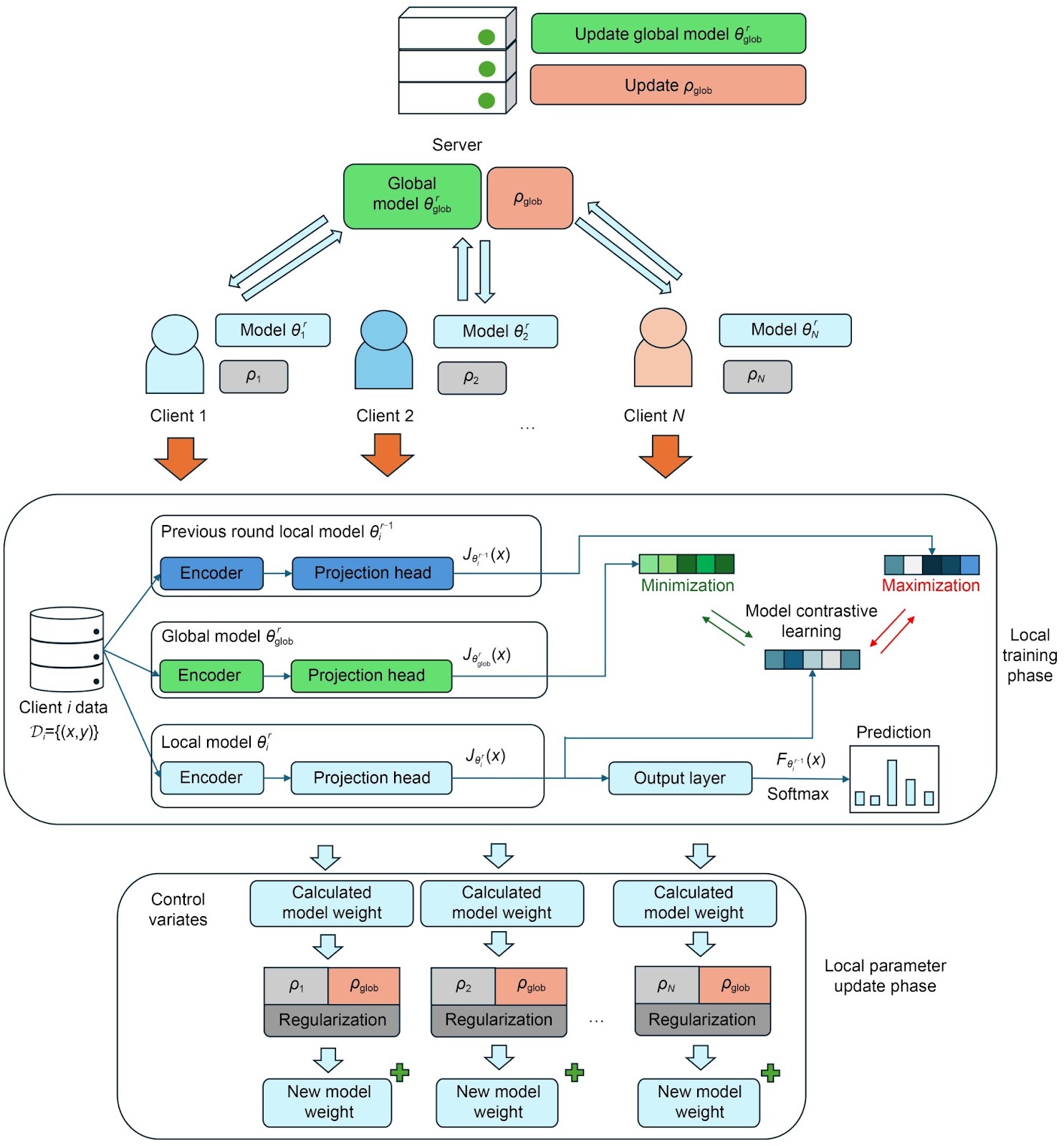
Recent attention to privacy issues demands a communication-safe method for training human activity recognition (HAR) models on client activity data. Federated learning (FL) has become a compelling technique to facilitate model training between the server and clients while preserving data privacy. However, classical FL methods often assume independent and identically distributed (IID) data among clients. This assumption does not hold true in practical scenarios. Human activity in real-world scena