Key Takeaways & Executive Findings
- •• STS specimens exhibited good ductility and bending failure, with deformation curves following a half-sine wave under loading. • A bidirectional bending test was conducted to evaluate bending stiffness, load capacity, and deformation mechanisms of STS composite slabs. • A theoretical deformation prediction model for STS composite slabs was developed, accurately estimating bending stiffness. • Experimental and theoretical results agreed within 15% maximum error, providing design references for STS structures.
Abstract
Steel tube slab (STS) structure, a novel pipe-roof structure, of which steel tubes are connected with flange plates, bolts and concrete, is an increasingly popular supporting structure for underground space development. Whilst the load-bearing of pipe-roof structures has been the subject of much research, uncertainties of deformation mechanism and the derivation of reliable calculation methods remain a challenge. For efficient design and wider deployment, this paper presents a bidirectional bending test to investigate the bending stiffnesses, load capacities and deformation mechanisms. The results show that the STS specimens exhibit good ductility and experience bending failure, and their deformation curves follow a half-sine wave upon loading. On this basis, the development of an STS composite slab deformation prediction model is proposed, along with the estimation for its bending stiffness. Theoretical predictions are shown to be in good agreement with the experimental measurements, with a maximum error of less than 15%. The outcomes of this investigation can provide references for the design and application of STS structures.
1. Introduction
By the end of 2023, 563 cities in 79 countries and regions have the operating urban rail transit system, with a total length of over 43400.40 km, among which the subway accounts for 50.07% [1]. New urban subway lines will inevitably cross the main road intersections, increasing the difficulty for constructing subway stations [2 −5]. The pipe-roof method has become a common technique to control the excavation induced disturbance, especially when the cover depth is shallow. However, low safety could still be resulted from subway station constructions with such approach due to the improper control of ground settlement [6−8]. This is because the adjacent steel pipes are normally only connected with interlocks, resulting in weak overall bearing capacity of the pipe-roof structure [9]. Many temporary supports must be implemented during excavation to ensure the construction safety, creating complexity in the construction procedures. Therefore, developing a safe and convenient underground excavation method for shallowly buried urban subway stations is necessary.
The steel tube slab (STS) method is a novel pipe-roof structure system that improves the lateral connection between adjacent steel tubes. The construction process involves: 1) steel tubes with flange plates are jacked into the soil using an ABS horizontal auger rig, which involves the subsequent removal of the soil inside the tubes; 2) the soil between the tubes is loosened using a micro horizontal auger, and then holes are opened in the inner wall of the steel tubes, and the remaining soil can be cleaned up; 3) the installation of transverse bolts is conducted to connect the adjacent steel tubes; 4) self-compacting super-fluid concrete is poured into the inside and between the steel tubes, to form a flat-topped pipe-roof system, as shown in Figure 1. The STS method improves the construction safety compared with other traditional underground construction methods. The station roof then changes from an arch to a flat-topped structure, increasing the tunnel clearance effectively [10]. Moreover, STS structures have a high load-bearing capacity and enable a full-section excavation without temporary supports [11]. Therefore, the STS method has significant advantages for use in the construction of shallowly buried subway stations in high-risk areas.
Loading authentic research manuscript (Pages 1–5)...
LU Bo, JIA Peng-jiao, ZHAO Wen, NI Peng-peng, BAI Qian, CHENG Cheng (2025). Deformation mechanism of a novel pipe-roof composite slab: An experimental and theoretical investigation. Journal of Central South University. https://doi.org/10.1007/s11771-025-5908-4
Research & Educational Purpose Only:The translations, structured abstracts, analytical annotations, and data reports provided by SinoTechIntel are intended exclusively for academic research, internal corporate R&D, and educational benchmarking. They do not constitute formal engineering, chemical safety, legal, or professional advice.
Copyright & Intellectual Property Notice: Original copyright of the underlying source articles and experimental data remains with the respective authors, institutions, and original publishing journals. SinoTechIntel claims intellectual property only over its proprietary translations, analytical syntheses, and AEO structured enhancements in accordance with international fair use and academic citation principles.
Frequently Asked Questions
What is the steel tube slab (STS) method?
The STS method is a novel pipe-roof structure system that connects adjacent steel tubes with flange plates, bolts, and concrete, enhancing lateral connection and load-bearing capacity for underground excavation.
What was the objective of this study?
The study aimed to investigate the deformation mechanism, bending stiffness, and load capacity of STS composite slabs through bidirectional bending tests and to propose a theoretical model for deformation prediction.
What were the key experimental findings?
The STS specimens exhibited good ductility and bending failure, with deformation curves following a half-sine wave under loading.
How accurate was the theoretical model?
The theoretical predictions matched experimental measurements well, with a maximum error of less than 15%.
Why is the STS method beneficial for shallow-buried subway stations?
The STS method provides a flat-topped structure with high load-bearing capacity, enabling full-section excavation without temporary supports and improving construction safety in high-risk areas.
Related Technical Papers & Translations
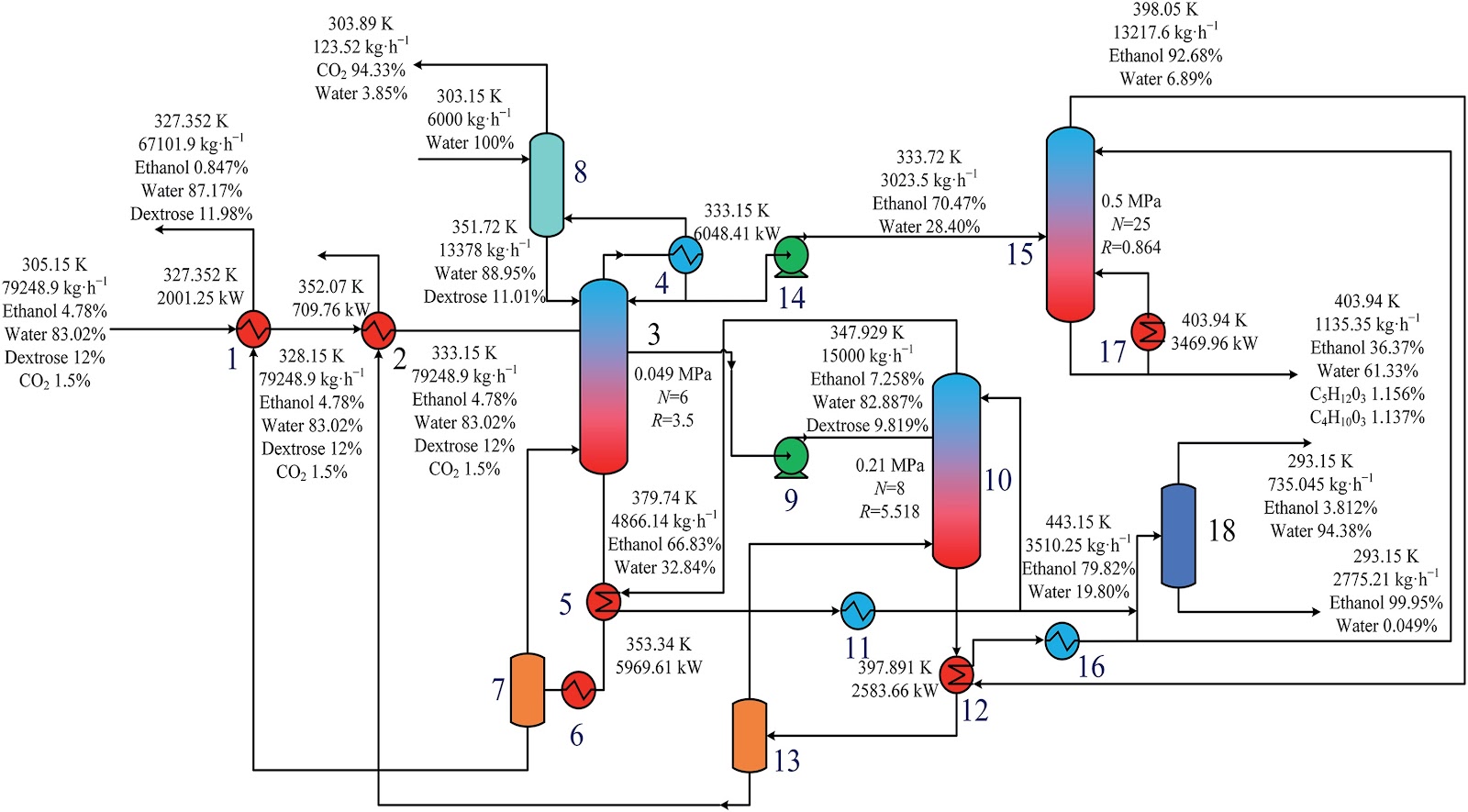
Design and optimization of a high-efficiency distillation process for cellulosic fuel ethanol integrated with thermal coupling and molecular sieve adsorption
To address the challenges of high energy consumption and prominent costs in the traditional three-columns distillation process for cellulosic fuel ethanol, a distillation—molecular sieve coupling separation process is proposed. This process integrates a three-column (crude distillation column, first distillation column, second distillation column) system with a 3A molecular sieve adsorption deep dehydration unit. A thermal coupling network is constructed via differential pressure design (steam from medium/high-pressure columns as mutual heat sources, reboiler liquid waste heat for feed preheating), and molecular sieve adsorption conditions are optimized. The study first performs a thermodynamic consistency test on the ethanol—water system, determines optimal non-random two-liquid (NRTL) model binary interaction parameters via experimental data regression for Aspen Plus simulation. Aiming at minimum total annual cost (TAC), Aspen Plus is used to optimize process parameters (theoretical tray number, feed location, reflux ratio, side-draw position, etc.). Economic analysis shows this process reduces CO2 emission costs by 27.56%, TAC by 15.58% (to 5.123 × 10⁶ USD·a-1), and increases ethanol purity to >99.6%, providing an effective solution for green, efficient separation.
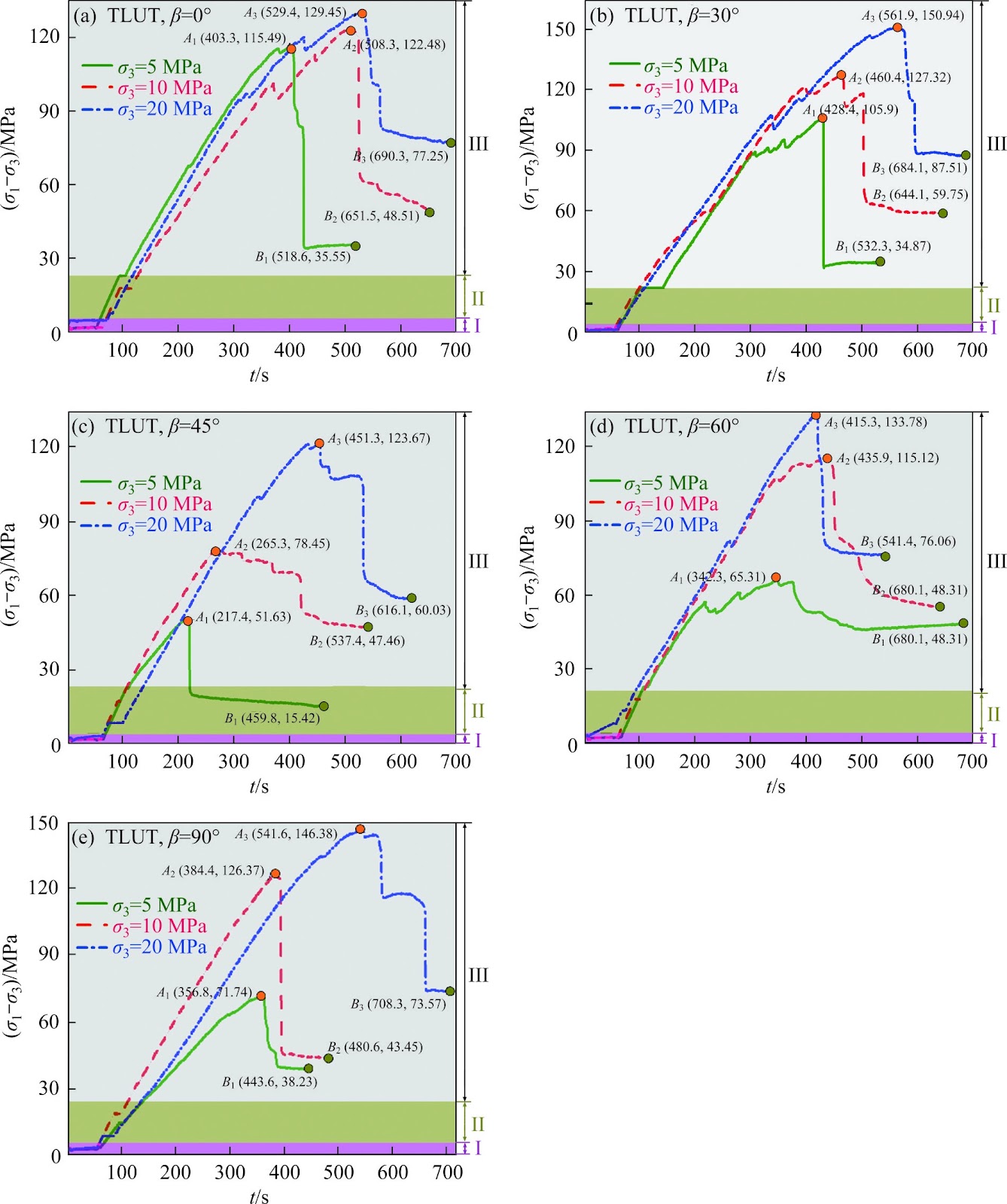
A cohesion loss model for determining residual strength of deep bedded sandstone
Rock residual strength, as an important input parameter, plays an indispensable role in proposing the reasonable and scientific scheme about stope design, underground tunnel excavation and stability evaluation of deep chambers. Therefore, previous residual strength models of rocks established were reviewed. And corresponding related problems were stated. Subsequently, starting from the effects of bedding and whole life-cycle evolution process, series of triaxial mechanical tests of deep bedded s
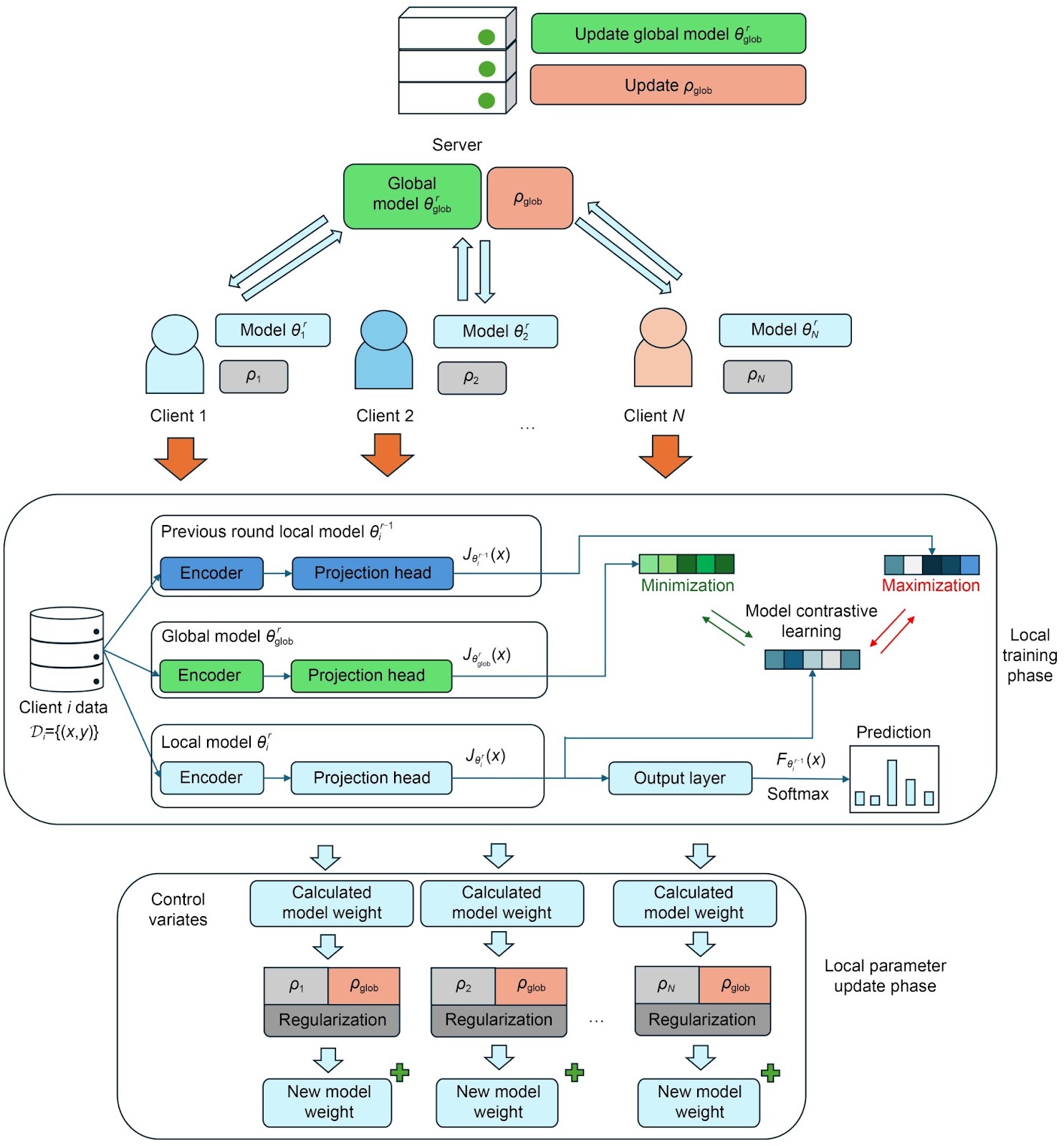
Federated model with contrastive learning and adaptive control variates for human activity recognition
Recent attention to privacy issues demands a communication-safe method for training human activity recognition (HAR) models on client activity data. Federated learning (FL) has become a compelling technique to facilitate model training between the server and clients while preserving data privacy. However, classical FL methods often assume independent and identically distributed (IID) data among clients. This assumption does not hold true in practical scenarios. Human activity in real-world scena