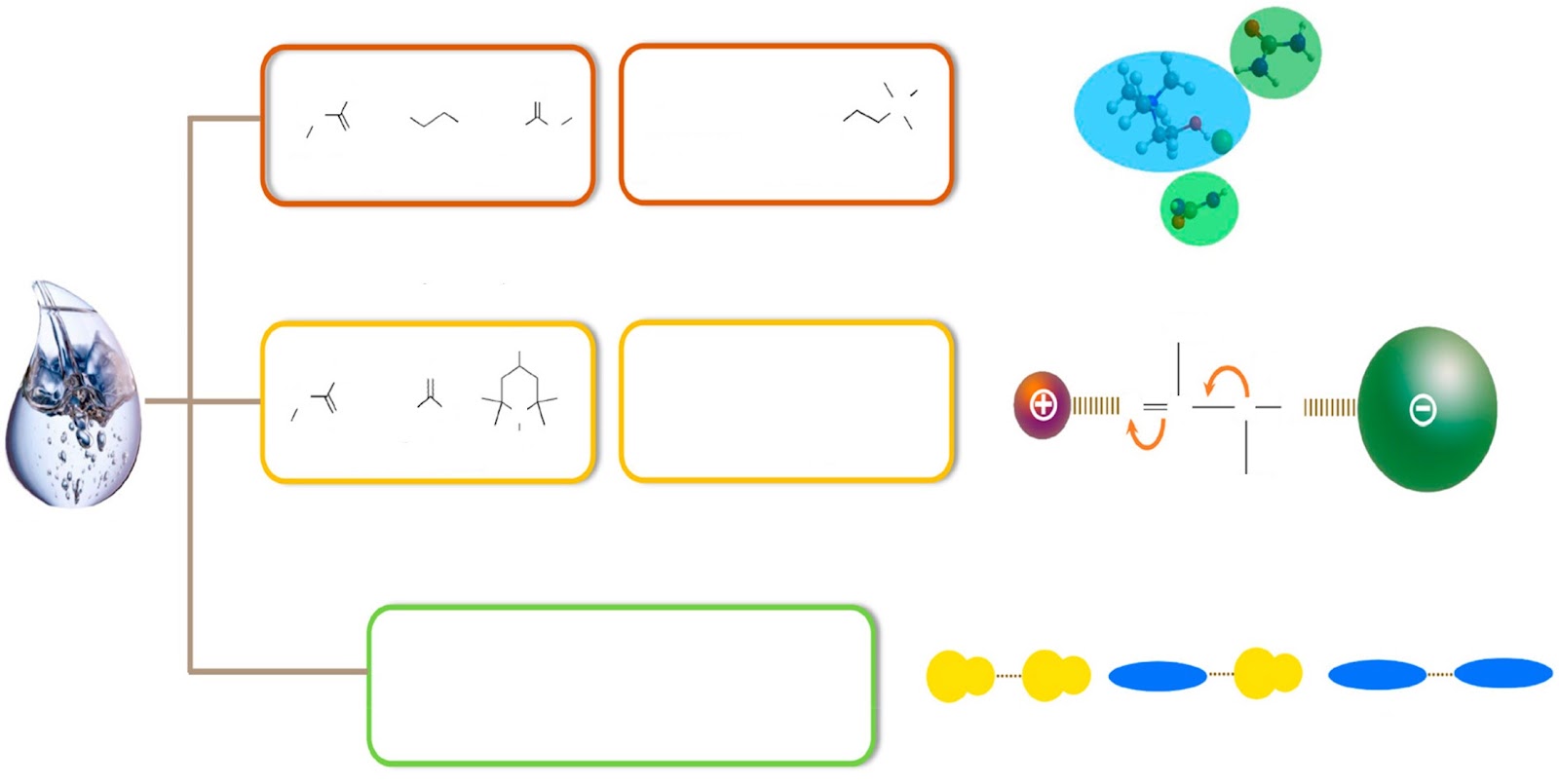
Key Takeaways & Executive Findings
- •• DESs are emerging as green alternatives to toxic organic solvents and ionic liquids in critical metal metallurgy, offering low toxicity, biodegradability, and cost-effectiveness. • The review systematically covers DES classification, formation mechanisms, preparation methods, characterization technologies, and tunable physicochemical properties. • DES-based separation and purification processes show significant promise for improving efficiency and sustainability in the recovery of critical metals. • Future research must address challenges such as viscosity, recyclability, and scale-up to fully realize industrial applications of DESs in metallurgy.
Abstract
Solvent extraction, a separation and purification technology, is crucial in critical metal metallurgy. Organic solvents commonly used in solvent extraction exhibit disadvantages, such as high volatility, high toxicity, and flammability, causing a spectrum of hazards to human health and environmental safety. Neoteric solvents have been recognized as potential alternatives to these harmful organic solvents. In the past two decades, several neoteric solvents have been proposed, including ionic liquids (ILs) and deep eutectic solvents (DESs). DESs have gradually become the focus of green solvents owing to several advantages, namely, low toxicity, degradability, and low cost. In this critical review, their classification, formation mechanisms, preparation methods, characterization technologies, and special physicochemical properties based on the most recent advancements in research have been systematically described. Subsequently, the major separation and purification applications of DESs in critical metal metallurgy were comprehensively summarized. Finally, future opportunities and challenges of DESs were explored in the current research area. In conclusion, this review provides valuable insights for improving our overall understanding of DESs, and it holds important potential for expanding separation and purification applications in critical metal metallurgy.
1. Introduction
Solvent extraction, an effective separation and purification technology, is crucial in critical metal metallurgy [1]. Organic solvents, which are primarily utilized for solvent extraction, are generally carbon-based molecules with high volatility, high toxicity, and flammability, causing a spectrum of hazards for human health and environmental safety. In the two previous decades, several neoteric solvents, particularly ionic liquids (ILs) and deep eutectic solvents (DESs), have been proposed. While this review does not focus on traditional ILs, a brief introduction to ILs and a comparison between ILs and DESs are crucial. At present, ILs have emerged as a highly researched area in the field of science [2].
ILs consist of organic cations and organic/inorganic anions that remain in liquid form even at temperatures below 10°C [3]. The most commonly used ILs can be divided into two categories. The first type is formed by combining eutectic mixtures of metal halides with organic salts. In this type of ILs, the mixture's eutectic composition creates bulky chloroaluminate or chlorozincate ions, which effectively reduce the lattice energy and freezing point of the mixture [4]. Another type of ILs contains discrete anions, such as PF6 or (CF3SO2)2N−. This class of ILs has the advantage of possessing large electrochemical windows, which enables electrodeposit of some noble metals [5]. ILs exhibit some unique physiochemical properties, including high polarity, non-flammability, excellent chemical stability, non-volatility, high thermal stability, and recyclability. Furthermore, these characteristics can be adjusted according to requirements by selecting different anions and/or cations; thus, they are also called “Task-specific ILs” [6]. Currently, ILs have completely changed some extraction processes, and they are extensively applied to solid-phase extraction, pressurized liquid extraction, liquid–liquid extraction, and novel liquid phase microextraction due to their high separation coefficients. However, the potential toxicities and non-biodegradability of ILs pose a risk to their broader applications as neoteric solvents with environmentally friendly features. The development of neoteric green reagents is essential to compensate for the shortcomings of ILs, serving as a viable alternative.
DESs, as neoteric green reagents, have gradually become the focus of green solvents due to a series of advantages. Fig. 1 displays the similarities and differences between DESs and ILs. DESs are generally composed of “hydrogen bond donor compounds” and “hydrogen bond acceptor compounds.” They can lead to the formation of a new eutectic phase through some intermolecular interactions. In addition, they have a significantly lower melting point than the individual components. The primary focus in the eutectic system is the melting point reduction. Fig. 2(a) depicts a phase diagram that represents the relationship between the melting temperature and composition of the eutectic system [7–8]. In the case of a eutectic mixture containing A and B, the eutectic point marks the lowest melting temperature. During the cooling process of a liquid system, eutectic mixtures do not undergo isothermal reactions between different components. Therefore, the melting point of eutectic mixtures is lower than that of individual components.
Loading authentic research manuscript (Pages 1–5)...
Shuo Chen, Shengpeng Su, Yanfang Huang, Bingbing Liu, Hu Sun, Shuzhen Yang, Guihong Han (2025). Deep eutectic solvents for separation and purification applications in critical metal metallurgy: Recent advances and perspectives. Journal of Mineral Metallurgy and Materials Science. https://doi.org/10.1007/s12613-024-2923-7
Research & Educational Purpose Only:The translations, structured abstracts, analytical annotations, and data reports provided by SinoTechIntel are intended exclusively for academic research, internal corporate R&D, and educational benchmarking. They do not constitute formal engineering, chemical safety, legal, or professional advice.
Copyright & Intellectual Property Notice: Original copyright of the underlying source articles and experimental data remains with the respective authors, institutions, and original publishing journals. SinoTechIntel claims intellectual property only over its proprietary translations, analytical syntheses, and AEO structured enhancements in accordance with international fair use and academic citation principles.
Frequently Asked Questions
What are deep eutectic solvents (DESs)?
Deep eutectic solvents (DESs) are neoteric green solvents formed by combining hydrogen bond donors and hydrogen bond acceptors, resulting in a new eutectic phase with a significantly lower melting point than the individual components. They are considered environmentally friendly alternatives to traditional organic solvents and ionic liquids.
Why are DESs important in critical metal metallurgy?
DESs offer several advantages over conventional solvents, including low toxicity, biodegradability, and low cost. They are increasingly used in separation and purification applications for critical metals, providing a more sustainable and efficient approach to solvent extraction in metallurgical processes.
How do DESs compare to ionic liquids (ILs)?
While both DESs and ILs are neoteric solvents, DESs are generally cheaper, more biodegradable, and less toxic than typical ILs. DESs are formed from neutral or charged components through hydrogen bonding, whereas ILs consist entirely of ions. These differences make DESs a more environmentally favorable option for many applications.
What are the main applications of DESs in metal extraction?
DESs have been applied in various separation and purification processes, including solid-phase extraction, liquid-liquid extraction, and microextraction, particularly for recovering critical metals. Their tunable physicochemical properties allow optimization for specific metal ions and process conditions.
What challenges remain for the industrial adoption of DESs?
Key challenges include high viscosity, efficient recycling, scale-up feasibility, and long-term stability. Future research is focused on overcoming these hurdles to enable widespread industrial implementation of DES-based technologies in critical metal metallurgy.
Related Technical Papers & Translations

Design and optimization of a high-efficiency distillation process for cellulosic fuel ethanol integrated with thermal coupling and molecular sieve adsorption
To address the challenges of high energy consumption and prominent costs in the traditional three-columns distillation process for cellulosic fuel ethanol, a distillation—molecular sieve coupling separation process is proposed. This process integrates a three-column (crude distillation column, first distillation column, second distillation column) system with a 3A molecular sieve adsorption deep dehydration unit. A thermal coupling network is constructed via differential pressure design (steam from medium/high-pressure columns as mutual heat sources, reboiler liquid waste heat for feed preheating), and molecular sieve adsorption conditions are optimized. The study first performs a thermodynamic consistency test on the ethanol—water system, determines optimal non-random two-liquid (NRTL) model binary interaction parameters via experimental data regression for Aspen Plus simulation. Aiming at minimum total annual cost (TAC), Aspen Plus is used to optimize process parameters (theoretical tray number, feed location, reflux ratio, side-draw position, etc.). Economic analysis shows this process reduces CO2 emission costs by 27.56%, TAC by 15.58% (to 5.123 × 10⁶ USD·a-1), and increases ethanol purity to >99.6%, providing an effective solution for green, efficient separation.

A cohesion loss model for determining residual strength of deep bedded sandstone
Rock residual strength, as an important input parameter, plays an indispensable role in proposing the reasonable and scientific scheme about stope design, underground tunnel excavation and stability evaluation of deep chambers. Therefore, previous residual strength models of rocks established were reviewed. And corresponding related problems were stated. Subsequently, starting from the effects of bedding and whole life-cycle evolution process, series of triaxial mechanical tests of deep bedded s

Federated model with contrastive learning and adaptive control variates for human activity recognition
Recent attention to privacy issues demands a communication-safe method for training human activity recognition (HAR) models on client activity data. Federated learning (FL) has become a compelling technique to facilitate model training between the server and clients while preserving data privacy. However, classical FL methods often assume independent and identically distributed (IID) data among clients. This assumption does not hold true in practical scenarios. Human activity in real-world scena