Key Takeaways & Executive Findings
- •• A novel damage variable equation integrating acoustic emission and resistivity parameters accurately characterizes damage evolution in sandstone under cyclic loading. • The derived damage constitutive equation closely matches experimental data, validating its predictive capability for rock behavior under varying water contents. • Nondestructive monitoring techniques (AE and resistivity) prove effective for real-time assessment of rock damage, offering advantages over destructive methods. • The findings provide a theoretical foundation for enhancing safety and stability monitoring in underground rock engineering, particularly in water-sensitive conditions.
Abstract
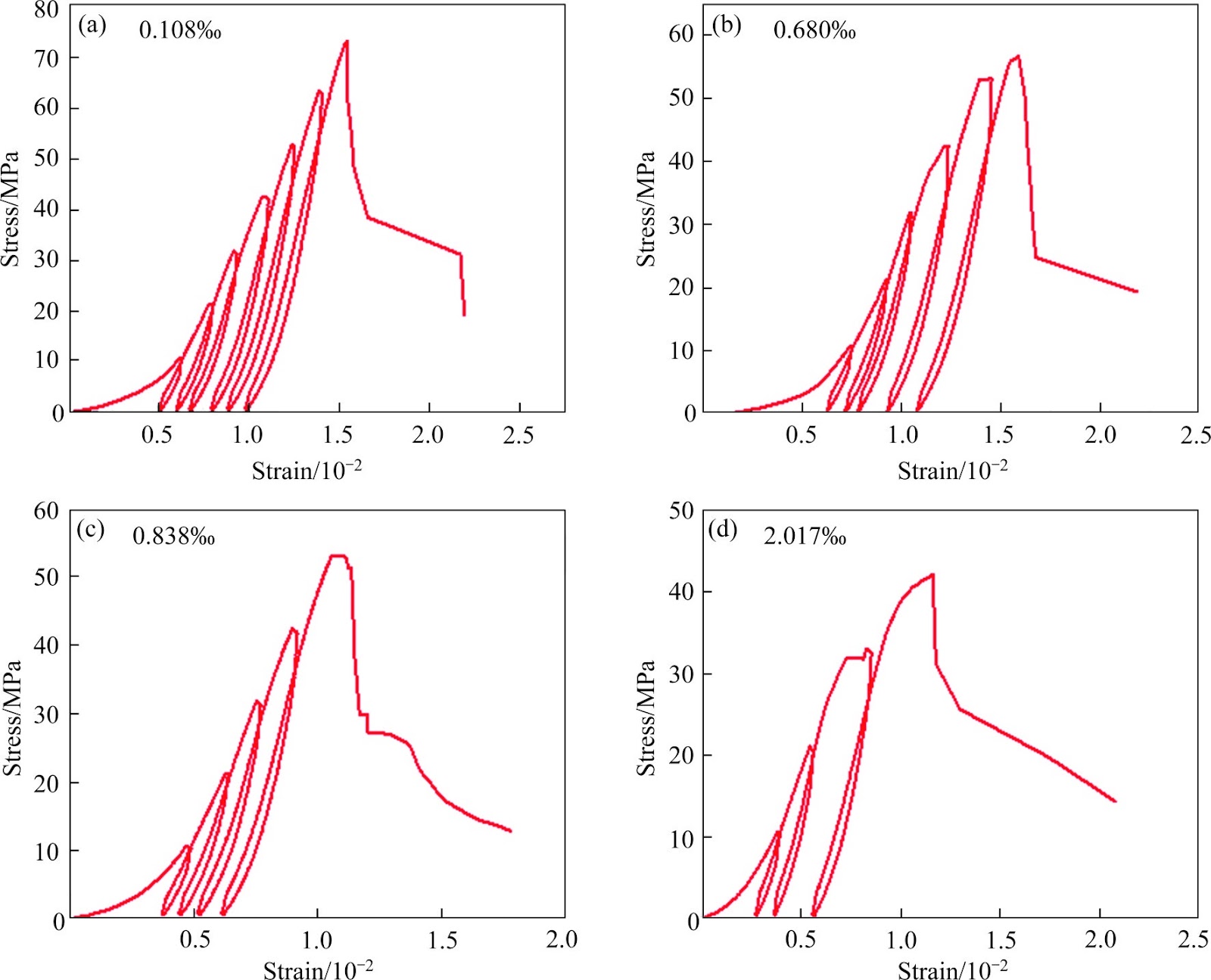
During underground excavation, the surrounding rock mass is subjected to complex cyclic stress, significantly impacting its long-term stability, especially under varying water content conditions where this effect is amplified. However, research on the mechanical response mechanisms of surrounding rock mass under such conditions remains inadequate. This study utilized acoustic emission (AE) and resistivity testing to monitor rock fracture changes, revealing the rock’s damage state and characterizing the damage evolution process during uniaxial cyclic loading and unloading. First, a damage variable equation was established based on AE and resistivity parameters, leading to the derivation of a corresponding damage constitutive equation. Uniaxial cyclic loading and unloading tests were then conducted on sandstone samples with varying water contents, continuously monitoring AE signals and resistivity, along with computed tomography scans before and after failure. The predictions from the damage constitutive equation were compared with experimental results. This comparison shows that the proposed damage variable equation effectively characterizes the damage evolution of sandstone during loading and unloading, and that the constitutive equation closely fits the experimental data. This study provides a theoretical basis for monitoring and assessing the responses of surrounding rock mass during underground excavation.
1. Introduction
During the construction of underground rock mass engineering, cyclic loads (such as blasting and excavation) may cause disturbance to the surrounding rock, leading to rock damage and ultimately causing catastrophic failure, thereby endangering the long-term safety of underground engineering [1, 2]. Rock damage not only affects its strength but may also have an adverse influence on its integrity and overall stability. Especially when sandstone exists in the rock mass, the increase in water content of the rock can lead to a decrease in its strength, resulting in reduced bearing capacity and stability of the rock mass, thereby significantly affecting construction safety [3, 4]. Therefore, studying the process of damage evolution in the rock with varying water contents under cyclic loading and unloading is of great significance for ensuring the safety of underground rock mass engineering construction.
In the field of rock mass damage evolution research, the methods for detecting rock mass damage are generally divided into destructive testing and nondestructive testing. Destructive testing methods include plastic strain testing [5, 6], energy dissipation monitoring [7], and dynamic modulus testing [1, 8]. The common feature of these methods is that they require a certain degree of damage to the rock mass to obtain data, and this damage may damage the underground rock mass structure and further aggravate rock mass damage. In addition, destructive testing is not conducive to in-situ dynamic monitoring, so it is limited in practical engineering applications. In contrast, nondestructive testing methods do not damage the rock mass and usually include acoustic emission (AE) monitoring [9, 10] and resistivity testing [11, 12]. These methods can provide real-time monitoring of rock mass damage without damaging the rock mass structure. Although destructive and nondestructive testing methods can both be used to characterize the degree of rock mass damage, since destructive testing may cause additional damage to the rock mass, nondestructive testing is more suitable for monitoring rock mass damage under cyclic loading and unloading.
Loading authentic research manuscript (Pages 1–5)...
ZHANG Sheng, BAI Wei, XU Ding-ping, ZHENG Hong, JIANG Quan, LI Zhi-wei (2025). Damage evolution in sandstone under uniaxial cyclic loading and varying water contents: Theoretical and experimental investigation. Journal of Central South University. https://doi.org/10.1007/s11771-025-6040-1
Research & Educational Purpose Only:The translations, structured abstracts, analytical annotations, and data reports provided by SinoTechIntel are intended exclusively for academic research, internal corporate R&D, and educational benchmarking. They do not constitute formal engineering, chemical safety, legal, or professional advice.
Copyright & Intellectual Property Notice: Original copyright of the underlying source articles and experimental data remains with the respective authors, institutions, and original publishing journals. SinoTechIntel claims intellectual property only over its proprietary translations, analytical syntheses, and AEO structured enhancements in accordance with international fair use and academic citation principles.
Frequently Asked Questions
What is the main objective of this study?
The study aims to investigate the damage evolution of sandstone under uniaxial cyclic loading and varying water contents, using acoustic emission and resistivity monitoring to develop a damage variable equation and constitutive model for assessing surrounding rock stability during underground excavation.
How is damage evolution characterized in the paper?
Damage evolution is characterized by establishing a damage variable equation based on acoustic emission and resistivity parameters, which is then used to derive a damage constitutive equation. The model's predictions are validated against experimental data from cyclic loading tests on sandstone with different water contents.
Why are nondestructive testing methods preferred in this research?
Nondestructive methods like acoustic emission and resistivity testing are preferred because they allow real-time monitoring of rock damage without causing additional damage to the rock mass, unlike destructive methods which may further compromise the integrity of the surrounding rock.
What are the practical applications of this research?
The findings provide a theoretical basis for monitoring and assessing the responses of surrounding rock mass during underground excavation, aiding in the early detection of damage and improving safety measures in rock engineering projects.
How does water content affect sandstone behavior under cyclic loading?
The study indicates that increasing water content reduces the strength of sandstone, leading to decreased bearing capacity and stability. The damage evolution process is amplified under varying water contents, which is critical for construction safety in water-sensitive environments.
Related Technical Papers & Translations
Design and optimization of a high-efficiency distillation process for cellulosic fuel ethanol integrated with thermal coupling and molecular sieve adsorption
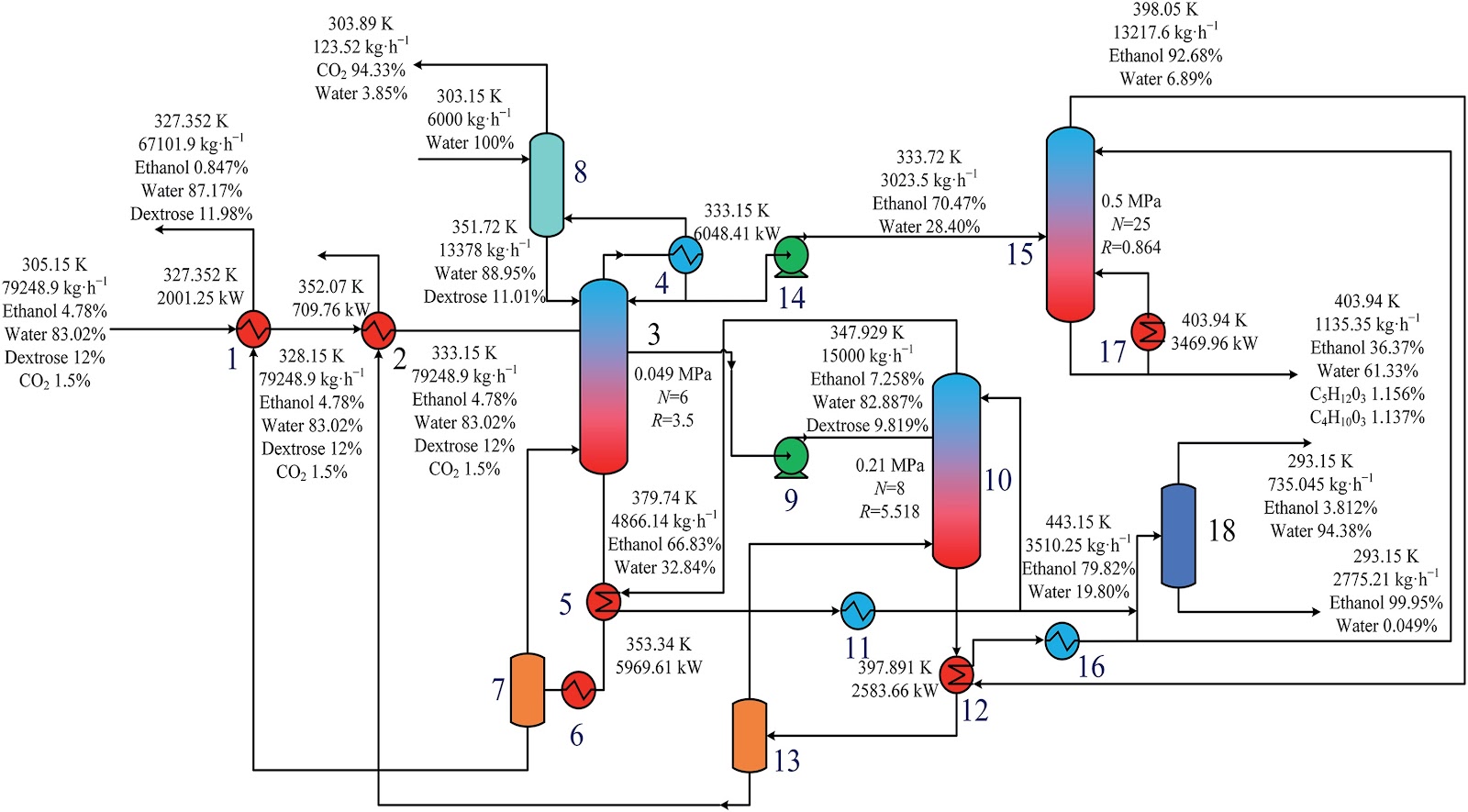
To address the challenges of high energy consumption and prominent costs in the traditional three-columns distillation process for cellulosic fuel ethanol, a distillation—molecular sieve coupling separation process is proposed. This process integrates a three-column (crude distillation column, first distillation column, second distillation column) system with a 3A molecular sieve adsorption deep dehydration unit. A thermal coupling network is constructed via differential pressure design (steam from medium/high-pressure columns as mutual heat sources, reboiler liquid waste heat for feed preheating), and molecular sieve adsorption conditions are optimized. The study first performs a thermodynamic consistency test on the ethanol—water system, determines optimal non-random two-liquid (NRTL) model binary interaction parameters via experimental data regression for Aspen Plus simulation. Aiming at minimum total annual cost (TAC), Aspen Plus is used to optimize process parameters (theoretical tray number, feed location, reflux ratio, side-draw position, etc.). Economic analysis shows this process reduces CO2 emission costs by 27.56%, TAC by 15.58% (to 5.123 × 10⁶ USD·a-1), and increases ethanol purity to >99.6%, providing an effective solution for green, efficient separation.
A cohesion loss model for determining residual strength of deep bedded sandstone
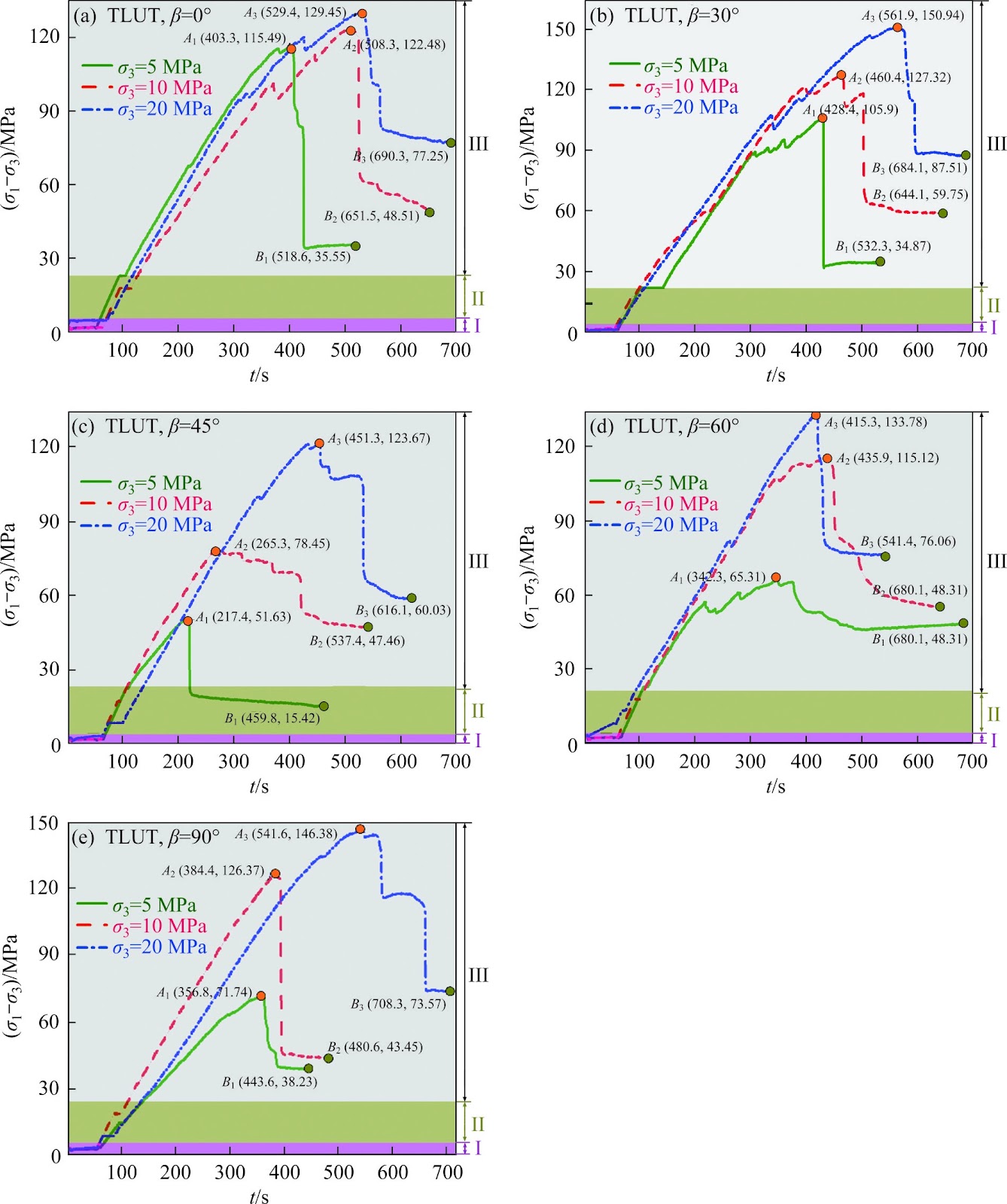
Rock residual strength, as an important input parameter, plays an indispensable role in proposing the reasonable and scientific scheme about stope design, underground tunnel excavation and stability evaluation of deep chambers. Therefore, previous residual strength models of rocks established were reviewed. And corresponding related problems were stated. Subsequently, starting from the effects of bedding and whole life-cycle evolution process, series of triaxial mechanical tests of deep bedded s
Federated model with contrastive learning and adaptive control variates for human activity recognition
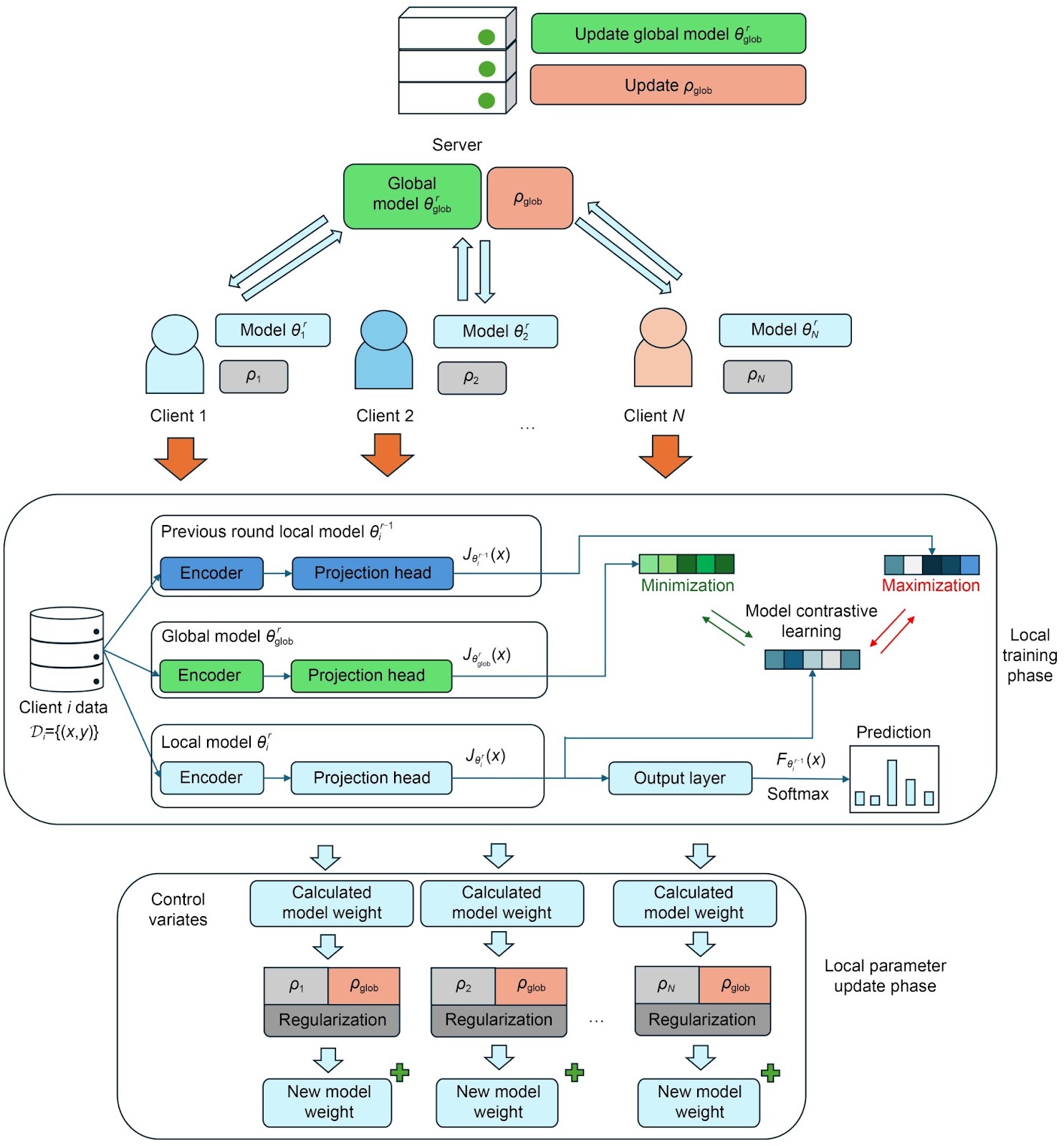
Recent attention to privacy issues demands a communication-safe method for training human activity recognition (HAR) models on client activity data. Federated learning (FL) has become a compelling technique to facilitate model training between the server and clients while preserving data privacy. However, classical FL methods often assume independent and identically distributed (IID) data among clients. This assumption does not hold true in practical scenarios. Human activity in real-world scena