Key Takeaways & Executive Findings
- •• Loading rate significantly governs energy-driven behavior, mechanical properties, and macro-micro degradation of coal-rock composites under cyclic loading. • Increasing loading rates from 0.05 to 0.15 mm/min reduces loading time by 32.39% (path I) and 48.60% (path II), while increasing crack counts by 1.66-fold and 1.41-fold, respectively. • Higher loading rates expand energy storage limits and promote transmatrix and shear crack formation, with cracks preferentially propagating along primary weak surfaces. • These findings provide a theoretical basis for predicting and mitigating damage and failure in coal-rock structures subjected to cyclic mining disturbances.
Abstract
In this study, a uniaxial cyclic compression test is conducted on coal-rock composite structures under two cyclic loads using MTSE45.104 testing apparatus to investigate the macro-mesoscopic deformation, damage behavior, and energy evolution characteristics of these structures under different cyclic stress disturbances. Three loading and unloading rates (LURs) are tested to examine the damage behaviors and energy-driven characteristics of the composites. The findings reveal that the energy-driven behavior, mechanical properties, and macro-micro degradation characteristics of the composites are significantly influenced by the loading rate. Under the gradual cyclic loading and unloading (CLU) path with a constant lower limit (path I) and the CLU path with variable upper and lower boundaries (path II), an increase in LURs from 0.05 to 0.15 mm/min reduces the average loading time by 32.39% and 48.60%, respectively. Consequently, the total number of cracks in the samples increases by 1.66-fold for path I and 1.41-fold for path II. As LURs further increase, the energy storage limit of samples expands, leading to a higher proportion of transmatrix and shear cracks. Under both cyclic loading conditions, a broader cyclic stress range promotes energy dissipation and the formation of internal fractures. Notably, at higher loading rates, cracks tend to propagate along primary weak surfaces, leading to an increased incidence of intermatrix fractures. This behavior indicates a microscopic feature of the failure mechanisms in composite structures. These results provide a theoretical basis for elucidating the damage and failure characteristics of coal-rock composite structures under cyclic stress disturbances.
1. Introduction
During deep coal mining, axial stresses undergo cyclic variations owing to mining disturbances, blasting operations, protective layer excavation, roadway construction, and advancements of the coal mining face. Consequently, both mined coal seams and adjacent rock structures undergo cyclic loading and unloading (CLU) [1, 2]. This CLU process creates concentrated stresses and promotes the storage and release of energy, which serve as primary triggers for dynamic catastrophic events [3].
Compared with conventional quasi-static loads, cyclic loads have greater accuracy in reflecting the complex and diverse mining stresses encountered in practical engineering scenarios. Moreover, cyclic loading generates unique stress patterns in materials, resulting in various changes in their properties. Previous research has shown significant differences in the acoustic emission (AE) characteristics [4], seepage behavior [5], energy-driven patterns [6], and mechanical properties [7] of pure coal and rock under CLU conditions, compared with traditional loading methods. Additionally, cyclic loading tends to induce the collapse of coal and rock bodies under these conditions, resulting in highly complex damage processes [7−9].
In practical engineering settings, both coal seams and surrounding rock layers encounter stress loads, facilitating stress transfer between coal-rock interlayers. This interaction leads to significant differences in the mechanical behavior of mining coal seams compared with pure coal. Therefore, researchers have developed samples that simulate the coal seam-surrounding rock configuration. Numerous studies have investigated the various factors influencing the mechanical characteristics and deformation behaviors of these composite structures. Key factors include the interface inclination angle [10], inte-
Loading authentic research manuscript (Pages 1–5)...
WANG Kai, ZUO Xiao-huan, DU Feng, SUN Jia-zhi, JU Yang, SHU Long-yong, CAI Yong-bo (2025). Damage evolution and failure behavior of coal-rock combination subjected to different cyclic loading paths and loading rates: Insights from energy-driven effects. Journal of Central South University. https://doi.org/10.1007/s11771-025-5950-2
Research & Educational Purpose Only:The translations, structured abstracts, analytical annotations, and data reports provided by SinoTechIntel are intended exclusively for academic research, internal corporate R&D, and educational benchmarking. They do not constitute formal engineering, chemical safety, legal, or professional advice.
Copyright & Intellectual Property Notice: Original copyright of the underlying source articles and experimental data remains with the respective authors, institutions, and original publishing journals. SinoTechIntel claims intellectual property only over its proprietary translations, analytical syntheses, and AEO structured enhancements in accordance with international fair use and academic citation principles.
Frequently Asked Questions
What is the purpose of studying coal-rock combinations under cyclic loading?
The study aims to understand the macro-mesoscopic deformation, damage behavior, and energy evolution characteristics of coal-rock composite structures under cyclic stress disturbances, which are typical in deep mining operations. This helps in predicting and preventing dynamic catastrophic events.
How does loading rate affect the damage behavior of coal-rock composites?
Increasing loading rates from 0.05 to 0.15 mm/min reduces loading time significantly (by 32.39% for path I and 48.60% for path II) while increasing total crack counts by 1.66-fold and 1.41-fold, respectively. Higher rates also expand energy storage limits and promote the formation of transmatrix and shear cracks.
What are the two cyclic loading paths investigated in the study?
The study investigates path I: gradual cyclic loading and unloading (CLU) with a constant lower limit, and path II: CLU with variable upper and lower boundaries. Both paths simulate different mining stress disturbance scenarios.
What methods were used to analyze internal crack evolution?
The researchers used acoustic emission (AE) monitoring and RA-AF correlation analysis to characterize crack types and propagation mechanisms, complementing the uniaxial cyclic compression tests performed on the MTSE45.104 apparatus.
What are the practical implications for deep coal mining?
The findings provide a theoretical basis for understanding and predicting damage and failure in coal-rock composite structures under cyclic stress, aiding in the design of safer mining operations and mitigation of dynamic disasters such as rock bursts.
Related Technical Papers & Translations
Design and optimization of a high-efficiency distillation process for cellulosic fuel ethanol integrated with thermal coupling and molecular sieve adsorption
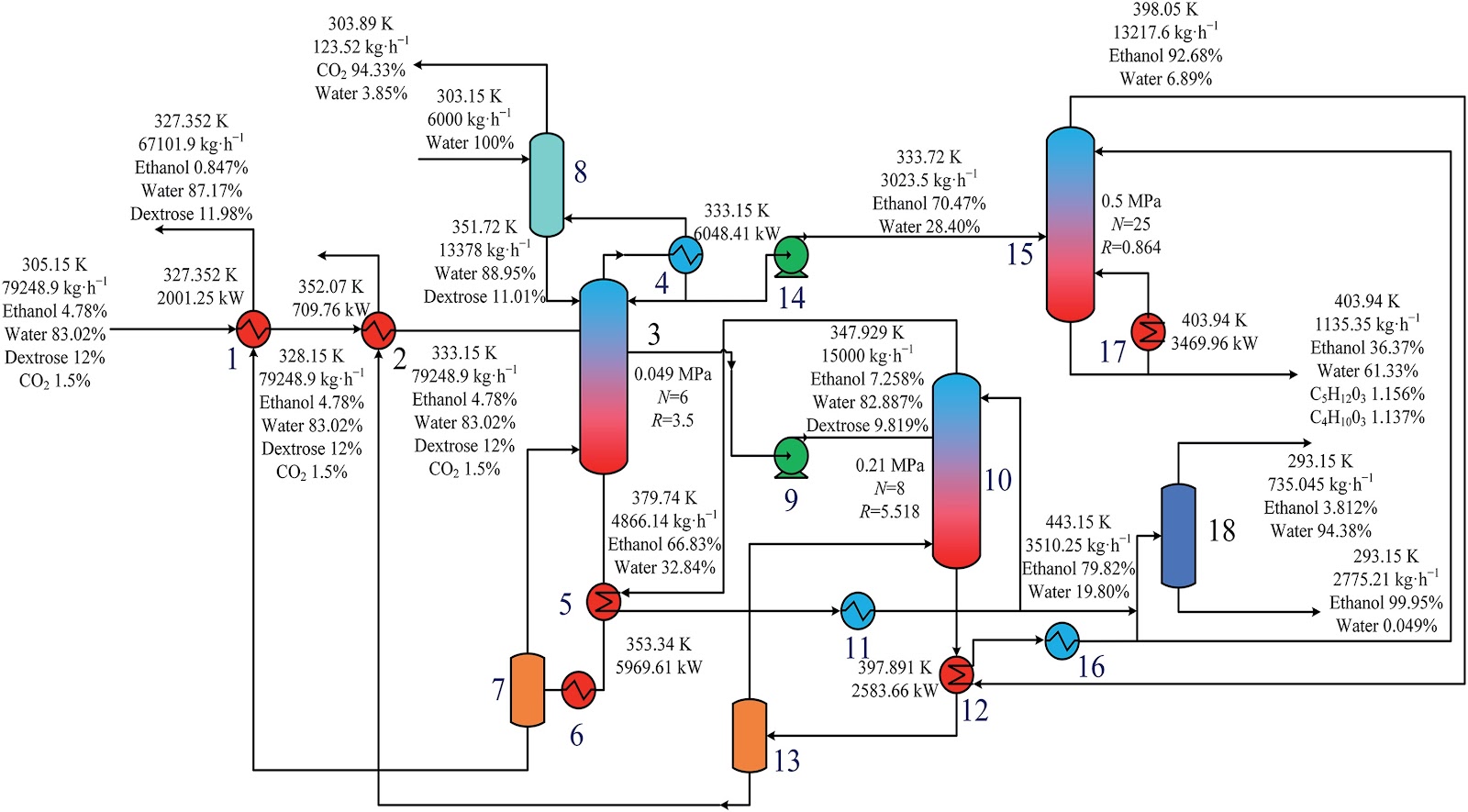
To address the challenges of high energy consumption and prominent costs in the traditional three-columns distillation process for cellulosic fuel ethanol, a distillation—molecular sieve coupling separation process is proposed. This process integrates a three-column (crude distillation column, first distillation column, second distillation column) system with a 3A molecular sieve adsorption deep dehydration unit. A thermal coupling network is constructed via differential pressure design (steam from medium/high-pressure columns as mutual heat sources, reboiler liquid waste heat for feed preheating), and molecular sieve adsorption conditions are optimized. The study first performs a thermodynamic consistency test on the ethanol—water system, determines optimal non-random two-liquid (NRTL) model binary interaction parameters via experimental data regression for Aspen Plus simulation. Aiming at minimum total annual cost (TAC), Aspen Plus is used to optimize process parameters (theoretical tray number, feed location, reflux ratio, side-draw position, etc.). Economic analysis shows this process reduces CO2 emission costs by 27.56%, TAC by 15.58% (to 5.123 × 10⁶ USD·a-1), and increases ethanol purity to >99.6%, providing an effective solution for green, efficient separation.
A cohesion loss model for determining residual strength of deep bedded sandstone
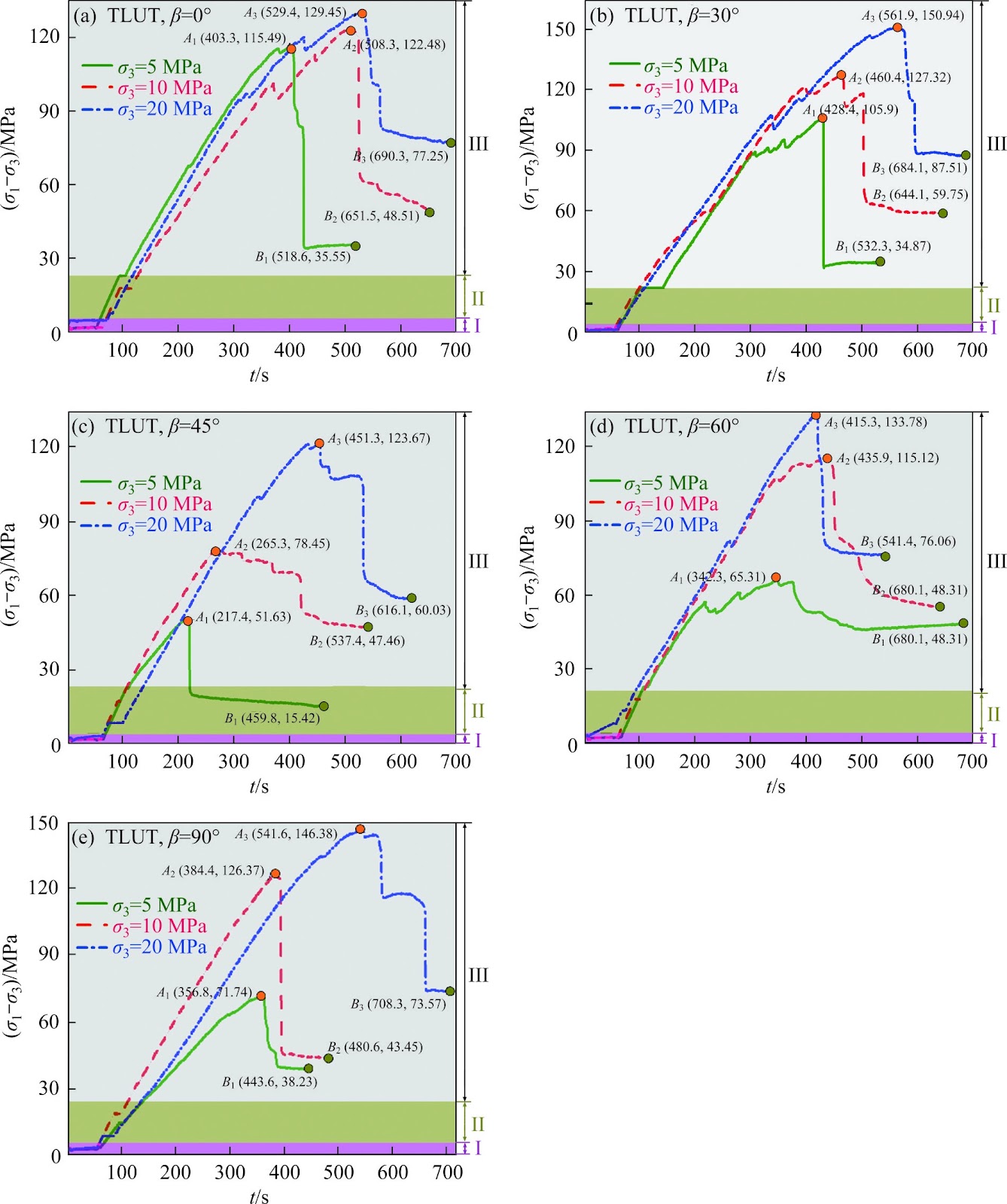
Rock residual strength, as an important input parameter, plays an indispensable role in proposing the reasonable and scientific scheme about stope design, underground tunnel excavation and stability evaluation of deep chambers. Therefore, previous residual strength models of rocks established were reviewed. And corresponding related problems were stated. Subsequently, starting from the effects of bedding and whole life-cycle evolution process, series of triaxial mechanical tests of deep bedded s
Federated model with contrastive learning and adaptive control variates for human activity recognition
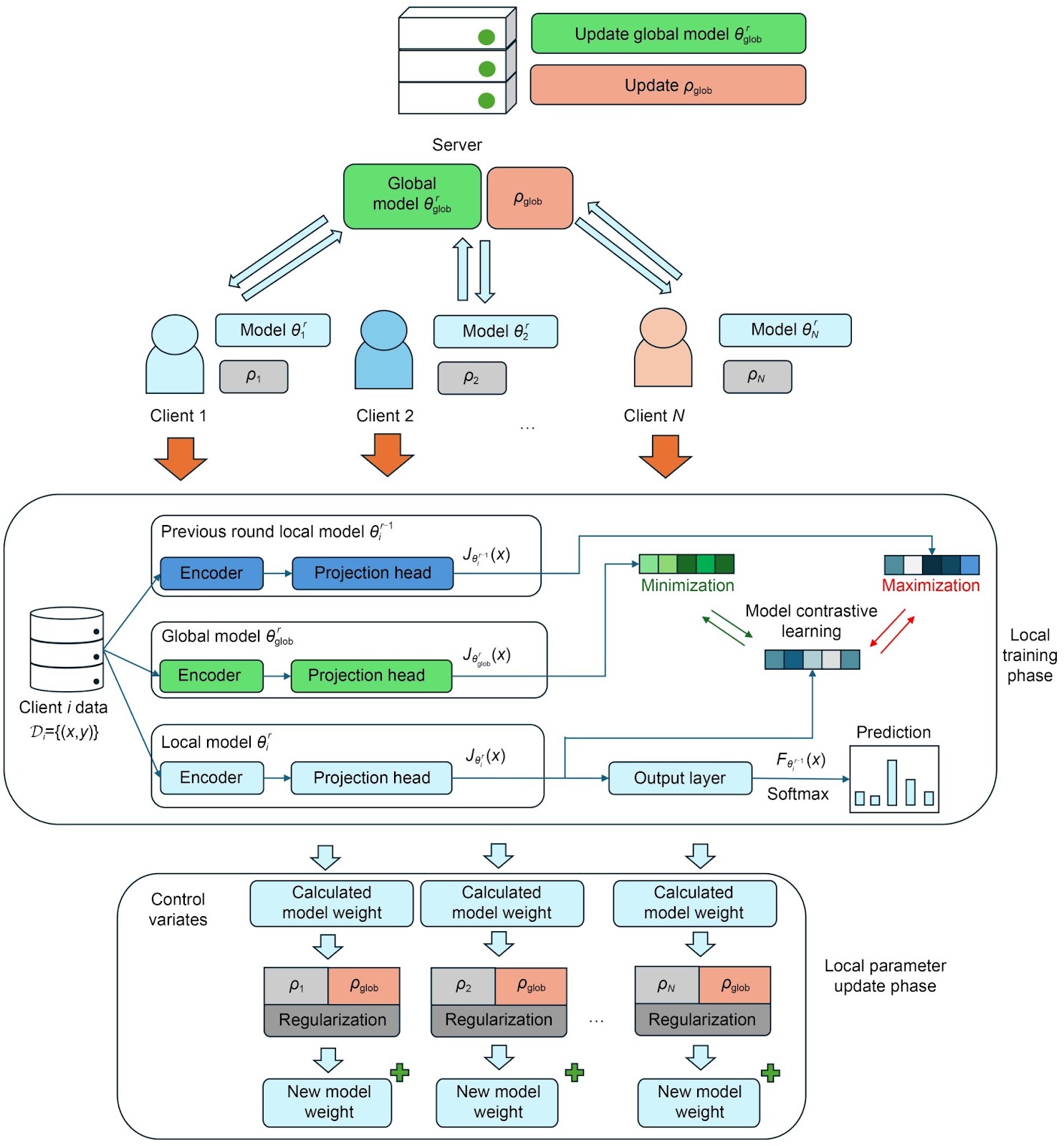
Recent attention to privacy issues demands a communication-safe method for training human activity recognition (HAR) models on client activity data. Federated learning (FL) has become a compelling technique to facilitate model training between the server and clients while preserving data privacy. However, classical FL methods often assume independent and identically distributed (IID) data among clients. This assumption does not hold true in practical scenarios. Human activity in real-world scena