Key Takeaways & Executive Findings
- •• Both vertical and maximum horizontal stress increase linearly with depth, confirming a clear depth-dependent stress regime. • No significant correlation exists between elastic modulus, Poisson's ratio, or RQD with depth, suggesting these properties are depth-independent in the studied rock masses. • The newly proposed characteristic parameter CERP shows a linear correlation with maximum horizontal stress at the same depth, offering a promising indicator for estimating in-situ stress. • The fuzzy identification method effectively captures the complex, fluctuating relationship between CERP and maximum horizontal stress, validating its use for geomechanical prediction and mining design.
Abstract
Understanding the mechanical properties of the lithologies is crucial to accurately determine the horizontal stress magnitude. To investigate the correlation between the rock mass properties and maximum horizontal stress, the three-dimensional (3D) stress tensors at 89 measuring points determined using an improved overcoring technique in nine mines in China were adopted, a newly defined characteristic parameter CERP was proposed as an indicator for evaluating the structural properties of rock masses, and a fuzzy relation matrix was established using the information distribution method. The results indicate that both the vertical stress and horizontal stress exhibit a good linear growth relationship with depth. There is no remarkable correlation between the elastic modulus, Poisson’s ratio and depth, and the distribution of data points is scattered and messy. Moreover, there is no obvious relationship between the rock quality designation (RQD) and depth. The maximum horizontal stress σH is a function of rock properties, showing a certain linear relationship with the CERP at the same depth. In addition, the overall change trend of σH determined by the established fuzzy identification method is to increase with the increase of CERP. The fuzzy identification method also demonstrates a relatively detailed local relationship between σH and CERP, and the predicted curve rises in a fluctuating way, which is in accord well with the measured stress data.
1. Introduction
Various geological phenomena in the lithosphere and the associated physical and chemical processes are closely correlated with the action of in-situ stresses [1–6]. Understanding the state of crustal stress, especially the stress conditions at great depths, is a necessary foundation for solving the scientific issues associated with geodynamics, such as plate driving mechanism, earthquake mechanism, volcanism, and tectonism, and is also a prerequisite for designing and devising underground projects and guiding the development of subsurface energy resources [7–15]. The origin of in-situ stress is quite complicated and has not yet been fully understood so far. It is widely accepted that the generation of crustal stress is primarily related to various dynamic movements of the Earth, including both historical tectonic movements and present-day active geological processes [16]. As a consequence, the crustal stress state is often affected by multiple endogenous and exogenous factors.
As internal stress exists in the interior of rock mass, in-situ stress is inevitably affected by various physical and mechanical properties such as elastic constants of the rock mass. For example, several pointers have affirmed and confirmed the dependence of in-situ horizontal stress on elastic modulus [17]. Moreover, numerous smaller-scale studies, particularly in sedimentary basins, highlighted the role of elastic property contrasts in in-situ stress [18]. Three-dimensional (3D) stress tensors can be divided into vertical stress and horizontal stress. In most cases, the vertical stress can be well estimated using the overburden without causing too much error [19]. However, horizontal stress can be significantly influenced by plate tectonics, main geological features, and mountainous terrain, which may seriously confuse the relationship between horizontal stress and elastic constants [20]. Hence, to accurately determine horizontal stress magnitudes, it is crucial to understand the mechanical properties of the lithologies. In addition, stress measurements are generally carried out in relatively dense strata, but it is currently almost impossible to conduct reliable stress measurements in soft rocks such as coal measures and mudstone, thus leading to little knowledge of the horizontal stress in soft rocks [20].
Loading authentic research manuscript (Pages 1–5)...
Peng Li, Meifeng Cai, Shengjun Miao, Yuan Li, Yu Wang (2025). Correlation between the rock mass properties and maximum horizontal stress: A case study of overcoring stress measurements. Journal of Mineral Metallurgy and Materials Science. https://doi.org/10.1007/s12613-024-2944-2
Research & Educational Purpose Only:The translations, structured abstracts, analytical annotations, and data reports provided by SinoTechIntel are intended exclusively for academic research, internal corporate R&D, and educational benchmarking. They do not constitute formal engineering, chemical safety, legal, or professional advice.
Copyright & Intellectual Property Notice: Original copyright of the underlying source articles and experimental data remains with the respective authors, institutions, and original publishing journals. SinoTechIntel claims intellectual property only over its proprietary translations, analytical syntheses, and AEO structured enhancements in accordance with international fair use and academic citation principles.
Frequently Asked Questions
What is the main objective of this study?
The study aims to investigate the correlation between rock mass properties (elastic modulus, Poisson's ratio, RQD) and maximum horizontal stress using data from 89 overcoring stress measurements in nine Chinese mines, introducing a new characteristic parameter CERP and a fuzzy identification method to quantify this relationship.
What is CERP and how is it used?
CERP is a newly defined characteristic parameter that evaluates the structural properties of rock masses. It is used as an indicator to correlate with maximum horizontal stress at the same depth, showing a linear relationship and improving the prediction of in-situ stress magnitudes.
What are the key findings regarding depth and stress?
The study found that both vertical and horizontal stresses increase linearly with depth, while elastic modulus, Poisson's ratio, and RQD show no significant correlation with depth, indicating that depth alone cannot predict these rock mass properties.
How does the fuzzy identification method improve stress prediction?
The fuzzy identification method uses an information distribution technique to establish a fuzzy relation matrix between CERP and maximum horizontal stress. It captures both the overall increasing trend and local fluctuations, providing a validated prediction that matches measured stress data well.
What is the engineering significance of this research?
The findings help refine the assessment of present-day tectonic stress states, which is essential for designing underground projects, guiding mining operations, and ensuring safety in rock engineering by allowing more accurate estimation of horizontal stress based on measurable rock mass properties.
Related Technical Papers & Translations
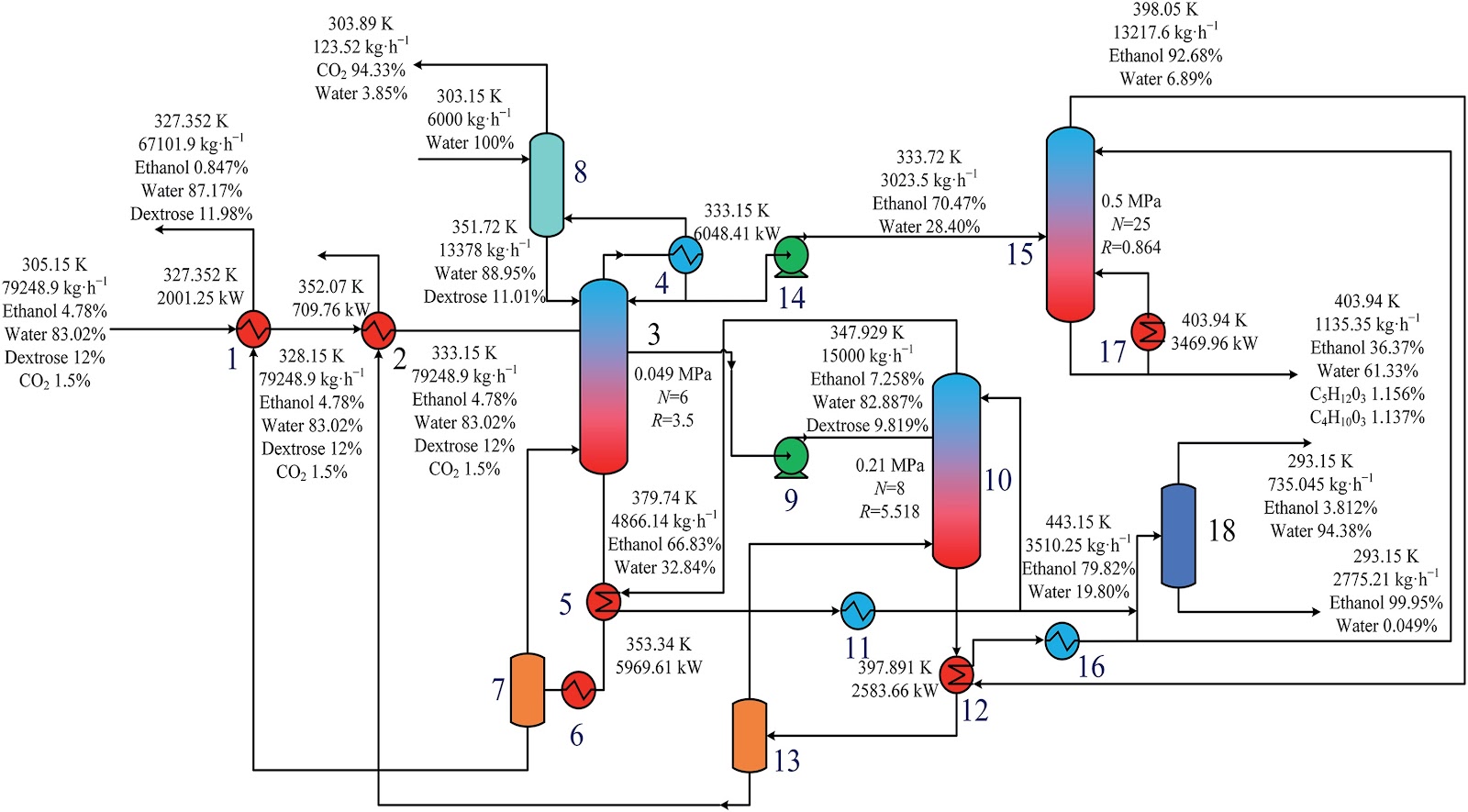
Design and optimization of a high-efficiency distillation process for cellulosic fuel ethanol integrated with thermal coupling and molecular sieve adsorption
To address the challenges of high energy consumption and prominent costs in the traditional three-columns distillation process for cellulosic fuel ethanol, a distillation—molecular sieve coupling separation process is proposed. This process integrates a three-column (crude distillation column, first distillation column, second distillation column) system with a 3A molecular sieve adsorption deep dehydration unit. A thermal coupling network is constructed via differential pressure design (steam from medium/high-pressure columns as mutual heat sources, reboiler liquid waste heat for feed preheating), and molecular sieve adsorption conditions are optimized. The study first performs a thermodynamic consistency test on the ethanol—water system, determines optimal non-random two-liquid (NRTL) model binary interaction parameters via experimental data regression for Aspen Plus simulation. Aiming at minimum total annual cost (TAC), Aspen Plus is used to optimize process parameters (theoretical tray number, feed location, reflux ratio, side-draw position, etc.). Economic analysis shows this process reduces CO2 emission costs by 27.56%, TAC by 15.58% (to 5.123 × 10⁶ USD·a-1), and increases ethanol purity to >99.6%, providing an effective solution for green, efficient separation.
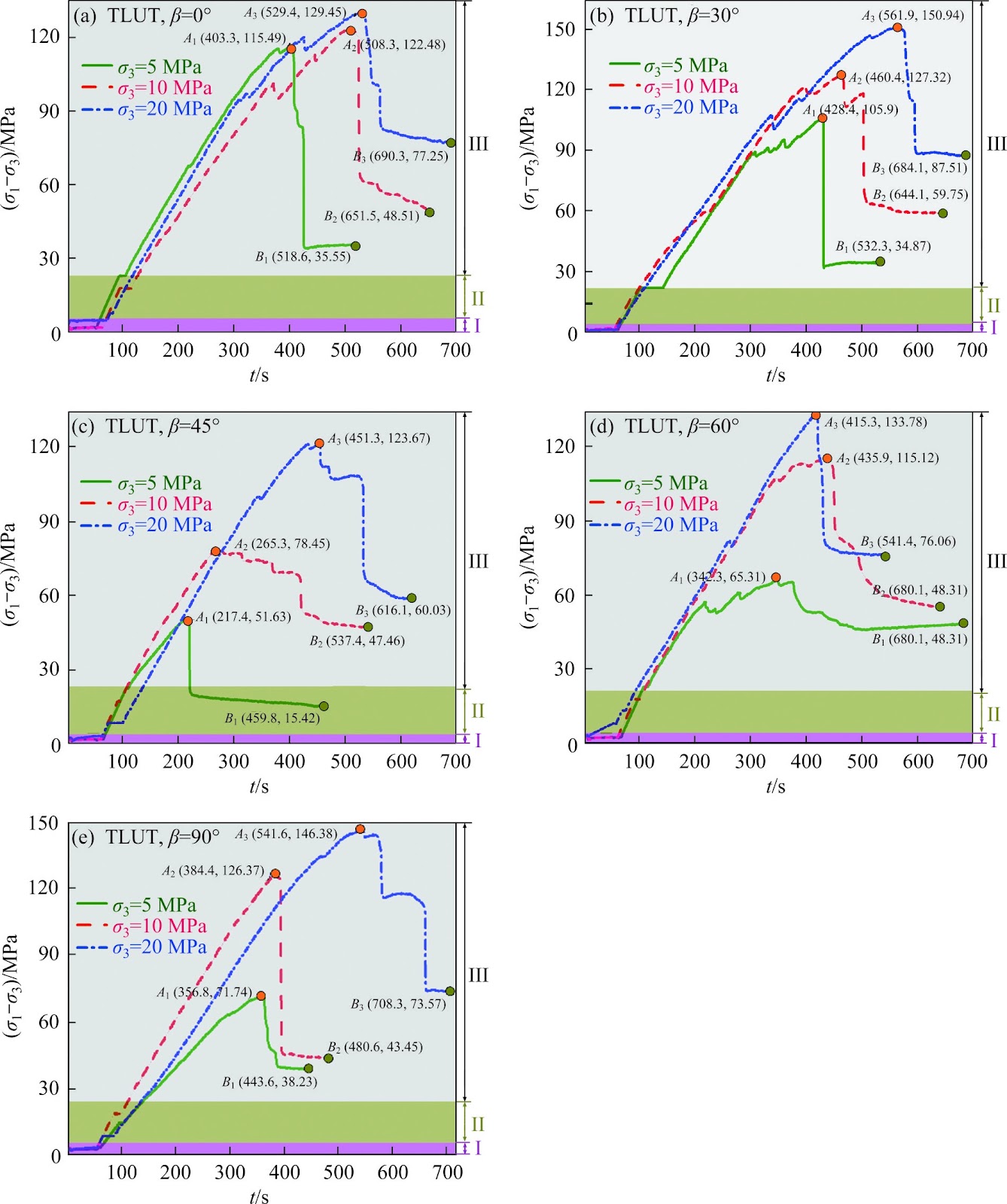
A cohesion loss model for determining residual strength of deep bedded sandstone
Rock residual strength, as an important input parameter, plays an indispensable role in proposing the reasonable and scientific scheme about stope design, underground tunnel excavation and stability evaluation of deep chambers. Therefore, previous residual strength models of rocks established were reviewed. And corresponding related problems were stated. Subsequently, starting from the effects of bedding and whole life-cycle evolution process, series of triaxial mechanical tests of deep bedded s
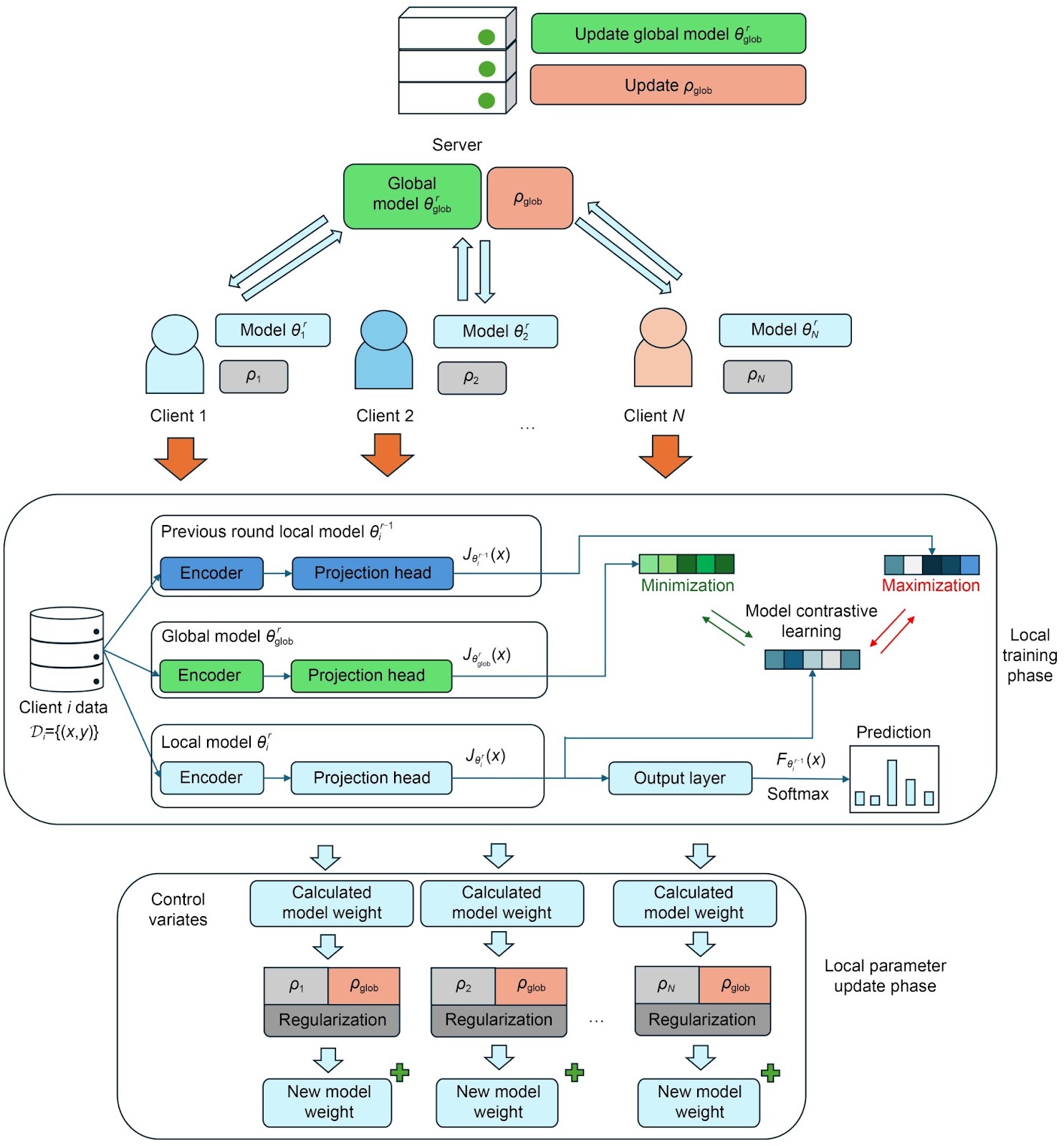
Federated model with contrastive learning and adaptive control variates for human activity recognition
Recent attention to privacy issues demands a communication-safe method for training human activity recognition (HAR) models on client activity data. Federated learning (FL) has become a compelling technique to facilitate model training between the server and clients while preserving data privacy. However, classical FL methods often assume independent and identically distributed (IID) data among clients. This assumption does not hold true in practical scenarios. Human activity in real-world scena