Key Takeaways & Executive Findings
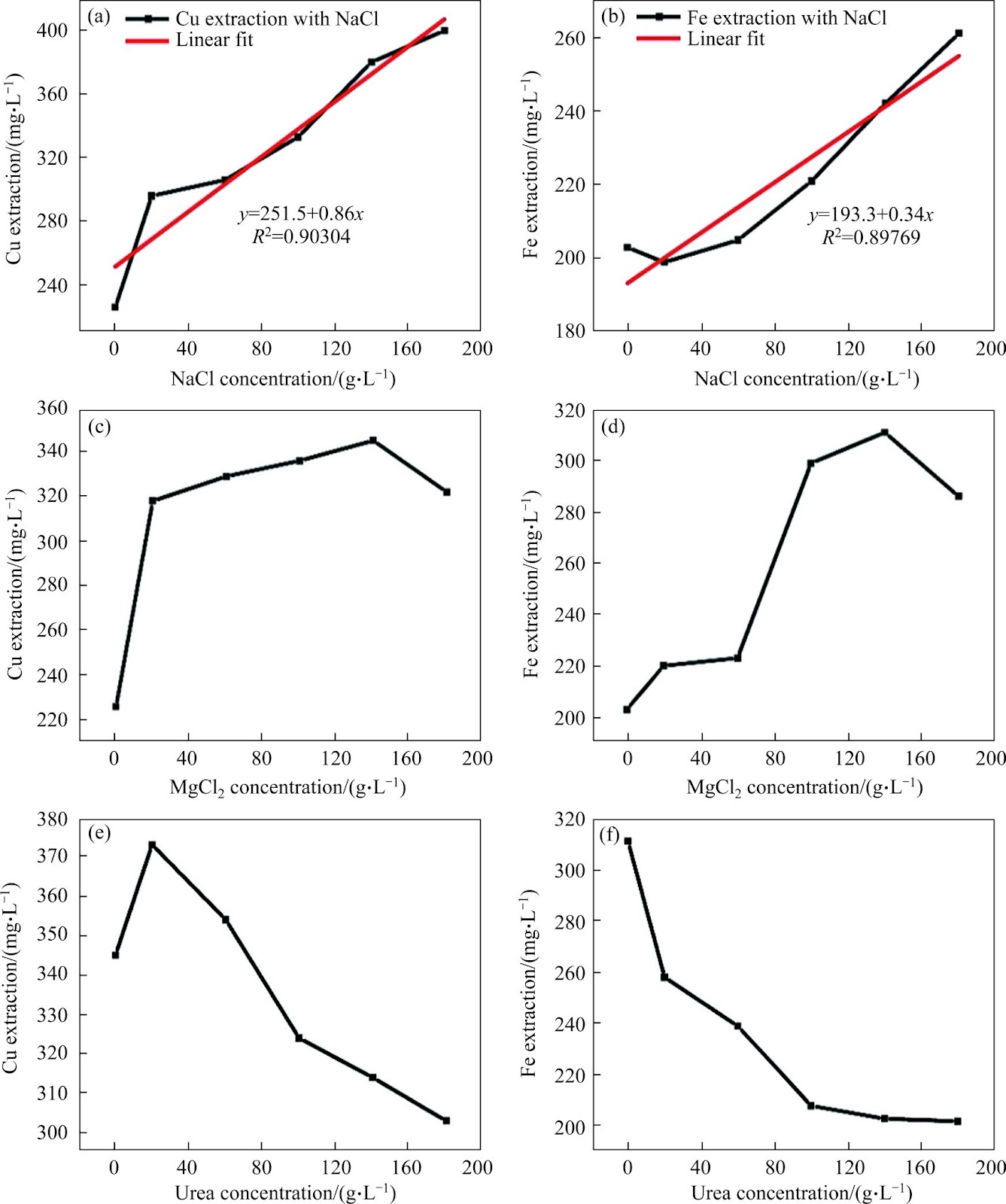
- •• 3 mol/L NaCl yielded the highest copper (60%) and iron (23%) extraction from chalcopyrite, outperforming MgCl2 and MgCl2-urea mixtures. • Urea addition effectively reduced iron levels in the leach solution, enabling more selective copper enrichment. • Hydrothermal synthesis using MgCl2-urea leach solution produced 2D CuFe2O4 electrodes on nickel foam with 45–50 nm wall thickness. • CuFe2O4 electrodes achieved a specific capacitance of 725 mF/cm² at 2 mA/cm², demonstrating strong potential for supercapacitor applications.
Abstract
This study was conducted in two sections. Initially, the effects of NaCl, MgCl2, and urea were investigated on extracting copper and iron from chalcopyrite. Subsequently, CuFe2O4-based electrodes for supercapacitors were synthesized using the extracted solution. The first phase revealed that 3 mol/L NaCl achieved the highest extraction performance, yielding 60% Cu and 23% Fe. MgCl2 at 1.5 mol/L extracted 52% Cu and 27% Fe, while a combination of 0.5 mol/L MgCl2 and 1.6 mol/L urea yielded 57% Cu and 20% Fe. Urea effectively reduced iron levels. CuFe2O4-based electrodes were then successfully synthesized via a hydrothermal method using a MgCl2-urea solution. Characterization studies confirmed CuFe2O4 formation with a 2D structure and 45−50 nm wall thickness on nickel foam. Electrochemical analysis showed a specific capacitance of 725 mF/cm² at 2 mA/cm2 current density, with energy and power densities of 12.3 mW·h/cm² and 175 mW/cm², respectively. These findings suggest that chalcopyrite has the potential for direct use in energy storage.
1. Introduction
Energy storage plays a critical role in ensuring the continuous availability of renewable energy sources [1 −3]. The most common energy storage devices are lithium-ion batteries and supercapacitors. Lithium-ion batteries, despite their high energy density, have a disadvantage due to their limited lifespan and losses during charge-discharge cycles [4, 5]. On the other hand, supercapacitors offer an advantage with their longer lifespan and fast charge-discharge capability [6].
Supercapacitors store energy by either adsorbing ions in the electrolyte onto the electrode surface or undergoing redox reactions, making it desirable for electrode materials to have both a high surface area and redox-active components [7 −9]. Therefore, compounds of metals like copper and iron are highly preferred due to their oxidizing/reducing properties. These metals are commonly sourced from ores such as pyrite and chalcopyrite [10, 11]. These copper and iron metals are extracted from these ores by extracting the acidic, basic, and salt components. However, the sulfur (S0) layer on the surface of chalcopyrite creates passivation, hindering the extraction of metals [12, 13].
In this context, TURAN and their colleagues attempted to overcome this by adding NaCl to the ammonium persulfate solution. They observed that the chloride ions in this solution disrupted sulfur passivation, resulting in copper and iron extraction efficiencies of 75% and 80% after 180 min duration, respectively [14]. VELÁSQUEZ-YÉVENES et al [15] treated chalcopyrite ore with high concentrations of acid and chloride ions, observing a 60% increase in copper extraction after a 20-day waiting period, with this increase continuing gradually with the waiting time. PETROVIC and their colleagues used hydrochloric acid and hydrogen peroxide to remove passivation. After an 80-min reaction period, they found that the maximum copper extraction rate was 33% with 0.5 mol/L HCl and 3.0 mol/L H2O2 at room temperature [16]. SolÍS-MARCIAL et al [17] argued that adding organic solvents to the solution is an effective method for removing the passivation layer. To achieve this, they employed various oxidants (H2O2, CuSO4, and O3) in an acidic solution and carried out chalcopyrite leaching at 40 ℃ in the presence of alcohols such as 2-propanol and hydrogen peroxide, determining an activation energy of 42 kJ/mol for copper dissolution. They also noted that above 40 ℃, peroxide degradation occurred, leading to a reduction in copper extraction. Additionally, they highlighted that methanol stabilized copper ions and prevented the formation of Cu2S2-6Cu2S. In all of these studies, the disruption of the passivation layer with secondary ions like oxidants has been successful in drawing copper and iron ions into the solution with primary components. Primary components such as salts like NaCl or MgCl2 are easily accessible, non-toxic, and cost-effective [18]. However, comparative analyses of different types of these salts are quite rare in the literature. On the other hand, sulfur is known to be removable with salts. Therefore, sulfur moving away from the surface can be captured by reacting with urea (CH4N2O) in the environment, converting it into thiourea (CH4N2S). This process may facilitate the transition of copper and iron into the solution.
Loading authentic research manuscript (Pages 1–5)...
POLAT Safa, MOHAMMED Mariem, MASHRAH Muwafaq (2025). Copper and iron extraction from chalcopyrite by NaCl@MgCl2@urea: Synthesis of CuFe2O4 electrodes for supercapacitors. Journal of Central South University. https://doi.org/10.1007/s11771-025-5860-3
Research & Educational Purpose Only:The translations, structured abstracts, analytical annotations, and data reports provided by SinoTechIntel are intended exclusively for academic research, internal corporate R&D, and educational benchmarking. They do not constitute formal engineering, chemical safety, legal, or professional advice.
Copyright & Intellectual Property Notice: Original copyright of the underlying source articles and experimental data remains with the respective authors, institutions, and original publishing journals. SinoTechIntel claims intellectual property only over its proprietary translations, analytical syntheses, and AEO structured enhancements in accordance with international fair use and academic citation principles.
Frequently Asked Questions
What was the main objective of the study?
The study had two main objectives: first, to investigate the effects of NaCl, MgCl2, and urea on extracting copper and iron from chalcopyrite; second, to synthesize CuFe2O4-based electrodes for supercapacitors using the extracted solution.
Which extraction condition produced the highest copper yield?
The use of 3 mol/L NaCl produced the highest copper extraction, achieving 60% Cu and 23% Fe from chalcopyrite.
How were CuFe2O4 electrodes synthesized?
CuFe2O4 electrodes were successfully synthesized via a hydrothermal method using a MgCl2-urea solution derived from chalcopyrite leaching.
What were the key electrochemical performance metrics of the electrodes?
The CuFe2O4 electrodes exhibited a specific capacitance of 725 mF/cm² at 2 mA/cm² current density, with energy and power densities of 12.3 mW·h/cm² and 175 mW/cm², respectively.
What potential application do the findings suggest?
The findings suggest that chalcopyrite, a common copper ore, has the potential to be directly used in energy storage applications, particularly for supercapacitor electrodes.
Related Technical Papers & Translations
Design and optimization of a high-efficiency distillation process for cellulosic fuel ethanol integrated with thermal coupling and molecular sieve adsorption
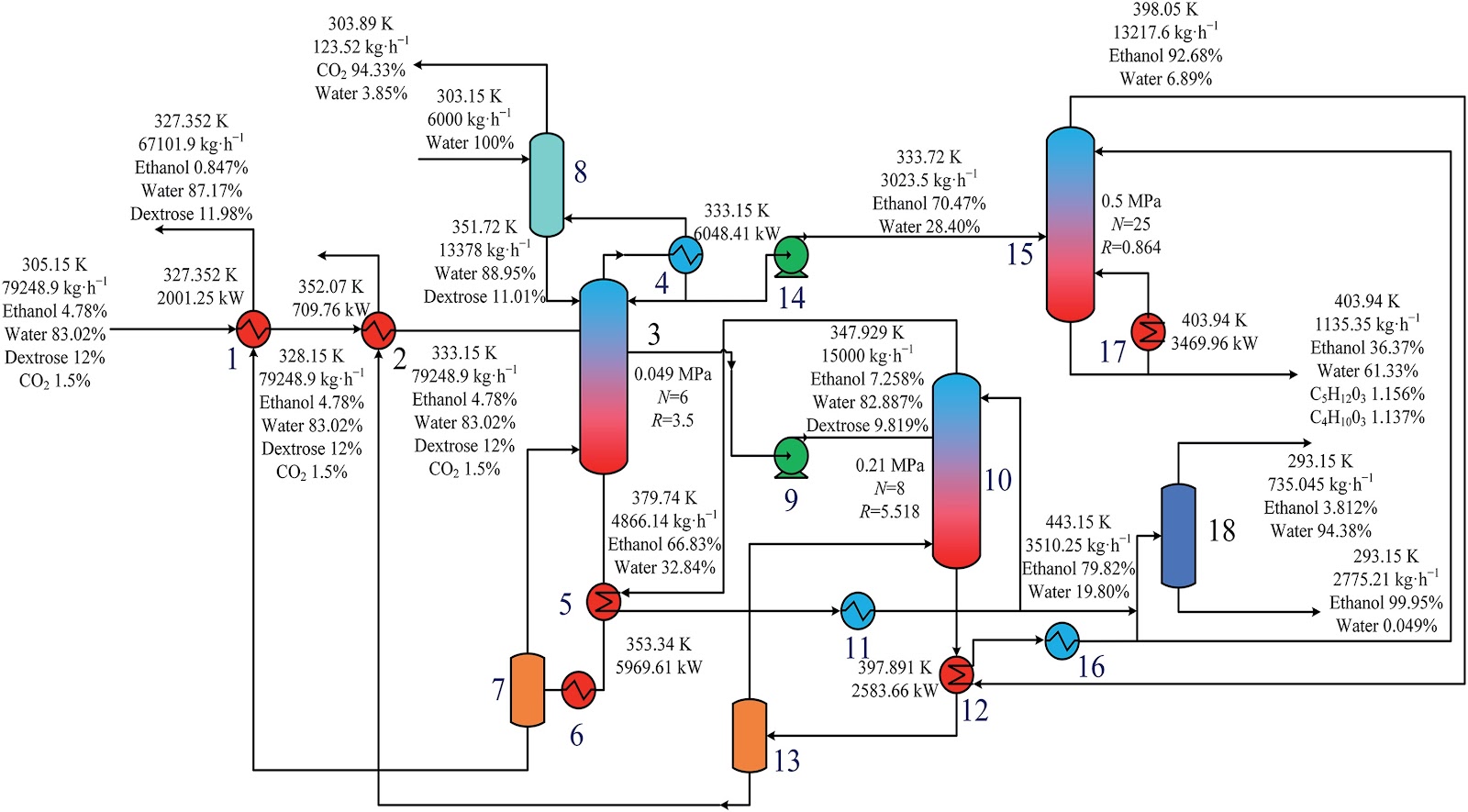
To address the challenges of high energy consumption and prominent costs in the traditional three-columns distillation process for cellulosic fuel ethanol, a distillation—molecular sieve coupling separation process is proposed. This process integrates a three-column (crude distillation column, first distillation column, second distillation column) system with a 3A molecular sieve adsorption deep dehydration unit. A thermal coupling network is constructed via differential pressure design (steam from medium/high-pressure columns as mutual heat sources, reboiler liquid waste heat for feed preheating), and molecular sieve adsorption conditions are optimized. The study first performs a thermodynamic consistency test on the ethanol—water system, determines optimal non-random two-liquid (NRTL) model binary interaction parameters via experimental data regression for Aspen Plus simulation. Aiming at minimum total annual cost (TAC), Aspen Plus is used to optimize process parameters (theoretical tray number, feed location, reflux ratio, side-draw position, etc.). Economic analysis shows this process reduces CO2 emission costs by 27.56%, TAC by 15.58% (to 5.123 × 10⁶ USD·a-1), and increases ethanol purity to >99.6%, providing an effective solution for green, efficient separation.
A cohesion loss model for determining residual strength of deep bedded sandstone
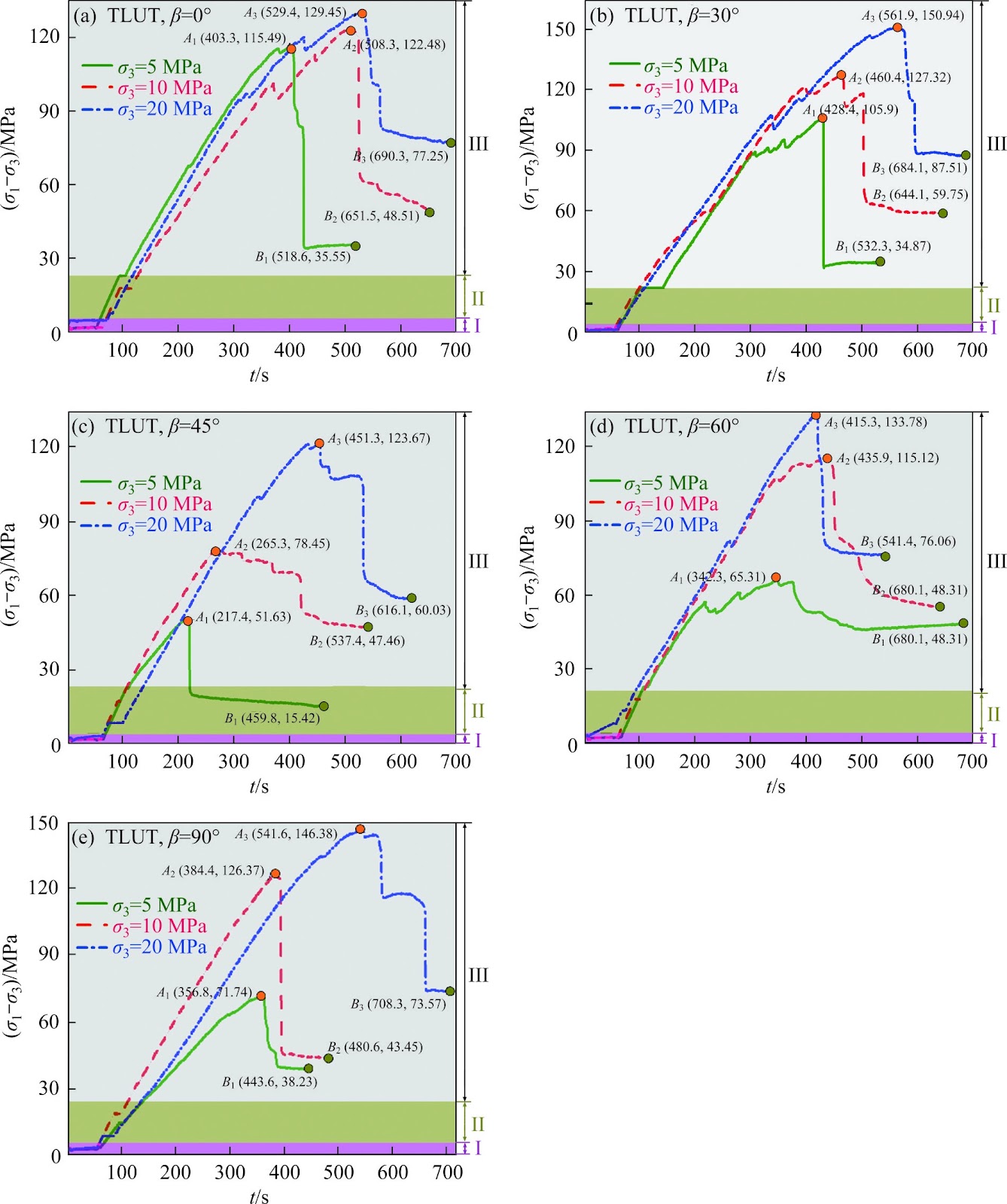
Rock residual strength, as an important input parameter, plays an indispensable role in proposing the reasonable and scientific scheme about stope design, underground tunnel excavation and stability evaluation of deep chambers. Therefore, previous residual strength models of rocks established were reviewed. And corresponding related problems were stated. Subsequently, starting from the effects of bedding and whole life-cycle evolution process, series of triaxial mechanical tests of deep bedded s
Federated model with contrastive learning and adaptive control variates for human activity recognition
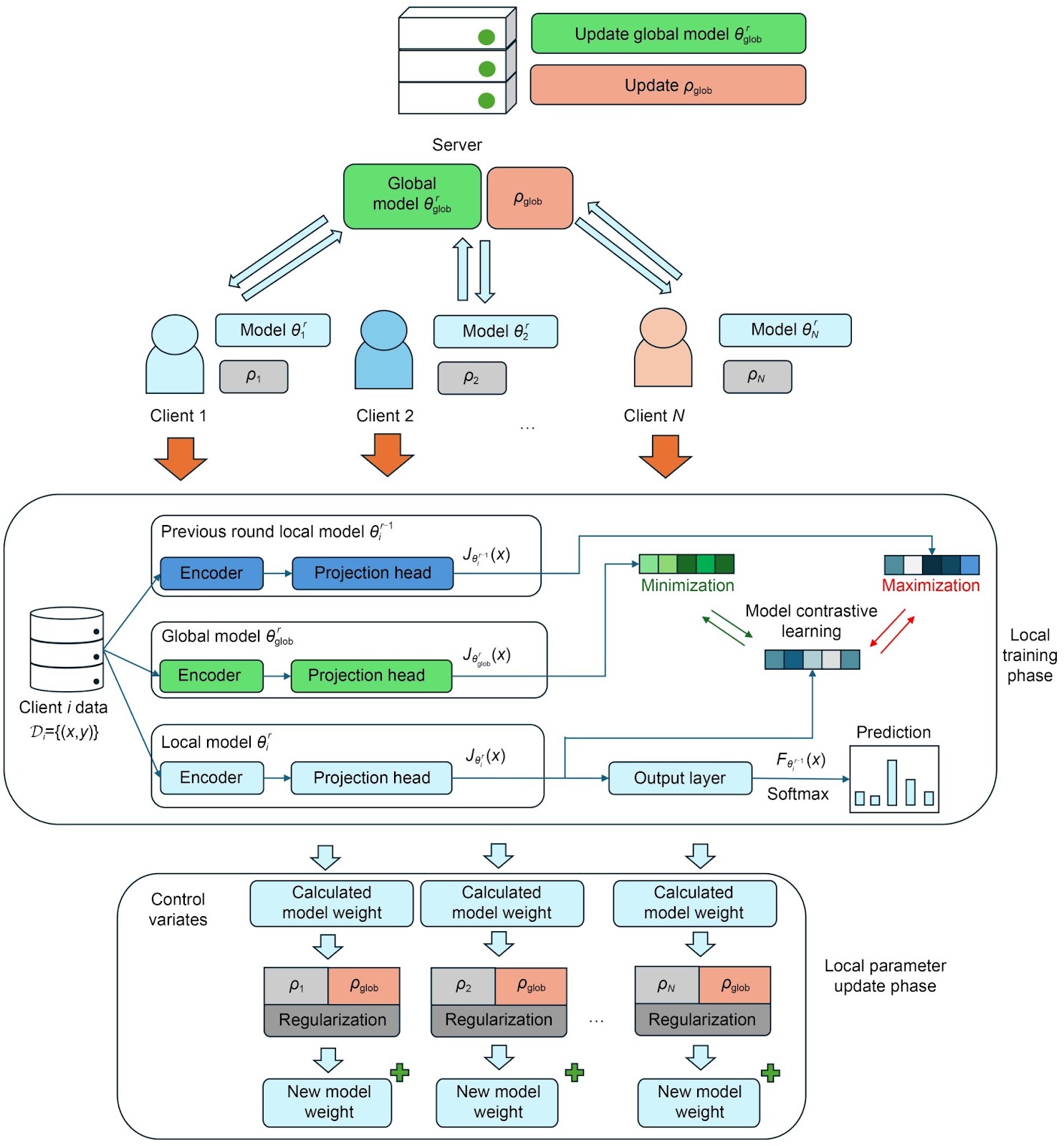
Recent attention to privacy issues demands a communication-safe method for training human activity recognition (HAR) models on client activity data. Federated learning (FL) has become a compelling technique to facilitate model training between the server and clients while preserving data privacy. However, classical FL methods often assume independent and identically distributed (IID) data among clients. This assumption does not hold true in practical scenarios. Human activity in real-world scena