Key Takeaways & Executive Findings
- •• Setting a transition section 6 m before a sudden rock mass change effectively controls deformation in layered strata. • Advance small pipe support significantly reduces tunnel arch settlement, while anchor bolts control horizontal convergence. • Adjusting anchor bolt angles is a cost-effective measure for asymmetric deformation in layered rock. • Recommended support optimization: flexible anchor bolt angles and increased advance small pipe support for rock stratum transitions.
Abstract
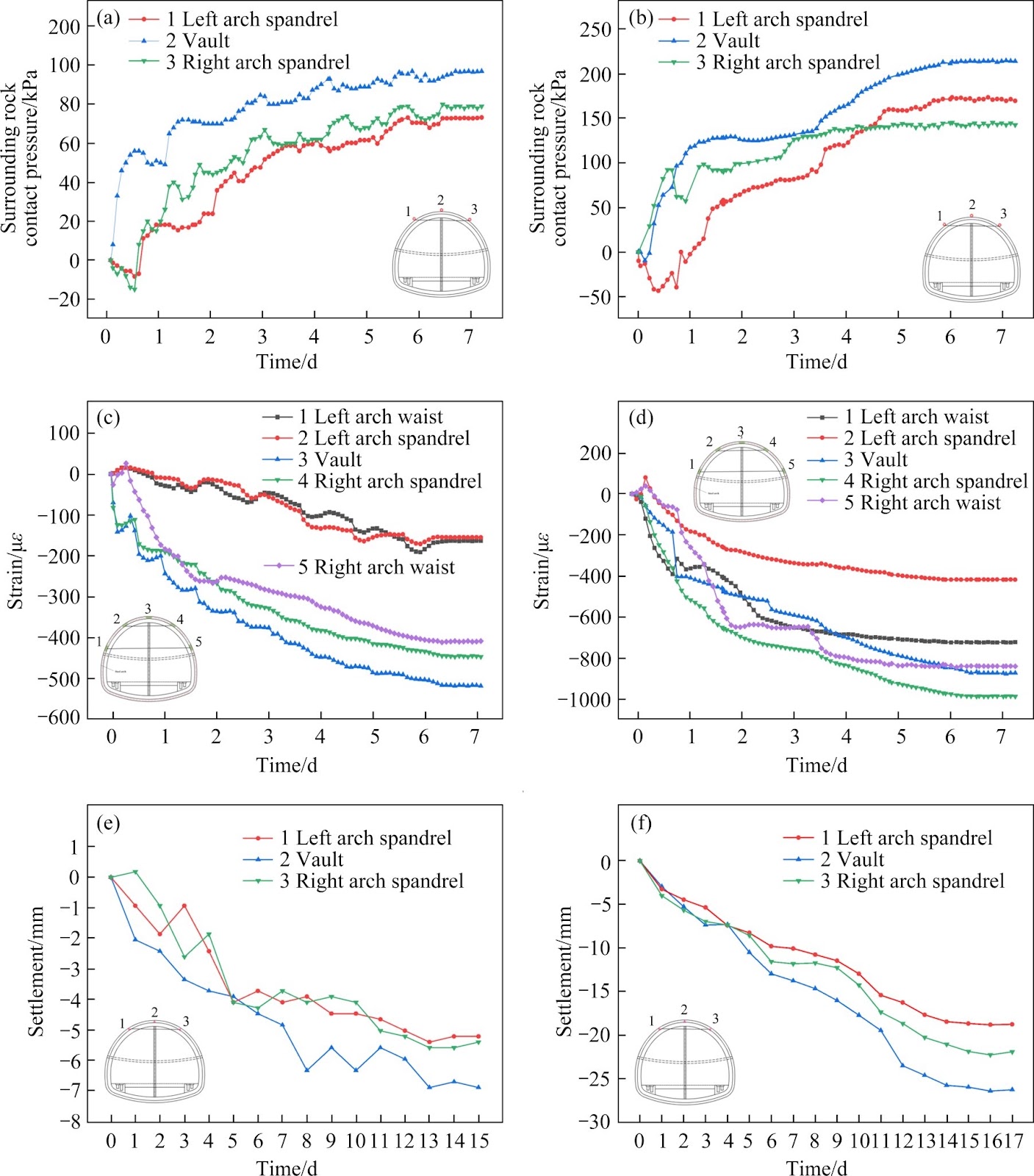
Layered rock masses represent complex geological formations characterized by pronounced anisotropy in strength. This study monitors stress/deformation during construction to summarize layered rock mass deformation and support stress characteristics based on Yunwushan Tunnel. Shale shows greater vault settlement and asymmetric support deformation than sandstone. The excavation was optimized by establishing a numerical model, analyzing the advanced support effect, and redesigning the anchor rod to control the asymmetric large deformation. The results show that: 1) It is effective to set a transition section before the sudden change of rock mass, and the optimal distance for setting the transition section is 6 m. 2) The implementation of advance small pipe support has been shown to effectively mitigate settlement in the tunnel arch, whereas anchor bolt support is effective in controlling the horizontal convergence of the surrounding rock. 3) Adjusting the angle of the anchor bolt is a cost-effective reinforcement method when facing asymmetric deformation. 4) It is recommended to flexibly adjust the angle of the anchor bolts and increase the advance small pipe support in mountain tunnel projects under the transformation of rock strata. These outcomes may serve as a valuable reference for the design and construction of similar engineering projects.
1. Introduction
Layered rock mass is a complex geological structure in underground cavern engineering [1−3]. The different failure modes of layered surrounding rocks are caused by differences in the physical and mechanical properties of the surrounding rock and the occurrence environment [4, 5]. Many scholars have studied the failure mechanism of layered surrounding rock through on-site monitoring [6], indoor experiments [7, 8], theoretical analysis [9], numerical simulation [10, 11], and other methods. The mode of failure is contingent upon several factors, including ground stress [12], the mechanical and physical attributes of the surrounding rock, the geometry of the rock layer [13], and the size and excavation technique of the tunnel. Large deformations, such as compression deformation, asymmetric deformation, and bottom plate uplift, are progressively revealed with the excavation of tunnels in stratified surrounding rocks [14−16]. Determining the mechanism of large deformations in layered surrounding rocks is key to implementing reasonable prevention and response measures.
The deformation of the surrounding rock affects the stability of tunnels. Currently, several countermeasures are available for large deformations of surrounding rocks, including strong support, yielding support, and advanced support. However, its high support stiffness inhibits the continuous development of tunnel deformation and failure [17], and the secondary stress redistribution process of the surrounding rock after tunnel excavation is prone to various large deformation accidents, yielding support that actively releases the stress of the surrounding rock has attracted attention [18, 19]. For fractured surrounding rock, advanced support can reinforce the surrounding rock in advance, which is beneficial for the stability of the surrounding rock during the period after tunnel excavation and before initial support, so that the surrounding rock will not be destabilized [20−22]. The selection of support methods is crucial for the safe construction of tunnels, asymmetric mechanical and large deformation caused by layered structure have long been recognized, and control measures have been extensively studied [23, 24]. Previous research has focused more on the deformation failure mechanism and stability of surrounding rock, and there is little research on the treatment measures of large deformation when the rock mass quality of the tunnel changes abruptly, and the support schemes need to be further improved.
Based on the Yunwushan Tunnel project of Chongqing Rail Transit Bi-tong Line, this study examines the optimization of excavation and support measures when the rock stratum changed from sandstone to shale. The deformation characteristics of the tunnel surrounding rock and the stress law of the support structure under different rock strata were summarized through on-site monitoring. FLAC3D was used to investigate the control effect of advanced small pipes and bolt support on...
Loading authentic research manuscript (Pages 1–5)...
JIANG Hua, HU Hao, SHEN Qing-yun, ZHANG Ao (2026). Conversion of tunnel excavation methods and optimization of support measures under transformation of rock stratum: A case study. Journal of Central South University. https://doi.org/10.1007/s11771-026-6234-1
Research & Educational Purpose Only:The translations, structured abstracts, analytical annotations, and data reports provided by SinoTechIntel are intended exclusively for academic research, internal corporate R&D, and educational benchmarking. They do not constitute formal engineering, chemical safety, legal, or professional advice.
Copyright & Intellectual Property Notice: Original copyright of the underlying source articles and experimental data remains with the respective authors, institutions, and original publishing journals. SinoTechIntel claims intellectual property only over its proprietary translations, analytical syntheses, and AEO structured enhancements in accordance with international fair use and academic citation principles.
Frequently Asked Questions
What is the optimal distance for setting a transition section in layered rock tunnels?
The study found that setting a transition section 6 m before the sudden change of rock mass is effective in controlling deformation.
Which support measure is most effective for controlling tunnel arch settlement?
Advance small pipe support is shown to effectively mitigate settlement in the tunnel arch.
How can asymmetric deformation in layered rock be controlled cost-effectively?
Adjusting the angle of the anchor bolt is a cost-effective reinforcement method for asymmetric deformation.
What are the recommended support measures for mountain tunnels under rock stratum transformation?
It is recommended to flexibly adjust the angle of anchor bolts and increase advance small pipe support.
What numerical method was used in this study?
FLAC3D was used to investigate the control effect of advanced small pipes and bolt support.
Related Technical Papers & Translations
Direct Repair of the Crystal Structure and Coating Surface of Spent LiFePO4 Materials Enables Superfast Li-Ion Migration
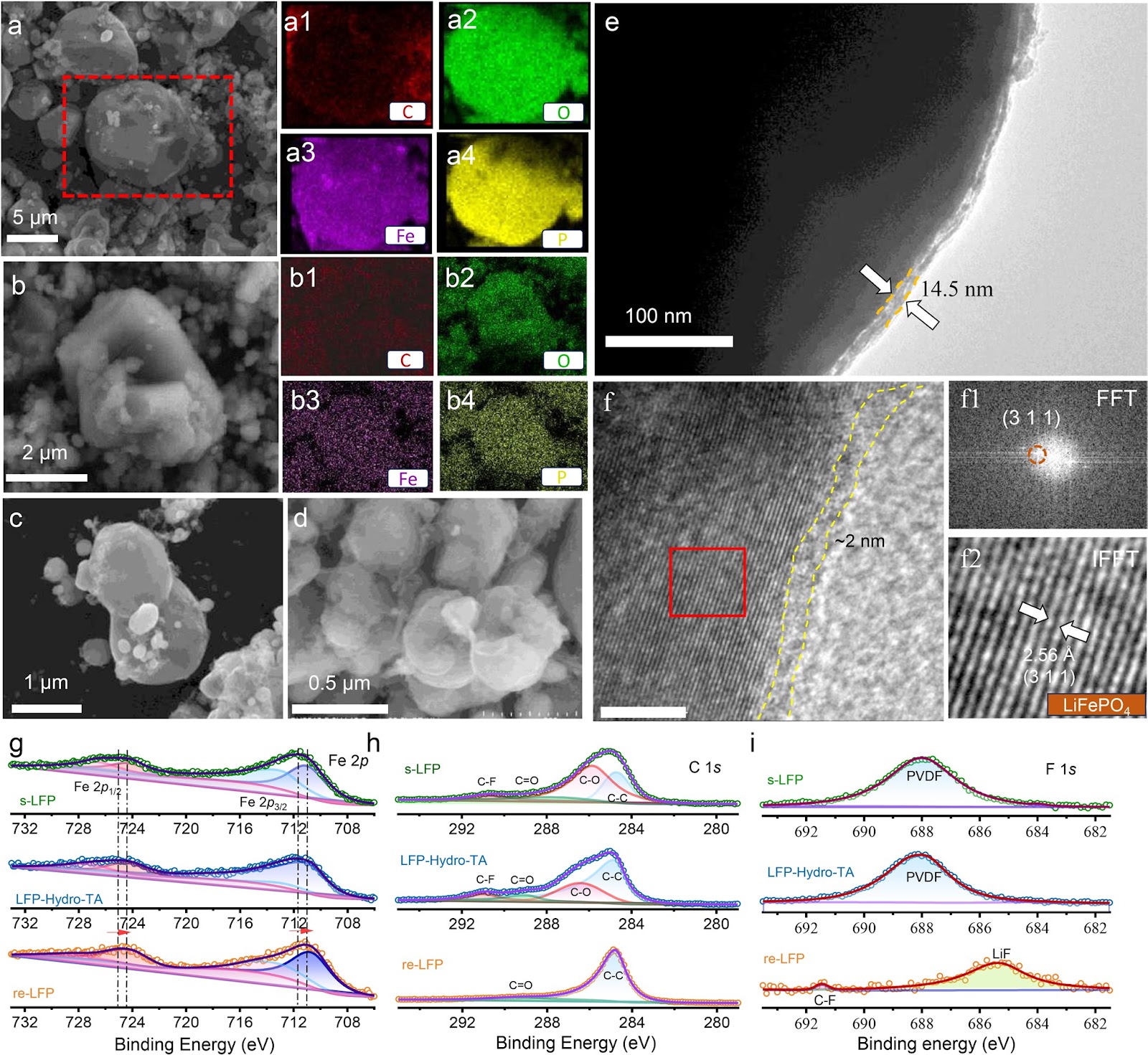
The rapid accumulation of spent LiFePO4 (LFP) cathodes from retired lithium-ion batteries necessitates the development of effective and environmental-friendly recycling strategies. In this context, direct regeneration has emerged as a promising approach for reclaiming LFP cathode materials, offering a streamlined pathway to restore their electrochemical functionality. We report an integrated regeneration protocol that simultaneously repairs the degraded crystal structure and reconstructs the damaged carbon coating in spent LFP. The regenerated cathode material had superfast lithium-ion diffusion kinetics and a stable cathode–electrolyte interface, giving a remarkable rate capability with specific capacities of 122 mAh g−1 at 5C and 106 mAh g−1 at 10C (1C = 170 mA g−1). It also maintained capacities of 110.7 mAh g−1 (5C) and 84.1 mAh g−1 (10C) after 400 cycles. It could be used in harsh environments and could be stably cycled at subzero temperatures (−10 and −20 °C) and in solid-state electrolyte batteries. Life cycle assessment combined with economic evaluation using the EverBatt model reveals that this direct regeneration approach has high economic and environmental benefits.
Oxide Semiconductor for Advanced Memory Architectures: Atomic Layer Deposition, Key Requirement and Challenges
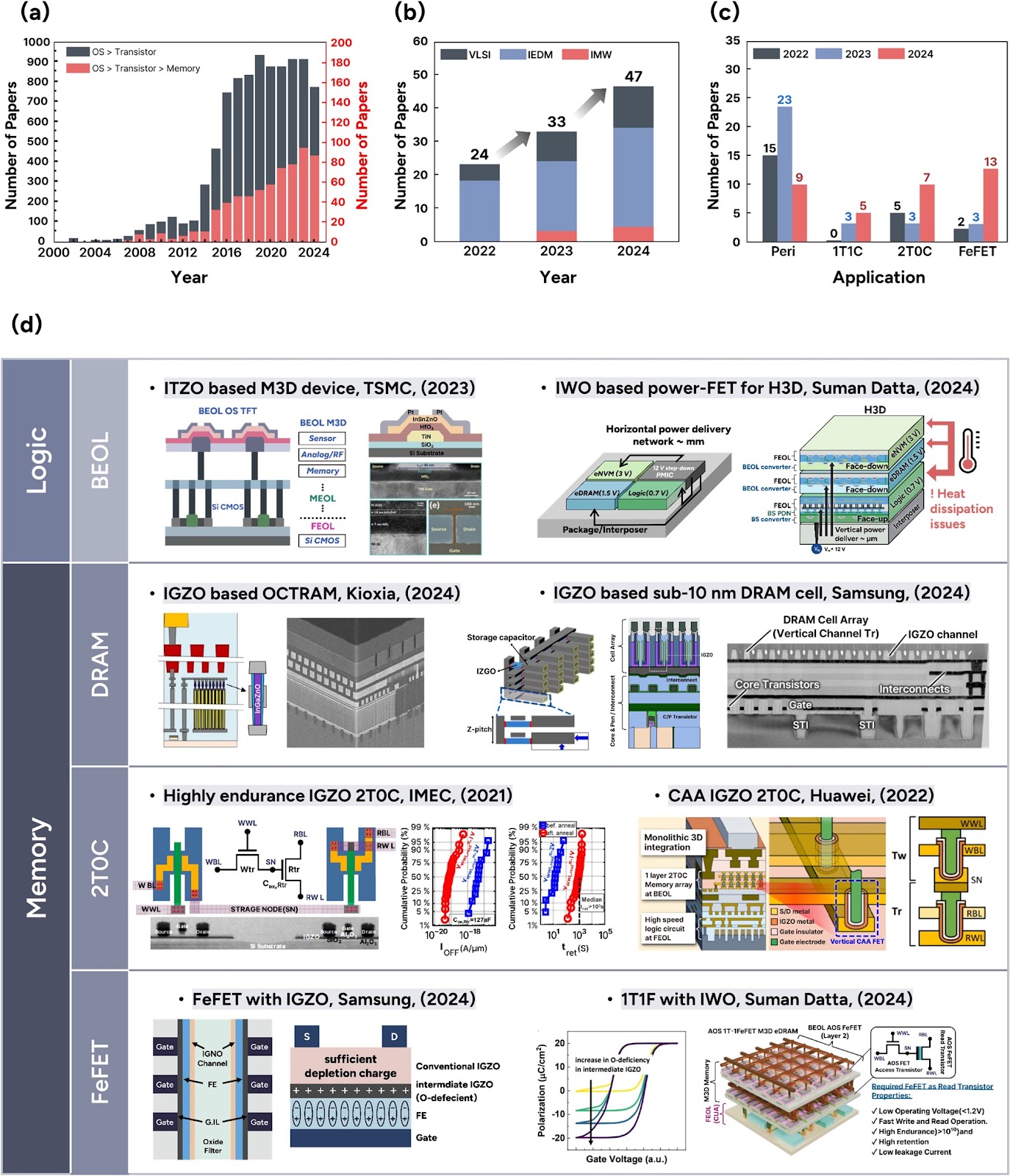
Oxide semiconductors (OSs), introduced by the Hosono group in the early 2000s, have evolved from display backplane materials to promising candidates for advanced memory and logic devices. The exceptionally low leakage current of OSs and compatibility with three-dimensional (3D) architectures have recently sparked renewed interest in their use in semiconductor applications. This review begins by exploring the unique material properties of OSs, which fundamentally originate from their distinct electronic band structure. Subsequently, we focus on atomic layer deposition (ALD), a core technique for growing excellent OS films, covering both basic and advanced processes compatible with 3D scaling. The basic surface reaction mechanisms—adsorption and reaction—and their roles in film growth are introduced. Furthermore, material design strategies, such as cation selection, crystallinity control, anion doping, and heterostructure engineering, are discussed. We also highlight challenges in memory applications, including contact resistance, hydrogen instability, and lack of p-type materials, and discuss the feasibility of ALD-grown OSs as potential solutions. Lastly, we provide an outlook on the role of ALD-grown OSs in memory technologies. This review bridges material fundamentals and device-level requirements, offering a comprehensive perspective on the potential of ALD-driven OSs for next-generation semiconductor memory devices.
Laser powder bed fusion of biodegradable Zn-4Cu alloy: Processing, microstructure and properties
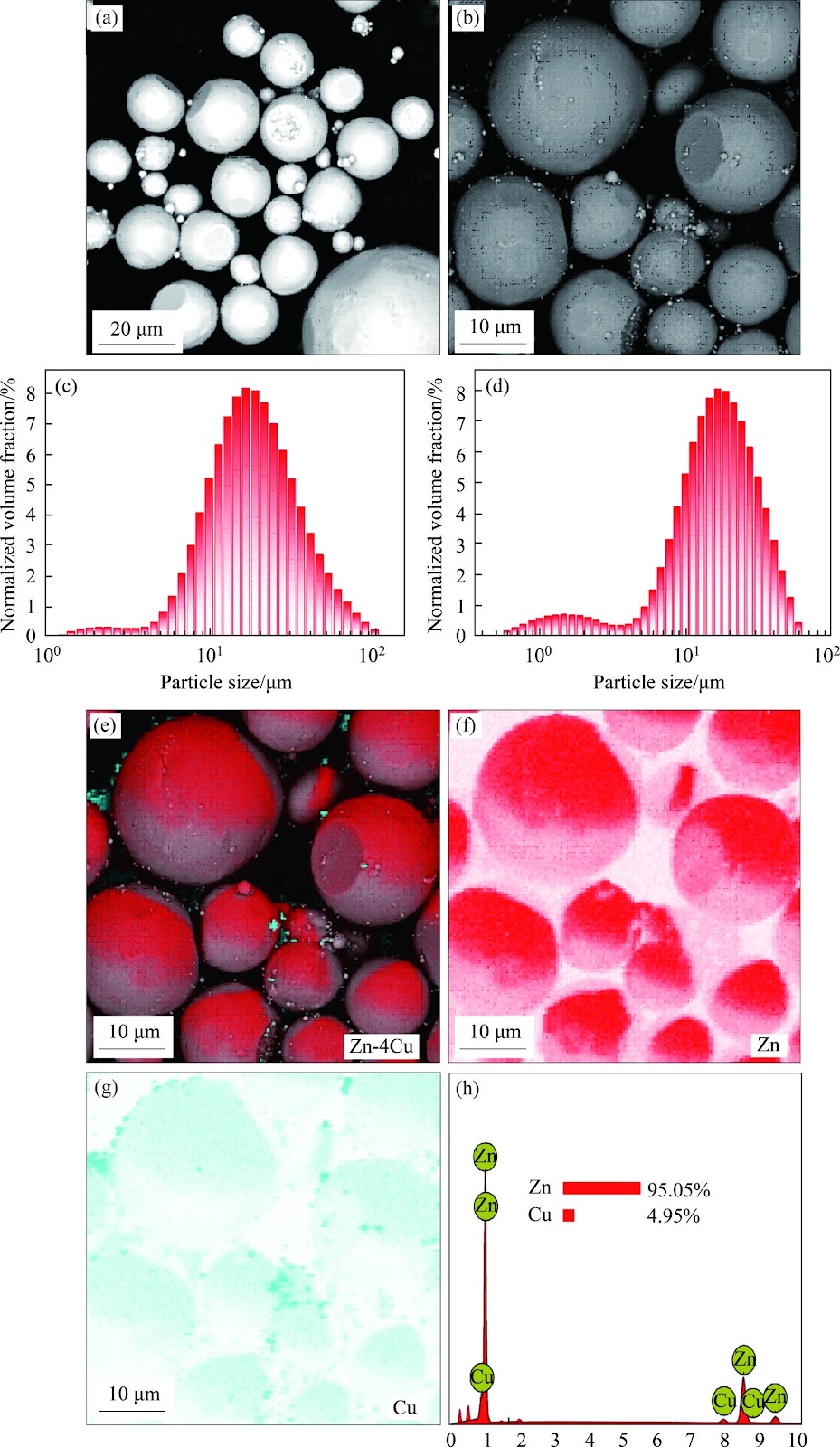
Zn's natural degradability and biocompatibility make it a promising candidate for implants, however, its mechanical properties remain insufficient for bone applications. In this study, the performance of Zn was enhanced by developing Zn-Cu alloys via laser powder bed fusion (LPBF). Optimal LPBF parameters for forming stable tracks were achieved by adjusting laser power and scanning speed. Under optimized conditions of 100 W and 100 mm/s, high-density (99.58%) Zn-Cu alloys with improved hardness (68.2HV) and yield strength (160 MPa) were achieved. These improvements are attributed to solid solution strengthening, segregation strengthening, and grain refinement. The Zn-Cu alloys also demonstrated favorable degradation behavior, with a rate of 0.16 mm/year. This degradation is primarily driven by micro-galvanic corrosion between the CuZn5 phase and Zn matrix, along with refined grains and increased grain boundary density. This work demonstrates a viable strategy for fabricating Zn-based implants with enhanced structural integrity and mechanical performance via LPBF.