Key Takeaways & Executive Findings
- •• Phase change cold storage technology stabilizes temperatures, reduces compressor load, and enables load shifting, significantly lowering energy consumption in cold-chain facilities. • Systematic comparison of three PCM types (organic, inorganic, and eutectic) highlights trade-offs among thermal conductivity, stability, cost, and encapsulation requirements. • Classifying cold storage systems into active and passive types identifies refrigeration units and external heat ingress as dominant energy consumers, guiding targeted PCM integration. • Future research should focus on high-performance PCMs, optimized cold storage panel arrangements, and system-level integration to overcome current scalability and cost barriers.
Abstract
Market demand for cold storage systems, a critical component of modern cold-chain logistics, is rapidly expanding. Phase change cold technology offers a low-carbon route for energy savings in cold storage systems and is now a major research focus. This paper outlines the application of cold storage technology, systematically reviews the characteristics of three types of phase change materials (PCMs), and provides a comparative analysis of their advantages and disadvantages. It elaborates on key techniques for enhancing material properties and details the primary encapsulation strategies to address engineering challenges. This study categorizes cold storage systems into active and passive types, and identifies refrigeration units and external heat ingress as the primary sources of energy consumption. Based on this classification, three specific application scenarios for integrating PCMs into cold storage systems are clearly outlined. This study provides a comprehensive summary and analysis of the current development prospects and challenges of phase change cold storage technology. It proposes that future research should prioritize the development of high-performance PCMs, optimization of cold storage panel arrangements, and studies on system-level integration.
1. Introduction
Cold chain logistics is a critical approach that ensures that a specified low temperature is consistently maintained during the storage and transportation of fresh food, thereby effectively safeguarding the quality and safety of food products [1–2]. A cold storage facility or cold room is a type of refrigeration equipment that artificially creates an environment with temperatures or humidity conditions different from the outdoors. It is a crucial component of cold chain logistics and is widely used for storing products such as food, dairy, meat, seafood, poultry, fruits, vegetables, and beverages, ensuring their quality and safety in low-temperature environments [3]. Typically, cold storage facilities maintain temperatures between −10 and −30°C and possess significant cooling capacity and area. In the domestic context, the construction of cold storage facilities in China is rapidly progressing, primarily located in major fruit and vegetable production areas as well as in the suburbs of medium to large cities [4]. With the rapid development of industries such as agri-food processing and biomedicine, the demand for freezing and refrigeration is also increasing rapidly, leading to greater requirements for tonnage, scale, and type of cold storage facilities. New construction concepts for cold stores that emphasize standardization, modularity, and factory-based approaches are gradually replacing traditional building forms and operational models. The cold storage industry in China will further focus on convenience and enhance its facilities to improve the “last mile” service capability of cold chain logistics. Nonetheless, the increasing demand for cold stores has accelerated energy consumption, with cold storage facilities accounting for approximately one-seventh of the total electricity usage of China [5]. Therefore, it is crucial to actively develop novel low-carbon energy-saving technologies for use in cold storage facilities [6–8].
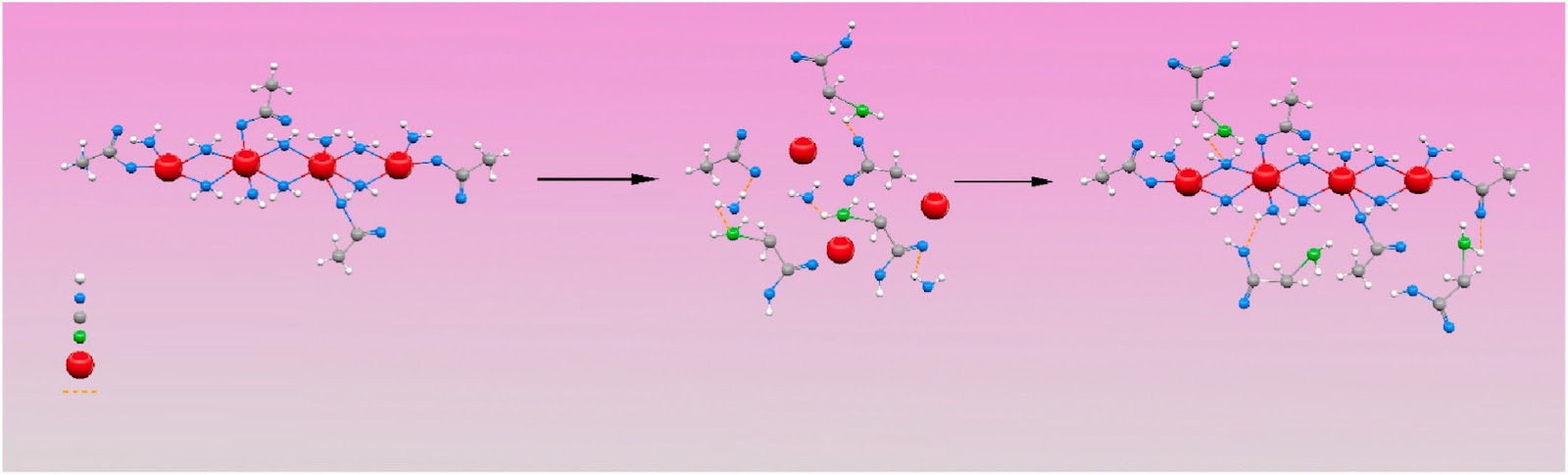
As a novel energy-storage technology [9], phase change cold storage technology can be integrated into cold storage systems. By utilizing a substantial amount of energy absorbed or released by phase change materials (PCMs) during their phase transition process, this approach maintains the temperature at an almost constant level, thereby enabling precise temperature control within cold storage facilities and ensuring that the temperature remains stable within a predefined optimal range [10–14]. This integration advances the twin goals of reducing energy use and emissions. By embedding PCMs, the cooling load on the compressors is reduced, and the power demand decreases. For instance [15], by cooling and storing refrigerants during off-peak hours when electricity is cheaper, their cooling capacities can be effectively utilized during peak daytime hours, thereby reducing reliance on refrigeration equipment. In addition, during power outages or compressor failures, stored cooling in PCMs maintains safe temperatures, prolongs shelf life, and sharply reduces the risk of food spoilage. Moreover, integrating phase change cooling technology between cold storage and cold chain transportation can ensure stable temperatures during transit, particularly in multimodal transport scenarios, thereby enhancing transportation efficiency and reducing losses [16]. As shown in Fig. 1, the application of phase change in cold storage systems primarily involves integrating PCMs with cold storage panels, building envelopes, and refrigeration units.
Loading authentic research manuscript (Pages 1–5)...
Xiao Yang, Baoshan Xie, Xikang Xie, Lijin Zhou, Yuanxin He, Chuanchang Li (2025). Cold storage systems integrated with phase change technology. Journal of Mineral Metallurgy and Materials Science. https://doi.org/10.1007/s12613-025-3342-0
Research & Educational Purpose Only:The translations, structured abstracts, analytical annotations, and data reports provided by SinoTechIntel are intended exclusively for academic research, internal corporate R&D, and educational benchmarking. They do not constitute formal engineering, chemical safety, legal, or professional advice.
Copyright & Intellectual Property Notice: Original copyright of the underlying source articles and experimental data remains with the respective authors, institutions, and original publishing journals. SinoTechIntel claims intellectual property only over its proprietary translations, analytical syntheses, and AEO structured enhancements in accordance with international fair use and academic citation principles.
Frequently Asked Questions
What is phase change cold storage technology?
It is an energy-storage approach that integrates phase change materials (PCMs) into cold storage systems. PCMs absorb and release significant amounts of energy during phase transitions, enabling precise temperature control, reducing compressor cooling loads, and shifting electricity demand to off-peak hours.
How do phase change materials improve cold storage system efficiency?
By embedding PCMs in cold storage panels, building envelopes, or refrigeration units, the cooling load on compressors is reduced and power demand decreases. PCMs also provide thermal buffering during power outages or peak demand, maintaining safe temperatures and prolonging food shelf life.
What are the main types of phase change materials used in cold storage?
The paper systematically reviews three types of PCMs—organic, inorganic, and eutectic—and compares their advantages and disadvantages, including thermal conductivity, stability, cost, and corrosion behavior.
What are the key challenges in integrating PCMs into cold storage systems?
Challenges include enhancing material properties (e.g., thermal conductivity and stability), developing effective encapsulation strategies to prevent leakage and corrosion, and optimizing system-level integration to minimize energy consumption from refrigeration units and external heat ingress.
What future research directions are proposed for phase change cold storage?
Future research should prioritize the development of high-performance PCMs, optimization of cold storage panel arrangements, and studies on system-level integration to improve scalability, cost-effectiveness, and low-carbon performance.
Related Technical Papers & Translations
Design and optimization of a high-efficiency distillation process for cellulosic fuel ethanol integrated with thermal coupling and molecular sieve adsorption
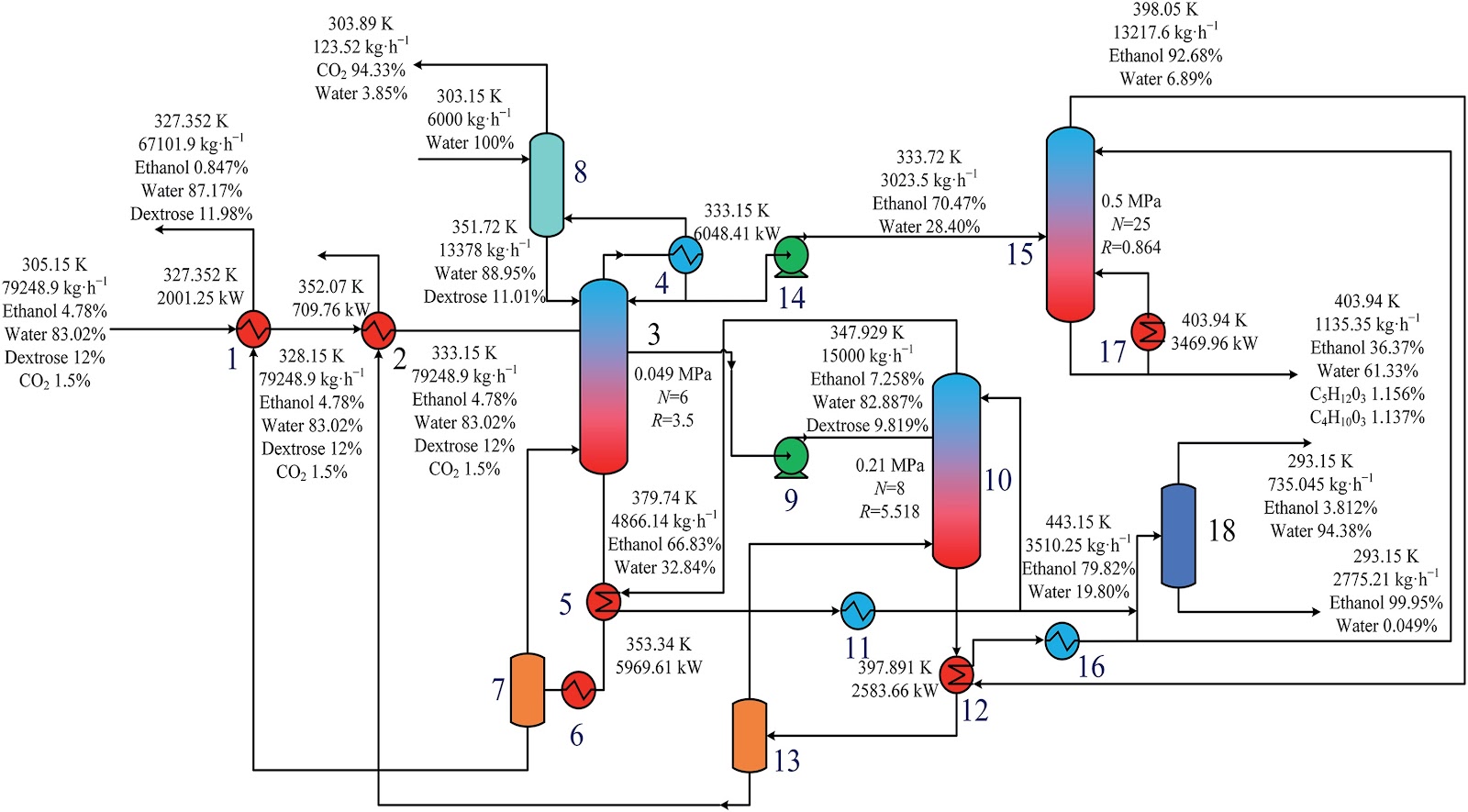
To address the challenges of high energy consumption and prominent costs in the traditional three-columns distillation process for cellulosic fuel ethanol, a distillation—molecular sieve coupling separation process is proposed. This process integrates a three-column (crude distillation column, first distillation column, second distillation column) system with a 3A molecular sieve adsorption deep dehydration unit. A thermal coupling network is constructed via differential pressure design (steam from medium/high-pressure columns as mutual heat sources, reboiler liquid waste heat for feed preheating), and molecular sieve adsorption conditions are optimized. The study first performs a thermodynamic consistency test on the ethanol—water system, determines optimal non-random two-liquid (NRTL) model binary interaction parameters via experimental data regression for Aspen Plus simulation. Aiming at minimum total annual cost (TAC), Aspen Plus is used to optimize process parameters (theoretical tray number, feed location, reflux ratio, side-draw position, etc.). Economic analysis shows this process reduces CO2 emission costs by 27.56%, TAC by 15.58% (to 5.123 × 10⁶ USD·a-1), and increases ethanol purity to >99.6%, providing an effective solution for green, efficient separation.
A cohesion loss model for determining residual strength of deep bedded sandstone
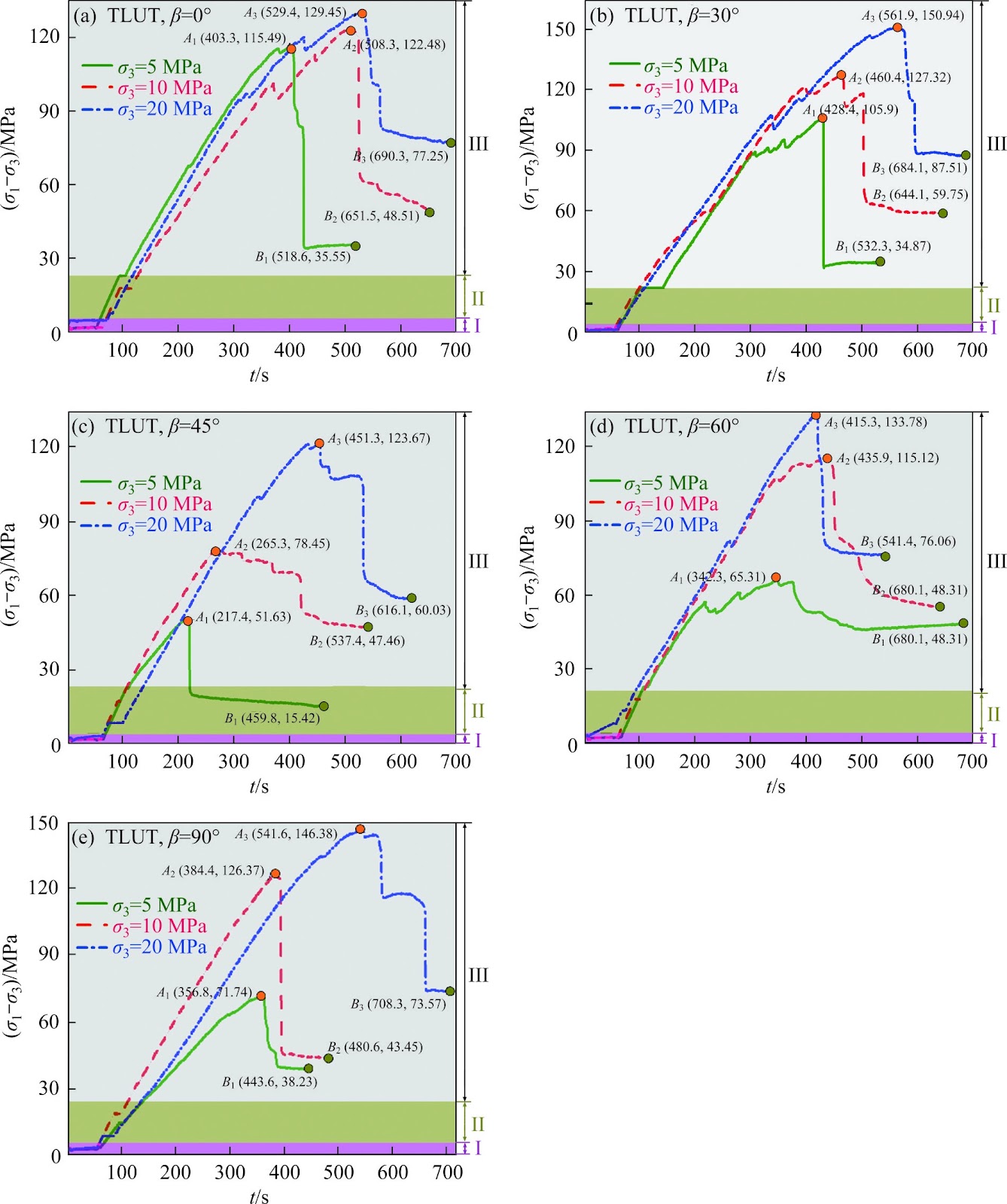
Rock residual strength, as an important input parameter, plays an indispensable role in proposing the reasonable and scientific scheme about stope design, underground tunnel excavation and stability evaluation of deep chambers. Therefore, previous residual strength models of rocks established were reviewed. And corresponding related problems were stated. Subsequently, starting from the effects of bedding and whole life-cycle evolution process, series of triaxial mechanical tests of deep bedded s
Federated model with contrastive learning and adaptive control variates for human activity recognition
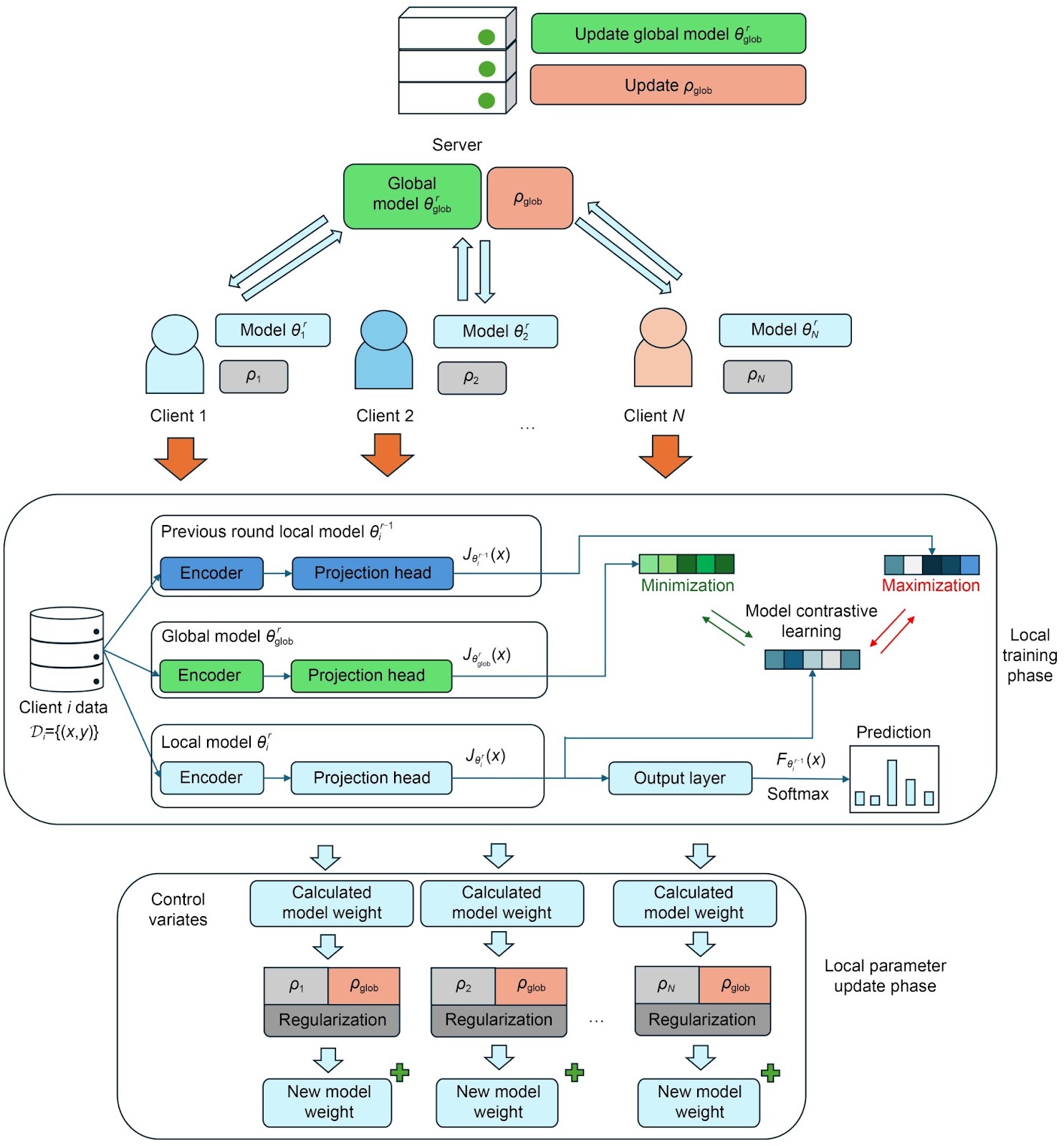
Recent attention to privacy issues demands a communication-safe method for training human activity recognition (HAR) models on client activity data. Federated learning (FL) has become a compelling technique to facilitate model training between the server and clients while preserving data privacy. However, classical FL methods often assume independent and identically distributed (IID) data among clients. This assumption does not hold true in practical scenarios. Human activity in real-world scena