Key Takeaways & Executive Findings
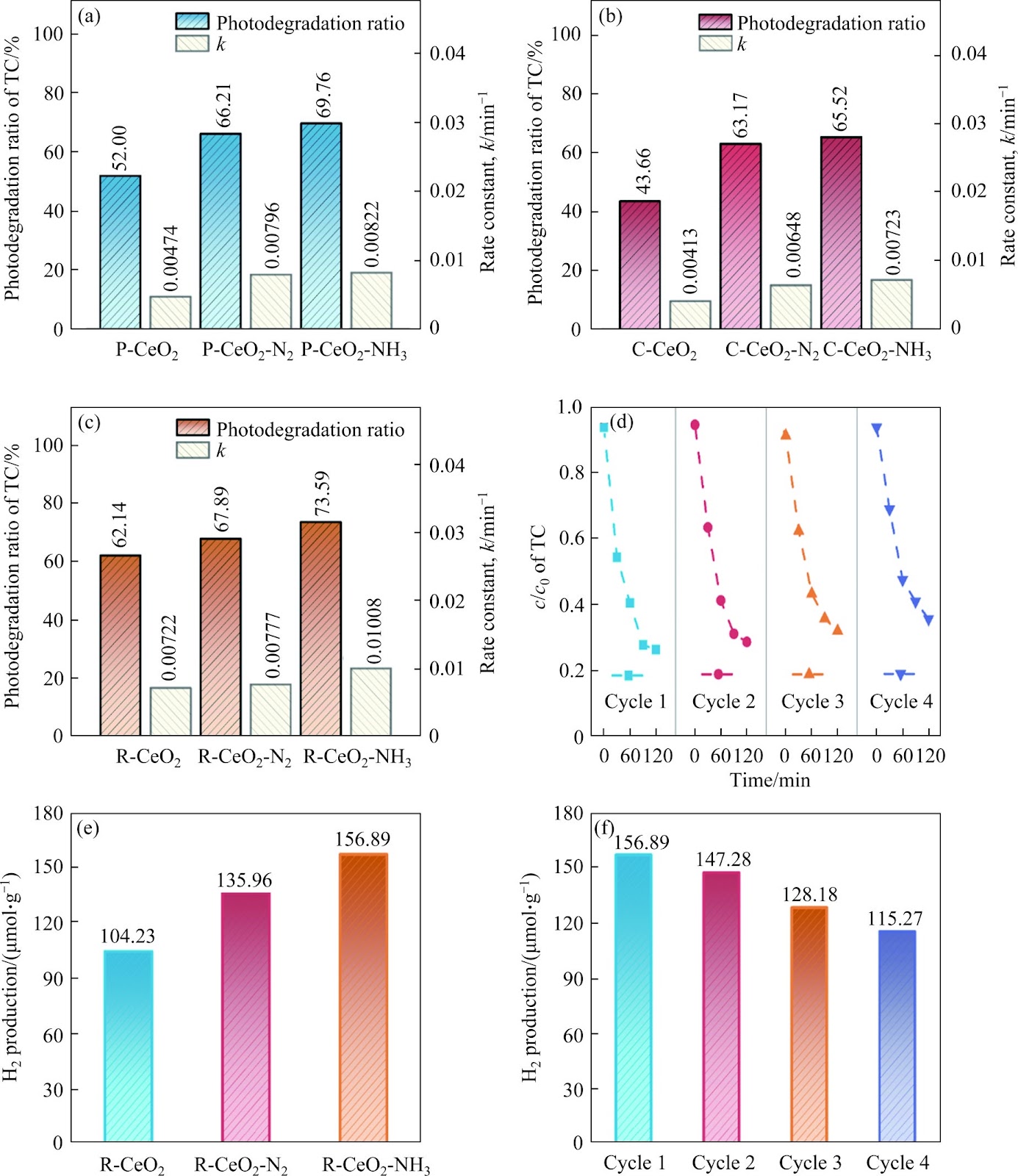
- •• Nitrogen doping and oxygen vacancies act synergistically to enhance the photocatalytic activity of ceria, as confirmed by experimental and DFT studies. • The exposed crystal face of CeO2 critically influences nitrogen incorporation, oxygen vacancy formation, and the resulting synergistic effect. • Rod-like nitrogen-doped CeO2 with exposed (110) face achieved 73.59% tetracycline degradation and 156.89 μmol/g hydrogen production, outperforming other photocatalysts. • Density functional theory simulations provided mechanistic insights into band structure, density of states, and oxygen defect properties, explaining the enhanced performance.
Abstract
Nitrogen doping has significant effects on the photocatalytic performance of ceria (CeO2), and the possible synergistic effect with the inevitably introduced abundant oxygen vacancies (OVs) is of great significance for further investigation, and the specifically exposed crystal faces of CeO2 may have an impact on the performance of nitrogen-doped CeO2. Herein, nitrogen-doped CeO2 with different morphologies and exposed crystal faces was prepared, and its performances in the photocatalytic degradation of tetracycline (TC) or hydrogen production via water splitting were evaluated. Density functional theory (DFT) was used to simulate the band structures, density of states, and oxygen defect properties of different CeO2 structures. It was found that nitrogen doping and OVs synergistically promoted the catalytic activity of nitrogen-doped CeO2. In addition, the exposed crystal faces of CeO2 have significant effects on the introduction of nitrogen and the ease of OV generation, as well as the synergistic effect of nitrogen doping with OVs. Among them, the rod-like nitrogen-doped CeO2 with exposed (110) face (R-CeO2-NH3) showed a photocatalytic degradation ratio of 73.59% for TC and hydrogen production of 156.89 μmol/g, outperforming other prepared photocatalysts.
1. Introduction
Ceria (CeO2), an abundant rare earth oxide, is widely considered as a photocatalyst for energy generation or environmental protection due to its excellent redox properties [1]. Its unique electronic structure enables CeO2 to form oxygen vacancies (OVs) during the Ce4+ to Ce3+ transition process [2, 3], endowing it with high oxygen storage and releasing capabilities [4]. However, the wide band gap and high carrier recombination rate inherent to CeO2 limit its photocatalytic performance [5]. Surface engineering [6, 7], oxygen vacancy defects [8, 9], additional elements doping [10, 11], etc., have garnered significant attention to enhance the performance of CeO2.
It has been demonstrated that OVs can directly affect the catalytic performance of CeO2 [12, 13], which is due to the fact that the introduction of OVs affects the properties of CeO2 such as band gap [14], light absorption [15] and photo-excited carrier migration [16], which are related to the defect states introduced in the band structure. In addition, the OV defects on the surface of CeO2 can serve as active sites, contributing to the adsorption and activation of reactants [17].
Doping anions in ceria attracts rising attention due to their ability to replace the oxygen atoms in lattice [18], and resulted in obviously enhanced photocatalytic properties [19]. Among the studied anions, including P, S, F and N, nitrogen is particularly effective due to its similar size to oxygen, smaller ionization energy, simple and low-cost doping method, and enhanced effect on the photocatalytic performance of CeO2 [20]. In our previous study [21], we found that the nitrogen-doped CeO2 exhibited a more effective photocatalytic degradation ratio of tetracycline (TC) compared to CeO2 containing only OVs. When heteroatoms enter the crystal cell of CeO2, lattice distortion, reduction of Ce4+ and formation of OVs are inevitably induced [22 −24]. Therefore, the enhancement of the photocatalytic performance of nitrogen-doped CeO2 is likely a result of the synergistic effect between doped N and OVs. However, the synergistic effect and mechanism of these two factors on the properties of CeO2 remain unclear and require further investigation. Additionally, the photocatalytic performance of CeO2 depends on the specific exposed crystal faces and surface atomic arrangement [25, 26]. Different exposed crystal faces such as (111), (100) and (110), have various effects on the formation energy of OV and photocatalytic performance.
Loading authentic research manuscript (Pages 1–5)...
WANG Fan, LI Jun-qi, MURALI Arun, CHEN Chao-yi, ZHANG Wei, LAN Yuan-pei (2025). Co-enhancement of doped N and oxygen vacancies on the photocatalytic performance of ceria: Mechanism and influence of crystal faces. Journal of Central South University. https://doi.org/10.1007/s11771-025-5990-7
Research & Educational Purpose Only:The translations, structured abstracts, analytical annotations, and data reports provided by SinoTechIntel are intended exclusively for academic research, internal corporate R&D, and educational benchmarking. They do not constitute formal engineering, chemical safety, legal, or professional advice.
Copyright & Intellectual Property Notice: Original copyright of the underlying source articles and experimental data remains with the respective authors, institutions, and original publishing journals. SinoTechIntel claims intellectual property only over its proprietary translations, analytical syntheses, and AEO structured enhancements in accordance with international fair use and academic citation principles.
Frequently Asked Questions
What is the main finding of this study?
The study reveals that nitrogen doping and oxygen vacancies synergistically enhance the photocatalytic performance of ceria, with the effect significantly influenced by the exposed crystal faces. Rod-like nitrogen-doped CeO2 with exposed (110) face exhibited the best performance.
How does nitrogen doping affect the photocatalytic properties of CeO2?
Nitrogen doping introduces defect states, reduces the band gap, and induces oxygen vacancies, which collectively improve light absorption and carrier separation, leading to enhanced photocatalytic activity in tetracycline degradation and hydrogen production.
Which crystal face of CeO2 is most favorable for nitrogen doping and oxygen vacancy generation?
The (110) exposed crystal face, as demonstrated by rod-like nitrogen-doped CeO2, showed the most significant synergistic effect, achieving the highest photocatalytic degradation and hydrogen production rates.
What methods were used to prepare and characterize the photocatalysts?
Nitrogen-doped CeO2 with different morphologies and exposed crystal faces were prepared, and density functional theory (DFT) simulations were used to study band structures, density of states, and oxygen defect properties.
What are the practical applications of this research?
The findings provide insights for designing efficient CeO2-based photocatalysts for environmental remediation (tetracycline degradation) and clean energy generation (hydrogen production via water splitting).
Related Technical Papers & Translations
Design and optimization of a high-efficiency distillation process for cellulosic fuel ethanol integrated with thermal coupling and molecular sieve adsorption
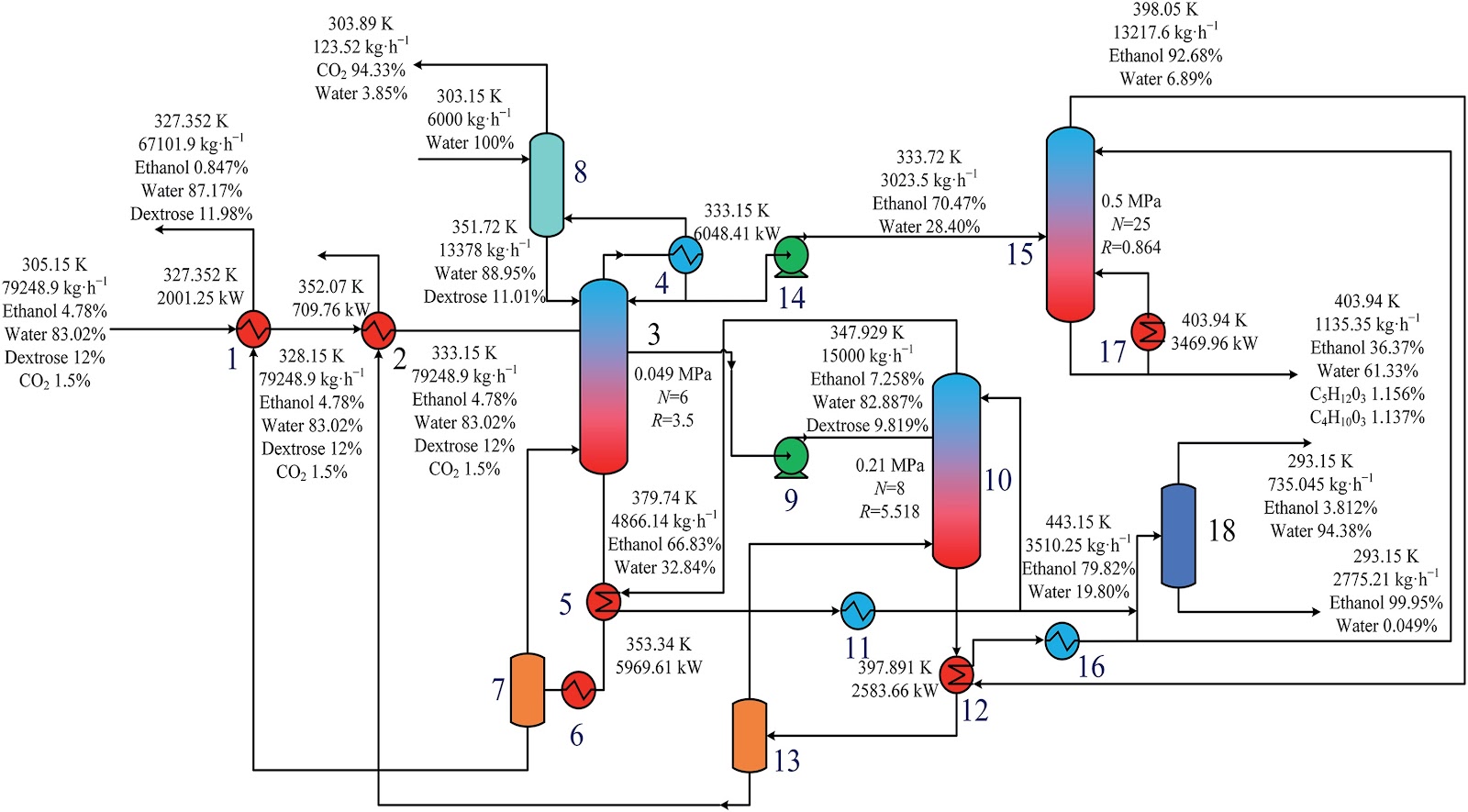
To address the challenges of high energy consumption and prominent costs in the traditional three-columns distillation process for cellulosic fuel ethanol, a distillation—molecular sieve coupling separation process is proposed. This process integrates a three-column (crude distillation column, first distillation column, second distillation column) system with a 3A molecular sieve adsorption deep dehydration unit. A thermal coupling network is constructed via differential pressure design (steam from medium/high-pressure columns as mutual heat sources, reboiler liquid waste heat for feed preheating), and molecular sieve adsorption conditions are optimized. The study first performs a thermodynamic consistency test on the ethanol—water system, determines optimal non-random two-liquid (NRTL) model binary interaction parameters via experimental data regression for Aspen Plus simulation. Aiming at minimum total annual cost (TAC), Aspen Plus is used to optimize process parameters (theoretical tray number, feed location, reflux ratio, side-draw position, etc.). Economic analysis shows this process reduces CO2 emission costs by 27.56%, TAC by 15.58% (to 5.123 × 10⁶ USD·a-1), and increases ethanol purity to >99.6%, providing an effective solution for green, efficient separation.
A cohesion loss model for determining residual strength of deep bedded sandstone
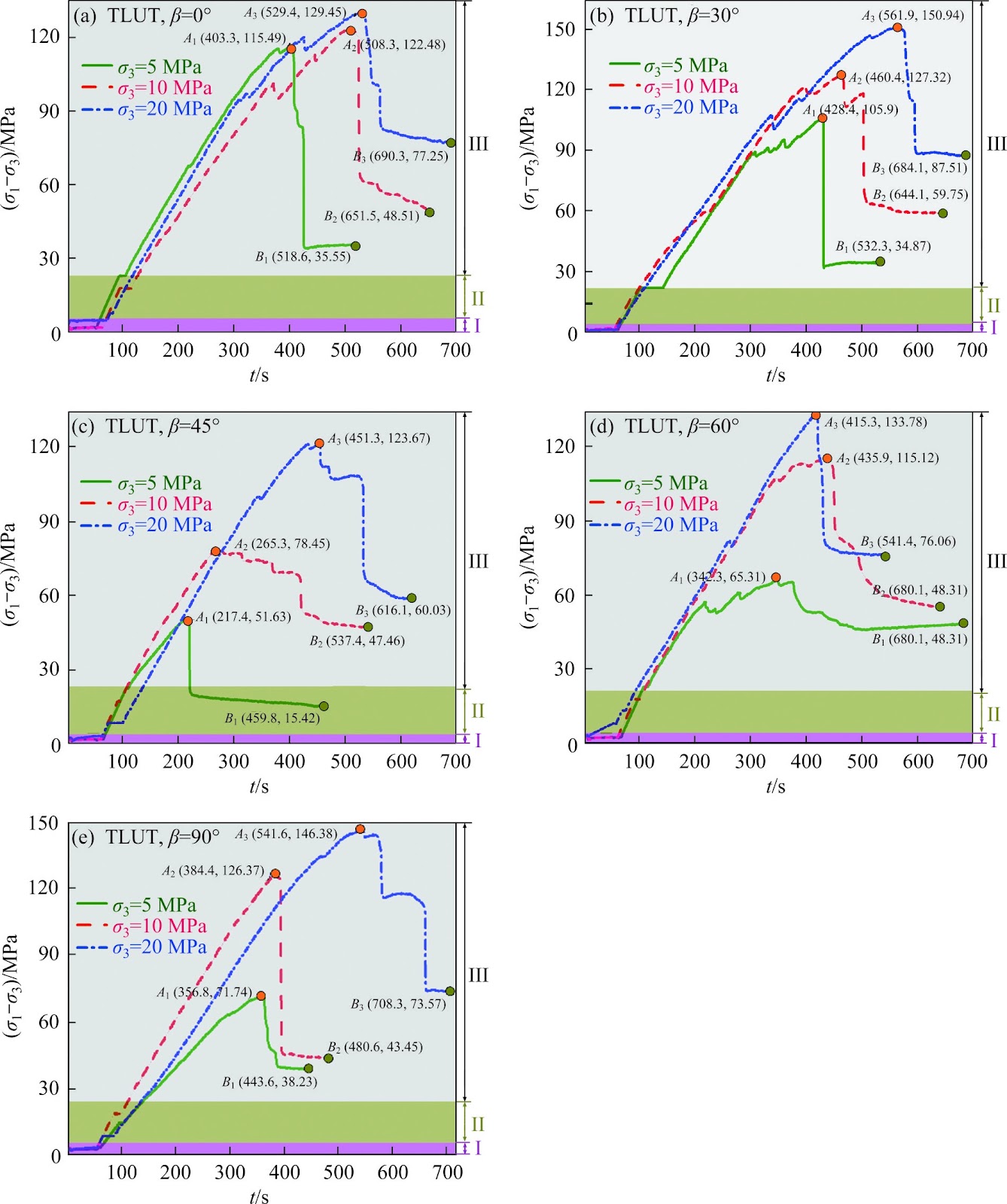
Rock residual strength, as an important input parameter, plays an indispensable role in proposing the reasonable and scientific scheme about stope design, underground tunnel excavation and stability evaluation of deep chambers. Therefore, previous residual strength models of rocks established were reviewed. And corresponding related problems were stated. Subsequently, starting from the effects of bedding and whole life-cycle evolution process, series of triaxial mechanical tests of deep bedded s
Federated model with contrastive learning and adaptive control variates for human activity recognition
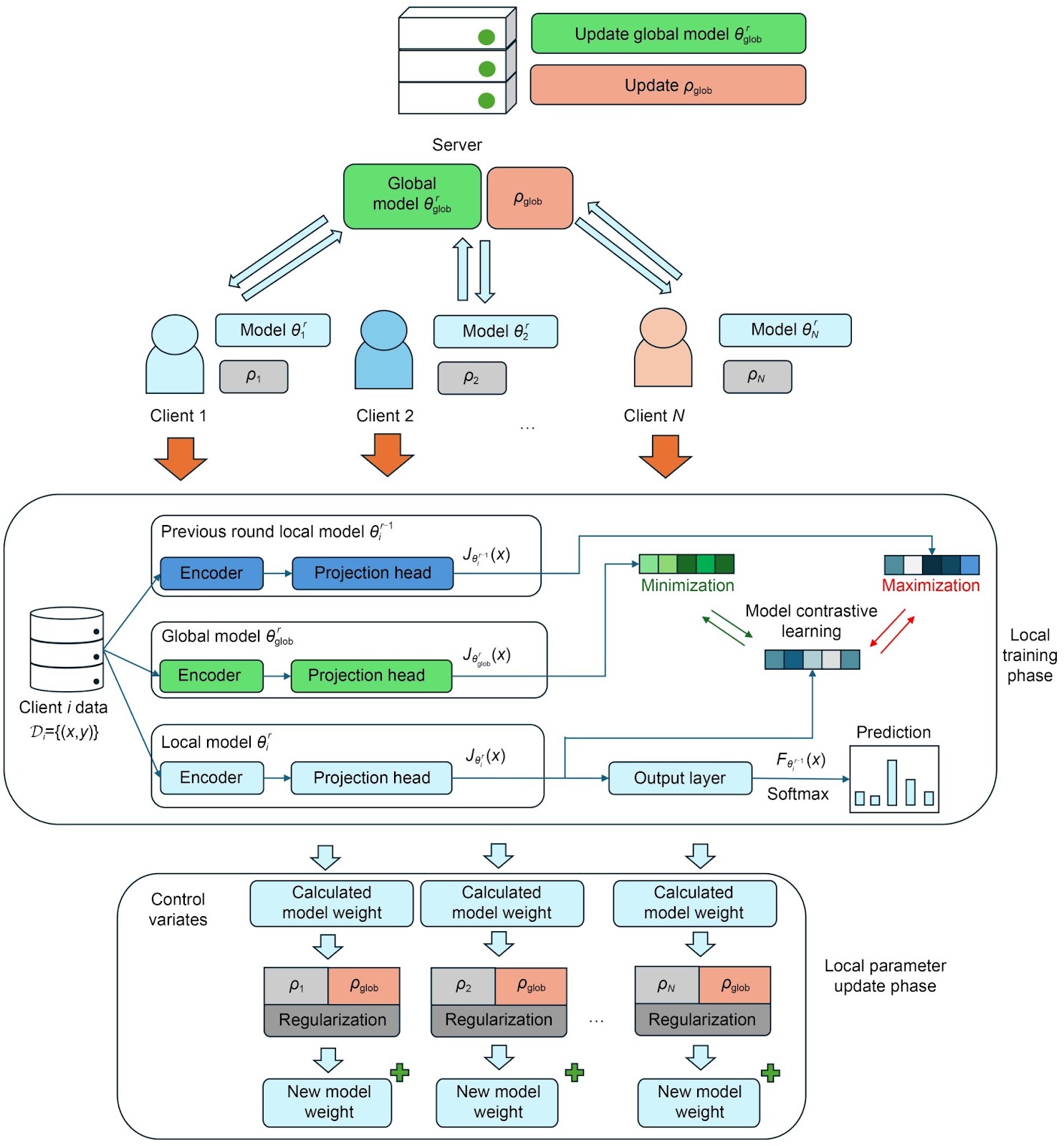
Recent attention to privacy issues demands a communication-safe method for training human activity recognition (HAR) models on client activity data. Federated learning (FL) has become a compelling technique to facilitate model training between the server and clients while preserving data privacy. However, classical FL methods often assume independent and identically distributed (IID) data among clients. This assumption does not hold true in practical scenarios. Human activity in real-world scena