Key Takeaways & Executive Findings
- •• Acidified seawater increased copper extraction from chalcopyrite by an enriched microbial community from 13.1% to 62.1% compared with non-acidified seawater. • Acidification enhances microbial community adaptability to high-salt conditions and maintains an optimal redox potential (360–410 mV) that favors chalcopyrite dissolution. • Chloride ions at 580 mmol/L improve leaching kinetics by increasing porosity and noncrystallinity of elemental sulfur intermediates. • This approach offers a sustainable alternative for bioleaching copper minerals in freshwater-scarce regions, utilizing seawater as a viable process water.
Abstract
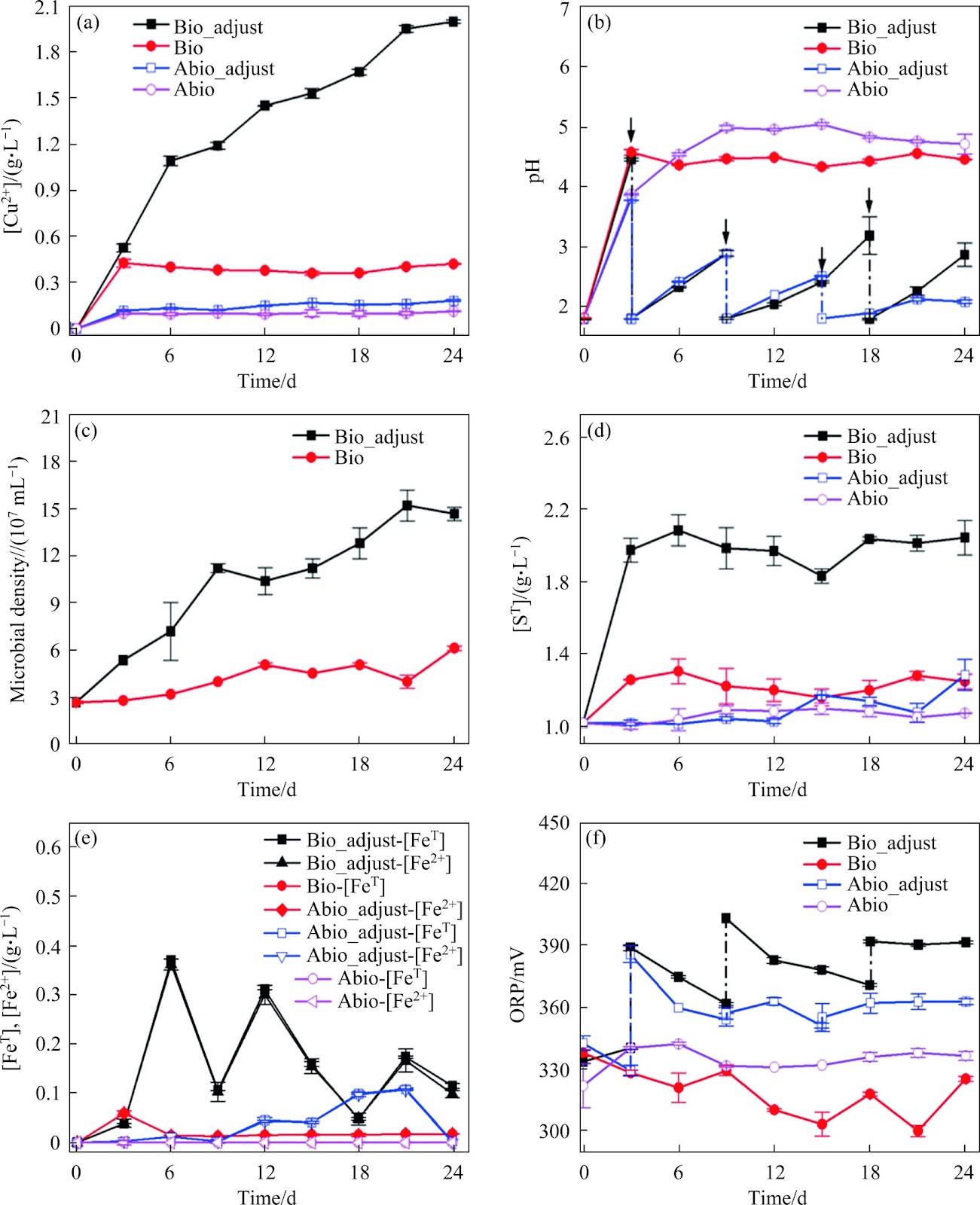
The enhancement of chalcopyrite bioleaching with an enriched microbial community by acidified seawater was studied, and the enhancing mechanism was analyzed. The microbial community was enriched at the Dabaoshan mine site, and the treated ore sample had high concentrations of chalcopyrite and galena. The experimental results show that copper extraction from chalcopyrite with an enriched microbial community in seawater was promoted from 13.1% to 62.1% by acidification in comparison with that without acidification. Further analyses of the solutions, solid residues and microbial compositions by scanning electron microscopy, X-ray diffraction, Raman spectroscopy, Fourier transform infrared spectroscopy and 16S rDNA sequencing revealed the promoting effects of acidified seawater. This acidification can increase the biodissolution of chalcopyrite to increase the concentration of iron ions and maintain the redox potential in the range of 360−410 mV. The latter produces an optimal redox environment conducive to chalcopyrite dissolution via Cu2S. The adaptability of the microbial community to a high-salt environment is improved. Chloride ions at 580 mmol/L improve the leaching kinetics of chalcopyrite by increasing the porosity and noncrystallinity of the intermediate elemental sulfur. This study provides a promising way to bioleaching copper minerals using seawater for areas with freshwater shortages.
1. Introduction
More than 80% of copper in the world is refined from copper-bearing sulfide ores [1]. Chalcopyrite constitutes the vast majority of copper resources and reserves of copper sulfide [2]. It is a mineralogical species with important economic significance. Copper extraction via traditional pyrometallurgical and hydrometallurgical processes has certain drawbacks, such as high energy consumption or low efficiency, because of its special crystal structure [3]. Compared with traditional methods, bioleaching has the advantages of being low cost and eco-friendly and has been successfully used in the copper extraction industry for some low-grade chalcopyrite ores [4 −6]. To date, many tests have been conducted to improve bioleaching efficiency, including the addition of Ag+ [7, 8], activated carbon [9], Cl– [10], and the surface-active agent Tween-80 [11]. The adjustment of the solution pH or redox potential is also used in a few cases [12, 13]. Among these methods, the addition of NaCl has received great attention because it has great application potential for freshwater shortages, where another challenge is the utilization of an alternative saline water source for the biohydrometallurgy process. For example, some mines from western Australia and parts of Chile often use seawater for mineral processing [14]. There are also several potential industrial applications of NaCl-resistant leaching bacteria for improving copper bioleaching [15, 16].
To date, several studies have attempted to utilize saline water at different temperatures for chalcopyrite bioleaching with typical bioleaching microorganisms. The bioleaching process of metal sulfides is significantly strengthened when the chloride ion concentration is low (<200 mmol/L) [17]. However, many bioleaching prokaryotes have relatively low tolerance to sodium chloride, which limits their growth and bioleaching performance under high-salt conditions. For example, for the typical mesophilic acidophilic iron-oxidizing bacterium Acidithiobacillus ferridurans (the optimum growth temperature is 30−35 ℃), the Rus operon is inactivated after a long period of growth with 500 mmol/L NaCl [18]. A high concentration of sodium chloride leads not only to the loss of microbial ferrous iron oxidation ability but also to the inability to reduce ferric iron
Loading authentic research manuscript (Pages 1–5)...
GU Chen-yun, ZHANG Rui-yong, XIA Jin-lan, LIU Hong-chang, SAND Wolfgang, WANG Yi-rong, CHEN Lu, NIE Zhen-yuan, ZHANG Yan-sheng, WANG Jun (2025). Chalcopyrite bioleaching by an enriched microbial community in acidic artificial seawater. Journal of Central South University. https://doi.org/10.1007/s11771-025-5957-8
Research & Educational Purpose Only:The translations, structured abstracts, analytical annotations, and data reports provided by SinoTechIntel are intended exclusively for academic research, internal corporate R&D, and educational benchmarking. They do not constitute formal engineering, chemical safety, legal, or professional advice.
Copyright & Intellectual Property Notice: Original copyright of the underlying source articles and experimental data remains with the respective authors, institutions, and original publishing journals. SinoTechIntel claims intellectual property only over its proprietary translations, analytical syntheses, and AEO structured enhancements in accordance with international fair use and academic citation principles.
Frequently Asked Questions
What is chalcopyrite bioleaching?
Chalcopyrite bioleaching is a process that uses microorganisms to extract copper from chalcopyrite ores. It is considered an eco-friendly and cost-effective alternative to traditional pyrometallurgical and hydrometallurgical methods, especially for low-grade ores.
How does acidified seawater enhance chalcopyrite bioleaching?
Acidified seawater promotes chalcopyrite bioleaching by increasing the biodissolution of the mineral, maintaining an optimal redox potential (360-410 mV), and improving the adaptability of the microbial community to high-salt conditions. This results in significantly higher copper extraction compared with non-acidified seawater.
What role do chloride ions play in the bioleaching process?
Chloride ions, at concentrations like 580 mmol/L in seawater, improve the leaching kinetics of chalcopyrite by increasing the porosity and noncrystallinity of intermediate elemental sulfur, which enhances the overall copper extraction rate.
Why is using seawater for bioleaching important?
Seawater is an abundant alternative water source for biohydrometallurgical processes, particularly in arid regions or areas with freshwater shortages. This study demonstrates that with acidification, seawater can be effectively used for chalcopyrite bioleaching, potentially reducing freshwater dependency.
What were the key findings of this study?
The study found that acidified seawater increased copper extraction from chalcopyrite from 13.1% to 62.1% using an enriched microbial community. It also revealed the mechanisms behind this enhancement, including redox potential maintenance and chloride ion effects, offering a promising approach for copper bioleaching in water-scarce regions.
Related Technical Papers & Translations
Design and optimization of a high-efficiency distillation process for cellulosic fuel ethanol integrated with thermal coupling and molecular sieve adsorption
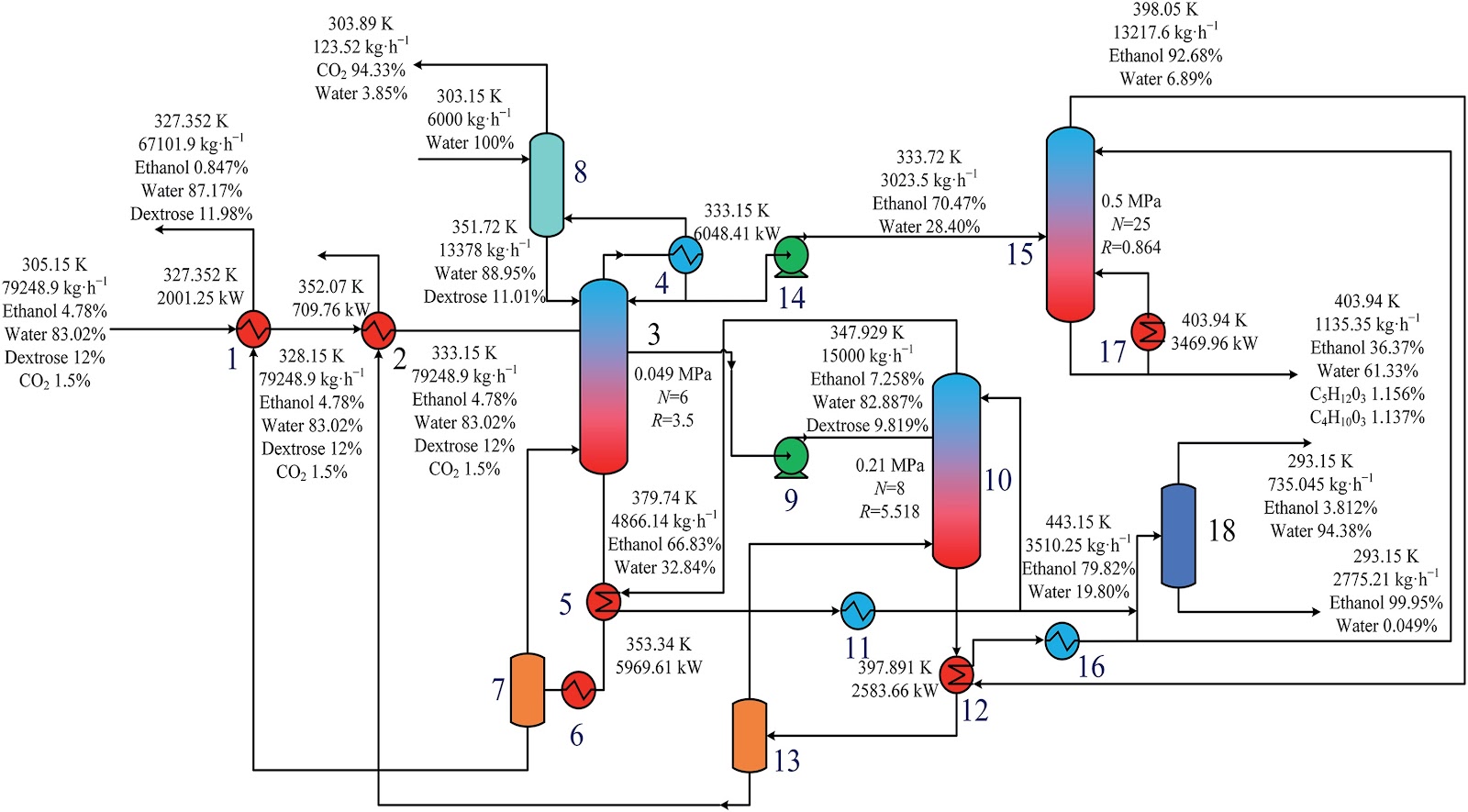
To address the challenges of high energy consumption and prominent costs in the traditional three-columns distillation process for cellulosic fuel ethanol, a distillation—molecular sieve coupling separation process is proposed. This process integrates a three-column (crude distillation column, first distillation column, second distillation column) system with a 3A molecular sieve adsorption deep dehydration unit. A thermal coupling network is constructed via differential pressure design (steam from medium/high-pressure columns as mutual heat sources, reboiler liquid waste heat for feed preheating), and molecular sieve adsorption conditions are optimized. The study first performs a thermodynamic consistency test on the ethanol—water system, determines optimal non-random two-liquid (NRTL) model binary interaction parameters via experimental data regression for Aspen Plus simulation. Aiming at minimum total annual cost (TAC), Aspen Plus is used to optimize process parameters (theoretical tray number, feed location, reflux ratio, side-draw position, etc.). Economic analysis shows this process reduces CO2 emission costs by 27.56%, TAC by 15.58% (to 5.123 × 10⁶ USD·a-1), and increases ethanol purity to >99.6%, providing an effective solution for green, efficient separation.
A cohesion loss model for determining residual strength of deep bedded sandstone
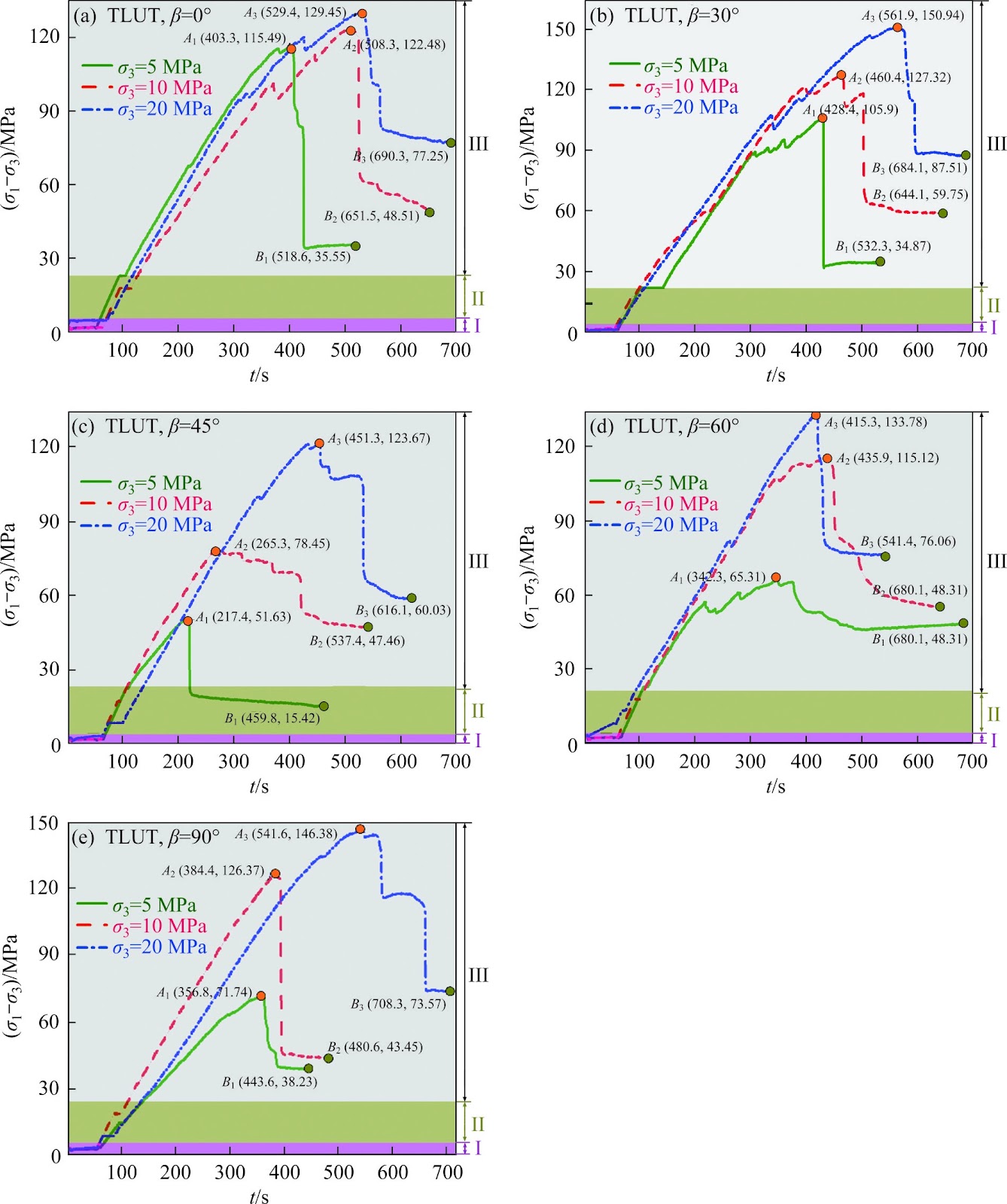
Rock residual strength, as an important input parameter, plays an indispensable role in proposing the reasonable and scientific scheme about stope design, underground tunnel excavation and stability evaluation of deep chambers. Therefore, previous residual strength models of rocks established were reviewed. And corresponding related problems were stated. Subsequently, starting from the effects of bedding and whole life-cycle evolution process, series of triaxial mechanical tests of deep bedded s
Federated model with contrastive learning and adaptive control variates for human activity recognition
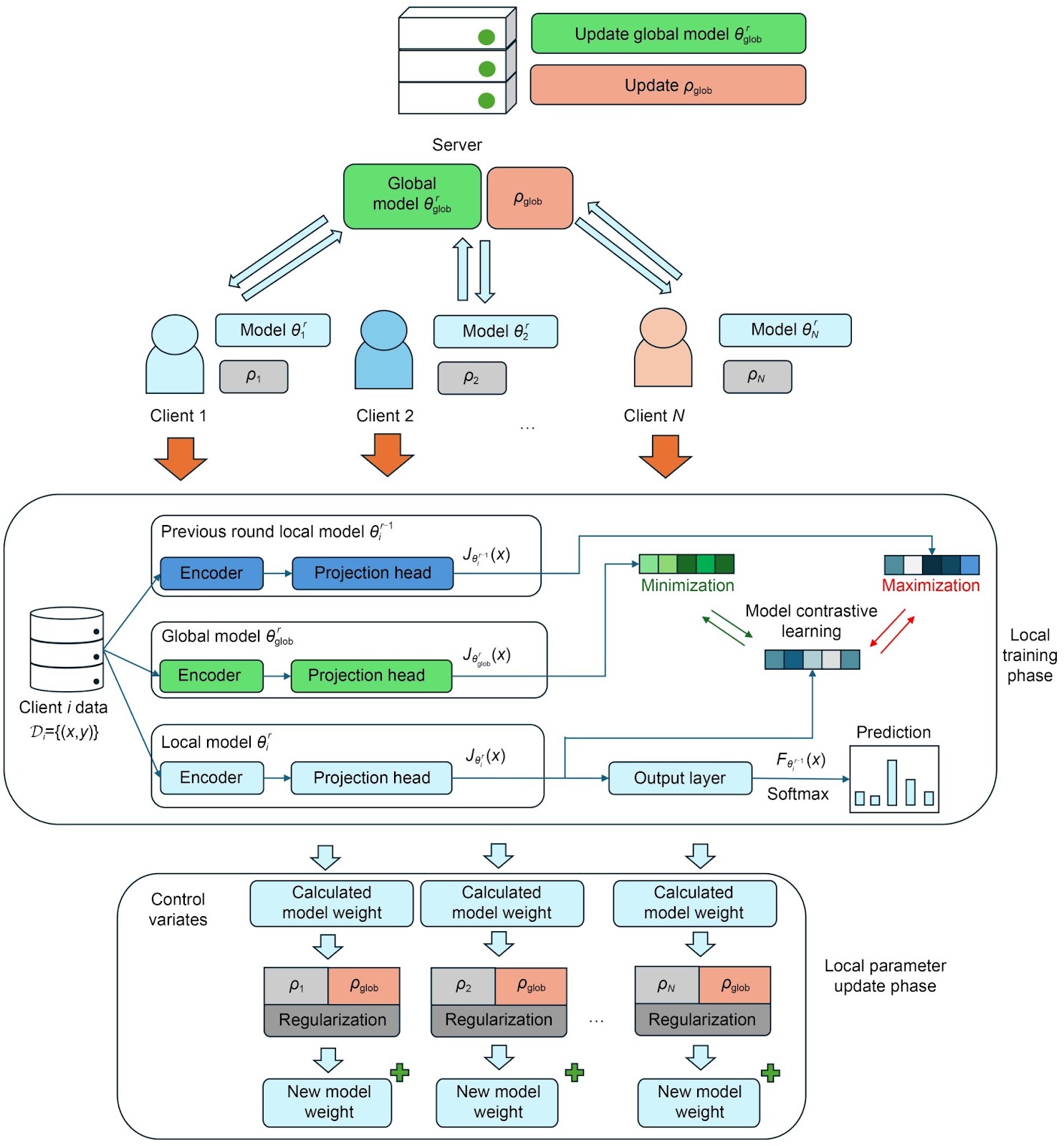
Recent attention to privacy issues demands a communication-safe method for training human activity recognition (HAR) models on client activity data. Federated learning (FL) has become a compelling technique to facilitate model training between the server and clients while preserving data privacy. However, classical FL methods often assume independent and identically distributed (IID) data among clients. This assumption does not hold true in practical scenarios. Human activity in real-world scena