Key Takeaways & Executive Findings
- •• A low-cost, sustainable synthesis route using cheap flour biomass produces single-atom Fe-N-C catalysts via two-step pyrolysis. • The catalyst achieves a half-wave potential of 0.86 V, surpassing commercial Pt/C (0.84 V), with superior stability for ORR. • Atomically dispersed Fe-Nx active sites, high specific surface area (1450.1 m²/g), and abundant micropores enable efficient 4-electron ORR pathway. • Offers a scalable, cost-effective strategy to balance performance and cost for practical metal-air battery applications.
Abstract
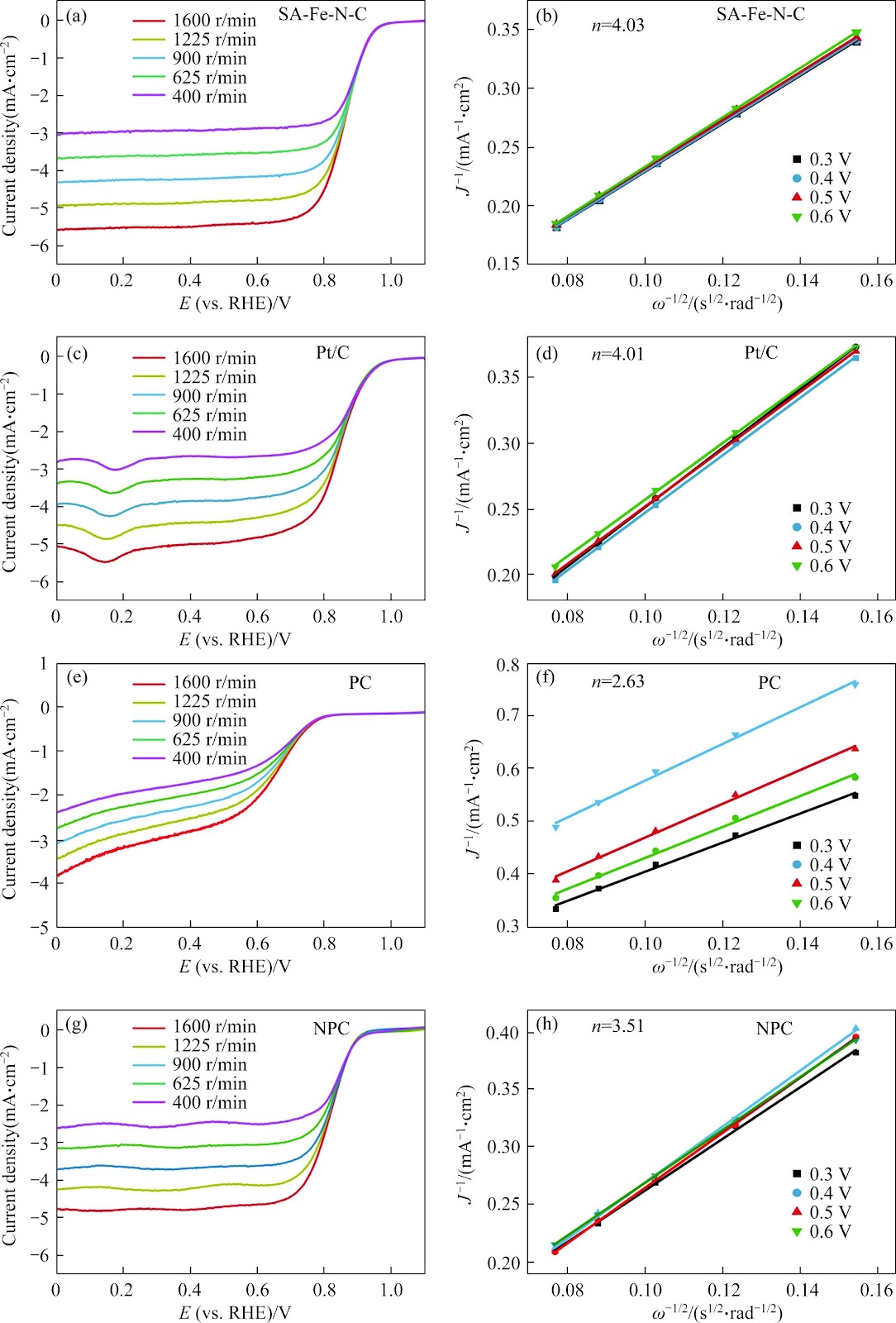
Single-atom catalysts (SACs) are promising for oxygen reduction reaction (ORR) on account of their excellent catalytic activity and maximum utilization of atoms. However, due to the complicated preparation processes and expensive reagents used, the cost of SACs is usually too high to put into practical application. The development of cost-effective and sustainable SACs remains a great challenge. Herein, a low-cost method employing biomass is designed to prepare efficient single-atom Fe-N-C catalysts (SA-Fe-N-C). Benefiting from the confinement effect of porous carbon support and the coordination effect of glucose, SA-Fe-N-C is derived from cheap flour by the two-step pyrolysis. Atomically dispersed Fe atoms exist in the form of Fe—Nx, which acts as active sites for ORR. The catalyst shows outstanding activity with a half-wave potential (E1/2) of 0.86 V, which is better than that of Pt/C (0.84 V). Additionally, the catalyst also exhibits superior stability. The ORR catalyzed by SA-Fe-N-C proceeds via an efficient 4e transfer pathway. The high performance of SA-Fe-N-C also benefits from its porous structure, extremely high specific surface area (1450.1 m2/ g), and abundant micropores, which are conducive to increasing the density of active sites and fully exposing them. This work provides a cost-effective strategy to synthesize SACs from cheap biomass, achieving a balance between performance and cost.
1. Introduction
The electrocatalysts are indispensable for metal-air batteries due to the sluggish kinetics of the oxygen reduction reaction (ORR) on cathodes. Although platinum (Pt)-based electrocatalysts possess high activity for ORR, their scarcity and high cost severely hinder their large-scale applications, thus restricting the commercialization of metal-air batteries [1−4]. Developing low-cost and high-performance alternatives to substitute Pt-based catalysts is still necessary but challenging [5−7]. Fe-based catalysts, especially Fe-N-C catalysts, have been considered to be the most promising class of candidates on account of their high activity, abundant source, and relatively low price [8]. Among them, single-atom catalysts (SACs) with Fe atomically dispersed on N-doped carbon supports have been a hot topic in catalysis in recent years for their excellent performance and nearly 100% atomic utilization of Fe atoms [9−11].
Among Fe-N-C SACs, the single atom Fe coordinated with N atoms (Fe—Nx, normally x=2, 4) has been thought to be the active sites for ORR catalysis [12−15]. The N can not only efficiently anchor and confine the Fe atoms on the carbon matrix, but also regulate the electronic structure of Fe atoms to optimize the adsorption/desorption of intermediates during the ORR process [16, 17]. However, the synthesis of SACs remains challenging because of the agglomeration tendency of Fe atoms during the preparation process, which severely hinders the exposure of active sites and leads to very low atomic utilization efficiency [18, 19]. In particular, metal atoms are more likely to migrate and aggregate at high temperatures. This makes it difficult to obtain SACs with single metal atoms loading, since high temperatures (over 700 ℃) are often required for the formation of the Fe─N bond. There are usually several strategies to inhibit the agglomeration, namely coordination effects, confinement effects, and chemical bonding, of which coordination engineering is the most effective and accessible strategy to overcome the agglomeration [20−22]. During the experimental design, the choice of ligands is a key factor. In the process of pyrolysis, metal atoms can be well dispersed on the carbon matrix through steric hindrance resulting from the coordination between metal atoms and organic ligands. Selecting a suitable carbon support is also critical for the preparation of SACs, which can effectively suppress agglomeration, increase atomic utilization, and improve electrical conductivity to facilitate electron transfer [18].
Loading authentic research manuscript (Pages 1–5)...
WANG Li-ping, XIAO Jin, MAO Qiu-yun, ZHONG Qi-fan (2025). Biomass-derived N-doped porous carbon supported single Fe atoms as low-cost and high-performance electrocatalysts for oxygen reduction reaction. Journal of Central South University. https://doi.org/10.1007/s11771-025-5954-y
Research & Educational Purpose Only:The translations, structured abstracts, analytical annotations, and data reports provided by SinoTechIntel are intended exclusively for academic research, internal corporate R&D, and educational benchmarking. They do not constitute formal engineering, chemical safety, legal, or professional advice.
Copyright & Intellectual Property Notice: Original copyright of the underlying source articles and experimental data remains with the respective authors, institutions, and original publishing journals. SinoTechIntel claims intellectual property only over its proprietary translations, analytical syntheses, and AEO structured enhancements in accordance with international fair use and academic citation principles.
Frequently Asked Questions
What is the significance of this study?
This study presents a low-cost, biomass-derived single-atom Fe-N-C catalyst with superior ORR activity and stability, offering a sustainable alternative to expensive Pt-based catalysts for practical applications.
How was the SA-Fe-N-C catalyst synthesized?
The catalyst was synthesized using cheap flour as a biomass precursor via a two-step pyrolysis process, leveraging the confinement effect of porous carbon and the coordination effect of glucose to achieve atomically dispersed Fe-Nx active sites.
What makes the catalyst highly active for ORR?
The high activity is attributed to atomically dispersed Fe-Nx active sites, an extremely high specific surface area (1450.1 m²/g), and abundant micropores that increase active site density and exposure, facilitating a direct 4-electron transfer pathway.
How does its performance compare to Pt/C?
The SA-Fe-N-C catalyst exhibits a half-wave potential of 0.86 V, which is better than that of commercial Pt/C (0.84 V), while also demonstrating superior stability.
What are the potential applications of this catalyst?
The catalyst is highly promising for metal-air batteries and other renewable energy devices that require efficient and cost-effective oxygen reduction reaction electrocatalysts.
Related Technical Papers & Translations
Design and optimization of a high-efficiency distillation process for cellulosic fuel ethanol integrated with thermal coupling and molecular sieve adsorption
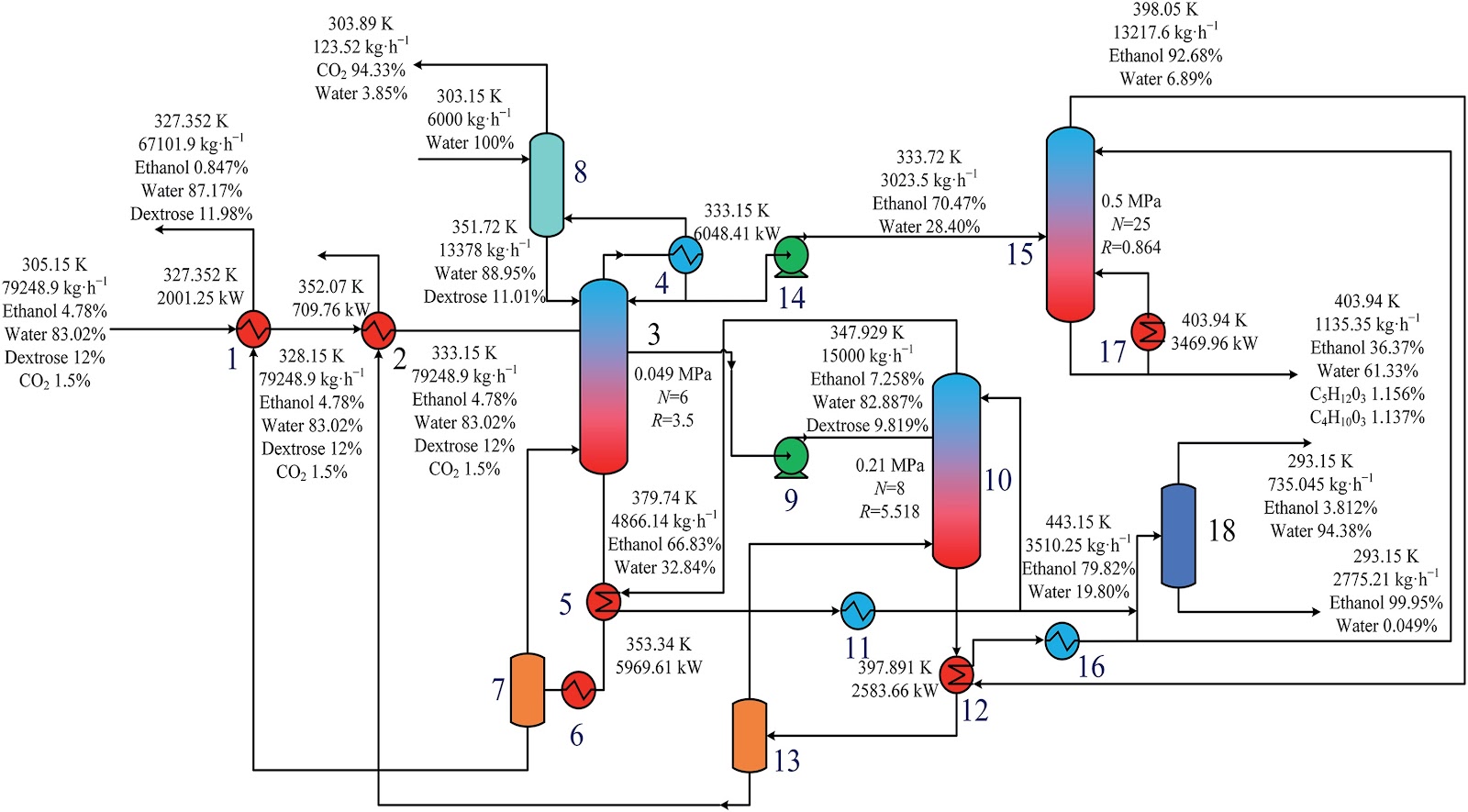
To address the challenges of high energy consumption and prominent costs in the traditional three-columns distillation process for cellulosic fuel ethanol, a distillation—molecular sieve coupling separation process is proposed. This process integrates a three-column (crude distillation column, first distillation column, second distillation column) system with a 3A molecular sieve adsorption deep dehydration unit. A thermal coupling network is constructed via differential pressure design (steam from medium/high-pressure columns as mutual heat sources, reboiler liquid waste heat for feed preheating), and molecular sieve adsorption conditions are optimized. The study first performs a thermodynamic consistency test on the ethanol—water system, determines optimal non-random two-liquid (NRTL) model binary interaction parameters via experimental data regression for Aspen Plus simulation. Aiming at minimum total annual cost (TAC), Aspen Plus is used to optimize process parameters (theoretical tray number, feed location, reflux ratio, side-draw position, etc.). Economic analysis shows this process reduces CO2 emission costs by 27.56%, TAC by 15.58% (to 5.123 × 10⁶ USD·a-1), and increases ethanol purity to >99.6%, providing an effective solution for green, efficient separation.
A cohesion loss model for determining residual strength of deep bedded sandstone
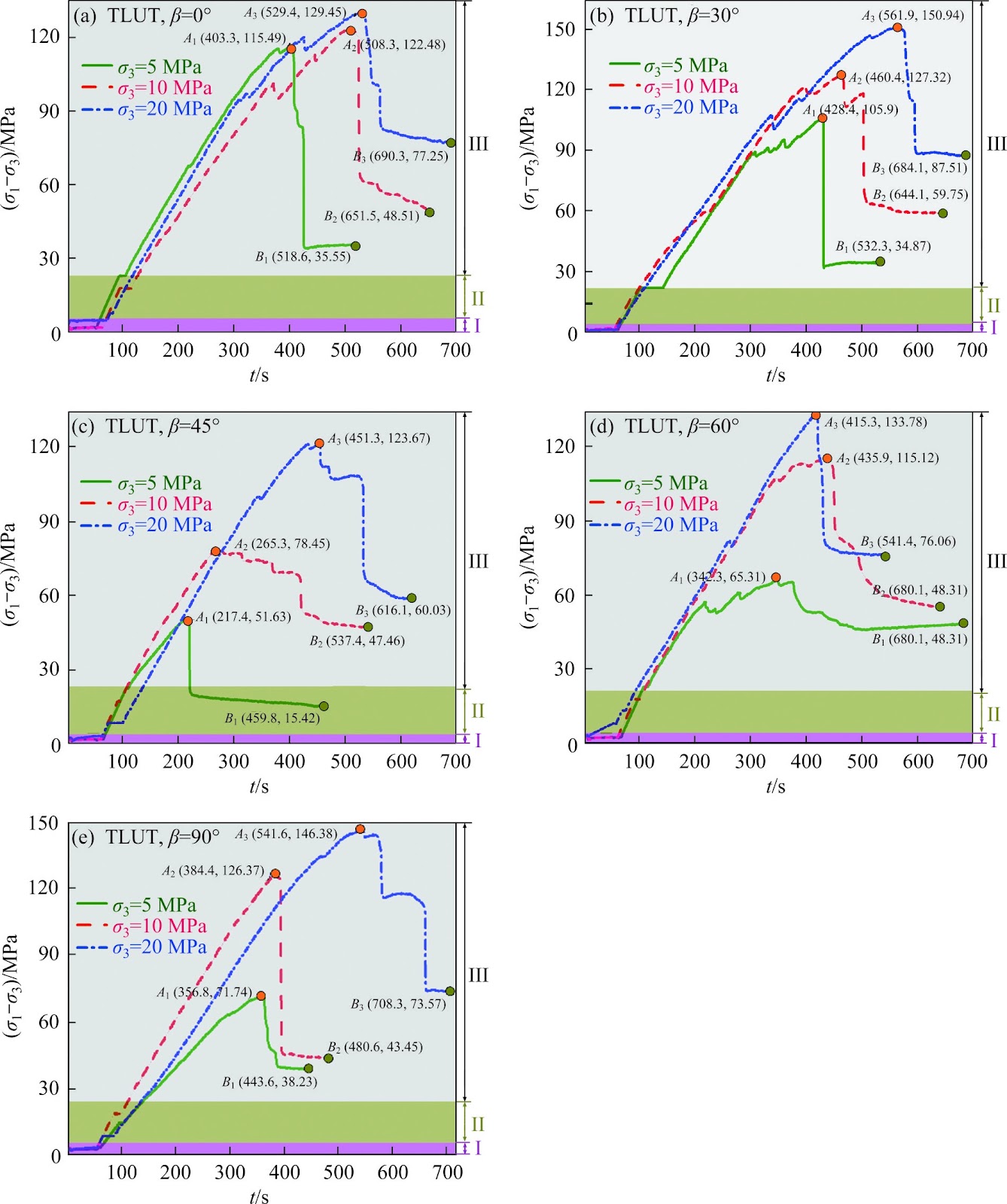
Rock residual strength, as an important input parameter, plays an indispensable role in proposing the reasonable and scientific scheme about stope design, underground tunnel excavation and stability evaluation of deep chambers. Therefore, previous residual strength models of rocks established were reviewed. And corresponding related problems were stated. Subsequently, starting from the effects of bedding and whole life-cycle evolution process, series of triaxial mechanical tests of deep bedded s
Federated model with contrastive learning and adaptive control variates for human activity recognition
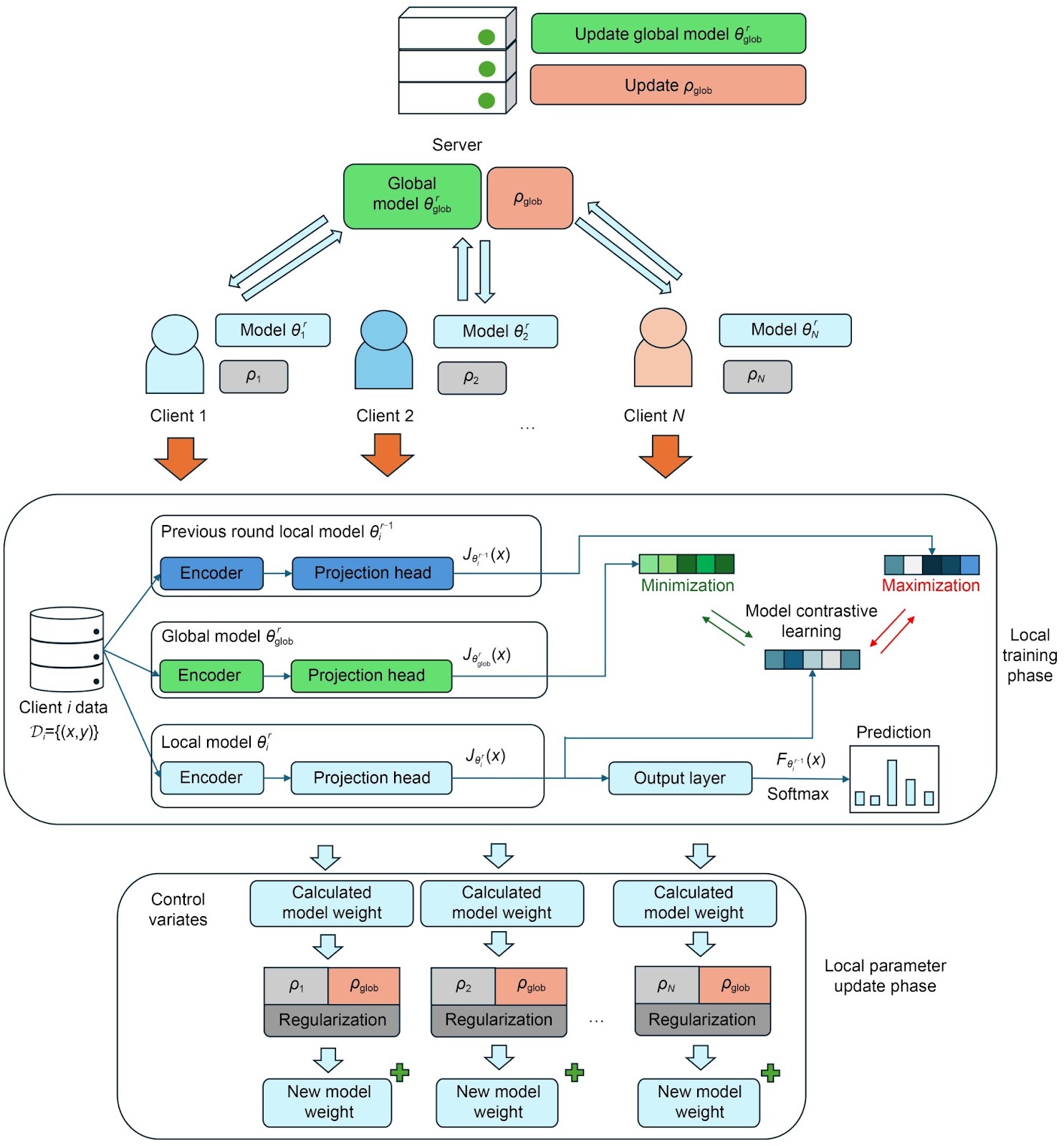
Recent attention to privacy issues demands a communication-safe method for training human activity recognition (HAR) models on client activity data. Federated learning (FL) has become a compelling technique to facilitate model training between the server and clients while preserving data privacy. However, classical FL methods often assume independent and identically distributed (IID) data among clients. This assumption does not hold true in practical scenarios. Human activity in real-world scena