Key Takeaways & Executive Findings
- •• Medium-sized MgSi clusters (10–19 atoms) at grain boundaries strengthen the boundary, suppress crack initiation, and inhibit intergranular cracking during hemming. • The Si/Fe atomic ratio in Fe-containing phases is decisive: a ratio of ~0.71 retains ductility, while 0.90 induces distinct brittle fracture. • Pre-aging treatment reduces the yield strength of AA6016 Al alloy to ~120 MPa by promoting solute dispersion, thereby enhancing hemming performance. • Pre-aging also promotes the formation of finer Mg–Si phases at grain boundaries during bake hardening, contributing to improved mechanical response.
Abstract
Al–Mg–Si alloys are widely employed in automotive vehicles; however, challenges such as cracking often arise during the hemming process (180° bending). Based on the molecular dynamics simulations and experiments, this study investigated the effects of the size and number of MgSi(Fe) clusters on the mechanical properties of 6xxx Al alloys. The results showed that medium-sized MgSi clusters (containing 10–19 atoms) at the grain boundaries (GBs) enhanced the strength of the GBs, effectively inhibiting crack initiation and significantly suppressing intergranular cracking. In addition, the ductility and brittleness of the model with the Fe-containing phase were significantly affected by the Si/Fe atomic ratio (~0.71). Tensile experiments confirmed that the failure morphology exhibited a distinct brittle fracture when the Si/Fe atomic ratio of the phase was 0.90. The pre-aging treatment promoted the dispersion of solute atoms, thereby reducing the yield strength of the AA6016 Al alloy to ~120 MPa, which improved its hemming performance. Furthermore, pre-aging facilitated the generation of finer Mg–Si phases at the GBs during bake hardening.
1. Introduction
Heat-treatable 6xxx Al alloys, whose main alloying elements are Mg and Si, are used in automotive body panels owing to their high specific strength and good formability, which satisfy the environmental protection, economic, and lightweight requirements of the automobile industry [1–3]. Moreover, automotive 6xxx alloys can tolerate certain amounts of Fe (<0.5wt%), which is beneficial for the utilization of recycled Al [4–5]. Automotive structures involve the bending of thick-gauge sheets wherein the outer and inner body panels are joined via a hemming process (180° bending) [6]. During fabrication, cracking or tearing stripes appear on the convex surface of the sheet after intense strain localization [7–9].
The defect-free manufacturing of body panels during stamping and hemming requires satisfactory formability and low yield strength (YS) [10]. It has been reported that the bendability or hemming performance of 6111 Al alloys deteriorates with an increasing YS in 6111 Al alloys [11]. For 6xxx Al alloys, the aging process has a significant impact on the strength, which is mainly related to the nature of the clusters (size, composition, and number density) [12]. For instance, Li et al. [13] reported that the formation of MgSi clusters was promoted during preaging (PA) treatment regardless of the alloy composition. After PA treatment, the YS of the 6082 Al alloys was only 105 MPa, while a subsequent one-month natural aging (NA) and 4 h artificial aging significantly increased the YS to 279 MPa [14].
It is well established that the precipitates or clusters that affect the YS are the preferred sites for void formation and crack propagation during hemming [15]. When the precipitates are located at the grain boundaries (GBs), including the Mg2Si and Al(Fe,Mn)Si phases, they can reduce the cohesive stress of the GBs and promote crack initiation and intergranular cracking (IGC) [16]. Specifically, Weng et al. [17] found that shear bands were generated during the hemming process in predeformed Al–Mg–Si–Cu alloys, which resulted in the fragmentation of Fe intermetallic particles. However, Trink et al. [5] reported that the addition of Fe and Mn could adjust the Si-containing precipitates in AA6016 Al alloys, and that their elongation reached ~30%. The above studies focused on the effects of alloy composition and heat treatment processes on the microstructure and hemming properties of 6xxx Al alloys.
Subsequently, surface baking results in a pronounced hardening effect. A low baking temperature (80°C for 1 h) could result in the transformation of the MgSi cluster into β″-MgSi precipitates, which has been shown to improve the elongation of AA6082 Al sheets [18]. Therefore, heat treatments influence the microstructure of Al alloys; however, the underlying mechanisms of the influences of different clusters on the mechanical properties at the nanoscale has yet to be conclusively elucidated.
It is difficult for macroexperiments to directly observe the dynamic emergence of cracks and their propagation at the atomic scale, which can now be elucidated through computational modeling [19–22]. With advances in molecular dynamics (MD) simulations, the deformation of polycrystals and dislocation/defect evolution in single/polycrystals have been widely studied [23–24]. For instance, Xue et al. [25] analyzed the effects of solute clusters and precipitates on the strength and ductility of Al–Si–Mg–Cu alloys. Moreover, Wu et al. [26] also reported the dislocation activity in Al–Si eutectics utilizing MD simulations and found that a nano-crack was nucleated at the in...
Loading authentic research manuscript (Pages 1–5)...
Yucheng Ji, Feng Ding, Jiahao Wen, Wentao Qin, Chenyang Yao, Xiang Xiao, Guojun Wang, Chaofang Dong (2025). Atomic-scale simulations and experimental insights into the effect of precipitates on the hemming performance of 6xxx Al alloys. Journal of Mineral Metallurgy and Materials Science. https://doi.org/10.1007/s12613-026-3420-y
Research & Educational Purpose Only:The translations, structured abstracts, analytical annotations, and data reports provided by SinoTechIntel are intended exclusively for academic research, internal corporate R&D, and educational benchmarking. They do not constitute formal engineering, chemical safety, legal, or professional advice.
Copyright & Intellectual Property Notice: Original copyright of the underlying source articles and experimental data remains with the respective authors, institutions, and original publishing journals. SinoTechIntel claims intellectual property only over its proprietary translations, analytical syntheses, and AEO structured enhancements in accordance with international fair use and academic citation principles.
Frequently Asked Questions
What is the role of MgSi clusters in the hemming performance of 6xxx Al alloys?
MgSi clusters, particularly those containing 10–19 atoms at grain boundaries, enhance grain boundary strength, inhibit crack initiation, and suppress intergranular cracking during 180° bending hemming processes.
How does the Si/Fe atomic ratio influence ductility of 6xxx Al alloys?
The Si/Fe atomic ratio critically affects the ductility and brittleness. A ratio of ~0.71 maintains ductile behavior, whereas a higher ratio of 0.90 leads to distinct brittle fracture.
What is the effect of pre-aging treatment on AA6016 aluminum alloy?
Pre-aging promotes solute atom dispersion, reducing yield strength to ~120 MPa and improving hemming performance. It also generates finer Mg-Si phases at grain boundaries during bake hardening.
Why are molecular dynamics simulations used in this study?
Molecular dynamics simulations allow atomic-scale observation of crack nucleation and propagation, which is difficult with macroscopic experiments, providing insights into mechanisms of cluster effects.
What is the significance of this research for automotive industry?
The findings guide heat-treatment and alloy design to reduce cracking during hemming, enabling defect-free manufacturing of lightweight automotive body panels.
Related Technical Papers & Translations
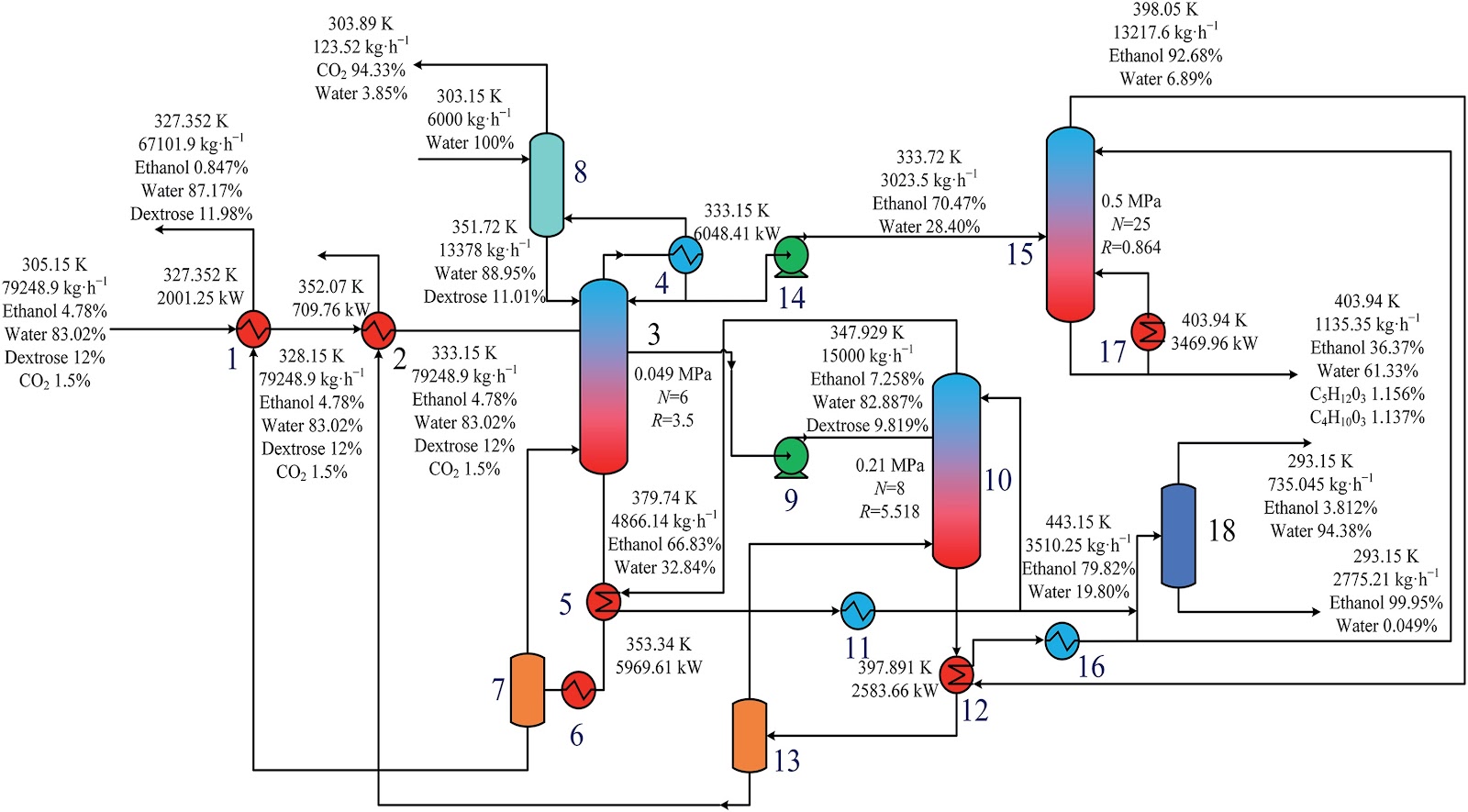
Design and optimization of a high-efficiency distillation process for cellulosic fuel ethanol integrated with thermal coupling and molecular sieve adsorption
To address the challenges of high energy consumption and prominent costs in the traditional three-columns distillation process for cellulosic fuel ethanol, a distillation—molecular sieve coupling separation process is proposed. This process integrates a three-column (crude distillation column, first distillation column, second distillation column) system with a 3A molecular sieve adsorption deep dehydration unit. A thermal coupling network is constructed via differential pressure design (steam from medium/high-pressure columns as mutual heat sources, reboiler liquid waste heat for feed preheating), and molecular sieve adsorption conditions are optimized. The study first performs a thermodynamic consistency test on the ethanol—water system, determines optimal non-random two-liquid (NRTL) model binary interaction parameters via experimental data regression for Aspen Plus simulation. Aiming at minimum total annual cost (TAC), Aspen Plus is used to optimize process parameters (theoretical tray number, feed location, reflux ratio, side-draw position, etc.). Economic analysis shows this process reduces CO2 emission costs by 27.56%, TAC by 15.58% (to 5.123 × 10⁶ USD·a-1), and increases ethanol purity to >99.6%, providing an effective solution for green, efficient separation.
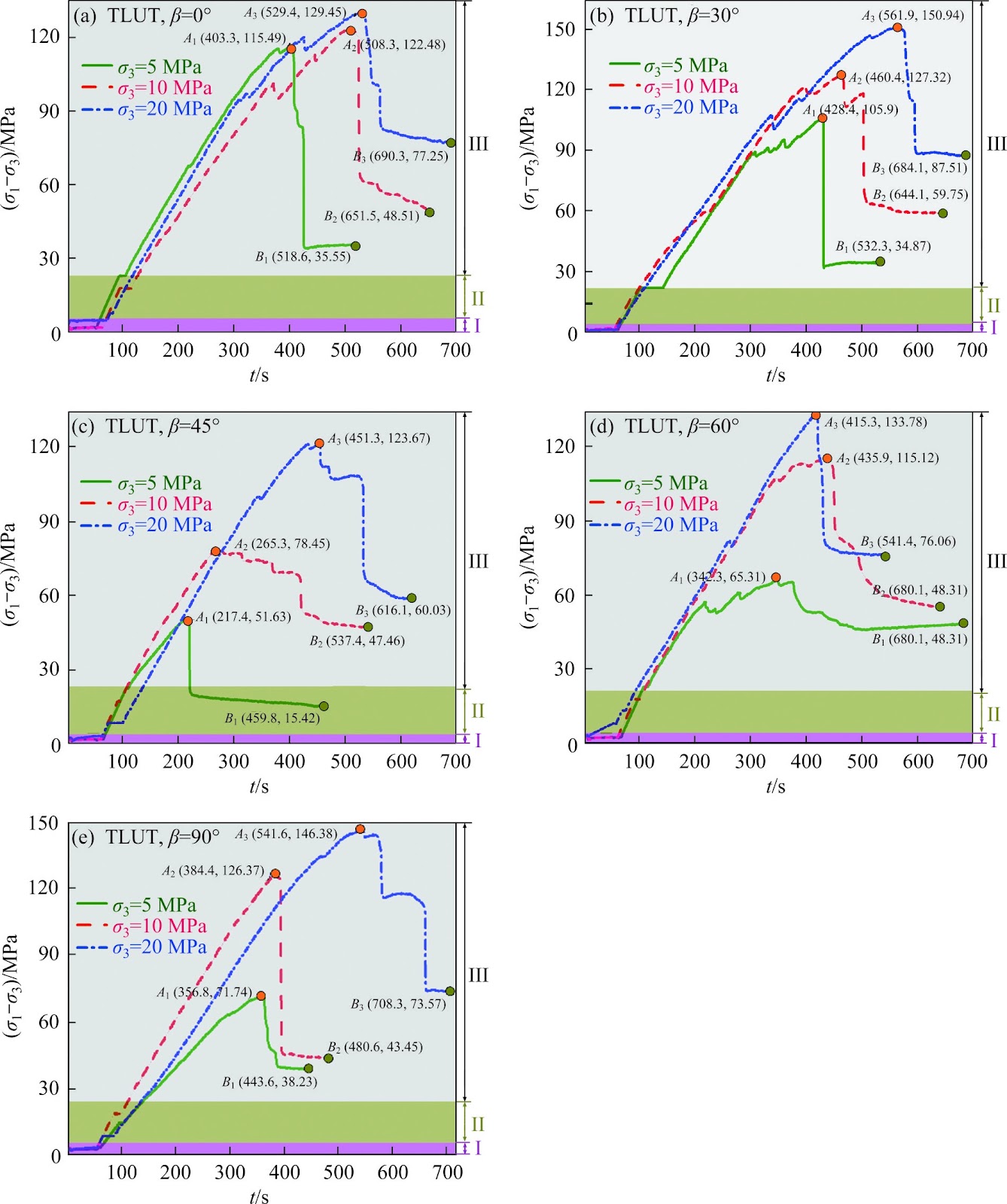
A cohesion loss model for determining residual strength of deep bedded sandstone
Rock residual strength, as an important input parameter, plays an indispensable role in proposing the reasonable and scientific scheme about stope design, underground tunnel excavation and stability evaluation of deep chambers. Therefore, previous residual strength models of rocks established were reviewed. And corresponding related problems were stated. Subsequently, starting from the effects of bedding and whole life-cycle evolution process, series of triaxial mechanical tests of deep bedded s
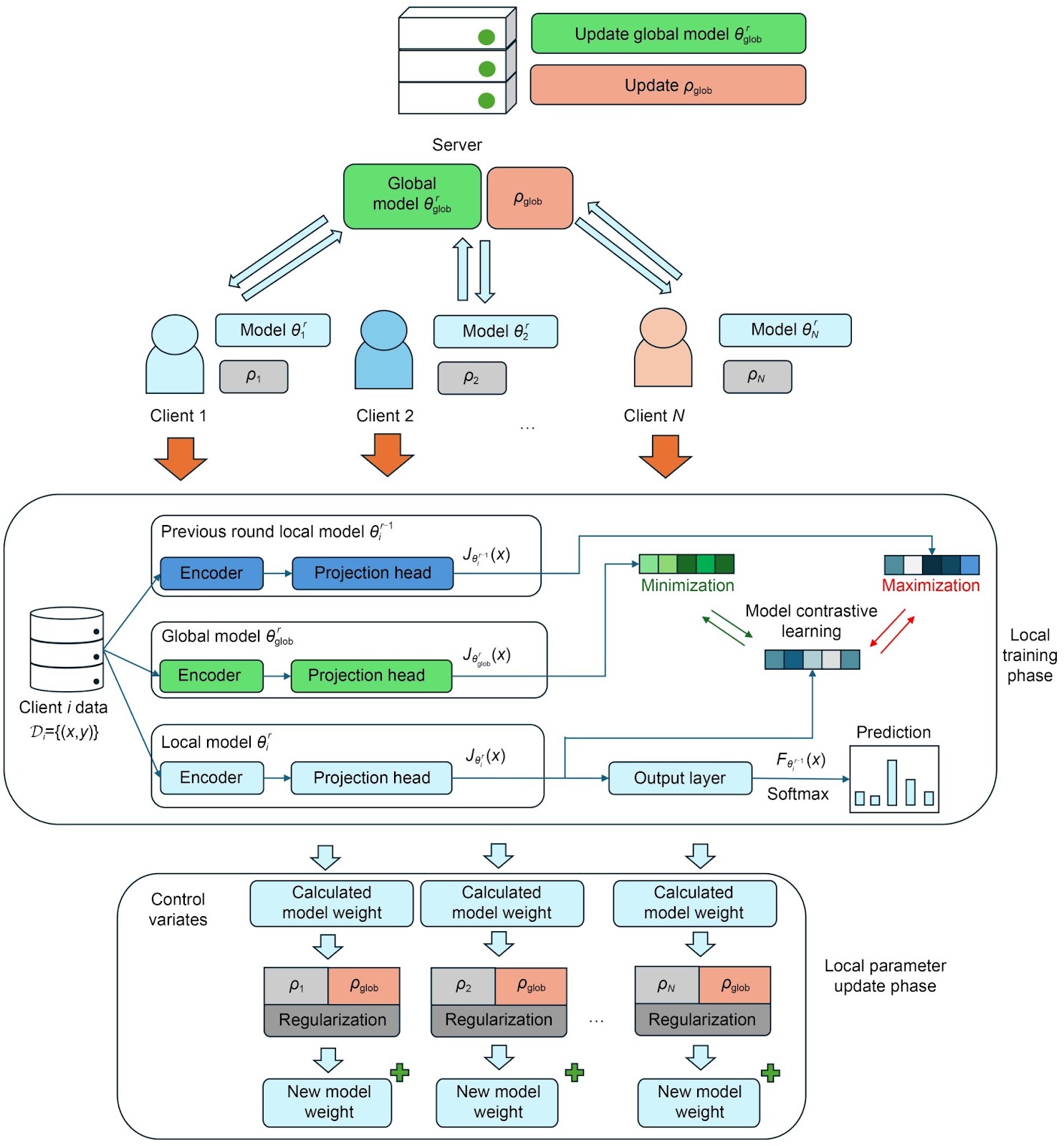
Federated model with contrastive learning and adaptive control variates for human activity recognition
Recent attention to privacy issues demands a communication-safe method for training human activity recognition (HAR) models on client activity data. Federated learning (FL) has become a compelling technique to facilitate model training between the server and clients while preserving data privacy. However, classical FL methods often assume independent and identically distributed (IID) data among clients. This assumption does not hold true in practical scenarios. Human activity in real-world scena