Key Takeaways & Executive Findings
- •• Annealing at 300 °C yields the most significant improvement in elongation and formability of Ag/Al bilayer sheets, with the effect most pronounced in aluminum layers. • Increasing annealing temperature reduces ultimate tensile strength and fracture toughness, while enhancing ductility and deep-cavity fracture behavior. • The cold roll bonding process with 70% thickness reduction and subsequent annealing produces a 350 μm Ag/Al bilayer with tunable mechanical properties. • Fracture mechanism transitions from shear ductile with shallow dimples to ductile with deep cavities as annealing temperature rises, as confirmed by SEM fractography.
Abstract
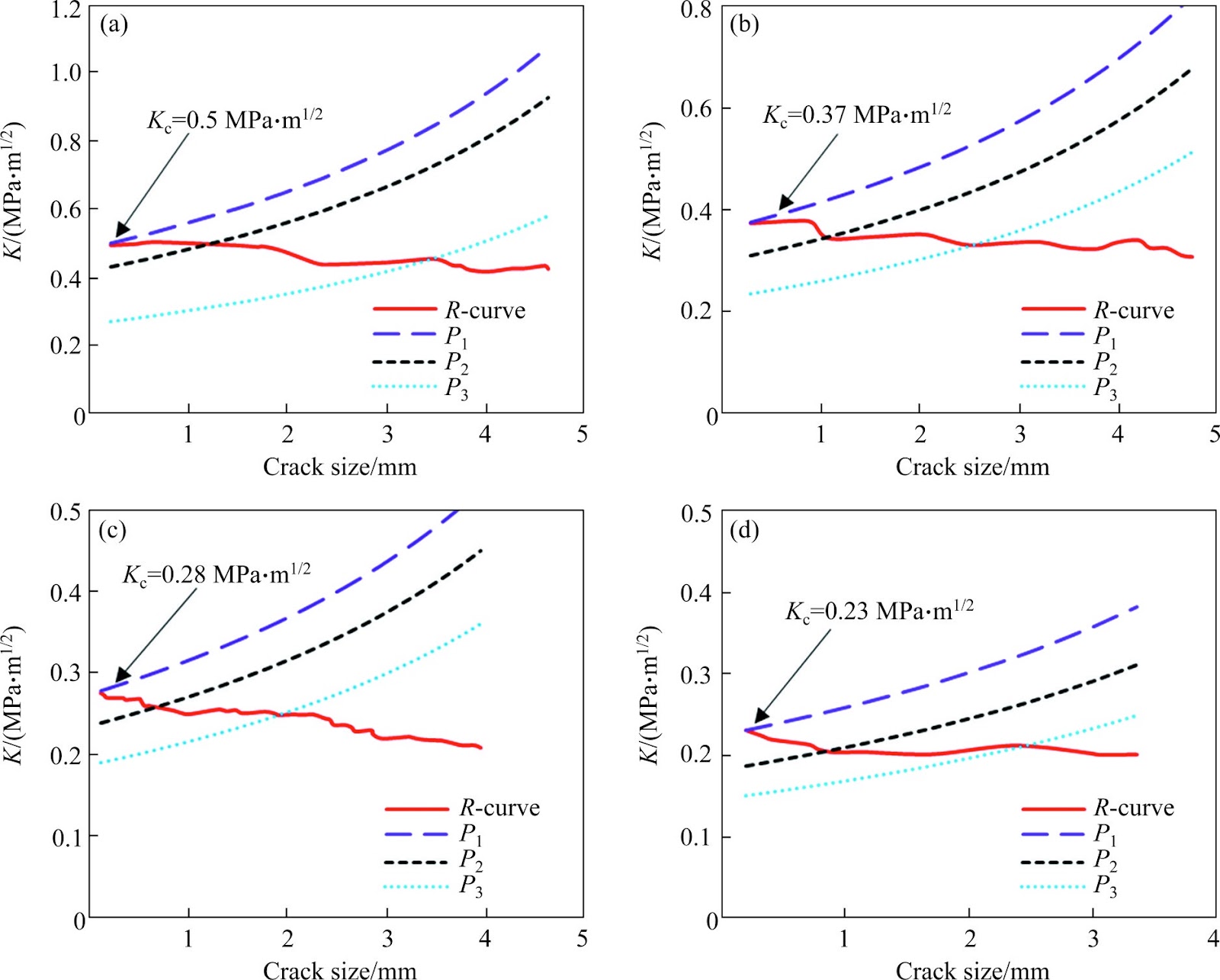
This article examines the influence of annealing temperature on fracture toughness and forming limit curves of dissimilar aluminum/silver sheets. In the cold roll bonding process, after brushing and acid washing, the prepared surfaces are placed on top of each other and by rolling with reduction more than 50%, the bonding between layers is established. In this research, the roll bonding process was done at room temperature, without the use of lubricants and with a 70% thickness reduction. Then, the final thickness of the Ag/Al bilayer sheet reached 350 μm by several stages of cold rolling. Before cold rolling, it should be noted that to decrease the hardness created due to plastic deformation, the roll-bonded samples were subjected to annealing heat treatment at 400 ℃ for 90 min. Thus, the final samples were annealed at 200, 300 and 400 ℃ for 90 min and cooled in a furnace to examine the annealing temperature effects. The uniaxial tensile and microhardness tests measured mechanical properties. Also, to investigate the fracture mechanism, the fractography of the cross-section was examined by scanning electron microscope (SEM). To evaluate the formability of Ag/Al bilayer sheets, forming limit curves were obtained experimentally through the Nakazima test. The resistance of composites to failure due to cracking was also investigated by fracture toughness. The results showed that annealing increases the elongation and formability of the Ag/Al bilayer sheet while reduces the ultimate tensile strength and fracture toughness. However, the changing trend is not the same at different temperatures, and according to the results, the most significant effect is obtained at 300 ℃ and aluminum layers. It was also determined that by increasing annealing temperature, the fracture mechanism from shear ductile with small and shallow dimples becomes ductile with deep cavities.
1. Introduction
Silver as one of the precious metals, in addition to its aesthetic appearance, has also been considered by the industry due to its unique properties. For example, it has the highest electrical and thermal conductivity among known metals [1]. However, high price and low strength usually limit its application [2]. Therefore, advanced and new materials are needed to replace single-layer silver sheets so that the use of multilayer composites can be fruitful. In fact, multilayer composites contain two or more similar or dissimilar metals, depending on the input layers, can offer different properties such as corrosion resistance, high strength, good wear properties and proper electrical conductivity [3]. So far, various combinations of silver sheets have been used to produce metal laminates like: Ag/Cu [4 −7], Ag/Fe [8 −10], Ag/Ni [11], and Au/Ag [12].
In this way, aluminum due to the low price and high specific strength [13] can be used as a desirable choice for the production of multilayer composite with silver. One of the common methods for producing multilayer metal sheets is the roll bonding process, which has an advantage over other methods due to simplicity, accessible equipment and its ability to work on sheets with different thickness [14]. In fact, cold roll bonding (CRB) process is one of the cold welding processes in which metals are bonded at room temperature by applying high contact pressures caused by the rolling machine [15]. Studies have shown that the roll bonding process can be influenced by many parameters such as surface preparation [16−18], speed and direction of rolling [19, 20], thickness reduction [21, 22], and rolling temperature [23, 24]. However, heat treatment after rolling seems to be one of the most important parameters affecting the mechanical and metallurgical properties as well as the ductility behavior of multilayer composites produced by roll bonding process.
JAMAATI et al [25] investigated the effect of annealing conditions on the bond strength of Al/Al sheet produced by cold roll bonding process. The results showed that with increasing annealing temperature, the peeling force of the layers and consequently bond strength increase. In fact, annealing reduces the effect of work-hardening caused by the rolling stage, which in turn improves bond strength and formability of the specimens. WANG et al [26] used hot roll boning process to fabricate Al/Mg clad sheets and studied the effect of annealing on the mechanical properties of composite. It was found that with increasing annealing temperature, the yield strength of the sample decreases while the elongation has the reversed trend. So that the maximum value of elongation was obtained at 200 ℃, and after that, increasing th
Loading authentic research manuscript (Pages 1–5)...
Mohammad Delshad GHOLAMI, Mojtaba KHODAKARAMI, Mohammad ABADIAN, Ramin HASHEMI (2025). Annealing temperature influence on forming limit curve and fracture toughness of aluminium/silver bilayer sheets. Journal of Central South University. https://doi.org/10.1007/s11771-025-5870-1
Research & Educational Purpose Only:The translations, structured abstracts, analytical annotations, and data reports provided by SinoTechIntel are intended exclusively for academic research, internal corporate R&D, and educational benchmarking. They do not constitute formal engineering, chemical safety, legal, or professional advice.
Copyright & Intellectual Property Notice: Original copyright of the underlying source articles and experimental data remains with the respective authors, institutions, and original publishing journals. SinoTechIntel claims intellectual property only over its proprietary translations, analytical syntheses, and AEO structured enhancements in accordance with international fair use and academic citation principles.
Frequently Asked Questions
What is the effect of annealing temperature on the formability of Ag/Al bilayer sheets?
Annealing at higher temperatures, particularly 300 °C, significantly increases the elongation and formability of Ag/Al bilayer sheets, as demonstrated by the forming limit curves obtained from Nakazima tests.
How does annealing influence the fracture toughness of aluminum/silver bilayer sheets?
Increasing annealing temperature reduces the fracture toughness of Ag/Al bilayer sheets. The most notable reduction is observed at 400 °C, while the fracture mechanism shifts from shear ductile with shallow dimples to ductile with deep cavities.
What is the role of cold roll bonding in producing Ag/Al bilayer sheets?
Cold roll bonding (CRB) is used to bond aluminum and silver layers at room temperature through high contact pressure during rolling. In this study, a 70% thickness reduction was applied, followed by annealing and cold rolling to achieve a final bilayer thickness of 350 μm.
Which annealing temperature gives the best combination of strength and ductility for Ag/Al bilayer sheets?
Annealing at 300 °C provides the most significant improvement in ductility and formability, especially in the aluminum layers, while maintaining acceptable strength. Higher temperatures further reduce strength and fracture toughness.
What experimental methods were used to evaluate the Ag/Al bilayer sheet properties?
Uniaxial tensile tests, microhardness measurements, SEM fractography, Nakazima forming limit tests, and fracture toughness evaluations were performed to comprehensively assess the mechanical behavior and failure mechanisms of the bilayer sheets.
Related Technical Papers & Translations

Design and optimization of a high-efficiency distillation process for cellulosic fuel ethanol integrated with thermal coupling and molecular sieve adsorption
To address the challenges of high energy consumption and prominent costs in the traditional three-columns distillation process for cellulosic fuel ethanol, a distillation—molecular sieve coupling separation process is proposed. This process integrates a three-column (crude distillation column, first distillation column, second distillation column) system with a 3A molecular sieve adsorption deep dehydration unit. A thermal coupling network is constructed via differential pressure design (steam from medium/high-pressure columns as mutual heat sources, reboiler liquid waste heat for feed preheating), and molecular sieve adsorption conditions are optimized. The study first performs a thermodynamic consistency test on the ethanol—water system, determines optimal non-random two-liquid (NRTL) model binary interaction parameters via experimental data regression for Aspen Plus simulation. Aiming at minimum total annual cost (TAC), Aspen Plus is used to optimize process parameters (theoretical tray number, feed location, reflux ratio, side-draw position, etc.). Economic analysis shows this process reduces CO2 emission costs by 27.56%, TAC by 15.58% (to 5.123 × 10⁶ USD·a-1), and increases ethanol purity to >99.6%, providing an effective solution for green, efficient separation.

A cohesion loss model for determining residual strength of deep bedded sandstone
Rock residual strength, as an important input parameter, plays an indispensable role in proposing the reasonable and scientific scheme about stope design, underground tunnel excavation and stability evaluation of deep chambers. Therefore, previous residual strength models of rocks established were reviewed. And corresponding related problems were stated. Subsequently, starting from the effects of bedding and whole life-cycle evolution process, series of triaxial mechanical tests of deep bedded s

Federated model with contrastive learning and adaptive control variates for human activity recognition
Recent attention to privacy issues demands a communication-safe method for training human activity recognition (HAR) models on client activity data. Federated learning (FL) has become a compelling technique to facilitate model training between the server and clients while preserving data privacy. However, classical FL methods often assume independent and identically distributed (IID) data among clients. This assumption does not hold true in practical scenarios. Human activity in real-world scena