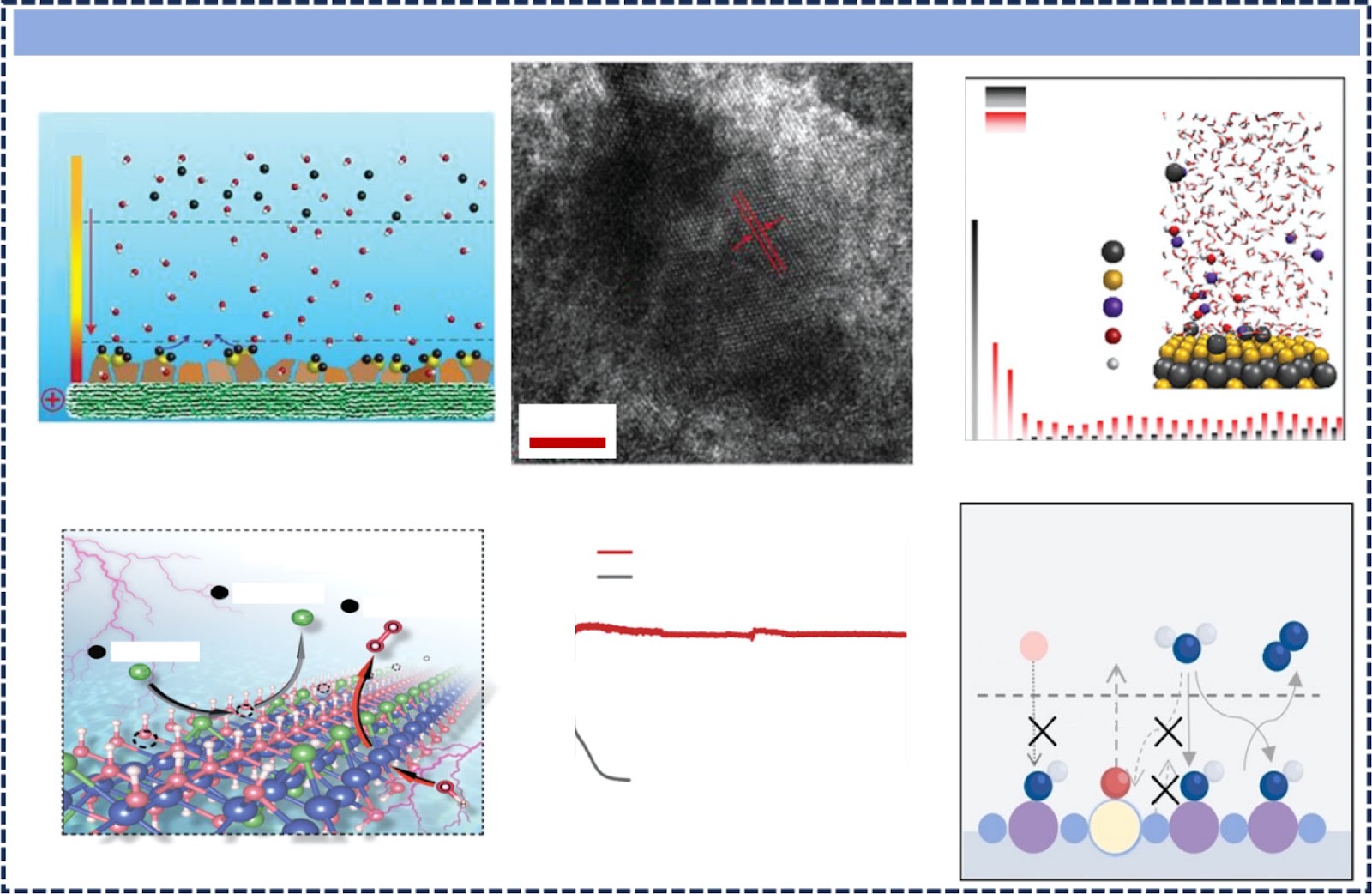
Key Takeaways & Executive Findings
- •• Anion modification offers a promising route to enhance OER catalyst stability and activity against chloride-ion corrosion in direct seawater electrolysis. • A novel anion selection framework based on adsorption energy, ionic potential, and acid-base character guides the design of robust seawater electrolysis catalysts. • The review identifies key stability mechanisms (external anion introduction, Cl−/OH− regulation) and activity mechanisms (electronic structure modulation, active species engineering, mass transfer optimization). • Direct seawater electrolysis emerges as a cost-effective, sustainable alternative to desalination-based hydrogen production, with challenges in long-term durability remaining.
Abstract
Direct seawater electrolysis presents a promising pathway for sustainable “green hydrogen” production. However, the complex composition of seawater, particularly the presence of chloride ions (Cl−), poses significant challenges to the structural stability and electrocatalytic performance of oxygen evolution reaction (OER) catalysts. Although recent studies have demonstrated that anion modification can improve the stability and activity of catalysts, the extent of these improvements varies considerably across different anions, and the underlying mechanisms remain poorly understood. This review examines the electrochemical behavior of anions related to their physicochemical properties and provides a comprehensive overview of recent advances and remaining challenges in anion-oriented strategies for seawater electrolysis. First, we propose a novel framework for determining anion properties based on adsorption energy, ionic potential, and acid-base character, which evaluates the physicochemical properties of anions from three dimensions and serves as a guideline for selecting modification materials for catalysts. Second, we critically discuss the underlying mechanisms by which anion modification enhances OER stability and activity in seawater, with a focus on chlorine chemistry and oxygen evolution dynamics. Classical approaches for stability improvement, such as the introduction of external anions and the regulation of Cl− and hydroxide ions (OH−), are discussed. We also summarize mechanisms for activity enhancement, including electronic structure modulation, active species engineering, and mass transfer optimization. Finally, we outline future research directions for anion modification strategies and highlight persistent challenges.
1. Introduction
Amid growing global energy security concerns, the pursuit of sustainable energy development has become an international priority [1]. Energy transition plays a central role in this effort. Hydrogen, as an environmentally benign, abundant, and high-energy-density carrier (with a high heating value of 141.8 MJ/kg at 298 K), serves dual roles in energy storage and CO2 mitigation, positioning itself as a highly promising alternative to conventional fossil fuels [2–6]. Among existing hydrogen production technologies, water electrolysis powered by renewable energy (such as wind, solar, and tidal energy) provides a carbon-free approach for generating clean and sustainable “green hydrogen” [7–12]. However, conventional water electrolysis relies on high-purity water feedstocks, limiting its application in water-scarce regions. In contrast, seawater constitutes approximately 96.5% of global water resources and exhibits higher conductivity (~5 S·m−1) than pure water (conductivity ~5.5 × 10⁻⁶ S·m−1), making it an attractive electrolyte [12–17]. Moreover, seawater electrolysis demonstrates inherent geographical synergies with emerging marine-based renewable energy technologies, such as offshore wind and tidal power, thereby offering opportunities to optimize the spatial layout of hydrogen supply chains [18].
Current seawater electrolysis strategies are broadly categorized into indirect and direct approaches [19]. The indirect method utilizes desalinated seawater for electrolysis, primarily through systems integrating reverse osmosis and electrolysis units, and is commonly referred to as “two-step” seawater electrolysis. This approach avoids interference from complex impurities in seawater and has gained widespread adoption [20–23]. However, significant limitations are to be considered, including the large footprints of desalination infrastructure, high capital expenditure, and substantial maintenance costs [24–25]. What’s more, large-scale seawater desalination considerably raises hydrogen production costs (~12.1 $·kg−1), while the disposal of concentrated brine byproducts poses serious threats to marine ecosystems [26–28]. Therefore, the development of direct seawater electrolysis technology emerges as a more cost-effective and environmentally sustainable alternative.
Seawater exhibits a complex ionic composition, dominated by approximately 0.55 M Cl−, 0.48 M Na+, 0.05 M Mg2+, and 0.01 M Ca2+. Among these ions, the aggressive Cl− induce severe corrosion during electrolysis, posing a major threat to long-term system stability.
Loading authentic research manuscript (Pages 1–5)...
Wei Wei, Ruize Ma, Ruguang Wang, Jisi Li, Quanlu Wang, Zheng Lv, Hui Jin, Jinshuai Xu, Jiaxin Guo, Tao Ling (2025). Anion modification for enhanced anode catalyst performance in seawater electrolysis. Journal of Mineral Metallurgy and Materials Science. https://doi.org/10.1007/s12613-025-3346-9
Research & Educational Purpose Only:The translations, structured abstracts, analytical annotations, and data reports provided by SinoTechIntel are intended exclusively for academic research, internal corporate R&D, and educational benchmarking. They do not constitute formal engineering, chemical safety, legal, or professional advice.
Copyright & Intellectual Property Notice: Original copyright of the underlying source articles and experimental data remains with the respective authors, institutions, and original publishing journals. SinoTechIntel claims intellectual property only over its proprietary translations, analytical syntheses, and AEO structured enhancements in accordance with international fair use and academic citation principles.
Frequently Asked Questions
What is the significance of anion modification in seawater electrolysis?
Anion modification enhances the stability and activity of oxygen evolution reaction (OER) catalysts by mitigating chloride-ion-induced corrosion, thereby improving the efficiency and longevity of direct seawater electrolysis for green hydrogen production.
What challenges does seawater electrolysis face?
The main challenges are the complex composition of seawater, especially chloride ions that cause severe corrosion of anode catalysts, leading to metal leaching, catalyst deactivation, and reduced system stability.
How does the proposed framework guide anion selection?
The framework evaluates anions based on adsorption energy, ionic potential, and acid-base character, providing a three-dimensional physicochemical property assessment to guide the selection of effective anion modification materials for catalysts.
What mechanisms enhance OER stability and activity in seawater?
Stability is improved by introducing external anions and regulating Cl−/OH− balance, while activity is enhanced through electronic structure modulation, active species engineering, and mass transfer optimization.
Why is direct seawater electrolysis preferred over indirect methods?
Direct seawater electrolysis avoids the high capital and maintenance costs, large footprints, and environmental issues associated with desalination-based two-step processes, making it more cost-effective and sustainable.
Related Technical Papers & Translations

Design and optimization of a high-efficiency distillation process for cellulosic fuel ethanol integrated with thermal coupling and molecular sieve adsorption
To address the challenges of high energy consumption and prominent costs in the traditional three-columns distillation process for cellulosic fuel ethanol, a distillation—molecular sieve coupling separation process is proposed. This process integrates a three-column (crude distillation column, first distillation column, second distillation column) system with a 3A molecular sieve adsorption deep dehydration unit. A thermal coupling network is constructed via differential pressure design (steam from medium/high-pressure columns as mutual heat sources, reboiler liquid waste heat for feed preheating), and molecular sieve adsorption conditions are optimized. The study first performs a thermodynamic consistency test on the ethanol—water system, determines optimal non-random two-liquid (NRTL) model binary interaction parameters via experimental data regression for Aspen Plus simulation. Aiming at minimum total annual cost (TAC), Aspen Plus is used to optimize process parameters (theoretical tray number, feed location, reflux ratio, side-draw position, etc.). Economic analysis shows this process reduces CO2 emission costs by 27.56%, TAC by 15.58% (to 5.123 × 10⁶ USD·a-1), and increases ethanol purity to >99.6%, providing an effective solution for green, efficient separation.

A cohesion loss model for determining residual strength of deep bedded sandstone
Rock residual strength, as an important input parameter, plays an indispensable role in proposing the reasonable and scientific scheme about stope design, underground tunnel excavation and stability evaluation of deep chambers. Therefore, previous residual strength models of rocks established were reviewed. And corresponding related problems were stated. Subsequently, starting from the effects of bedding and whole life-cycle evolution process, series of triaxial mechanical tests of deep bedded s

Federated model with contrastive learning and adaptive control variates for human activity recognition
Recent attention to privacy issues demands a communication-safe method for training human activity recognition (HAR) models on client activity data. Federated learning (FL) has become a compelling technique to facilitate model training between the server and clients while preserving data privacy. However, classical FL methods often assume independent and identically distributed (IID) data among clients. This assumption does not hold true in practical scenarios. Human activity in real-world scena