Key Takeaways & Executive Findings
- •• Increasing recycled aggregate content reduces both permeability and bending load of cement-stabilized permeable recycled aggregate material. • Recycled aggregates diminish energy dissipation capacity, indicating altered damage evolution under cyclic loading. • A robust relationship between initial damage and fatigue life was established, enabling a predictive model for fatigue performance. • A fatigue damage assessment method based on strain evolution and energy dissipation was developed to support low-carbon, permeable, and durable roadway design.
Abstract
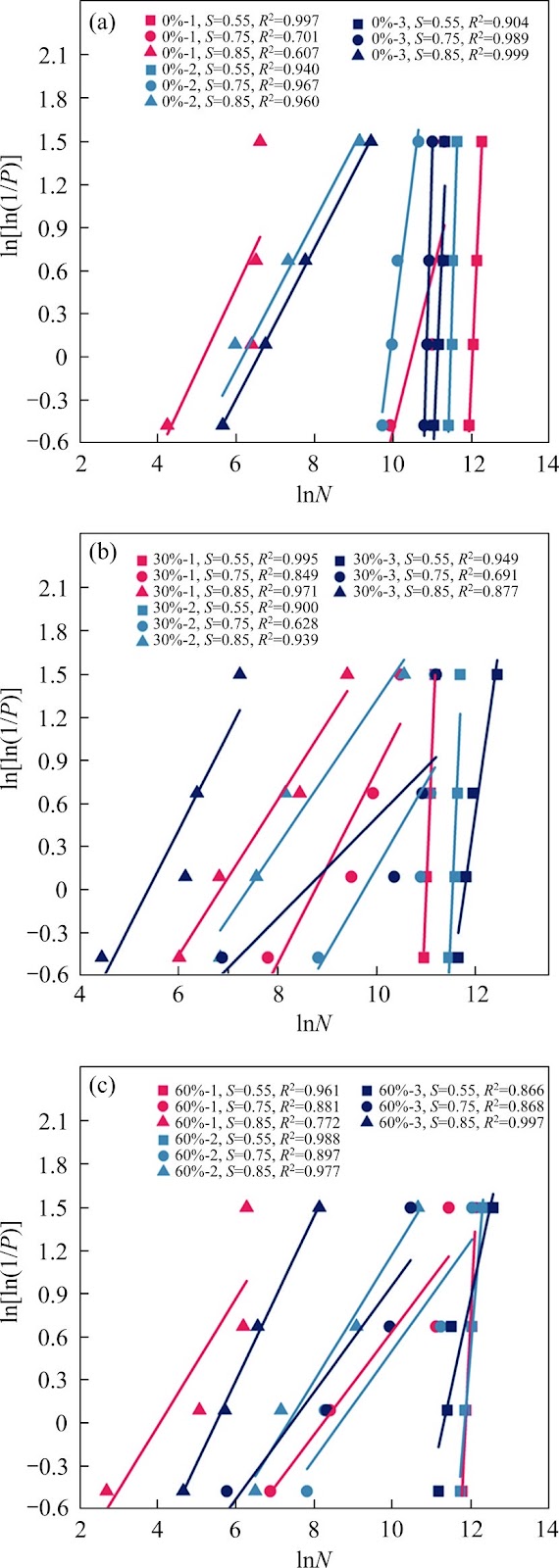
Permeable roads generally exhibit inferior mechanical properties and shorter service life than traditional dense-graded/impermeable roads. Furthermore, the incorporation of recycled aggregates in their construction may exacerbate these limitations. To address these issues, this study introduced a novel cement-stabilized permeable recycled aggregate material. A total of 162 beam specimens prepared with nine different levels of cement-aggregate ratio were tested to evaluate their permeability, bending load, and bending fatigue life. The experimental results indicate that increasing the content of recycled aggregates led to a reduction in both permeability and bending load. Additionally, the inclusion of recycled aggregates diminished the energy dissipation capacity of the specimens. These findings were used to establish a robust relationship between the initial damage in cement-stabilized permeable recycled aggregate material specimens and their fatigue life, and to propose a predictive model for their fatigue performance. Further, a method for assessing fatigue damage based on the evolution of fatigue-induced strain and energy dissipation was developed. The findings of this study provide valuable insights into the mechanical behavior and fatigue performance of cement-stabilized permeable recycled aggregate materials, offering guidance for the design of low-carbon-emission, permeable, and durable roadways incorporating recycled aggregates.
1. Introduction
The subgrade of a permeable road plays a crucial role in the construction of road networks within “sponge city” projects. Compared to dense-graded/impermeable road subgrades, permeable subgrades exhibit higher porosity, which confers excellent water permeability and storage capabilities. However, such increased porosity adversely affects the mechanical properties of the material, resulting in a significantly reduced service life under traffic loading. Existing research has primarily focused on the fatigue life and behavior of dense-graded road subgrades under traffic loads; therefore, the performance of permeable roads when subjected to fatigue loads needs to be investigated comprehensively.
Cement-stabilized aggregate materials are frequently used because they are more cost-effective than cement concrete materials. Although the mechanical properties of cement-stabilized aggregates are generally inferior to those of concrete, their material compositions share considerable similarities, with differences mainly arising from variations in constituent material ratios. Both concrete and cement-stabilized aggregates are widely used in road subgrade construction. Previous studies examined the fatigue performance of these materials through compressive and bending fatigue tests. The fatigue behaviors of both concrete and cement-stabilized aggregates are characterized by significant non-linearity, which can largely be attributed to the complexity of their material composition and the intricate pore structures within them. These complex internal structures contribute to the observed non-linearity responses during fatigue testing, highlighting the need for a deeper understanding of their fatigue behavior.
Such insights are essential for developing more accurate fatigue prediction models and establishing design guidelines to enhance the durability and performance of road subgrade materials. This would ultimately support the design of more resilient and long-lasting permeable road infrastructures.
Loading authentic research manuscript (Pages 1–5)...
YANG Tao, XIAO Yuan-jie, LI Yun-bo, WANG Xiao-ming, HUA Wen-jun, HE Qing-yu, CHEN Yu-liang, ZHOU Zhen, MENG Fan-wei (2025). Analyzing fatigue behaviors and predicting fatigue life of cement-stabilized permeable recycled aggregate material. Journal of Central South University. https://doi.org/10.1007/s11771-025-5932-4
Research & Educational Purpose Only:The translations, structured abstracts, analytical annotations, and data reports provided by SinoTechIntel are intended exclusively for academic research, internal corporate R&D, and educational benchmarking. They do not constitute formal engineering, chemical safety, legal, or professional advice.
Copyright & Intellectual Property Notice: Original copyright of the underlying source articles and experimental data remains with the respective authors, institutions, and original publishing journals. SinoTechIntel claims intellectual property only over its proprietary translations, analytical syntheses, and AEO structured enhancements in accordance with international fair use and academic citation principles.
Frequently Asked Questions
What is cement-stabilized permeable recycled aggregate material?
It is a novel pavement material that combines cement-stabilized aggregates with recycled aggregates to create a permeable road subgrade with high porosity, water permeability, and storage capability, while aiming to improve durability and sustainability.
How does recycled aggregate content affect performance?
Increasing the content of recycled aggregates reduces both permeability and bending load, and also diminishes the energy dissipation capacity of the specimens, indicating a trade-off between sustainability and mechanical performance.
How is fatigue life predicted in this study?
A robust relationship was established between the initial damage in the material and its fatigue life, leading to a predictive model for fatigue performance of cement-stabilized permeable recycled aggregate material.
Why is energy dissipation important in fatigue damage assessment?
Energy dissipation reflects the material's capacity to absorb and dissipate energy under repeated loading; its evolution can be used to assess fatigue damage and complement strain-based fatigue evaluation methods.
What are the practical applications of this research?
The findings offer guidance for designing low-carbon-emission, permeable, and durable roadways that incorporate recycled aggregates, supporting sponge city infrastructure and sustainable pavement engineering.
Related Technical Papers & Translations
Design and optimization of a high-efficiency distillation process for cellulosic fuel ethanol integrated with thermal coupling and molecular sieve adsorption
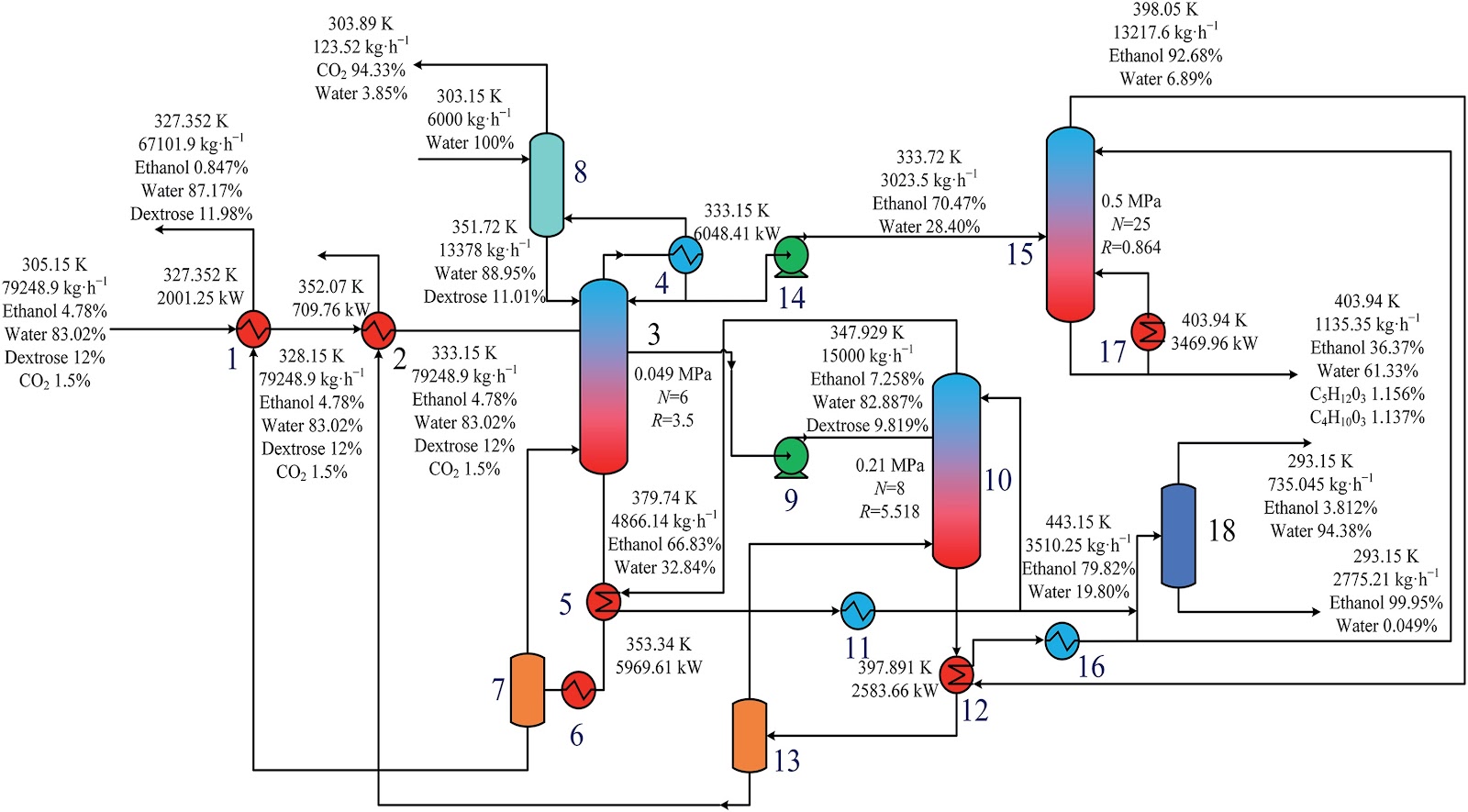
To address the challenges of high energy consumption and prominent costs in the traditional three-columns distillation process for cellulosic fuel ethanol, a distillation—molecular sieve coupling separation process is proposed. This process integrates a three-column (crude distillation column, first distillation column, second distillation column) system with a 3A molecular sieve adsorption deep dehydration unit. A thermal coupling network is constructed via differential pressure design (steam from medium/high-pressure columns as mutual heat sources, reboiler liquid waste heat for feed preheating), and molecular sieve adsorption conditions are optimized. The study first performs a thermodynamic consistency test on the ethanol—water system, determines optimal non-random two-liquid (NRTL) model binary interaction parameters via experimental data regression for Aspen Plus simulation. Aiming at minimum total annual cost (TAC), Aspen Plus is used to optimize process parameters (theoretical tray number, feed location, reflux ratio, side-draw position, etc.). Economic analysis shows this process reduces CO2 emission costs by 27.56%, TAC by 15.58% (to 5.123 × 10⁶ USD·a-1), and increases ethanol purity to >99.6%, providing an effective solution for green, efficient separation.
A cohesion loss model for determining residual strength of deep bedded sandstone
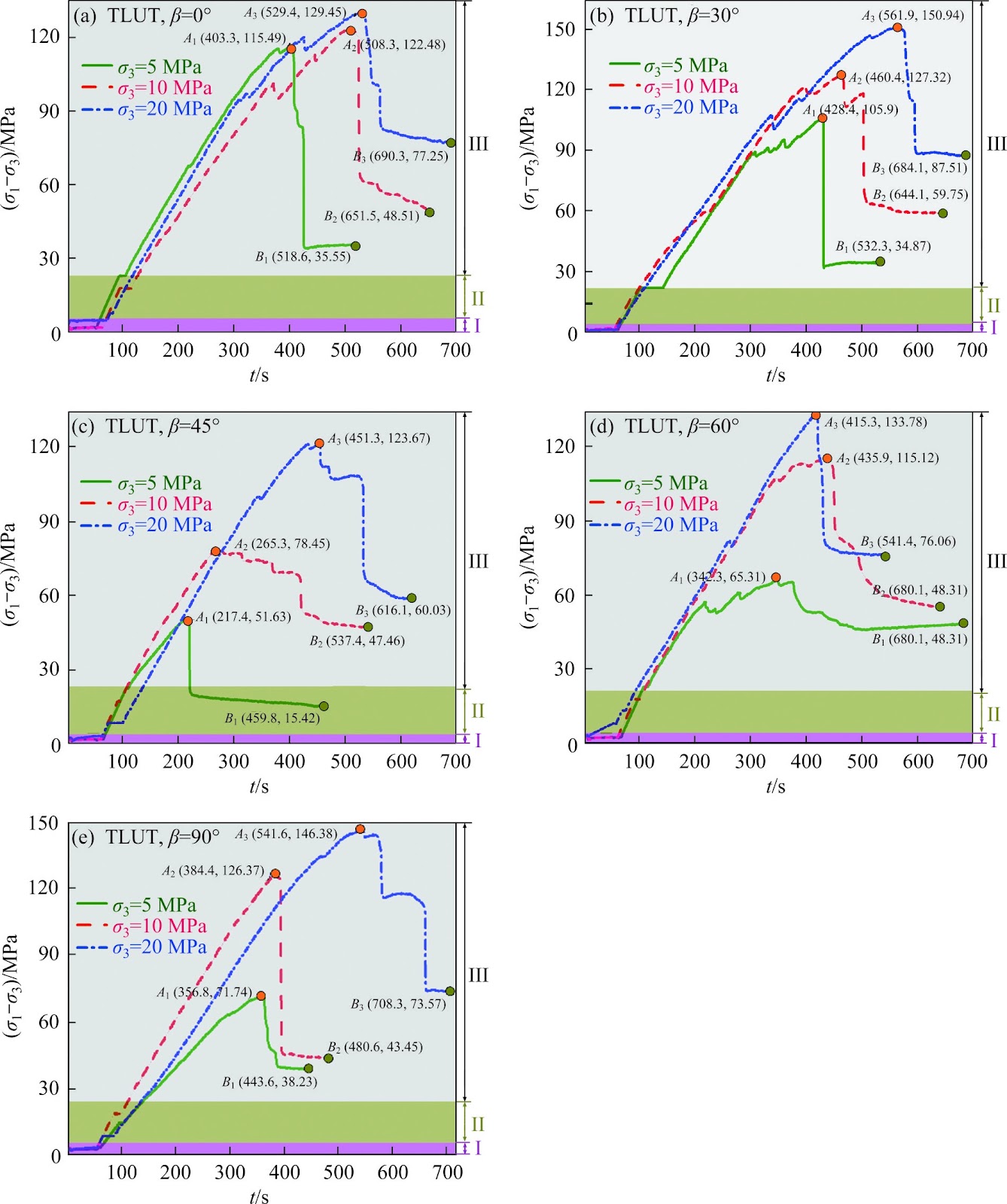
Rock residual strength, as an important input parameter, plays an indispensable role in proposing the reasonable and scientific scheme about stope design, underground tunnel excavation and stability evaluation of deep chambers. Therefore, previous residual strength models of rocks established were reviewed. And corresponding related problems were stated. Subsequently, starting from the effects of bedding and whole life-cycle evolution process, series of triaxial mechanical tests of deep bedded s
Federated model with contrastive learning and adaptive control variates for human activity recognition
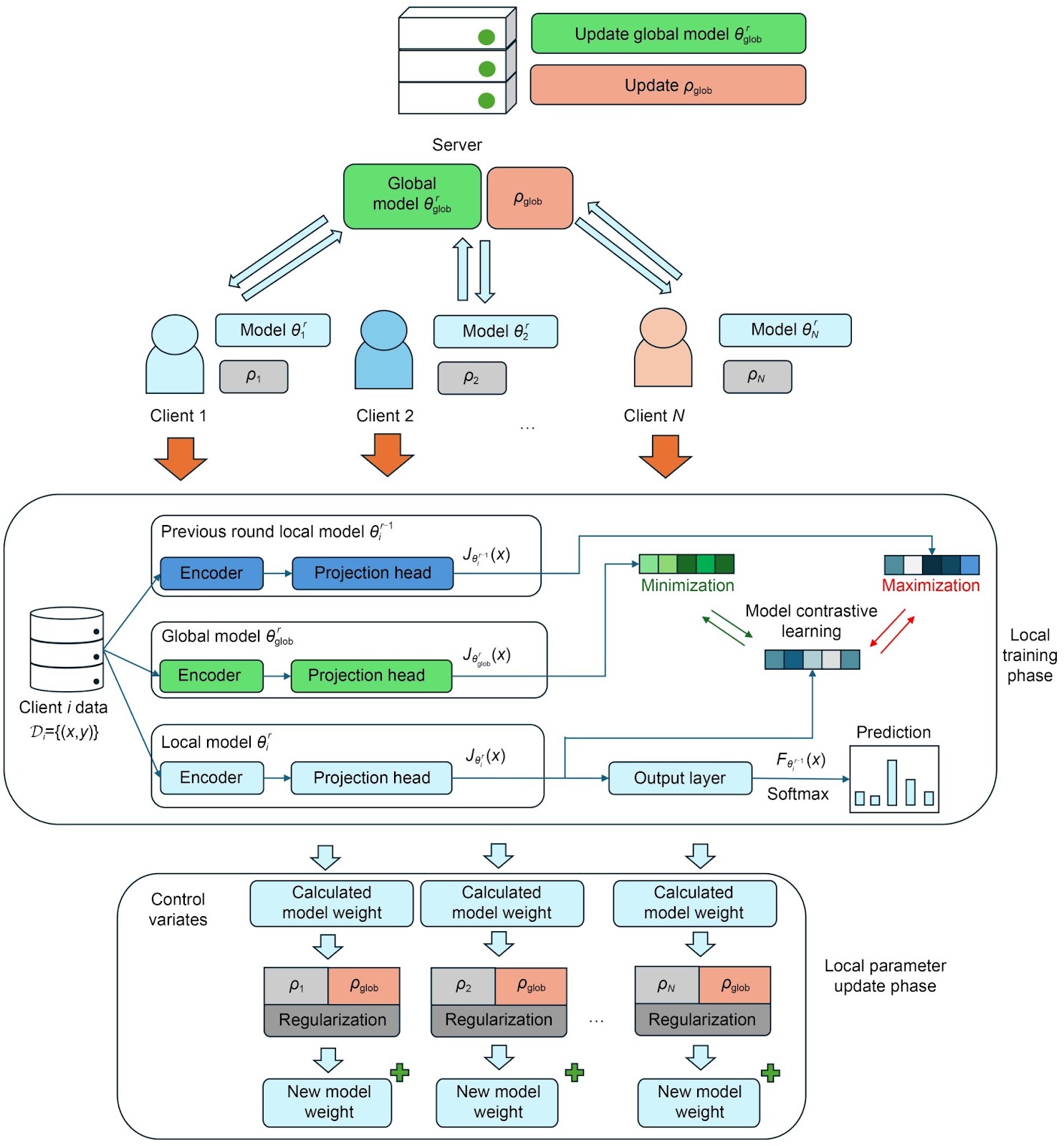
Recent attention to privacy issues demands a communication-safe method for training human activity recognition (HAR) models on client activity data. Federated learning (FL) has become a compelling technique to facilitate model training between the server and clients while preserving data privacy. However, classical FL methods often assume independent and identically distributed (IID) data among clients. This assumption does not hold true in practical scenarios. Human activity in real-world scena