Key Takeaways & Executive Findings
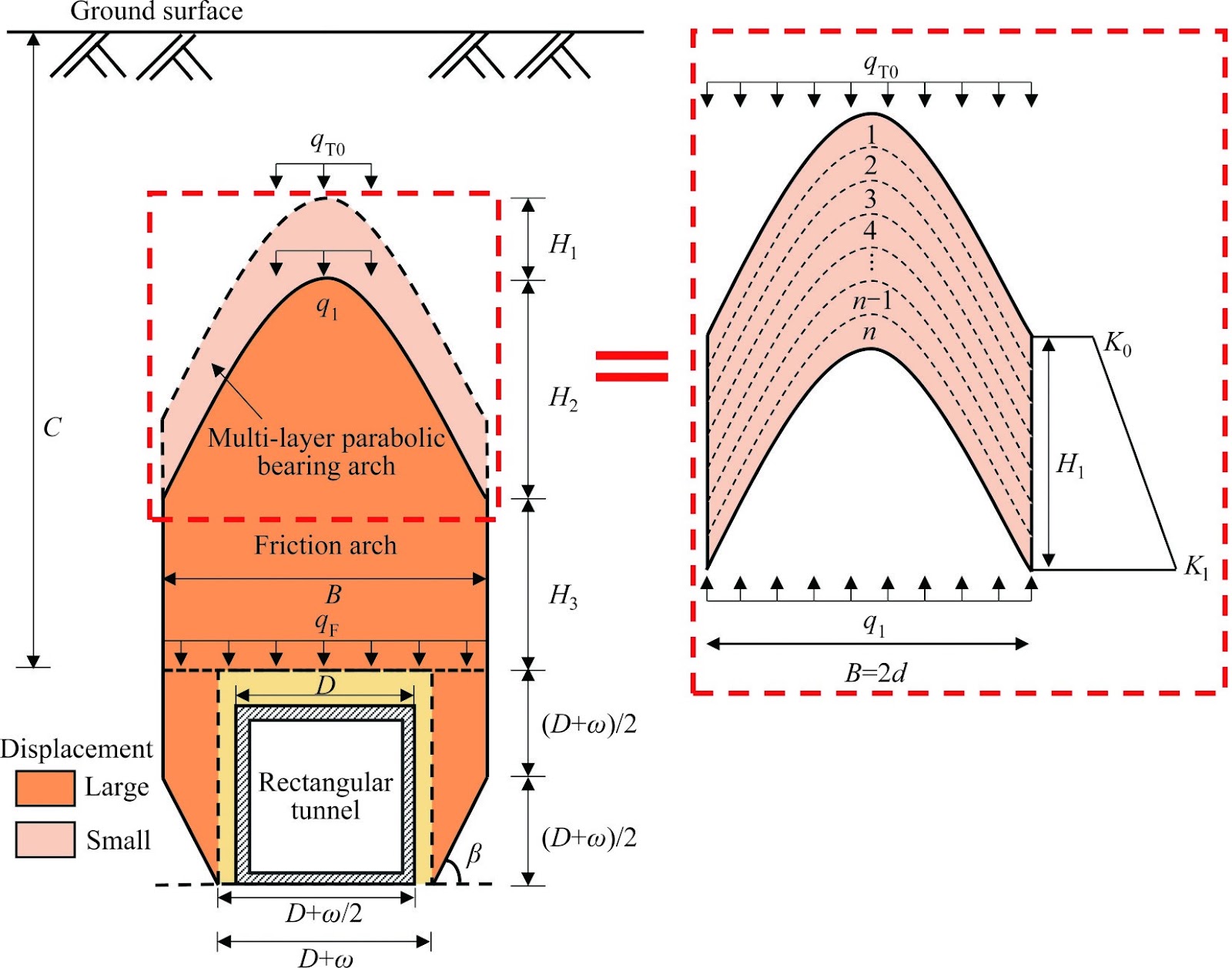
- •• Proposes a novel analytical model combining a multi-layer parabolic soil arch and a lower friction arch to predict vertical earth pressure on deep rectangular pipe jacking tunnels. • Explicitly incorporates tunnelling-induced ground loss distribution, enabling more realistic assessment of soil arching effects. • Derives closed-form solutions for key arch parameters (B, H1, lateral pressure coefficient Kl) based on principal stress rotation characteristics. • Validates predictions against experimental and numerical results and quantifies parameter sensitivities, facilitating reliable jacking force estimation and lining safety design.
Abstract
Determining earth pressure on jacked pipes is essential for ensuring lining safety and calculating jacking force, especially for deep-buried pipes. To better reflect the soil arching effect resulting from the excavation of rectangular jacked pipes and the distribution of the earth pressure on jacked pipes, we present an analytical solution for predicting the vertical earth pressure on deep-buried rectangular pipe jacking tunnels, incorporating the tunnelling-induced ground loss distribution. Our proposed analytical model consists of the upper multi-layer parabolic soil arch and the lower friction arch. The key parameters (i.e., width and height of friction arch B and height of parabolic soil arch H1) are determined according to the existing research, and an analytical solution for Kl is derived based on the distribution characteristics of the principal stress rotation angle. With consideration for the transition effect of the mechanical characteristics of the parabolic arch zone, an analytical solution for soil load transfer is derived. The prediction results of our analytical solution are compared with tests and simulation results to validate the effectiveness of the proposed analytical solution. Finally, the effects of different parameters on the soil pressure are discussed.
1. Introduction
The development of underground transportation infrastructure has emerged as a critical solution to reconcile the conflict between urban economic expansion and traffic congestion challenges [1−4]. Among modern trenchless technologies, rectangular pipe jacking has gained prominence in constructing utility tunnels and subsurface passageways due to its superior spatial efficiency, economic viability, and rapid construction timelines [5−7]. A fundamental requirement in rectangular pipe jacking operations is maintaining sufficient jacking force to overcome both frictional resistance along the pipe periphery and face resistance at the excavation front, thereby ensuring continuous advancement. Notably, frictional resistance, predominantly governed by the circumferential earth pressure distribution along the pipe-soil interface, constitutes the primary component of total jacking force consumption [8, 9]. This underscores the critical importance of accurate earth pressure prediction for reliable jacking force estimation and equipment selection in engineering practice [10, 11].
Scholars have conducted model tests and numerical studies to determine the earth pressure above tunnels [12−19]. These studies offer valuable insights into the soil-tunnel interaction and serve as a solid foundation for establishing theoretical models. Based on model tests, TERZAGHI [20] built a widely used model for predicting vertical earth pressure on shallow tunnels. However, some key parameters in Terzaghi’s formula, such as loosened zone width and lateral pressure coefficient, are empirical and challenging to determine. As a result, many researchers have modified these parameters based on model tests and numerical analysis [21, 22]. While improvements have been made to Terzaghi’s theory for shallow-buried tunnels, the focus has mainly been on tunnels where the loosened soil zone extends to the ground surface. In contrast, JACOBSZ [23] discovered that a damage zone exists in the soil without extending to the surface in deep-buried tunnels. Consequently, researchers have further studied the damage zone height based on the existing research for shallow-buried tunnels to accurately calculate soil load on deep-buried tunnels. For example, according to simulation results, the damage region height is considered 0.75 times the tunnel diameter [24]. In fact, the damage region height is determined by several parameters, including ground loss and volume bulking factors. ZHANG et al [25] derived an equation to calculate the height of the shearing bands caused by circular pipe jacking machine.
Loading authentic research manuscript (Pages 1–5)...
LI Jian-ye, FANG Qian, LIU Xiang, WANG Gan, HUANG Jun, DU Jian-ming, ZHANG Zi-yi (2025). Analytical solutions of vertical load on deep rectangular jacked pipe considering tunnelling-induced ground loss. Journal of Central South University. https://doi.org/10.1007/s11771-025-5941-3
Research & Educational Purpose Only:The translations, structured abstracts, analytical annotations, and data reports provided by SinoTechIntel are intended exclusively for academic research, internal corporate R&D, and educational benchmarking. They do not constitute formal engineering, chemical safety, legal, or professional advice.
Copyright & Intellectual Property Notice: Original copyright of the underlying source articles and experimental data remains with the respective authors, institutions, and original publishing journals. SinoTechIntel claims intellectual property only over its proprietary translations, analytical syntheses, and AEO structured enhancements in accordance with international fair use and academic citation principles.
Frequently Asked Questions
Why is predicting vertical earth pressure important for rectangular pipe jacking tunnels?
Accurate prediction of vertical earth pressure is essential for ensuring lining safety and calculating the jacking force, as frictional resistance along the pipe–soil interface is a major component of the total jacking force.
What is the proposed analytical model in this paper?
The model consists of an upper multi-layer parabolic soil arch and a lower friction arch, with parameters derived from the principal stress rotation angle and tunnelling-induced ground loss distribution.
How is the analytical solution validated?
The prediction results were compared with experimental model tests and numerical simulation results, demonstrating the effectiveness of the proposed analytical solution.
What are the key parameters affecting soil pressure on deep jacked pipes?
Key parameters include the width and height of the friction arch (B, H1), the parabolic arch height, and the lateral pressure coefficient Kl, along with ground loss conditions.
What practical benefits does this research offer to engineers?
The analytical solution provides a reliable tool for estimating vertical earth pressure and jacking forces in deep rectangular pipe jacking projects, improving safety and equipment selection.
Related Technical Papers & Translations
Design and optimization of a high-efficiency distillation process for cellulosic fuel ethanol integrated with thermal coupling and molecular sieve adsorption
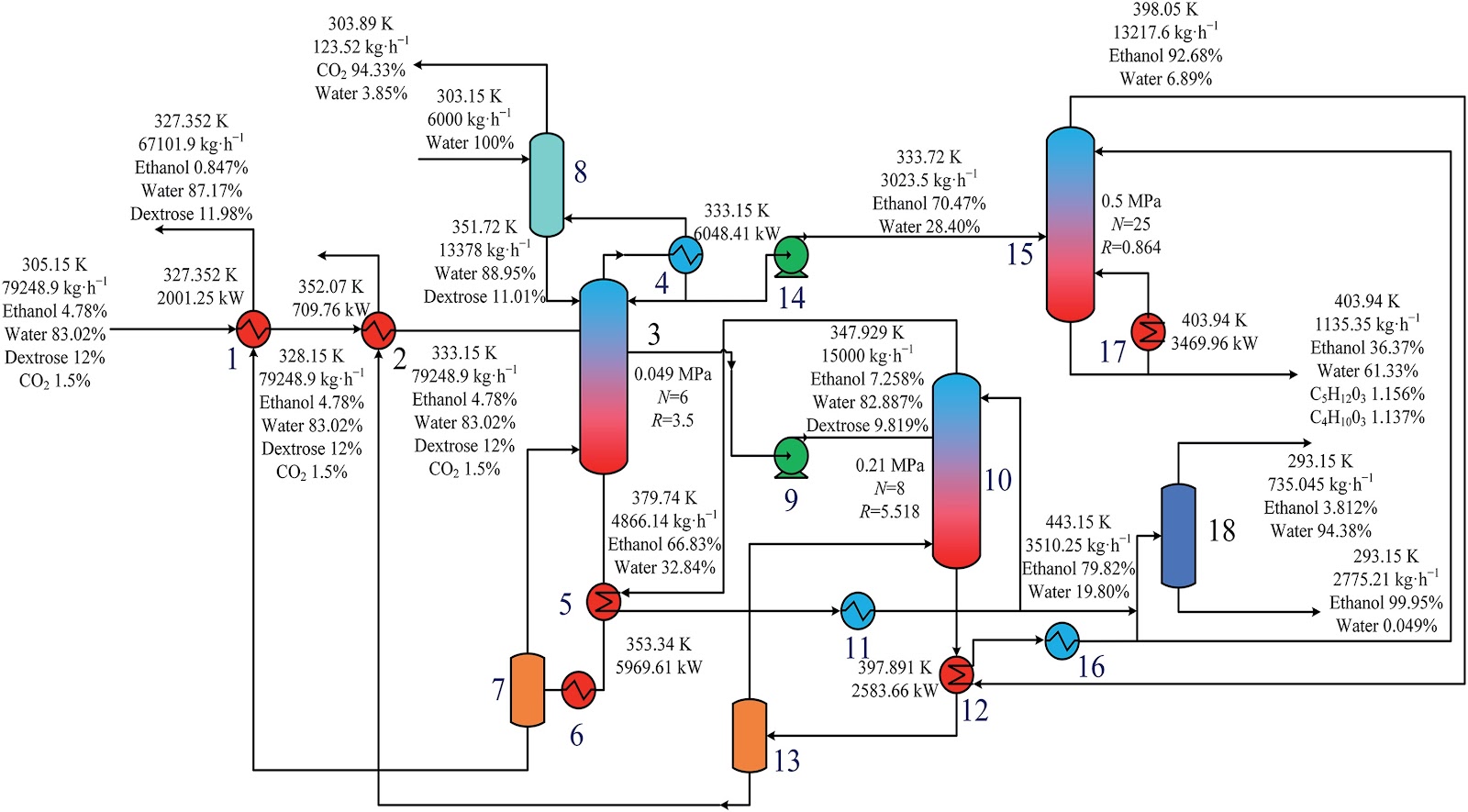
To address the challenges of high energy consumption and prominent costs in the traditional three-columns distillation process for cellulosic fuel ethanol, a distillation—molecular sieve coupling separation process is proposed. This process integrates a three-column (crude distillation column, first distillation column, second distillation column) system with a 3A molecular sieve adsorption deep dehydration unit. A thermal coupling network is constructed via differential pressure design (steam from medium/high-pressure columns as mutual heat sources, reboiler liquid waste heat for feed preheating), and molecular sieve adsorption conditions are optimized. The study first performs a thermodynamic consistency test on the ethanol—water system, determines optimal non-random two-liquid (NRTL) model binary interaction parameters via experimental data regression for Aspen Plus simulation. Aiming at minimum total annual cost (TAC), Aspen Plus is used to optimize process parameters (theoretical tray number, feed location, reflux ratio, side-draw position, etc.). Economic analysis shows this process reduces CO2 emission costs by 27.56%, TAC by 15.58% (to 5.123 × 10⁶ USD·a-1), and increases ethanol purity to >99.6%, providing an effective solution for green, efficient separation.
A cohesion loss model for determining residual strength of deep bedded sandstone
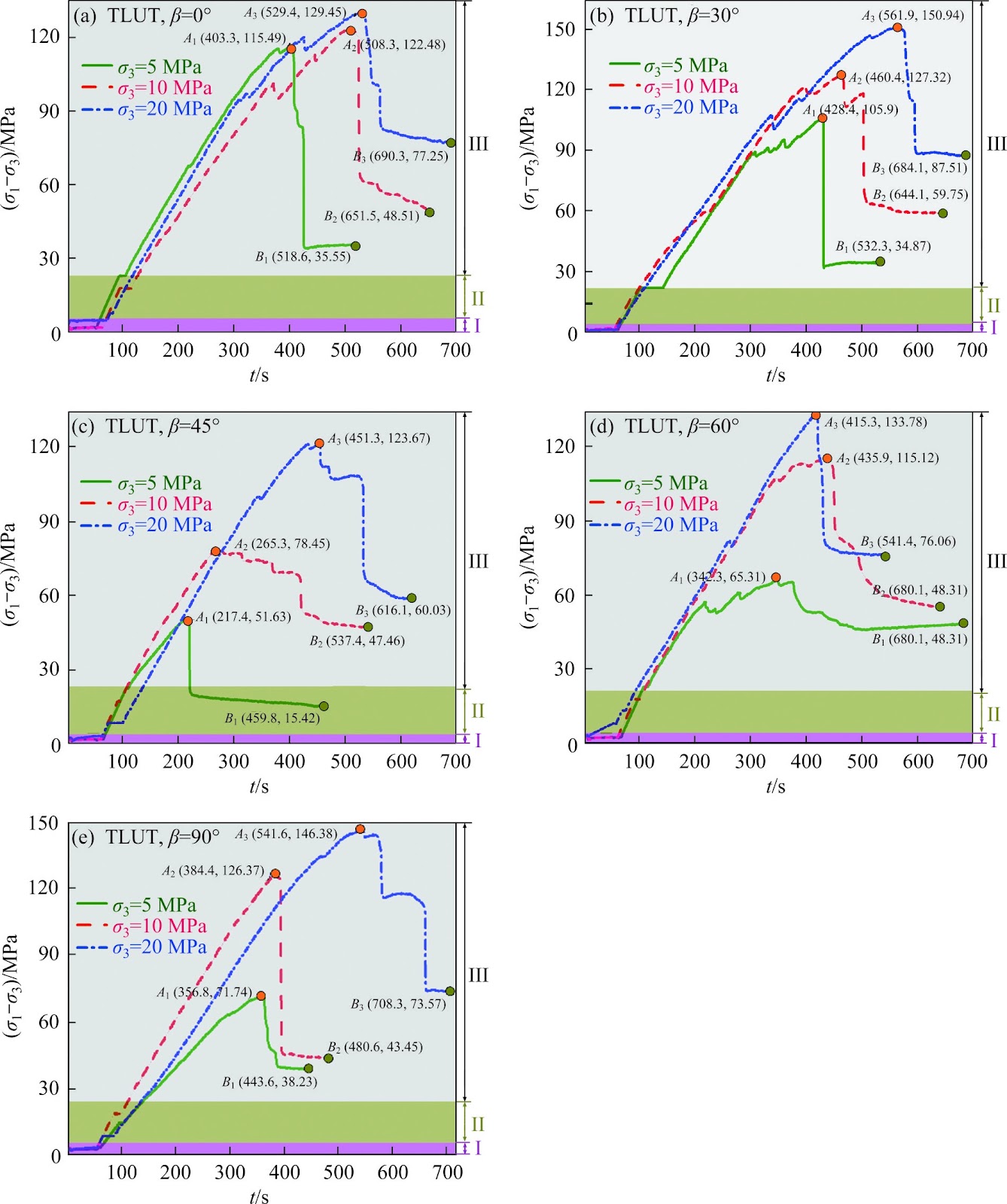
Rock residual strength, as an important input parameter, plays an indispensable role in proposing the reasonable and scientific scheme about stope design, underground tunnel excavation and stability evaluation of deep chambers. Therefore, previous residual strength models of rocks established were reviewed. And corresponding related problems were stated. Subsequently, starting from the effects of bedding and whole life-cycle evolution process, series of triaxial mechanical tests of deep bedded s
Federated model with contrastive learning and adaptive control variates for human activity recognition
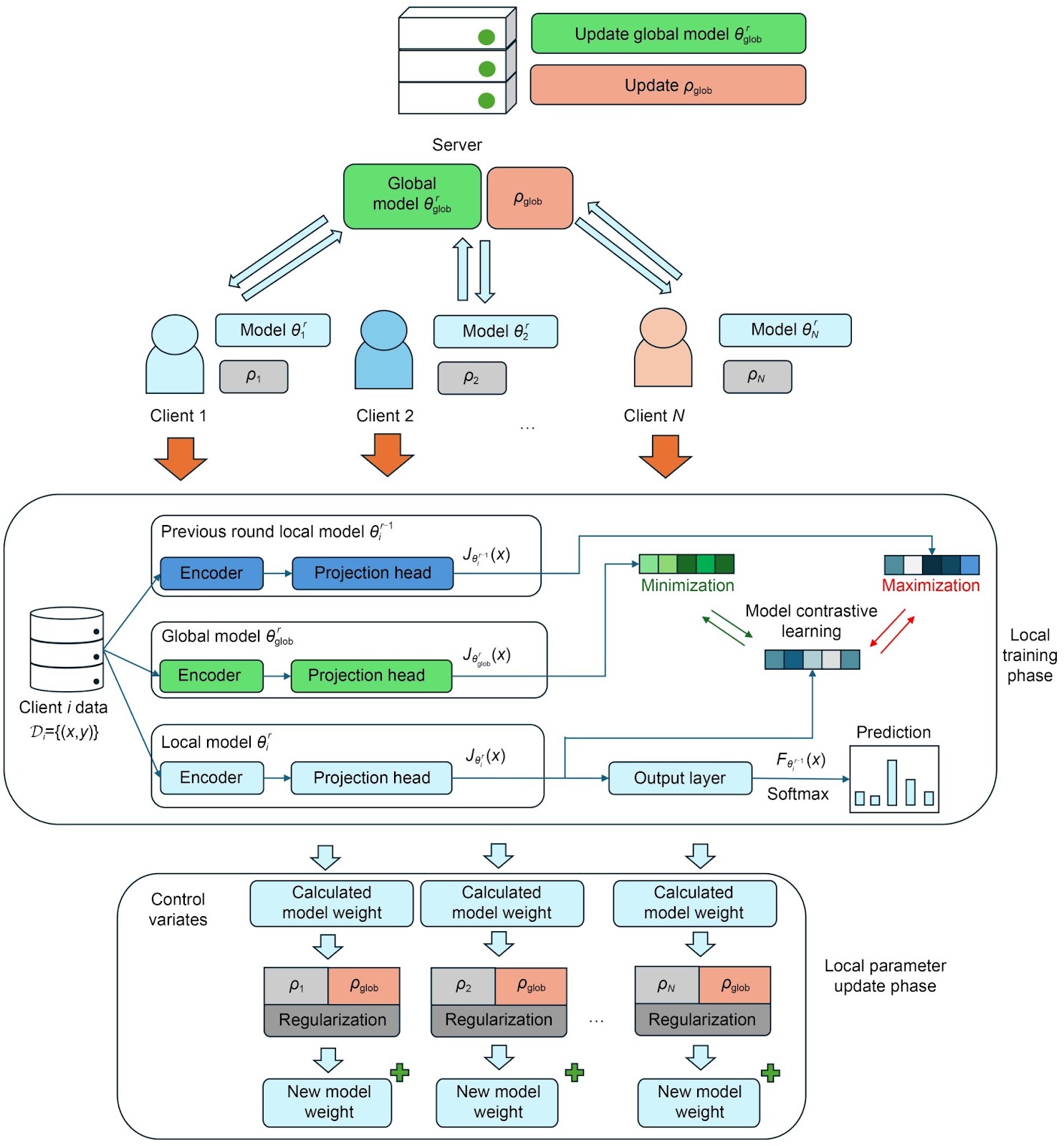
Recent attention to privacy issues demands a communication-safe method for training human activity recognition (HAR) models on client activity data. Federated learning (FL) has become a compelling technique to facilitate model training between the server and clients while preserving data privacy. However, classical FL methods often assume independent and identically distributed (IID) data among clients. This assumption does not hold true in practical scenarios. Human activity in real-world scena