Key Takeaways & Executive Findings
- •• Esterification of xanthan gum with polystyrene maleic anhydride creates an interpenetrating polymer network that significantly enhances shear resistance, overcoming the limitations of hydrogen-bonded double-helix structures. • The optimal mass ratio of xanthan gum to SMA (5:3) yields a modified gel with viscosity of 1578.8 mPa·s at 4 s⁻¹ and 100.7 mPa·s at 383 s⁻¹, more than doubling shear resistance compared to unmodified XG. • The introduced ester bonds strengthen molecular interactions, enabling the gel to withstand strong mechanical stress, thus preventing plastic deformation in gel ink applications. • This work provides a novel approach for developing high-performance gel inks and offers theoretical insights into the rheological behavior of non-Newtonian fluids.
Abstract
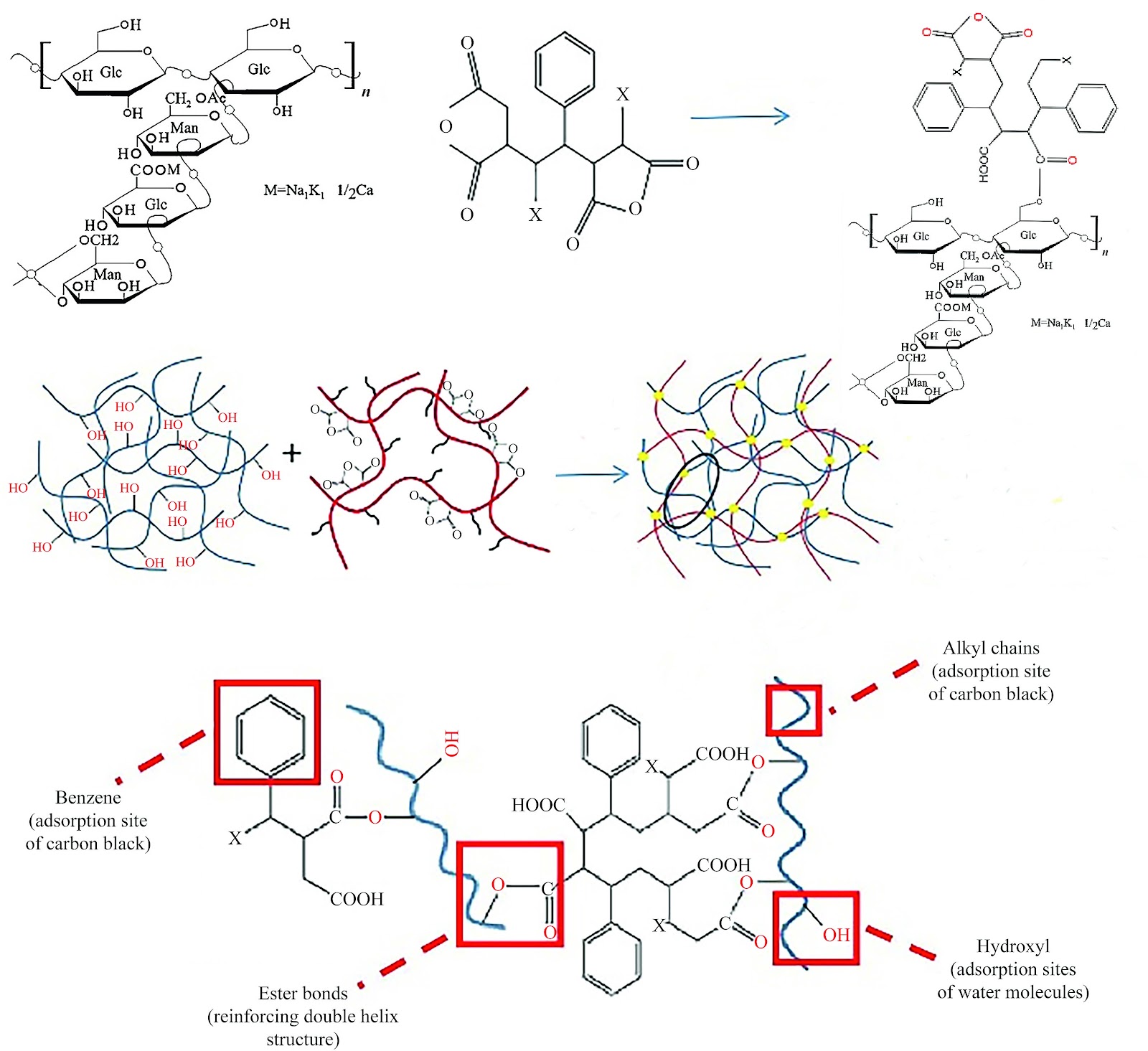
As a natural organic polymer, xanthan gum (XG) can alleviate the plastic deformation of gel ink under strong stress and realize the reasonable regulation of the rheological properties of gel ink. However, as the double-helix structure connected by hydrogen bonds cannot resist the mechanical environment of strong stress, XG shows poor shear resistance. In this study, a polymer gel with interpenetrating polymer network structure was prepared by esterifying XG, taking polystyrene maleic anhydride (SMA) as the modifier. In addition to retaining the excellent rheological properties of XG, the generated polymer gel also exhibited high shear resistance. The optimal addition amount of the esterification reaction modifier was determined as mXG: mSMA = 5:3 according to the gel ink standard. With this amount, the viscosity of the modified xanthan gum (SXG) gel increased to 1578.8 mPa·s and 100.7 mPa·s at shear rates of 4 s⁻¹ and 383 s⁻¹, respectively, and the shear resistance increased more than 2 times compared to the unmodified one. It is because of the ester bond formed by esterification that the reaction strengthens the interaction between molecular segments, enabling the new gel to resist to strong mechanical stress. The new polymer gel studied in this paper and the proposed mechanism of action provide new insights for the development of high-end gel ink and also provide theoretical support for the study of rheological properties of non-Newtonian fluids.
1. Introduction
With the continuous improvement of the public use and awareness of gel pens, it has now become the mainstream product of writing instruments, and the production of gel pens will continue to rise in the future. However, due to the poor performance of the neutral ink, there are many problems with the writing of the filled gel pen, such as ink leakage, breaking, and ink accumulation, and their root cause is that the rheological properties of gel ink cannot match the strict writing requirements.
For decades, polymeric materials have shown a great potential in fluid rheological regulation, and polymers can be divided into natural organic polymer compounds and synthetic organic compounds according to the source of the material. The researchers studied the interaction between various polymers with water molecules and pigment particles in aqueous systems and realized the rheological regulation of gel ink by constructing a dynamic network structure. Souza et al. and Zhang et al. introduced acrylic-based polymers, which use their unique polar group to form hydrogen bonds with water to show excellent water absorption performance and have a three-dimensional network structure to achieve the effect of water storage. However, because acrylic acid mainly relies on an alkaline environment to function, it has the problem of pH sensitivity. Du et al. introduced polyurethane polymers; the imine group on the molecular chain and water molecules can form hydrogen bonds, and the weak polar polyester segments form physical cross-links and play the role of water storage, but the strong polarity and rigid urethane groups are easy to microscopically separate from the polyester chain segments due to their large molecular cohesion energy.
However, with the continuous improvement of the rheological properties and environmental protection requirements of gel ink, as well as the high cost of synthetic polymers, researchers have focused on natural organic polymers with excellent performance. Natural organic polymers are usually composed of thousands of atoms covalently bonded with each other to form organic compounds with particularly large relative molecular masses and repeating structural units. The polymer level is relatively large and usually has a tertiary structure. Its hydrogels have gel-like rheological properties, and it has strong plasticity, providing conditions for regulating the rheological properties of gel ink. Natural organic polymer compounds rely on the hydroxyl group on the molecular chain to hydrogen bond with water molecules adsorbing water molecules near the molecular chain, and the active groups on the molecular chain give polymer compounds a negative charge, the negatively charged side chain and the positively charged pigment particles attract each other to achieve the adsorption effect. Other than that, they rely on the intermolecular force and the winding and cross-linking.
Loading authentic research manuscript (Pages 1–5)...
Xiaokun Li, Mingyi Wang, Zilu Liu, Song Yang, Na Xu, Wei Zhao, Gan Luo, Shoujun Liu (2024). Alleviation of the plastic deformation of gel ink under strong stress through an esterification of xanthan gum reinforcing its double helix structure. Chinese Journal of Chemical Engineering. https://doi.org/10.1016/j_cjche_144878863
Research & Educational Purpose Only:The translations, structured abstracts, analytical annotations, and data reports provided by SinoTechIntel are intended exclusively for academic research, internal corporate R&D, and educational benchmarking. They do not constitute formal engineering, chemical safety, legal, or professional advice.
Copyright & Intellectual Property Notice: Original copyright of the underlying source articles and experimental data remains with the respective authors, institutions, and original publishing journals. SinoTechIntel claims intellectual property only over its proprietary translations, analytical syntheses, and AEO structured enhancements in accordance with international fair use and academic citation principles.
Frequently Asked Questions
What is the main problem with xanthan gum in gel ink applications?
Xanthan gum (XG) has a double-helix structure connected by hydrogen bonds, which cannot resist strong mechanical stress, leading to poor shear resistance and plastic deformation of gel ink under high stress.
How was xanthan gum modified to improve its shear resistance?
Xanthan gum was esterified using polystyrene maleic anhydride (SMA) as a modifier, creating an interpenetrating polymer network structure with ester bonds that strengthen molecular interactions and enhance shear resistance.
What is the optimal ratio of xanthan gum to SMA for gel ink?
The optimal mass ratio of xanthan gum to SMA was determined to be 5:3 (mXG:mSMA) according to gel ink standards, resulting in significantly improved viscosity and shear resistance.
What were the viscosity improvements after modification?
The modified xanthan gum (SXG) gel exhibited a viscosity of 1578.8 mPa·s at a shear rate of 4 s⁻¹ and 100.7 mPa·s at 383 s⁻¹, with shear resistance more than doubled compared to unmodified XG.
What are the broader implications of this research?
This study provides new insights for developing high-end gel inks and offers theoretical support for understanding the rheological properties of non-Newtonian fluids, potentially benefiting various industrial applications.
Related Technical Papers & Translations
Design and optimization of a high-efficiency distillation process for cellulosic fuel ethanol integrated with thermal coupling and molecular sieve adsorption
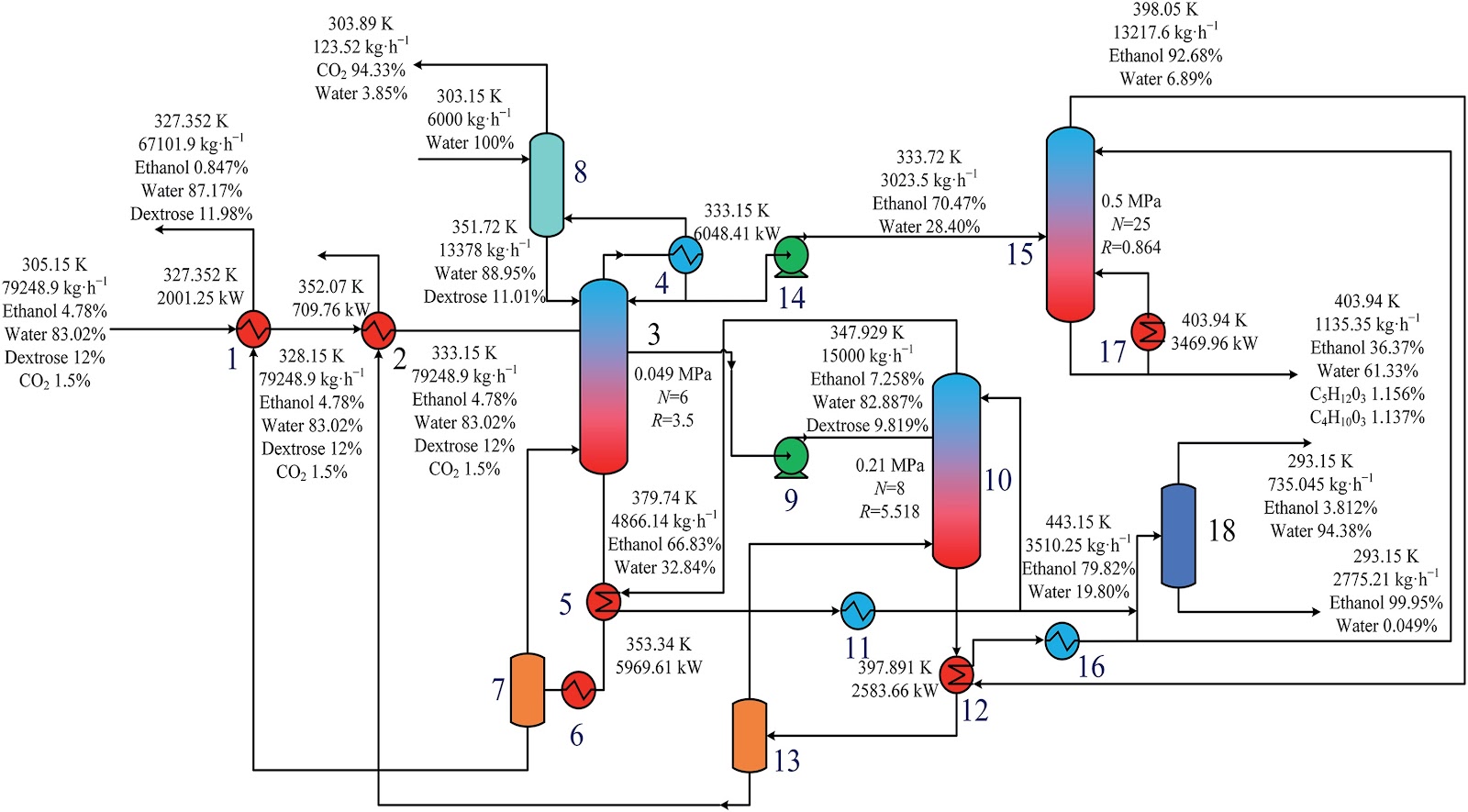
To address the challenges of high energy consumption and prominent costs in the traditional three-columns distillation process for cellulosic fuel ethanol, a distillation—molecular sieve coupling separation process is proposed. This process integrates a three-column (crude distillation column, first distillation column, second distillation column) system with a 3A molecular sieve adsorption deep dehydration unit. A thermal coupling network is constructed via differential pressure design (steam from medium/high-pressure columns as mutual heat sources, reboiler liquid waste heat for feed preheating), and molecular sieve adsorption conditions are optimized. The study first performs a thermodynamic consistency test on the ethanol—water system, determines optimal non-random two-liquid (NRTL) model binary interaction parameters via experimental data regression for Aspen Plus simulation. Aiming at minimum total annual cost (TAC), Aspen Plus is used to optimize process parameters (theoretical tray number, feed location, reflux ratio, side-draw position, etc.). Economic analysis shows this process reduces CO2 emission costs by 27.56%, TAC by 15.58% (to 5.123 × 10⁶ USD·a-1), and increases ethanol purity to >99.6%, providing an effective solution for green, efficient separation.
A cohesion loss model for determining residual strength of deep bedded sandstone
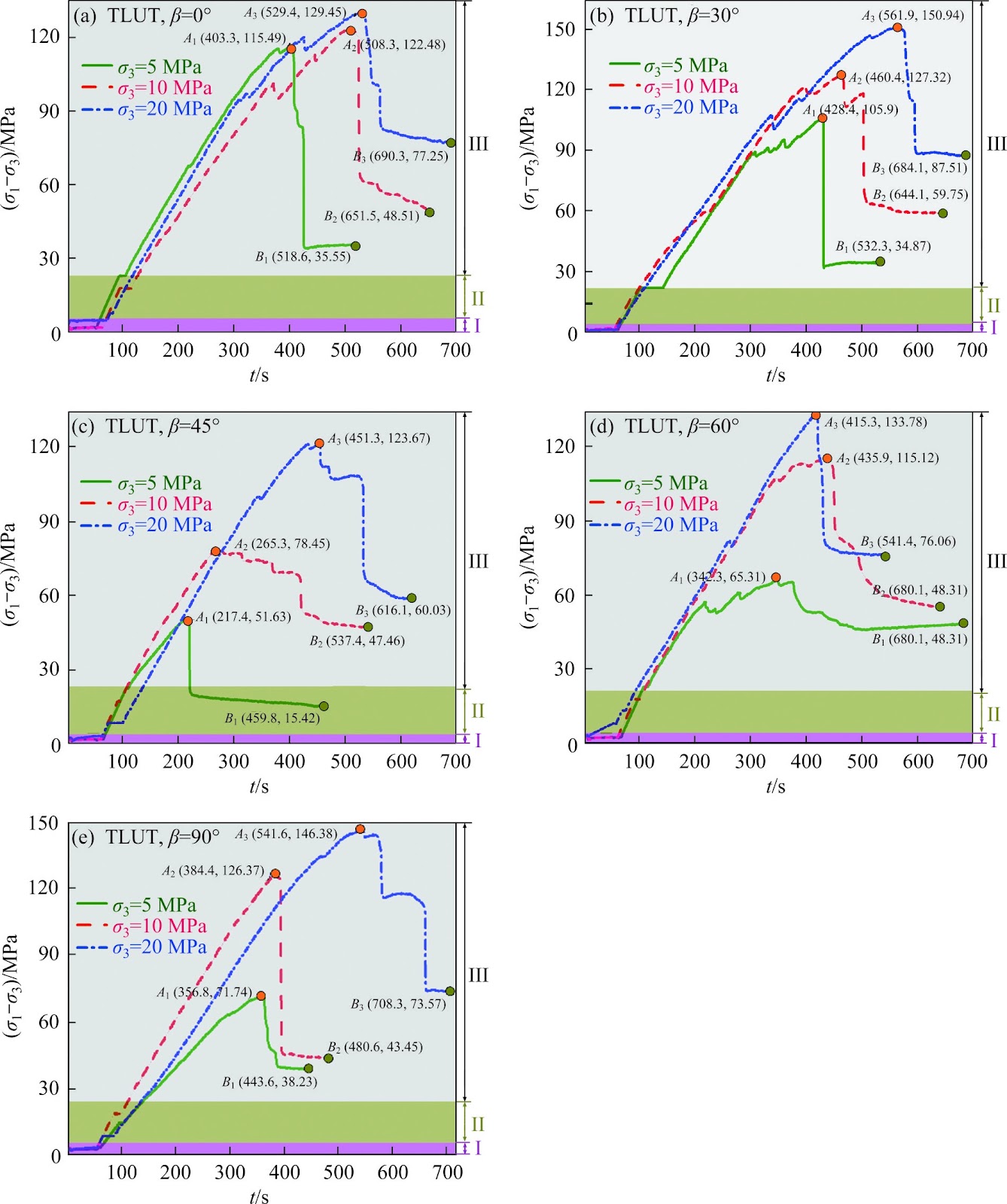
Rock residual strength, as an important input parameter, plays an indispensable role in proposing the reasonable and scientific scheme about stope design, underground tunnel excavation and stability evaluation of deep chambers. Therefore, previous residual strength models of rocks established were reviewed. And corresponding related problems were stated. Subsequently, starting from the effects of bedding and whole life-cycle evolution process, series of triaxial mechanical tests of deep bedded s
Federated model with contrastive learning and adaptive control variates for human activity recognition
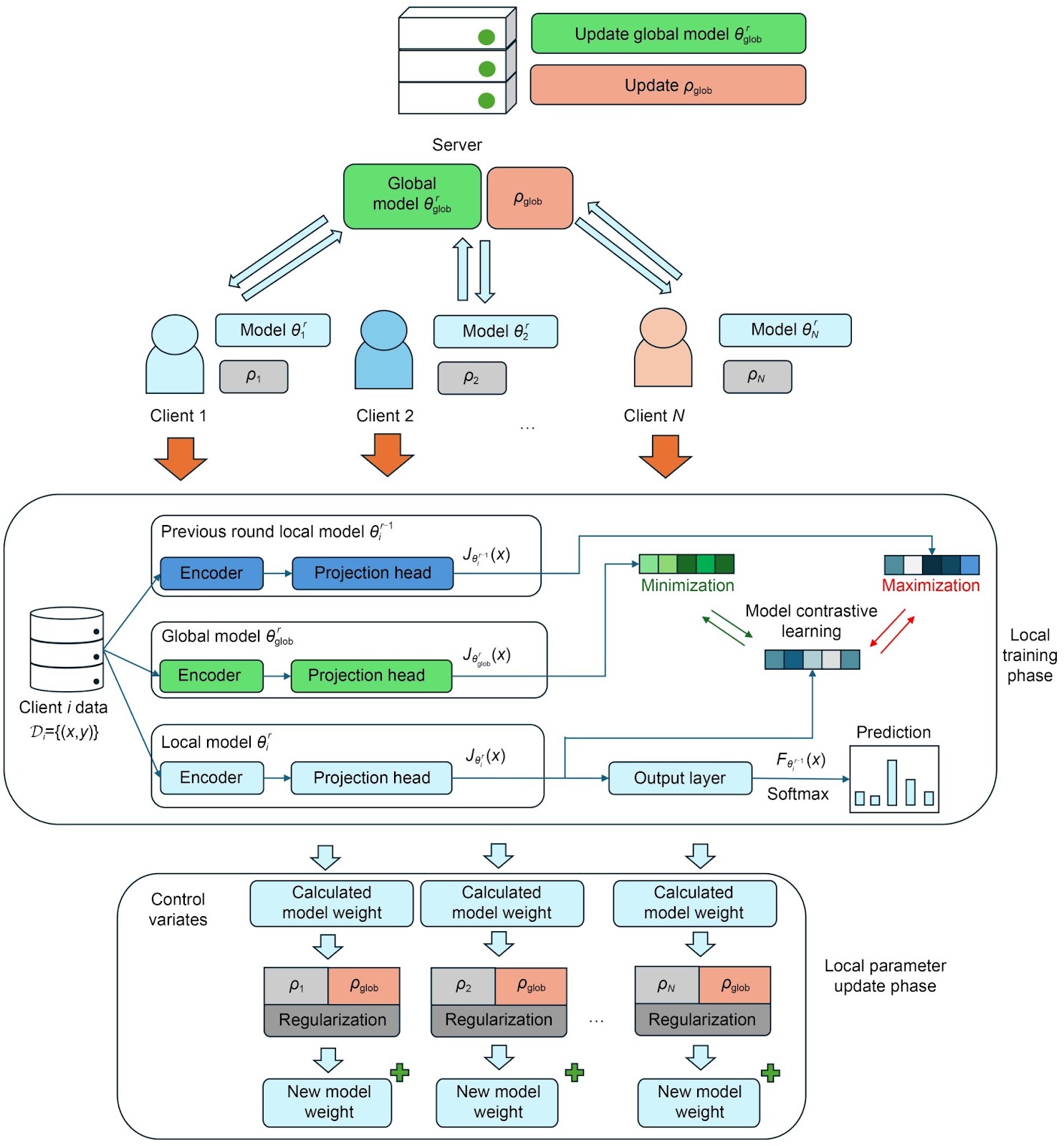
Recent attention to privacy issues demands a communication-safe method for training human activity recognition (HAR) models on client activity data. Federated learning (FL) has become a compelling technique to facilitate model training between the server and clients while preserving data privacy. However, classical FL methods often assume independent and identically distributed (IID) data among clients. This assumption does not hold true in practical scenarios. Human activity in real-world scena