
Key Takeaways & Executive Findings
- •• A high-carbon low-alloy steel achieves a tensile strength of ~2.6 GPa with a total elongation of 12%, demonstrating outstanding strength–ductility synergy. • Refinement of prior austenite grains promotes dislocation martensite over brittle twinned martensite, enhancing ductility without sacrificing strength. • Suppressing the Mf temperature to sub-room temperature via combined alloying (C, Ni, Mn, Si, Cr, Mo) enables ~15 vol% retained austenite at room temperature. • The retained austenite activates the transformation-induced plasticity (TRIP) effect, providing a cost-effective and industrially viable alternative to complex Q&P processes and Mn segregation concerns.
Abstract
Increasing the carbon content in low-alloy steels is one of the most cost-effective and efficient methods for enhancing strength, often resulting in a significant reduction in ductility. In this study, a high-carbon low-alloy steel with a tensile strength of about 2.6 GPa and a total elongation of 12% was developed, through the synergistic applications of two key strategies: i) refine prior austenite grains (PAGs) leading to the transition of quenched microstructure from brittle twinned martensite to dislocation martensite; ii) suppress the martensitic transformation finish temperature to sub-room temperature by the combined effect of high content of carbon and alloying elements, i.e., Ni, Mn, Si, Cr, and Mo. After quenching and tempering, the steel retains approximately 15vol% stable retained austenite (RA), which enhances ductility through the transformation-induced plasticity (TRIP) effect. These strategies collectively contribute to both high strength and excellent ductility, enhancing the strength–ductility synergy in ultra-high strength steels.
1. Introduction
The remarkable mechanical properties of high-strength low-alloy steel have positioned it as a key material in industries, such as automotive, marine, and aerospace [1–3]. However, as the pursuit of higher strength intensifies, a critical challenge emerges that the ductility tends to diminish with increasing strength [4–5]. This paradox complicates manufacturing processes and limits the potential applications of high-strength steel, highlighting the need for innovative solutions to balance these conflicting properties.
It has been demonstrated in many studies that retained austenite (RA) plays a crucial role in enhancing the ductility and toughness of high-strength steels [6–8], offering insights for the development of high-strength steels with improved ductility. Especially, several recent studies on medium- and high-carbon low-alloy steels have demonstrated that the introduction of RA can enable a satisfactory level of ductility while achieving tensile strengths exceeding 2200 MPa, highlighting the potential of RA-assisted design for developing ultrahigh-strength steels with excellent strength–ductility synergy [9–10]. To effectively introduce and stabilize RA, Speer et al. [11] proposed the quenching and partitioning (Q&P) process, which increases the volume fraction of RA at room temperature (RT). The process involves quenching the steel to a temperature between the martensitic start (Ms) and finish (Mf) temperatures, followed by holding or further heating to partition carbon from martensite to austenite. The austenite is then stabilized and retained upon cooling, forming a certain volume of RA after the Q&P process [12].
Although Q&P is effective in improving ductility and toughness compared to traditional quenching and tempering (Q-T), its process is difficult to control. Precise management is required, as quenching must occur within a narrow temperature range between Ms and Mf, both typically above RT [13]. To address this issue, Al was added to medium-carbon steel to promote the formation of carbon-depleted δ-ferrite and carbon-enriched austenite at elevated temperatures [14]. The carbon-enriched austenite, with enhanced stability and Mf temperature lower than RT, facilitates the retention of a high volume of RA after quenching to RT. This approach simplifies the Q&P process by eliminating the requirement for quenching at a temperature above RT. However, the introduction of a high proportion of δ-ferrite limits its strength normally lower than 1200 MPa [14–15]. Recently, He et al. [16] proposed a medium-manganese (approx. 10wt%) room-temperature quenching and partitioning (RT-Q&P) steel based on a similar strategy. This process leverages the positive effect of Mn on austenite stability and lowers the Mf below RT, achieving 10vol% to 30vol% RA after quenching [17]. However, adding approximately 10wt% Mn to stabilize austenite creates a new challenge in the steel smelting process, i.e., Mn segregation [18]. Further effort to reduce Mn content to 4wt% in the implementation of the RT-Q&P process have then been explored, relying on the non-uniform distribution of Mn to achieve the desired effects [19]. Nonetheless, controlling the segregation of Mn element remains a significant challenge in industrial production with medium to high contents of Mn [20].
Loading authentic research manuscript (Pages 1–5)...
Guoyang Li, Feilong Sun, Guilin Wu, Honghui Wu, Junheng Gao, Haitao Zhao, Yuhe Huang, Jun Lu, Chaolei Zhang, Shuize Wang, Xinping Mao (2025). Achieving 2.6 GPa tensile strength with outstanding ductility in high-carbon low-alloy steel. Journal of Mineral Metallurgy and Materials Science. https://doi.org/10.1007/s12613-025-3185-8
Research & Educational Purpose Only:The translations, structured abstracts, analytical annotations, and data reports provided by SinoTechIntel are intended exclusively for academic research, internal corporate R&D, and educational benchmarking. They do not constitute formal engineering, chemical safety, legal, or professional advice.
Copyright & Intellectual Property Notice: Original copyright of the underlying source articles and experimental data remains with the respective authors, institutions, and original publishing journals. SinoTechIntel claims intellectual property only over its proprietary translations, analytical syntheses, and AEO structured enhancements in accordance with international fair use and academic citation principles.
Frequently Asked Questions
What mechanical properties were achieved in this high-carbon low-alloy steel?
The steel achieved a tensile strength of approximately 2.6 GPa and a total elongation of 12%, demonstrating an outstanding combination of ultra-high strength and ductility.
How does the steel retain ductility at such high strength?
The ductility is primarily attributed to the presence of about 15 vol% stable retained austenite, which undergoes transformation-induced plasticity (TRIP) during deformation, enhancing elongation while maintaining high strength.
What are the two key strategies used to achieve the superior mechanical properties?
First, refinement of prior austenite grains promotes the formation of dislocation martensite instead of brittle twinned martensite. Second, the combined alloying elements suppress the martensitic transformation finish temperature to sub-room temperature, enabling retention of austenite at room temperature.
Why is this approach considered industrially advantageous?
The design eliminates the need for precise quenching within a narrow temperature range, simplifying the quenching and partitioning process. It also avoids the use of high manganese content (approx. 10 wt%) that causes segregation issues, offering a more cost-effective and manufacturable route.
What role does the transformation-induced plasticity (TRIP) effect play?
The TRIP effect occurs when metastable retained austenite transforms to martensite upon plastic deformation, providing additional strain hardening and delaying necking, thereby improving ductility and toughness without compromising strength.
Related Technical Papers & Translations
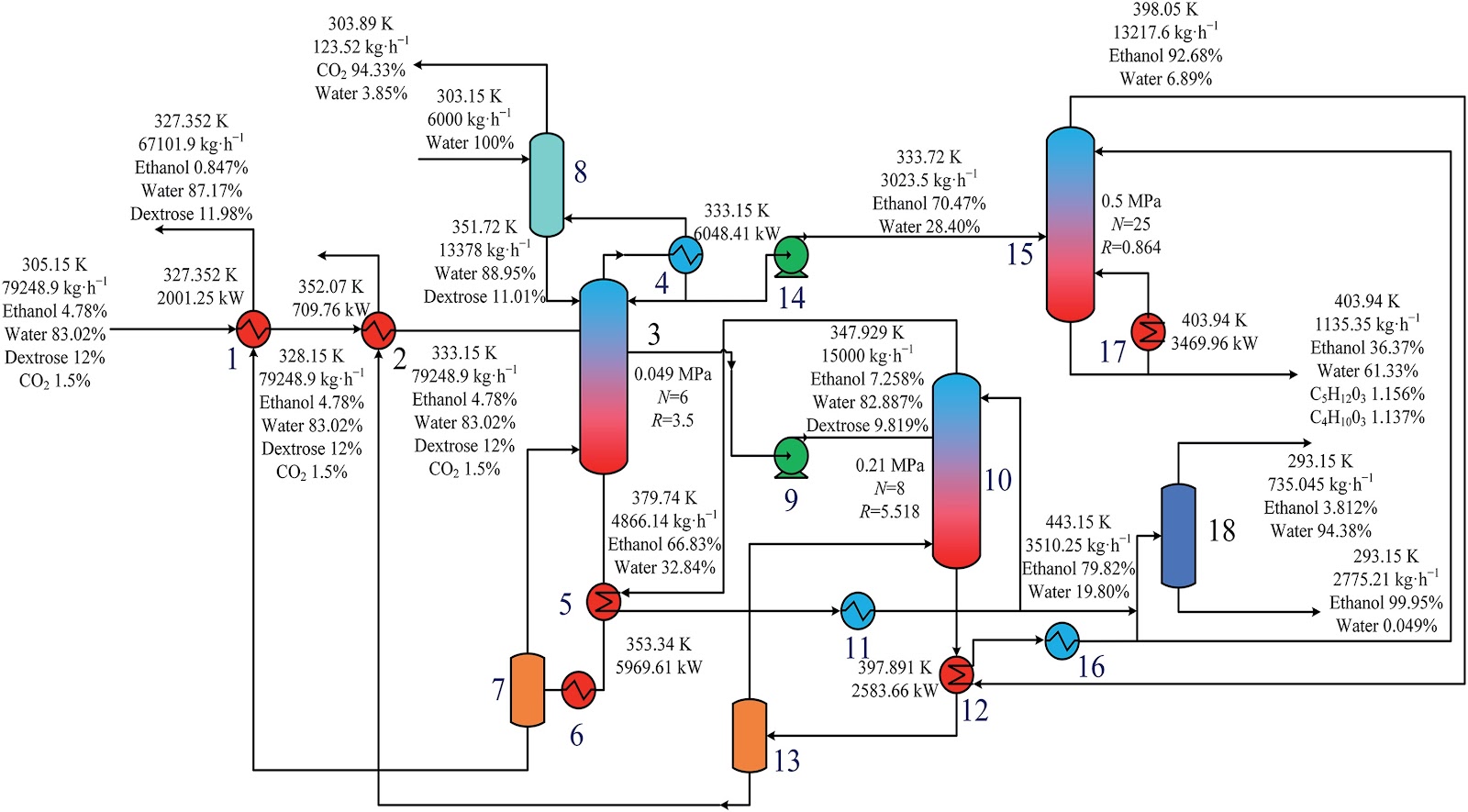
Design and optimization of a high-efficiency distillation process for cellulosic fuel ethanol integrated with thermal coupling and molecular sieve adsorption
To address the challenges of high energy consumption and prominent costs in the traditional three-columns distillation process for cellulosic fuel ethanol, a distillation—molecular sieve coupling separation process is proposed. This process integrates a three-column (crude distillation column, first distillation column, second distillation column) system with a 3A molecular sieve adsorption deep dehydration unit. A thermal coupling network is constructed via differential pressure design (steam from medium/high-pressure columns as mutual heat sources, reboiler liquid waste heat for feed preheating), and molecular sieve adsorption conditions are optimized. The study first performs a thermodynamic consistency test on the ethanol—water system, determines optimal non-random two-liquid (NRTL) model binary interaction parameters via experimental data regression for Aspen Plus simulation. Aiming at minimum total annual cost (TAC), Aspen Plus is used to optimize process parameters (theoretical tray number, feed location, reflux ratio, side-draw position, etc.). Economic analysis shows this process reduces CO2 emission costs by 27.56%, TAC by 15.58% (to 5.123 × 10⁶ USD·a-1), and increases ethanol purity to >99.6%, providing an effective solution for green, efficient separation.
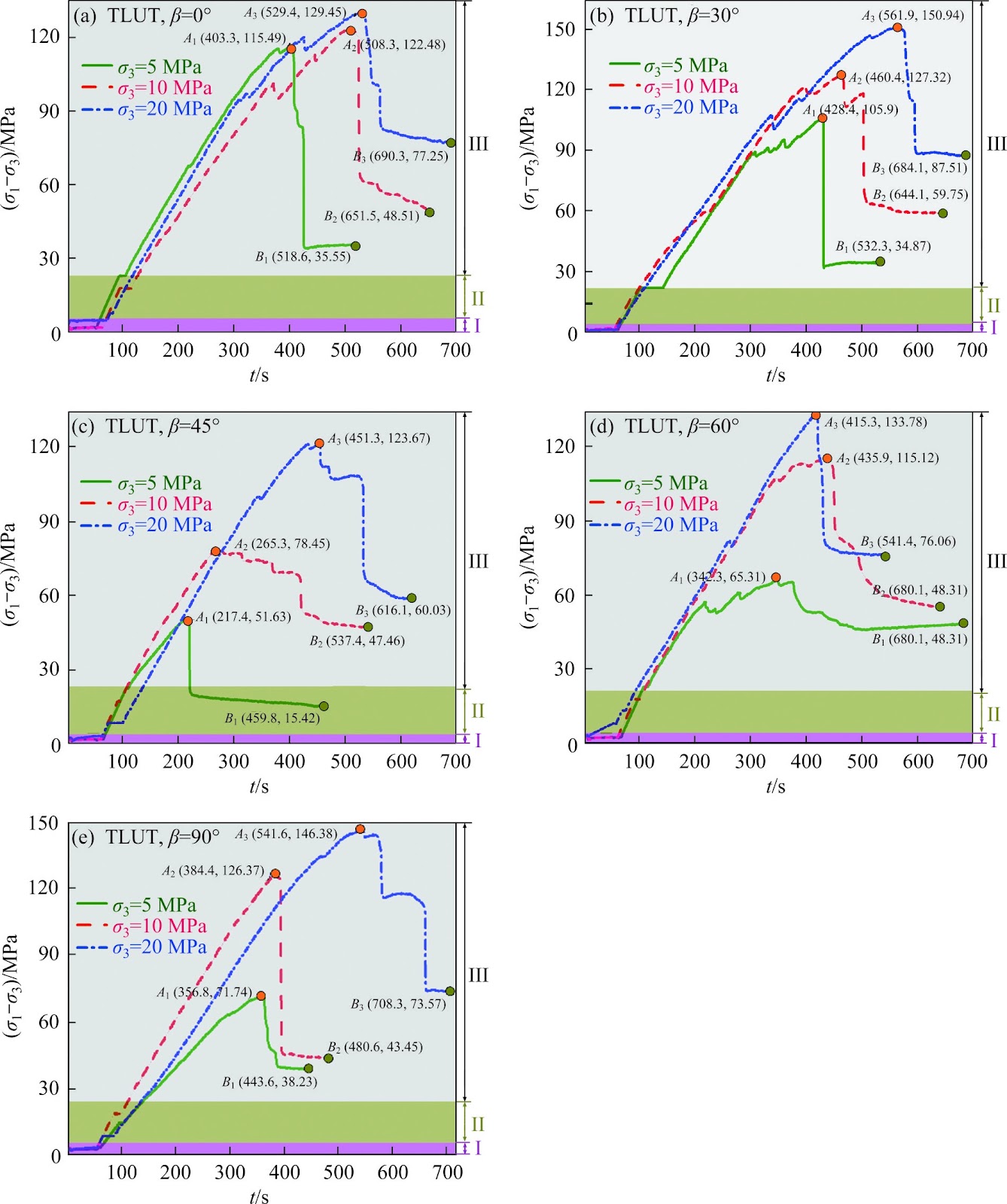
A cohesion loss model for determining residual strength of deep bedded sandstone
Rock residual strength, as an important input parameter, plays an indispensable role in proposing the reasonable and scientific scheme about stope design, underground tunnel excavation and stability evaluation of deep chambers. Therefore, previous residual strength models of rocks established were reviewed. And corresponding related problems were stated. Subsequently, starting from the effects of bedding and whole life-cycle evolution process, series of triaxial mechanical tests of deep bedded s
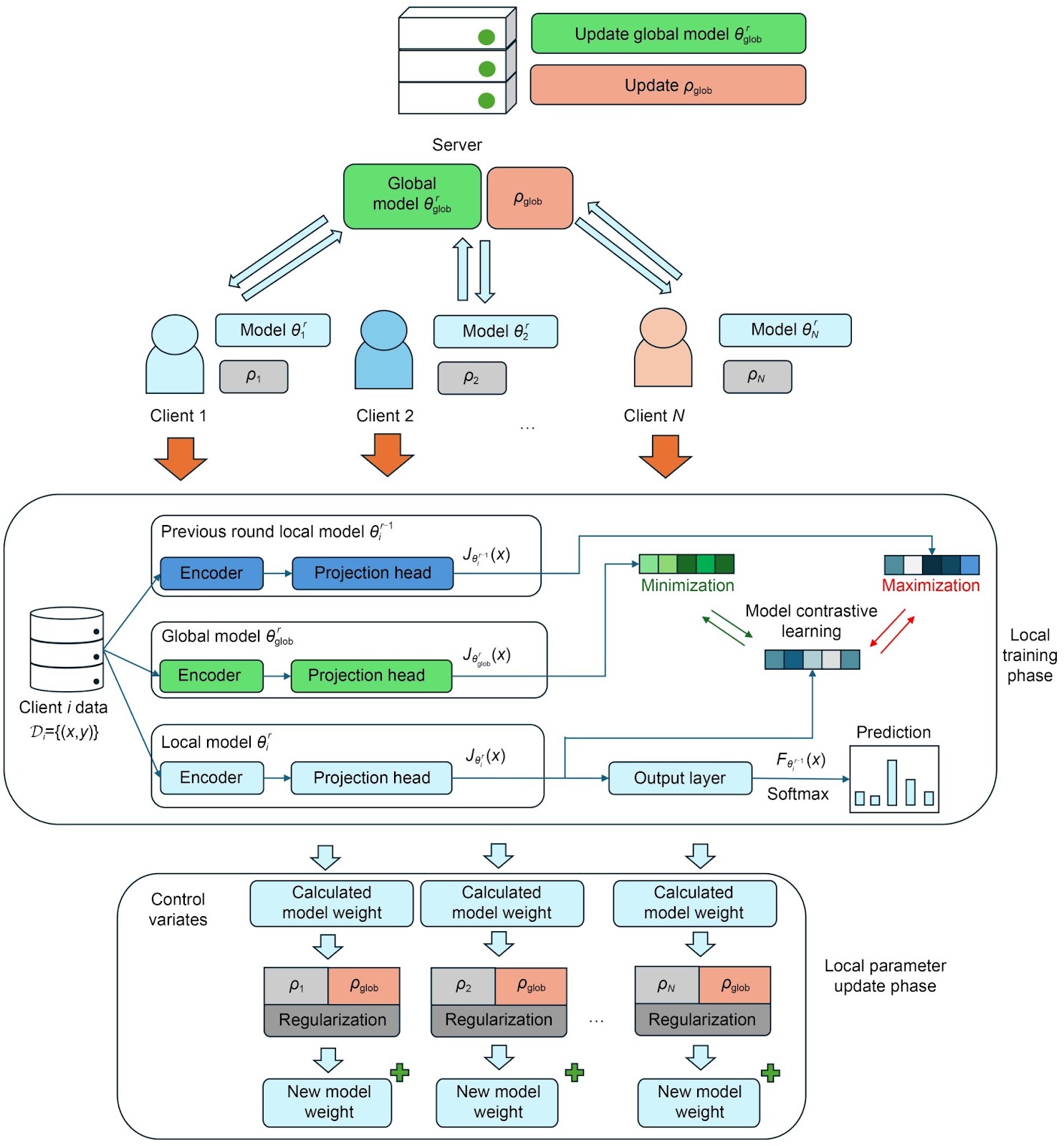
Federated model with contrastive learning and adaptive control variates for human activity recognition
Recent attention to privacy issues demands a communication-safe method for training human activity recognition (HAR) models on client activity data. Federated learning (FL) has become a compelling technique to facilitate model training between the server and clients while preserving data privacy. However, classical FL methods often assume independent and identically distributed (IID) data among clients. This assumption does not hold true in practical scenarios. Human activity in real-world scena