Key Takeaways & Executive Findings
- •• The proposed method integrates raw satellite observation data with RTK to enhance train positioning accuracy by addressing abnormal observations caused by railway environments. • Zero-baseline testing and dual-frequency GNSS detection enable effective identification of cycle slips and gross errors, improving data quality. • A data selection strategy for ambiguity fixing increased fixing percentage by 29.2% and reduced standard deviations in East, North, and Up components by 12.7%, 7.4%, and 12.5%, respectively. • The approach offers a novel perspective for optimizing train satellite-based positioning in challenging railway environments, supporting advanced train control systems.
Abstract
In this paper, a novel train positioning method considering satellite raw observation data was proposed, which aims to promote train positioning performance from an innovative perspective of the train satellite-based positioning error sources. The method focused on overcoming the abnormal observations in satellite observation data caused by railway environment rather than the positioning results. Specifically, the relative positioning experimental platform was built and the zero-baseline method was firstly employed to evaluate the carrier phase data quality, and then, GNSS combined observation models were adopted to construct the detection values, which were applied to judge abnormal-data through the dual-frequency observations. Further, ambiguity fixing optimization was investigated based on observation data selection in partly-blocked environments. The results show that the proposed method can effectively detect and address abnormal observations and improve positioning stability. Cycle slips and gross errors can be detected and identified based on dual-frequency global navigation satellite system data. After adopting the data selection strategy, the ambiguity fixing percentage was improved by 29.2%, and the standard deviation in the East, North, and Up components was enhanced by 12.7%, 7.4%, and 12.5%, respectively. The proposed method can provide references for train positioning performance optimization in railway environments from the perspective of positioning error sources.
1. Introduction
The train positioning system plays a vital role in the rapid development of train operation control technology [1], based on it and the successful application of the moving block system in the communication-based train control (CBTC) system, following trains can utilize the rear of the preceding train as the target point, which means that trains can be operated with an adequate margin calculated by the absolute braking distance rather than employing fixed blocks [2]. However, the maximum capacity for operational density has already reached within current safety limits. In this case, further shortening the tracking interval to achieve train group dynamic tracking operation is inevitable trend in surpassing the limitations of operational capacity and train dispatching efficiency [3]. Note that train dynamic tracking involves train driving strategy optimization, which is a typical dynamic optimization problem [4]. When addressing optimization problems, appropriately responding to environmental changes and effectively managing these dynamic behaviors are significant [5]. Particularly, due to the existence of the dynamic behaviors, both constraints and objective functions are changeable with time [6]. Hence, in order to ensure the stable control problem of tracking operation, trains need to attain the real-time and accurate state information of each other [7], and the train dynamic position is of utmost importance. At this time, higher requirements are placed on the train positioning system.
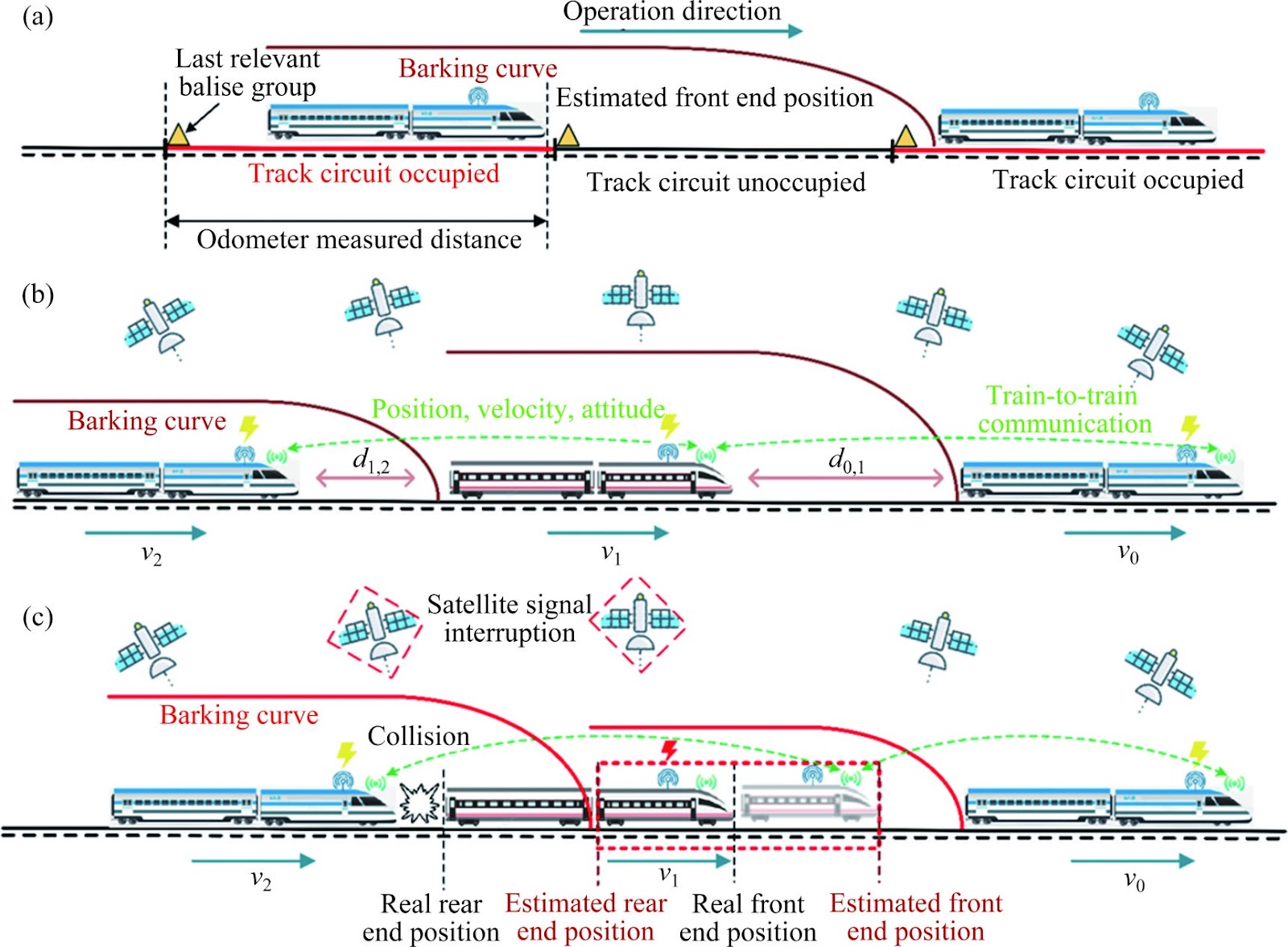
Compared with the current train positioning method based on balise/odometer, as shown in Figure 1, satellite-based train positioning technology has significant advantages in shortening operation interval relied on high-precision credible positioning service and movement authority, which is the basis for safe cooperative operation with absolute time, relative velocity and dynamic position [8].
Loading authentic research manuscript (Pages 1–5)...
YUCHI Zhen-xin, LI Wei, GAO Shi-juan, CHEN Chun-yang, HUANG Su-su, JIANG Ji-xiong (2025). A satellite observation data considered train positioning optimization method with RTK. Journal of Central South University. https://doi.org/10.1007/s11771-025-5916-4
Research & Educational Purpose Only:The translations, structured abstracts, analytical annotations, and data reports provided by SinoTechIntel are intended exclusively for academic research, internal corporate R&D, and educational benchmarking. They do not constitute formal engineering, chemical safety, legal, or professional advice.
Copyright & Intellectual Property Notice: Original copyright of the underlying source articles and experimental data remains with the respective authors, institutions, and original publishing journals. SinoTechIntel claims intellectual property only over its proprietary translations, analytical syntheses, and AEO structured enhancements in accordance with international fair use and academic citation principles.
Frequently Asked Questions
How does the proposed method improve train positioning?
The proposed method uses raw satellite observation data and RTK technology to detect and correct anomalies such as cycle slips and gross errors, thereby increasing positioning stability and accuracy in railway environments.
What is the zero-baseline method used for in this study?
The zero-baseline method is used to evaluate carrier phase data quality before applying detection models for abnormal observations, ensuring reliable data for subsequent GNSS processing.
What specific results were achieved in the research?
The ambiguity fixing percentage increased by 29.2%, and the standard deviation in the East, North, and Up components improved by 12.7%, 7.4%, and 12.5%, respectively.
What environments are targeted by this method?
The method is designed for railway environments with partly-blocked satellite signals, where abnormal observations are common, such as tunnels, cuttings, and urban canyons.
Why is this research significant for train control systems?
It provides a more reliable satellite-based positioning approach, which is essential for advanced train operation control systems like dynamic tracking and moving block signaling, enhancing operational capacity and safety.
Related Technical Papers & Translations
Design and optimization of a high-efficiency distillation process for cellulosic fuel ethanol integrated with thermal coupling and molecular sieve adsorption
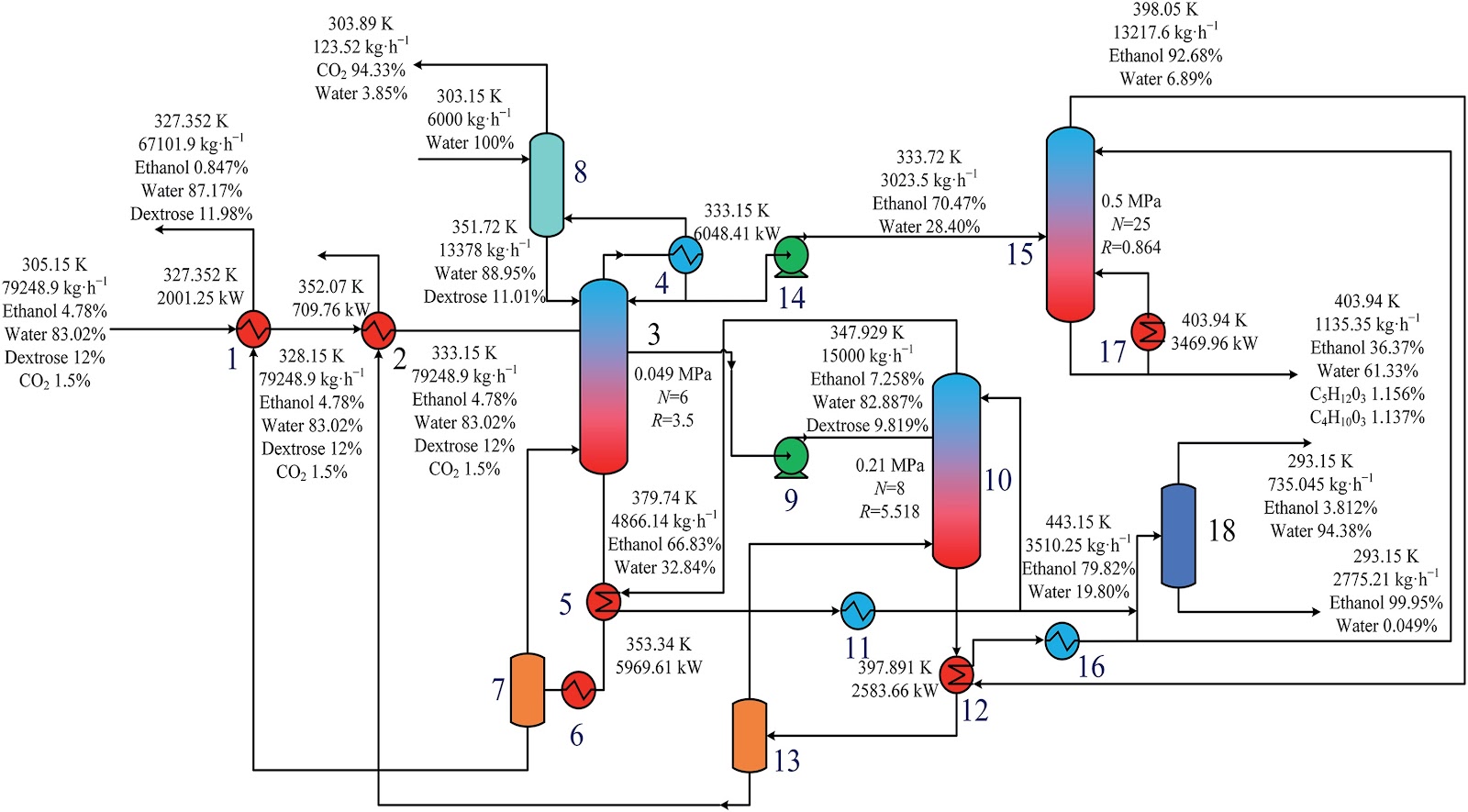
To address the challenges of high energy consumption and prominent costs in the traditional three-columns distillation process for cellulosic fuel ethanol, a distillation—molecular sieve coupling separation process is proposed. This process integrates a three-column (crude distillation column, first distillation column, second distillation column) system with a 3A molecular sieve adsorption deep dehydration unit. A thermal coupling network is constructed via differential pressure design (steam from medium/high-pressure columns as mutual heat sources, reboiler liquid waste heat for feed preheating), and molecular sieve adsorption conditions are optimized. The study first performs a thermodynamic consistency test on the ethanol—water system, determines optimal non-random two-liquid (NRTL) model binary interaction parameters via experimental data regression for Aspen Plus simulation. Aiming at minimum total annual cost (TAC), Aspen Plus is used to optimize process parameters (theoretical tray number, feed location, reflux ratio, side-draw position, etc.). Economic analysis shows this process reduces CO2 emission costs by 27.56%, TAC by 15.58% (to 5.123 × 10⁶ USD·a-1), and increases ethanol purity to >99.6%, providing an effective solution for green, efficient separation.
A cohesion loss model for determining residual strength of deep bedded sandstone
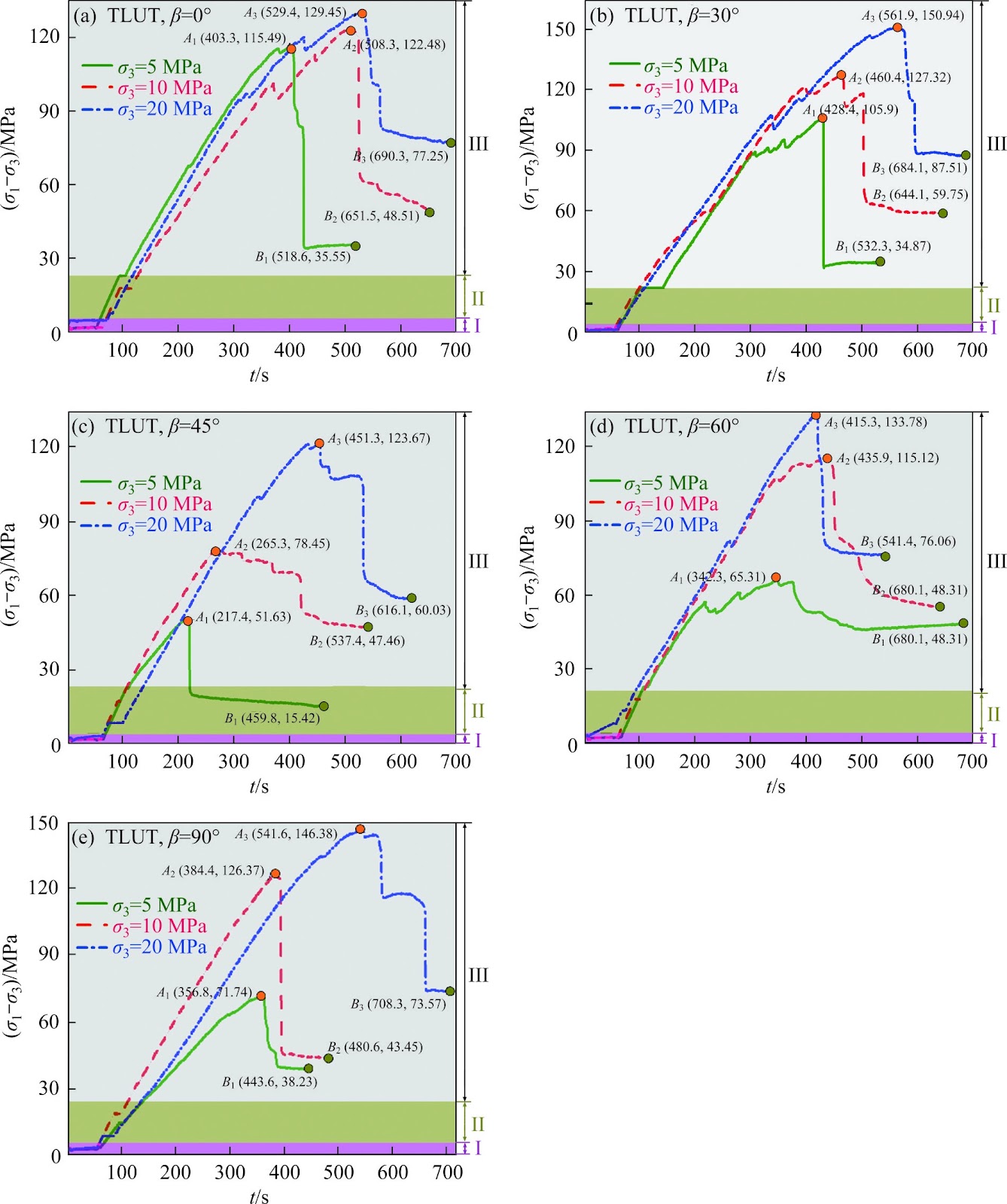
Rock residual strength, as an important input parameter, plays an indispensable role in proposing the reasonable and scientific scheme about stope design, underground tunnel excavation and stability evaluation of deep chambers. Therefore, previous residual strength models of rocks established were reviewed. And corresponding related problems were stated. Subsequently, starting from the effects of bedding and whole life-cycle evolution process, series of triaxial mechanical tests of deep bedded s
Federated model with contrastive learning and adaptive control variates for human activity recognition
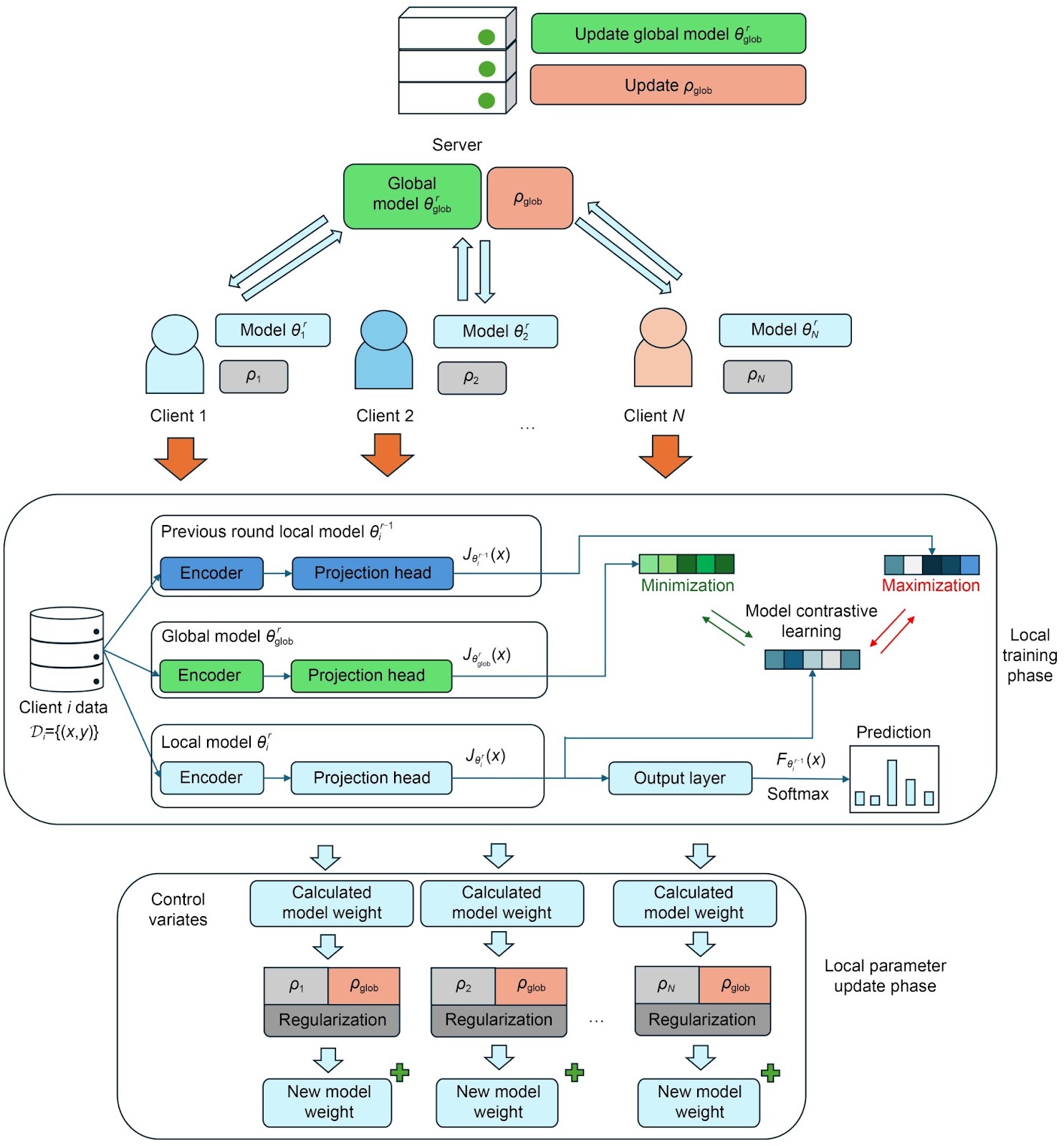
Recent attention to privacy issues demands a communication-safe method for training human activity recognition (HAR) models on client activity data. Federated learning (FL) has become a compelling technique to facilitate model training between the server and clients while preserving data privacy. However, classical FL methods often assume independent and identically distributed (IID) data among clients. This assumption does not hold true in practical scenarios. Human activity in real-world scena