Key Takeaways & Executive Findings
- •• BCDOM content in biochar ranges from 0.17 to 37.03 mg/g, influenced by feedstock, pyrolysis temperature, and extraction conditions. • Protein-like components of BCDOM interact with heavy metals via complexation and adsorption, enhancing their immobilization onto biochar. • BCDOM enhances organic pollutant adsorption through π−π interactions, hydrogen bonding, and redox processes. • BCDOM promotes plant growth by stimulating microbial activity, supplying nutrients, and improving soil properties, yet its transport and fate in soil remain poorly understood.
Abstract
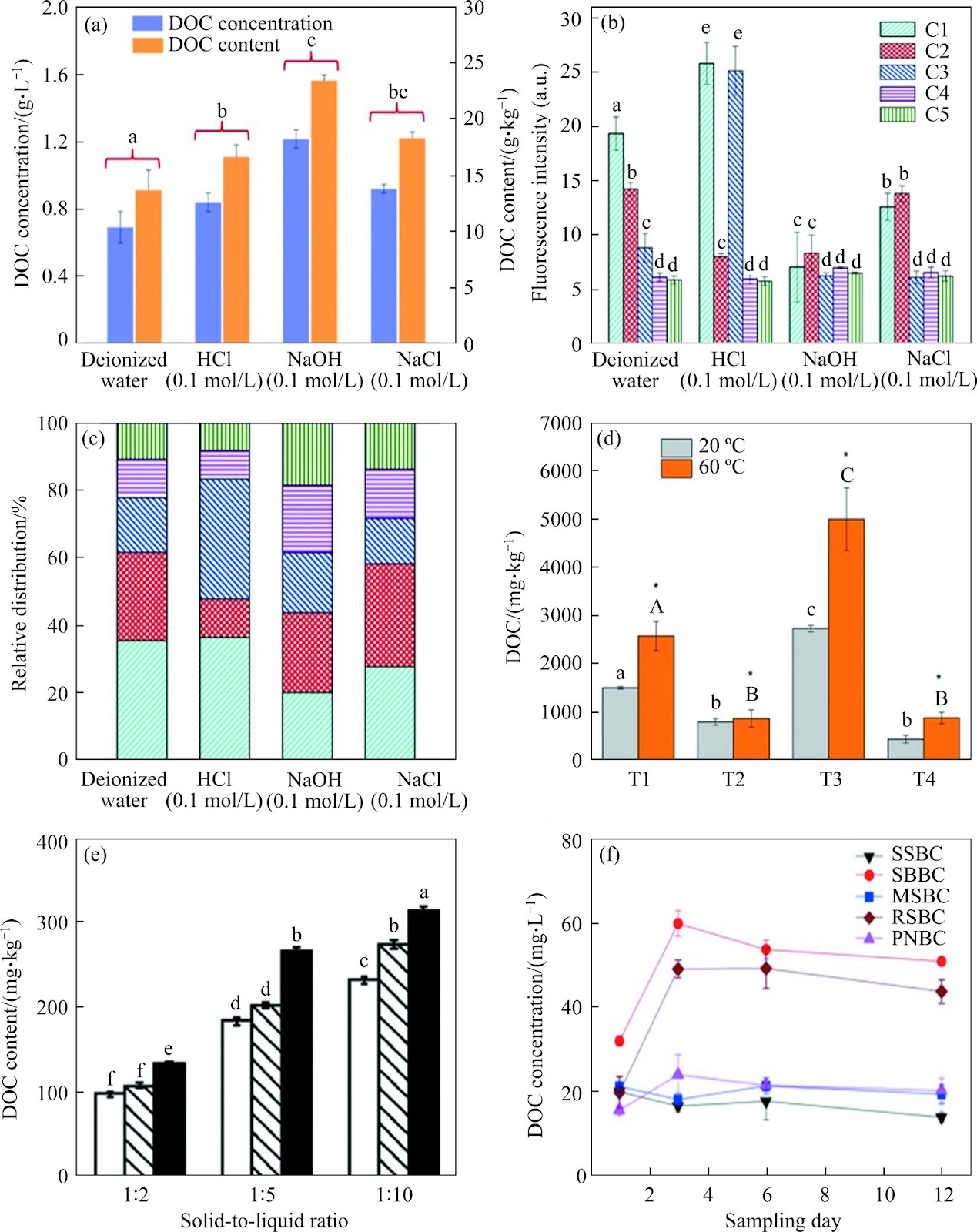
Biochar-derived dissolved organic matter (BCDOM), an essential component of biochar, plays a vital role in regulating the physicochemical and biological properties of soils during biochar application. However, the influence of BCDOM on soil organisms has not been clearly explained. Hence, this review aims to discuss the factors affecting BCDOM and its interaction with soil substances including organic pollutants, heavy metals, and microorganisms. Results displayed that the quantity of BCDOM ranges from 0.17 to 37.03 mg/g, which was influenced by feedstock, preparation methods of biochar, and extraction methods. With the decrease in lignin content of feedstocks, carbonization temperature, and acidity of extraction solution, the content of BCDOM increased. Through complexation and adsorption, protein-like components in BCDOM interact with heavy metals, promoting the adsorption and immobilization of heavy metals onto biochar. Furthermore, BCDOM enhances the adsorption of organic pollutants by biochar through π−π interactions, hydrogen bonding, and redox processes. More importantly, BCDOM promotes plant growth by enhancing microbial activities, providing nutrients, and improving soil properties. However, the transport and fate of BCDOM in soil have not been well studied, and more researches are needed to explore the interaction mechanisms between BCDOM and soil organisms.
1. Introduction
Environmental pollution is an increasingly serious problem that has attracted widespread attention. In particular, soil pollution caused by heavy metals and organic contaminants has increased dramatically over the last 30 years [1−5]. Therefore, to ensure sustainable agricultural development, it is urgent to search for a cost-effective and environmentally friendly approach to reduce soil pollution.
Biochar, also known as bio-coal, is generally produced by pyrolysis of natural and waste biomass under an inert atmosphere at a wide range of temperatures. Due to its unique physicochemical properties, biochar has received much attention over the past two decades for its ability to modify soil properties [6−8], clean fuel production [9, 10], waste management strategies [11−14], environmental remediation [15−17], and climate change mitigation [18, 19]. Previous research has indicated that biochar can immobilize heavy metals and organic contaminants, thereby reducing soil pollution [20−25]. One study indicated that after the application of multiple-modified biochar, the extractable Cu(II) and Cd(II) were decreased by 100% and 92.0% for farmland soil, and 100% and 90.3% for vegetable soil, respectively [26]. In addition, the application of biochar to soil could promote soil bacteria growth, supply nutrients, and modify soil structure and properties, including soil pH, organic carbon, available phosphorous and potassium, electrical conductivity, and water retention, thus increasing crop yields [27−29].
Due to the above advantages, biochar has been favored by a wide range of research in the field of soil remediation in recent years [25, 30]. When biochar is applied to the soil, it can release dissolved organic matter (BCDOM) into the soil environment under the conditions of irrigation or natural rainfall, thus changing the properties of the soil by binding soil particles together, leading to better water retention, lower erosion, and higher soil porosity [31, 32]. Generally, BCDOM is composed of organic molecules that can pass through a 0.45 μm filter, including humic biopolymers, hydrophobic organic carbon, and some acids with low molecular weight [33−36]. Although BCDOM has a small proportion in biochar (0.17 −37.03 (mg/g)), it has received noticeable attention as an essential part of biochar and plays an important role in the application of biochar for soil remediation [13, 37, 38]. Because of the abundance of functional groups, BCDOM can interact with some soil contaminants including heavy metals, organic pollutants, and biologicals, which can alter the transport and fate of BCDOM and soil pollutants [39−41]. In addition, BCDOM can serve as a food source for soil microorganisms, stimulating microbial activity and increasing soil fertility and nutrient cycling.
Loading authentic research manuscript (Pages 1–5)...
ZHANG Xiu-xiu, NAN Hong-yan, LIU Gong-gang, SHOW Pau-Loke, WANG Chong-qing (2025). A review on dissolved organic matter derived from biochar in soil: Characterizations, interaction with pollutants, and transformation. Journal of Central South University. https://doi.org/10.1007/s11771-025-5861-2
Research & Educational Purpose Only:The translations, structured abstracts, analytical annotations, and data reports provided by SinoTechIntel are intended exclusively for academic research, internal corporate R&D, and educational benchmarking. They do not constitute formal engineering, chemical safety, legal, or professional advice.
Copyright & Intellectual Property Notice: Original copyright of the underlying source articles and experimental data remains with the respective authors, institutions, and original publishing journals. SinoTechIntel claims intellectual property only over its proprietary translations, analytical syntheses, and AEO structured enhancements in accordance with international fair use and academic citation principles.
Frequently Asked Questions
What is biochar-derived dissolved organic matter (BCDOM)?
BCDOM is the fraction of biochar that can pass through a 0.45 μm filter, including humic biopolymers, hydrophobic organic carbon, and low-molecular-weight acids. It plays a vital role in soil properties and pollutant interactions.
How does BCDOM affect heavy metal immobilization?
Protein-like components in BCDOM interact with heavy metals through complexation and adsorption, promoting the adsorption and immobilization of heavy metals onto biochar.
What factors influence the quantity of BCDOM?
The quantity of BCDOM ranges from 0.17 to 37.03 mg/g and is influenced by feedstock type, biochar preparation methods, and extraction methods. Lower lignin content, lower carbonization temperature, and more acidic extraction solutions increase BCDOM content.
Can BCDOM enhance organic pollutant adsorption?
Yes, BCDOM enhances the adsorption of organic pollutants by biochar through π−π interactions, hydrogen bonding, and redox processes.
What is the role of BCDOM in promoting plant growth?
BCDOM promotes plant growth by enhancing microbial activities, providing nutrients, and improving soil properties.
Related Technical Papers & Translations
Design and optimization of a high-efficiency distillation process for cellulosic fuel ethanol integrated with thermal coupling and molecular sieve adsorption
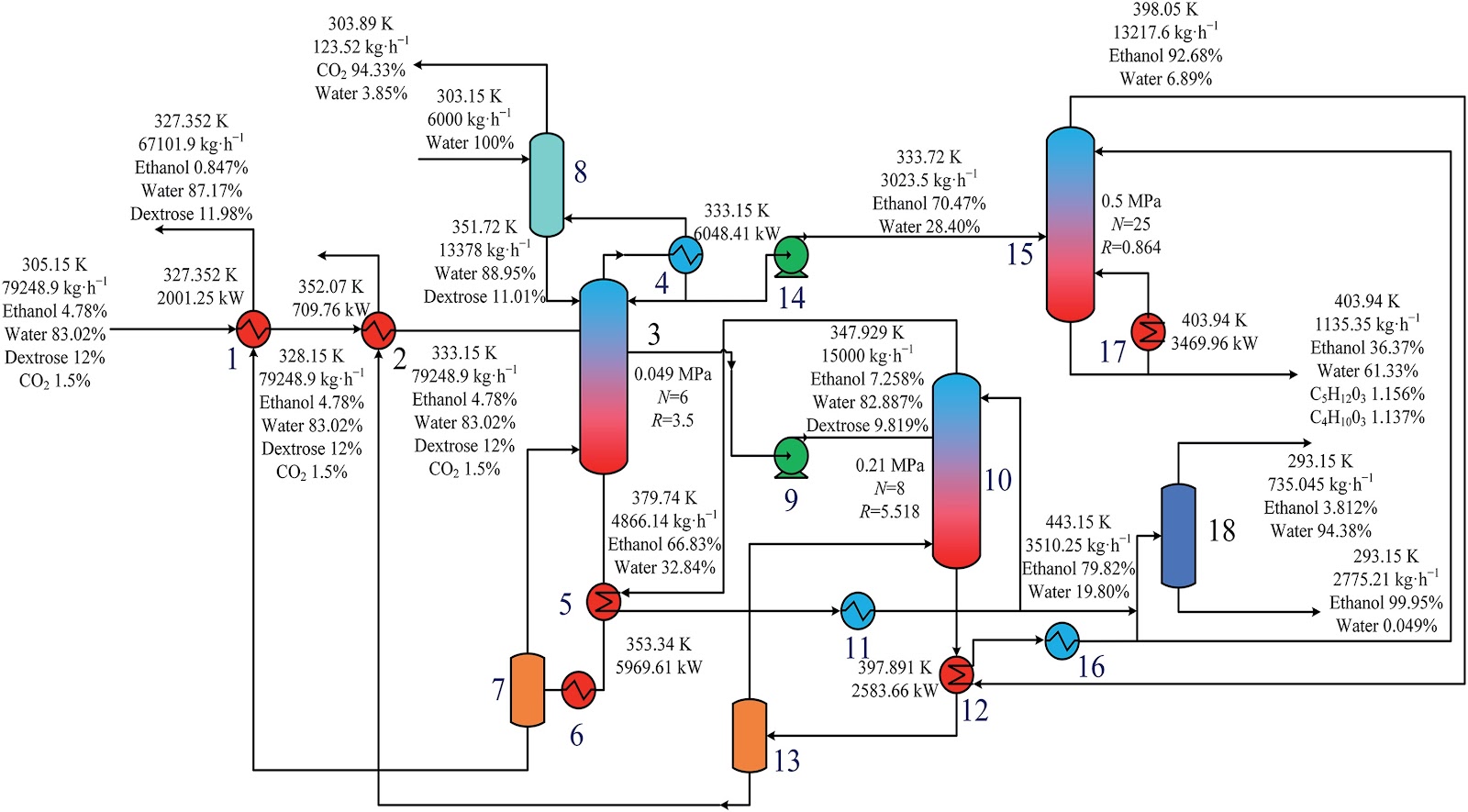
To address the challenges of high energy consumption and prominent costs in the traditional three-columns distillation process for cellulosic fuel ethanol, a distillation—molecular sieve coupling separation process is proposed. This process integrates a three-column (crude distillation column, first distillation column, second distillation column) system with a 3A molecular sieve adsorption deep dehydration unit. A thermal coupling network is constructed via differential pressure design (steam from medium/high-pressure columns as mutual heat sources, reboiler liquid waste heat for feed preheating), and molecular sieve adsorption conditions are optimized. The study first performs a thermodynamic consistency test on the ethanol—water system, determines optimal non-random two-liquid (NRTL) model binary interaction parameters via experimental data regression for Aspen Plus simulation. Aiming at minimum total annual cost (TAC), Aspen Plus is used to optimize process parameters (theoretical tray number, feed location, reflux ratio, side-draw position, etc.). Economic analysis shows this process reduces CO2 emission costs by 27.56%, TAC by 15.58% (to 5.123 × 10⁶ USD·a-1), and increases ethanol purity to >99.6%, providing an effective solution for green, efficient separation.
A cohesion loss model for determining residual strength of deep bedded sandstone
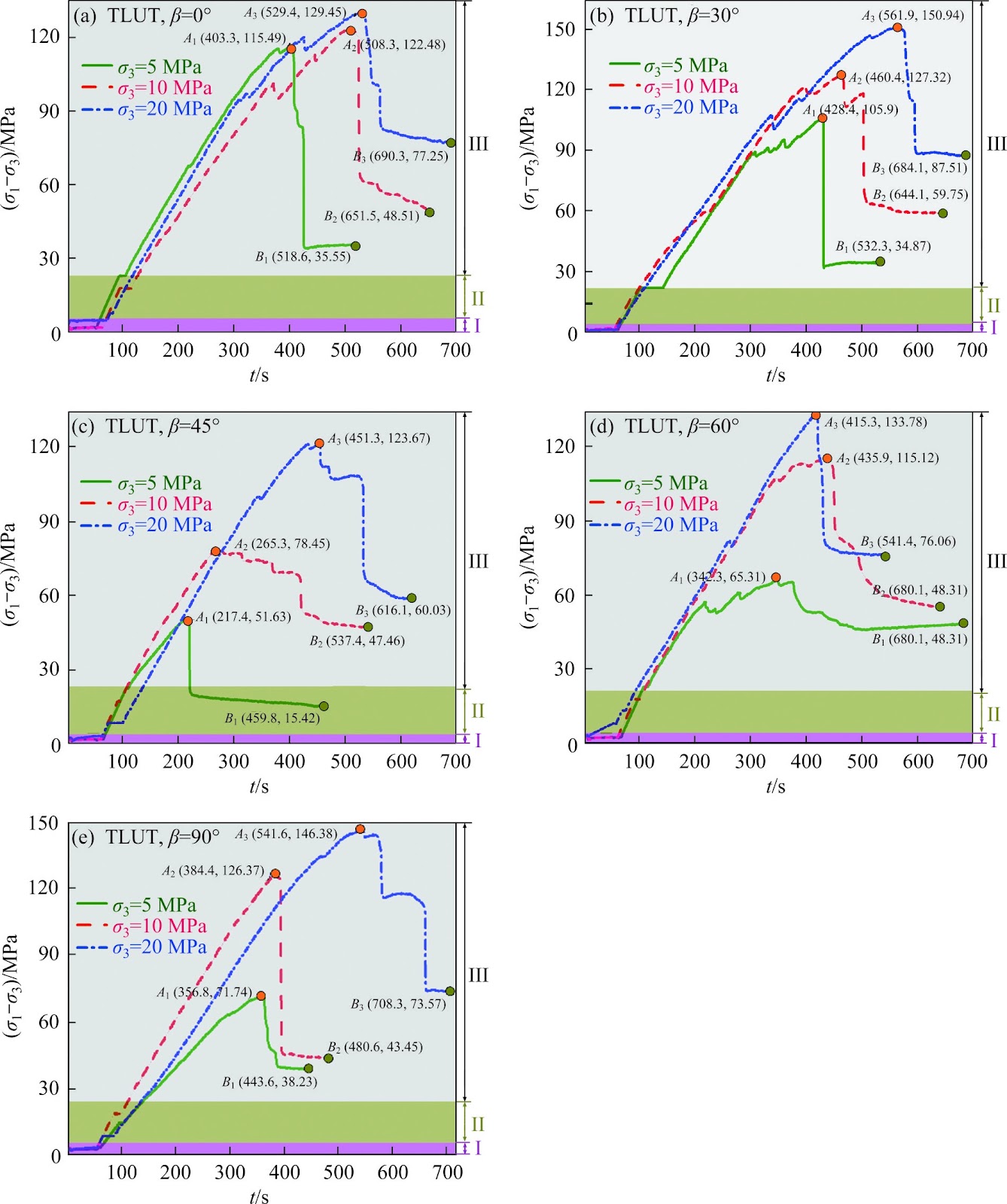
Rock residual strength, as an important input parameter, plays an indispensable role in proposing the reasonable and scientific scheme about stope design, underground tunnel excavation and stability evaluation of deep chambers. Therefore, previous residual strength models of rocks established were reviewed. And corresponding related problems were stated. Subsequently, starting from the effects of bedding and whole life-cycle evolution process, series of triaxial mechanical tests of deep bedded s
Federated model with contrastive learning and adaptive control variates for human activity recognition
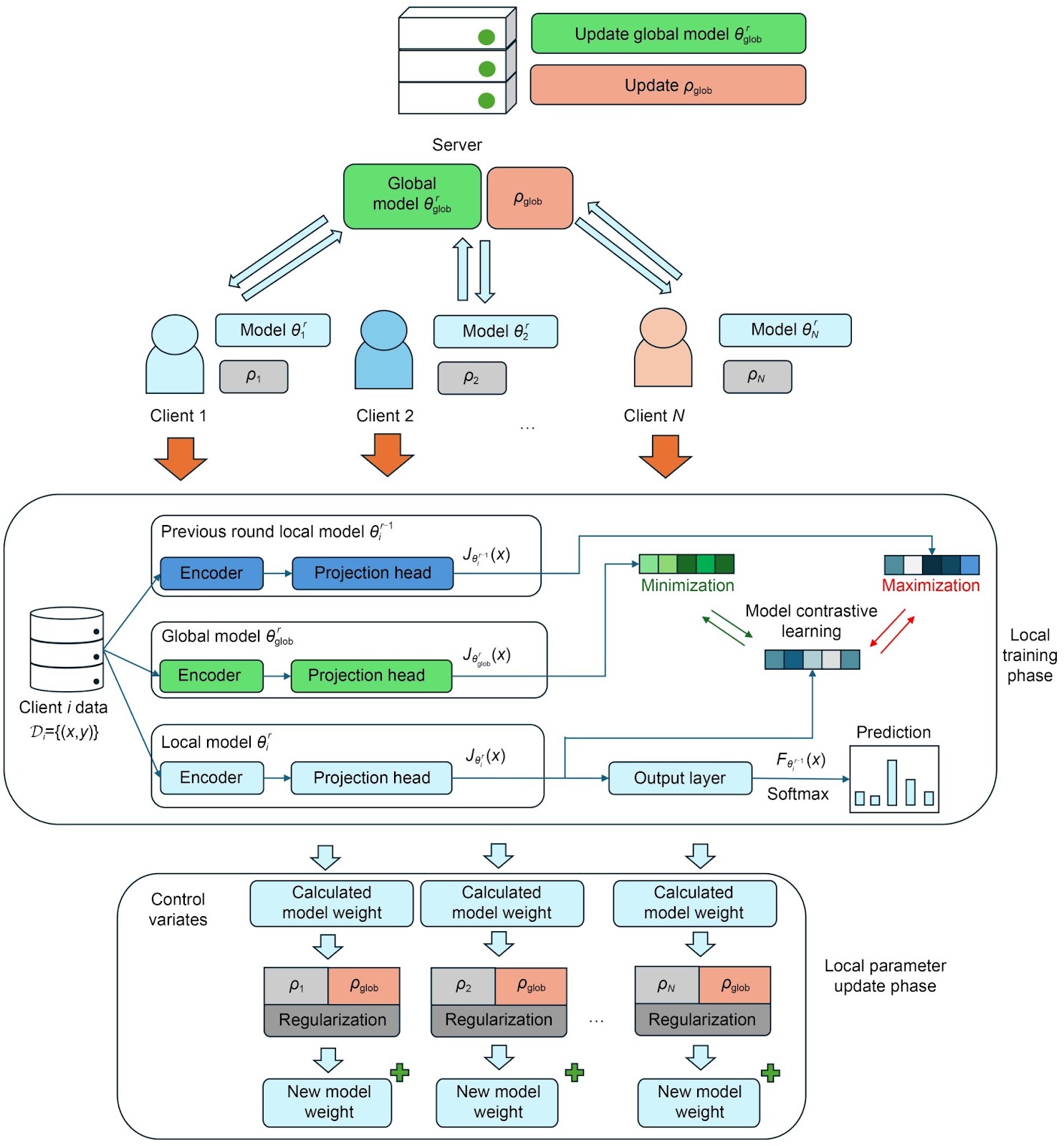
Recent attention to privacy issues demands a communication-safe method for training human activity recognition (HAR) models on client activity data. Federated learning (FL) has become a compelling technique to facilitate model training between the server and clients while preserving data privacy. However, classical FL methods often assume independent and identically distributed (IID) data among clients. This assumption does not hold true in practical scenarios. Human activity in real-world scena