Key Takeaways & Executive Findings
- •• A new numerical method based on a porous medium physical model is proposed to simulate wind fields behind porous windbreaks for high-speed railways. • The method transforms the porosity–windproof performance matching problem into a relationship between the resistance coefficient and train aerodynamic loads. • The influence of hole type on the wind field is examined, and explicit relationships among resistance coefficient, porosity, and aerodynamic loads are established. • The porous media model effectively replaces geometrical windbreak structures in aerodynamic simulations, offering a simplified and efficient approach for engineering design.
Abstract
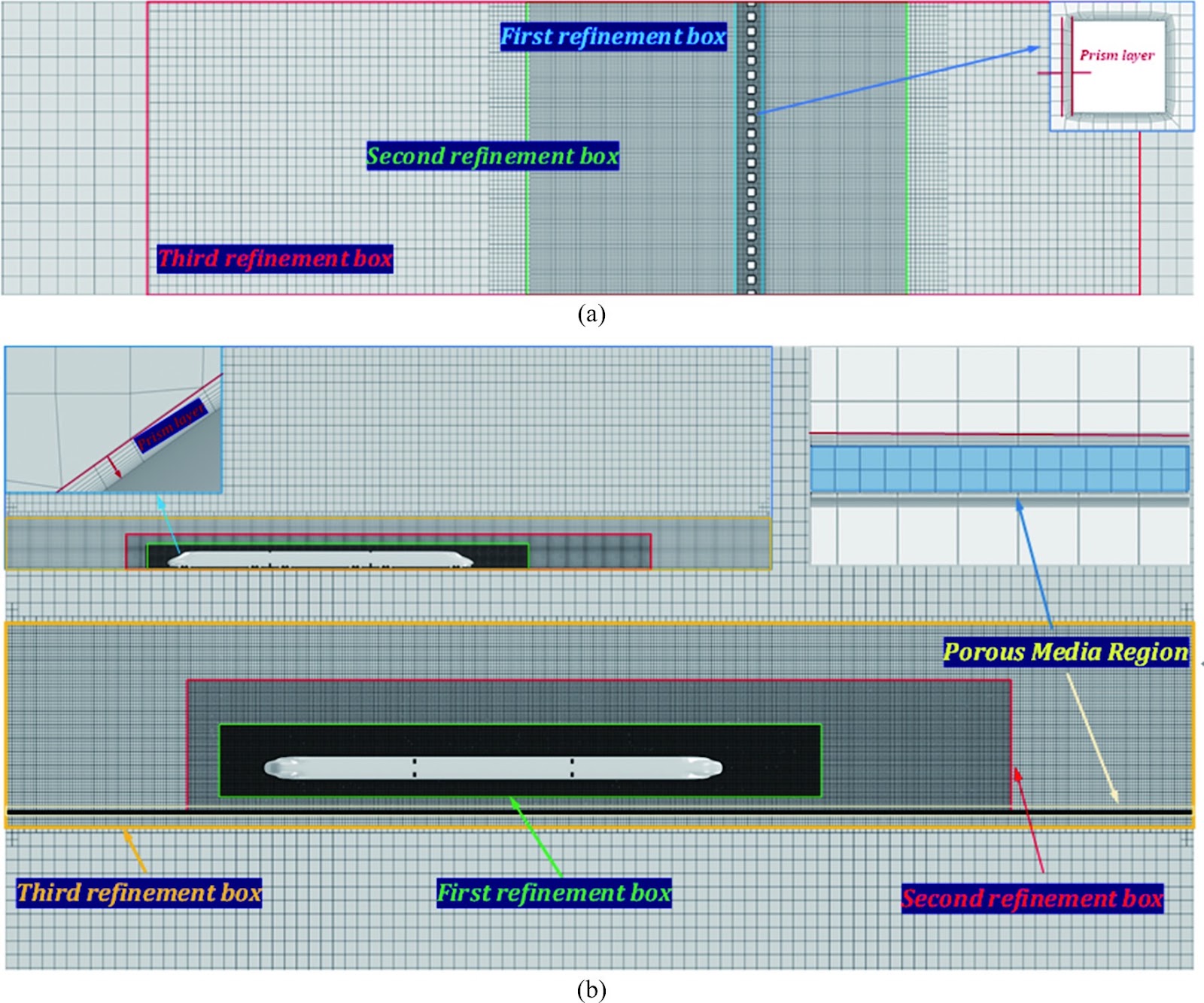
Following the fundamental characteristics of the porosity windbreak, this study suggests a new numerical investigation method for the wind field of the windbreak based on the porous medium physical model. This method can transform the reasonable matching problem of the porosity and windproof performance of the windbreak into a study of the relationship between the resistance coefficient of the porous medium and the aerodynamic load of the train. This study examines the influence of the hole type on the wind field behind the porosity windbreak. Then, the relationship between the resistance coefficient of the porous medium, the porosity of the windbreak, and the aerodynamic loads of the train is investigated. The results show that the porous media physical model can be used instead of the windbreak geometry to study the windbreak-train aerodynamic performance, and the process of using this method is suggested.
1. Introduction
Crosswind effects on trains have been some of the most intensively studied issues in vehicle aerodynamics in the last decade due to their importance in railway safety [1−3]. Many scholars have made great efforts to improve the operating safety performance under strong winds in three aspects: aerodynamic shape optimization [4−6], operating control strategies [7−9], and windbreaks [10−12], and they have achieved a series of remarkable results. Accordingly, installing windbreaks along the railway line is one of the most effective and practical proven solutions worldwide. However, because increasingly railways are opened in complex wind areas, new engineering phenomena have emerged and seriously endanger train operation safety.
A special test on the effects of windy conditions on the operating safety of high-speed trains on the Southern Xinjiang Railway showed that although the concrete solid windbreak could well ensure that the train did not have the risk of overturning, in some sections, the environmental wind crossed the top of the wall and caused serious pantograph-catenary disconnection, and the pantograph could not be raised normally [10]. Further increasing the windbreak would lead to excessive wind protection and make the car-body tilt to the windward side. Consequently, to ensure the pantograph-catenary connection and operating safety, it is imperative to improve the current windbreaks from a new perspective.
Currently, windbreaks along railway lines are primarily designed for wind “blocking” purposes. Nevertheless, it is difficult to balance the conflict between overturning safety and pantograph-catenary contact by merely changing the windbreak height to block winds. Hence, changing “blocking” to “draining” and regulating the wind field behind the windbreak by a porosity rate offer a novel solution to this situation. However, to balance these contradictions by porosity, the first challenge is to obtain a precise matching relationship between porosity and windproof performance. BAKER et al [13] studied the effect of porosity on the aerodynamic performance of the train using wind tunnel tests. It was discovered that a 30% porosity windbreak could reduce the aerodynamic force and moment coefficient of the train by approximately two-thirds. TOMASINI et al [14] conducted wind tunnel tests to investigate different windbreak windproof performance levels, which included high porosity at a low height (porosity 63%; height 2 m), low porosity at a high height (porosity 33%; height 4 m), and medium porosity at a medium height (porosity 51%; height 3 m). The result revealed that the leeward overturning moment coefficient CMxLee was minimal at a lower porosity and a higher height. LI et al [15] compared the windproof performance of windbreaks with porosities of 20%, 30% and 40%. The results revealed that the train had optimal lateral aerodynamic performance under a windbreak with a porosity of 30%. DONG et al [16] investigated the influence of earth embankment windbreaks with porosity values of 12.5%, 25%, 37.5% and 50% on the catenary displacement.
Loading authentic research manuscript (Pages 1–5)...
LIU Dong-run, WAN Yuan, LI Yan-cheng, ZHOU Nan-qing, WANG Tian-tian, ZHANG Lei, LIN Tong-tong (2025). A new method for a numerical investigation of windproof performance of porous windbreaks for high-speed railways based on a physical model. Journal of Central South University. https://doi.org/10.1007/s11771-025-5907-5
Research & Educational Purpose Only:The translations, structured abstracts, analytical annotations, and data reports provided by SinoTechIntel are intended exclusively for academic research, internal corporate R&D, and educational benchmarking. They do not constitute formal engineering, chemical safety, legal, or professional advice.
Copyright & Intellectual Property Notice: Original copyright of the underlying source articles and experimental data remains with the respective authors, institutions, and original publishing journals. SinoTechIntel claims intellectual property only over its proprietary translations, analytical syntheses, and AEO structured enhancements in accordance with international fair use and academic citation principles.
Frequently Asked Questions
What is the main contribution of this paper?
The paper proposes a new numerical investigation method using a porous medium physical model to study the windproof performance of porous windbreaks for high-speed railways. It simplifies the windbreak structure into a porous medium and examines relationships between resistance coefficient, porosity, and aerodynamic loads.
Why is porosity important in windbreak design?
Porosity controls the 'draining' effect, balancing overturning safety and pantograph-catenary contact. The study aims to find the optimal porosity by relating it to aerodynamic performance.
How does the porous medium model work?
The windbreak geometry is replaced by a porous medium with a resistance coefficient that is calibrated to match the aerodynamic effects of the actual windbreak, allowing efficient numerical simulation.
What are the key findings of this research?
The porous media physical model can be used instead of the windbreak geometry to study windbreak-train aerodynamic performance. The study establishes the relationship between resistance coefficient, porosity, and aerodynamic loads, and suggests a process for using this method.
What is the significance of this research for railway safety?
It provides a way to optimize porous windbreak porosity to ensure both overturning safety and pantograph-catenary contact under crosswind conditions, which is critical for high-speed railway operations.
Related Technical Papers & Translations
Design and optimization of a high-efficiency distillation process for cellulosic fuel ethanol integrated with thermal coupling and molecular sieve adsorption
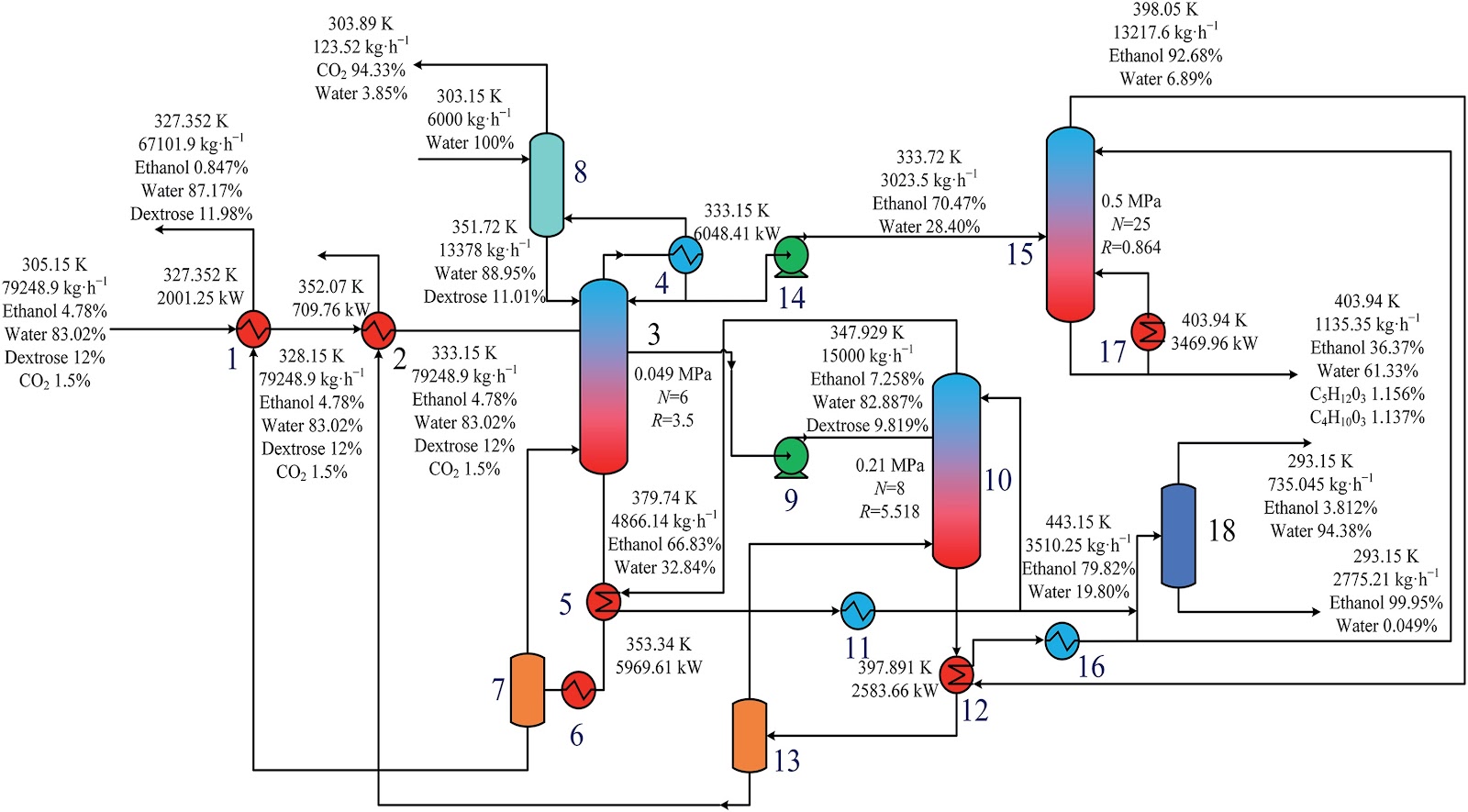
To address the challenges of high energy consumption and prominent costs in the traditional three-columns distillation process for cellulosic fuel ethanol, a distillation—molecular sieve coupling separation process is proposed. This process integrates a three-column (crude distillation column, first distillation column, second distillation column) system with a 3A molecular sieve adsorption deep dehydration unit. A thermal coupling network is constructed via differential pressure design (steam from medium/high-pressure columns as mutual heat sources, reboiler liquid waste heat for feed preheating), and molecular sieve adsorption conditions are optimized. The study first performs a thermodynamic consistency test on the ethanol—water system, determines optimal non-random two-liquid (NRTL) model binary interaction parameters via experimental data regression for Aspen Plus simulation. Aiming at minimum total annual cost (TAC), Aspen Plus is used to optimize process parameters (theoretical tray number, feed location, reflux ratio, side-draw position, etc.). Economic analysis shows this process reduces CO2 emission costs by 27.56%, TAC by 15.58% (to 5.123 × 10⁶ USD·a-1), and increases ethanol purity to >99.6%, providing an effective solution for green, efficient separation.
A cohesion loss model for determining residual strength of deep bedded sandstone
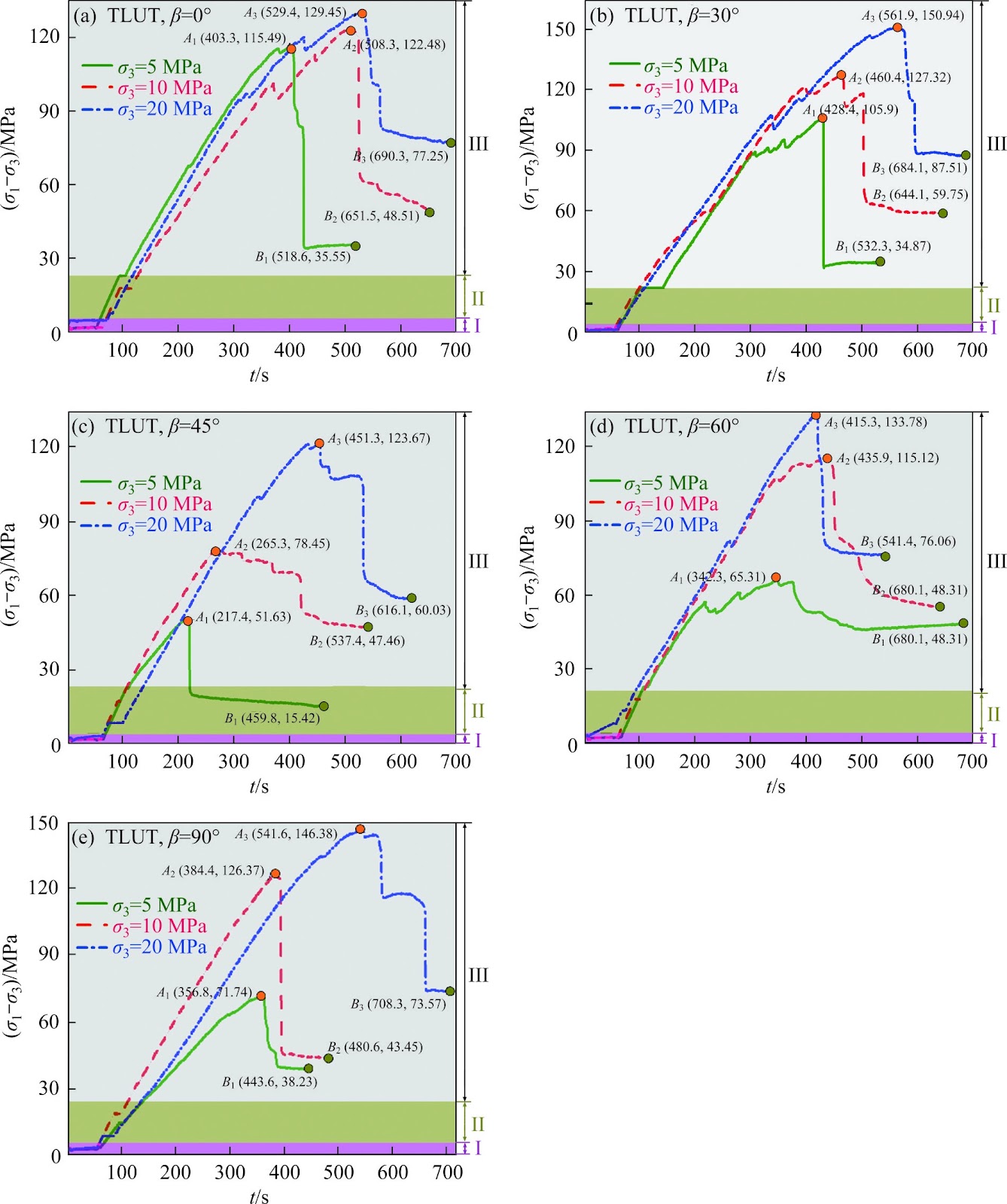
Rock residual strength, as an important input parameter, plays an indispensable role in proposing the reasonable and scientific scheme about stope design, underground tunnel excavation and stability evaluation of deep chambers. Therefore, previous residual strength models of rocks established were reviewed. And corresponding related problems were stated. Subsequently, starting from the effects of bedding and whole life-cycle evolution process, series of triaxial mechanical tests of deep bedded s
Federated model with contrastive learning and adaptive control variates for human activity recognition
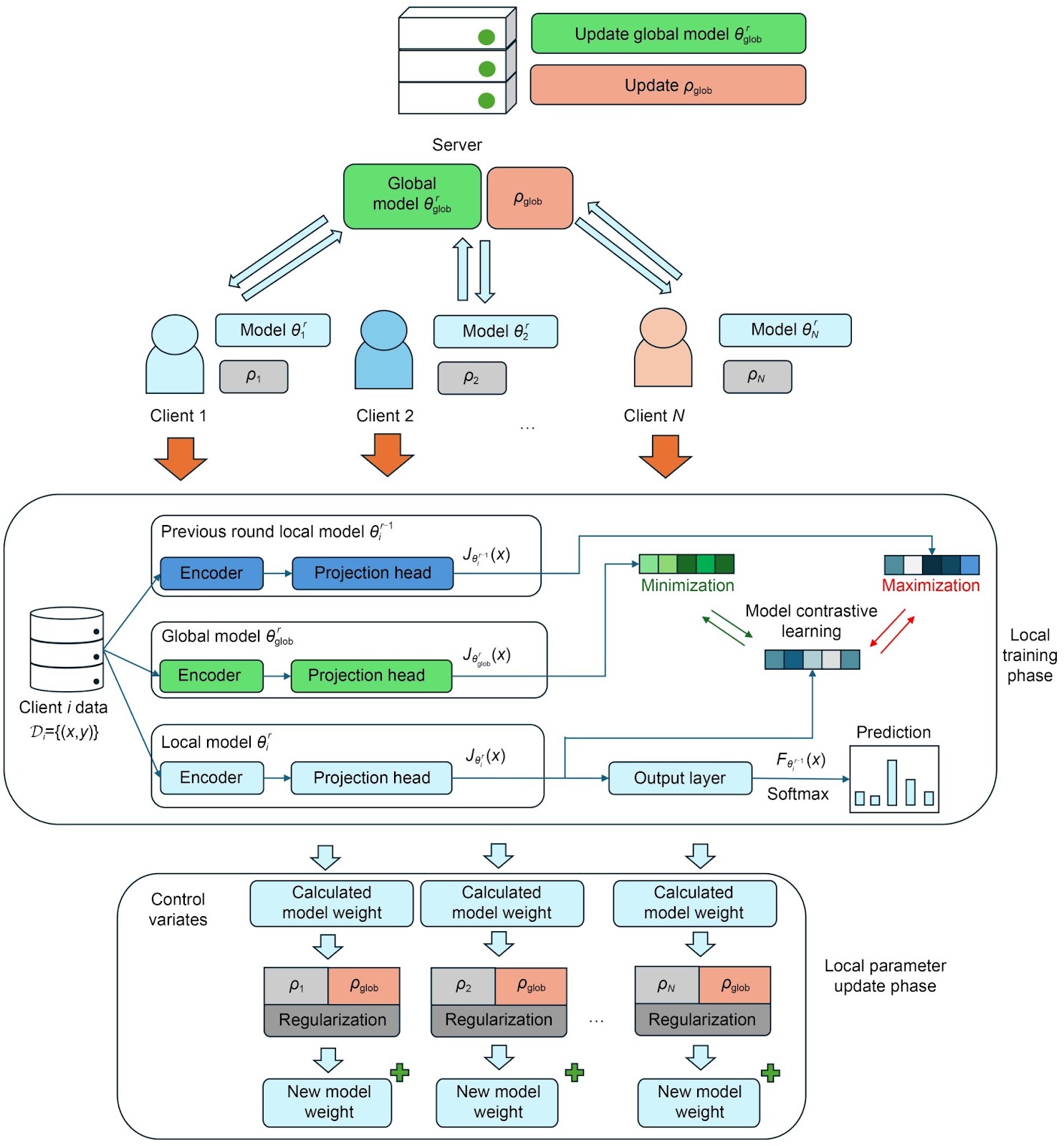
Recent attention to privacy issues demands a communication-safe method for training human activity recognition (HAR) models on client activity data. Federated learning (FL) has become a compelling technique to facilitate model training between the server and clients while preserving data privacy. However, classical FL methods often assume independent and identically distributed (IID) data among clients. This assumption does not hold true in practical scenarios. Human activity in real-world scena