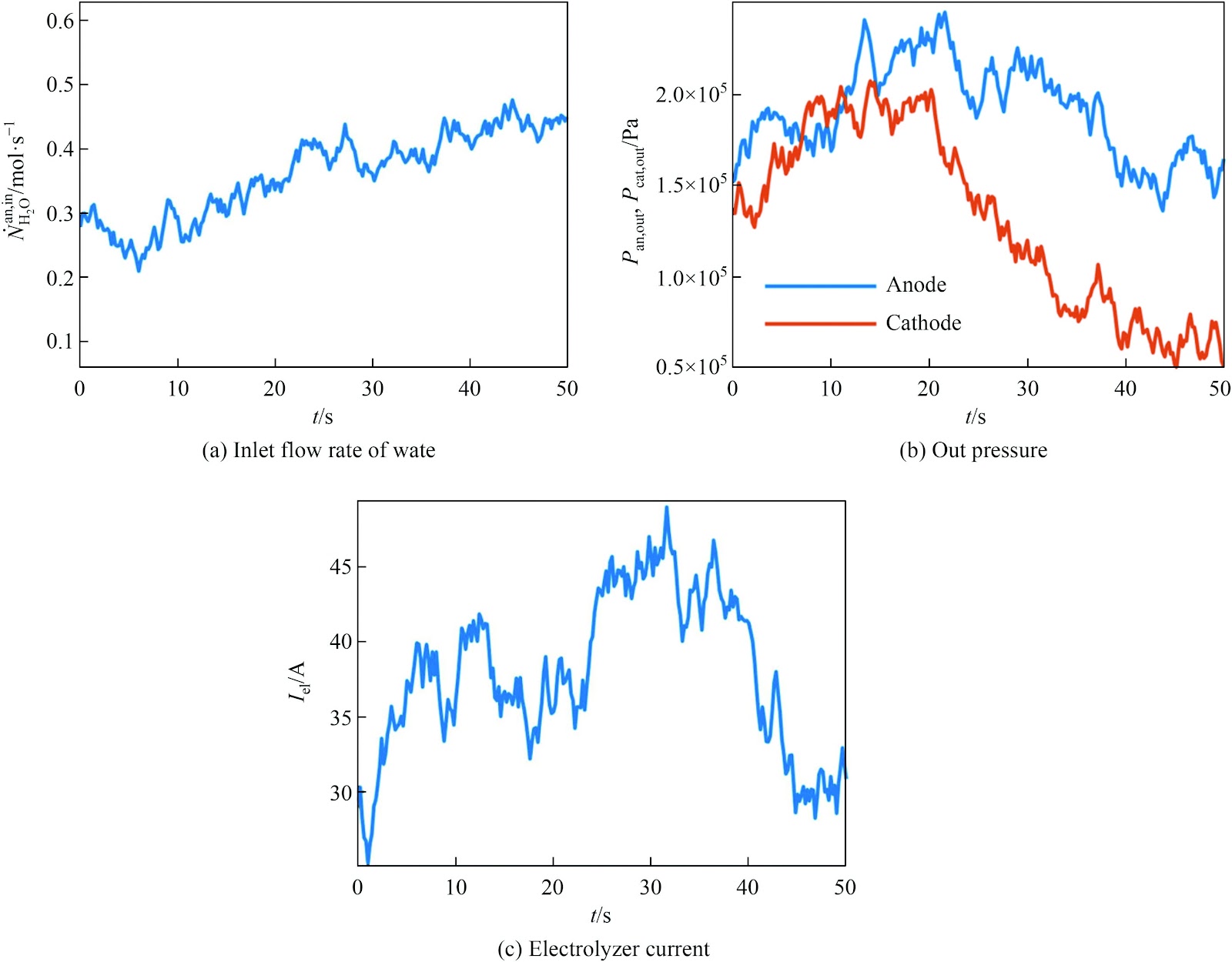
Key Takeaways & Executive Findings
- •• A novel Koopman MPC with fuzzy compensation is proposed for PEM electrolyzer pressure regulation, addressing model mismatch issues. • The Koopman linear predictor is identified from experimental data, enabling linear MPC design for a nonlinear system. • The fuzzy compensator effectively mitigates model mismatch, improving control performance. • Simulation results demonstrate the effectiveness of the proposed method in hydrogen production processes.
Abstract
Proton exchange membrane (PEM) electrolyzer have attracted increasing attention from the industrial and researchers in recent years due to its excellent hydrogen production performance. Developing accurate models to predict their performance is crucial for promoting and accelerating the design and optimization of electrolysis systems. This work developed a Koopman model predictive control (MPC) method incorporating fuzzy compensation for regulating the anode and cathode pressures in a PEM electrolyzer. A PEM electrolyzer is then built to study pressure control and provide experimental data for the identification of the Koopman linear predictor. The identified linear predictors are used to design the Koopman MPC. In addition, the developed fuzzy compensator can effectively solve the Koopman MPC model mismatch problem. The effectiveness of the proposed method is verified through the hydrogen production process in PEM simulation.
1. Introduction
Hydrogen plays an important role in developing an environmentally friendly energy system in the future of the world. Compared to non-renewable fossil fuels, hydrogen is used as a source of energy or fuel and may be the ideal energy carrier [1] due to its high energy content by mass without emitting pollutants or greenhouse gases. Traditionally, hydrogen can be produced from various sources including oil, natural gas, and coal. However, these methods of hydrogen production are highly polluting. In today's global low-carbon development, hydrogen production from water electrolysis is the most promising way. Hydrogen production by water electrolysis can use electrical or thermal energy generated from nuclear or renewable sources (i.e. wind and solar) with no carbon emissions during the process. There are three main types of water electrolysis hydrogen production technologies, depending on the type of electrolyzer: Alkaline water electrolysis (AWE), proton exchange membrane (PEM), and solid oxide electrolysis cells (SOEC) [2].
The poor quality of the hydrogen produced and the need for additional treatment are the drawbacks of AWE hydrogen production. The expensive electrode and electrolyte materials as well as the prolonged start-up and shutdown times are SOEC's drawbacks. Although the PEM technique has many advantages such as compact system design, higher hydrogen purity, faster transient response, higher current density, and higher voltage efficiency. However, the main disadvantages of PEM electrolyzer are the higher cost of components and lower durability compared to the alkaline electrolyzer [3], which severely limits the use of PEM electrolysis. Moreover, the high-pressure operation of the electrolyzer facilitates the delivery of hydrogen to the end user and reduces the energy consumed by further compression and storage of hydrogen. However, according to Fick's law of diffusion, gas permeability increases significantly with increasing pressure [4]. Correa et al. [5], Han et al. [6], and Koponen et al. [3] investigated the effect of the operating pressure on the electrolyzer performance from aspects including energy consumption, activation overpotential, efficiency, etc. The drawn conclusion shows that hydrogen production could be maximized by controlling the stack hydrogen outlet pressure as close to the storage pressure as possible, while the specific energy consumption of the PEM water electrolyzer increased at higher hydrogen outlet pressure. In summary, PEM water electrolysis needs to be carried out at appropriate operating pressures in many practical situations.
Loading authentic research manuscript (Pages 1–5)...
Haokun Xiong, Lei Xie, Cheng Hu, Hongye Su (2024). A fuzzy compensation-Koopman model predictive control design for pressure regulation in proton exchange membrane electrolyzer. Chinese Journal of Chemical Engineering. https://doi.org/10.1016/j_cjche_1448
Research & Educational Purpose Only:The translations, structured abstracts, analytical annotations, and data reports provided by SinoTechIntel are intended exclusively for academic research, internal corporate R&D, and educational benchmarking. They do not constitute formal engineering, chemical safety, legal, or professional advice.
Copyright & Intellectual Property Notice: Original copyright of the underlying source articles and experimental data remains with the respective authors, institutions, and original publishing journals. SinoTechIntel claims intellectual property only over its proprietary translations, analytical syntheses, and AEO structured enhancements in accordance with international fair use and academic citation principles.
Frequently Asked Questions
What is the main contribution of this paper?
The paper proposes a fuzzy compensation-Koopman model predictive control (MPC) method for pressure regulation in a proton exchange membrane (PEM) electrolyzer, addressing model mismatch issues and improving control performance.
How does the Koopman operator help in controlling the PEM electrolyzer?
The Koopman operator is used to identify a linear predictor from experimental data, enabling the design of a linear MPC for the nonlinear PEM electrolyzer system, simplifying the control design.
What is the role of the fuzzy compensator in the proposed method?
The fuzzy compensator effectively solves the model mismatch problem of the Koopman MPC, enhancing the robustness and accuracy of the pressure control.
What are the advantages of PEM electrolyzers over other types?
PEM electrolyzers offer compact system design, higher hydrogen purity, faster transient response, higher current density, and higher voltage efficiency compared to alkaline and solid oxide electrolyzers.
Why is pressure regulation important in PEM electrolyzers?
Proper pressure regulation is crucial for maximizing hydrogen production efficiency, reducing energy consumption, and ensuring safe operation, as high pressures can increase gas permeability and affect performance.
Related Technical Papers & Translations
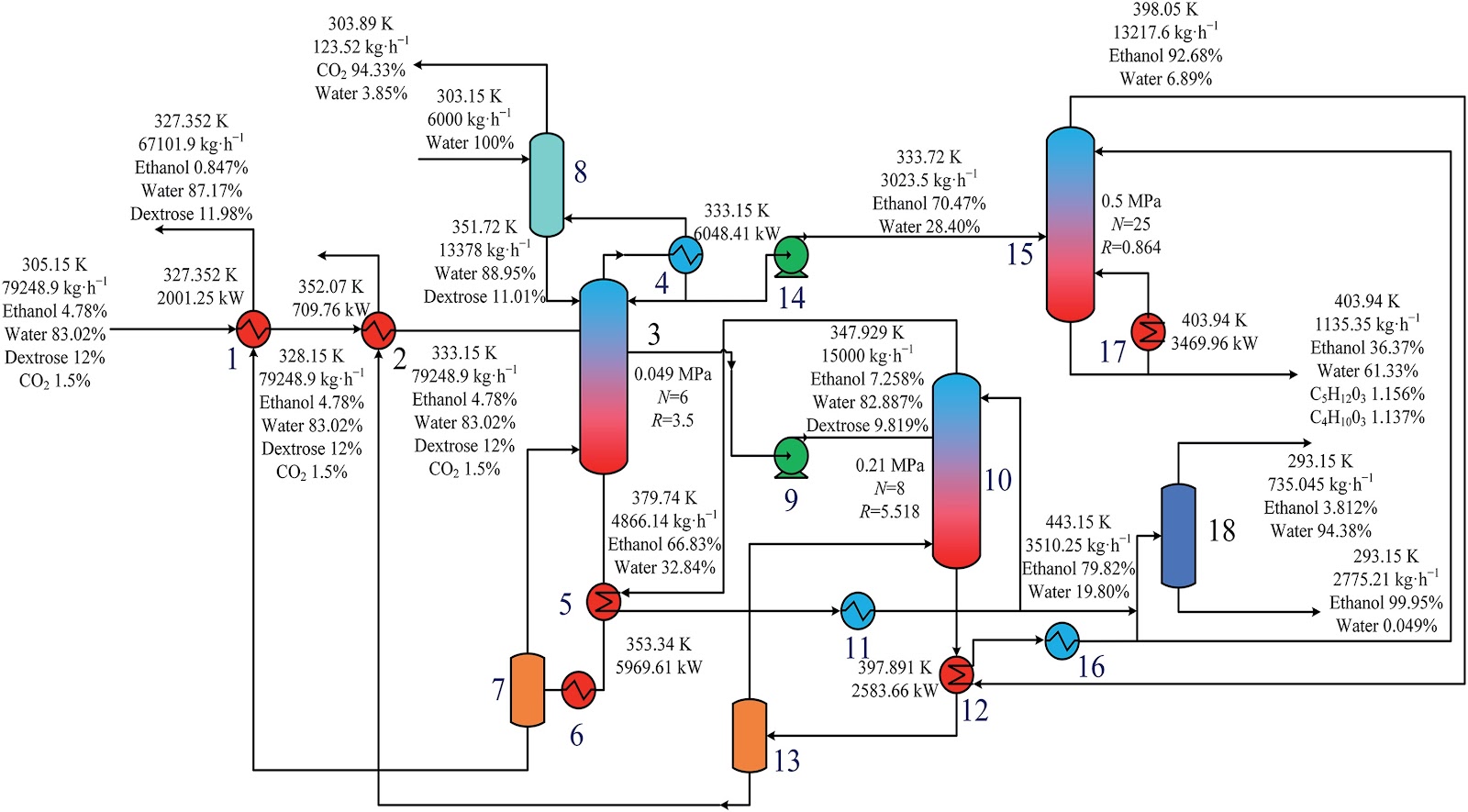
Design and optimization of a high-efficiency distillation process for cellulosic fuel ethanol integrated with thermal coupling and molecular sieve adsorption
To address the challenges of high energy consumption and prominent costs in the traditional three-columns distillation process for cellulosic fuel ethanol, a distillation—molecular sieve coupling separation process is proposed. This process integrates a three-column (crude distillation column, first distillation column, second distillation column) system with a 3A molecular sieve adsorption deep dehydration unit. A thermal coupling network is constructed via differential pressure design (steam from medium/high-pressure columns as mutual heat sources, reboiler liquid waste heat for feed preheating), and molecular sieve adsorption conditions are optimized. The study first performs a thermodynamic consistency test on the ethanol—water system, determines optimal non-random two-liquid (NRTL) model binary interaction parameters via experimental data regression for Aspen Plus simulation. Aiming at minimum total annual cost (TAC), Aspen Plus is used to optimize process parameters (theoretical tray number, feed location, reflux ratio, side-draw position, etc.). Economic analysis shows this process reduces CO2 emission costs by 27.56%, TAC by 15.58% (to 5.123 × 10⁶ USD·a-1), and increases ethanol purity to >99.6%, providing an effective solution for green, efficient separation.
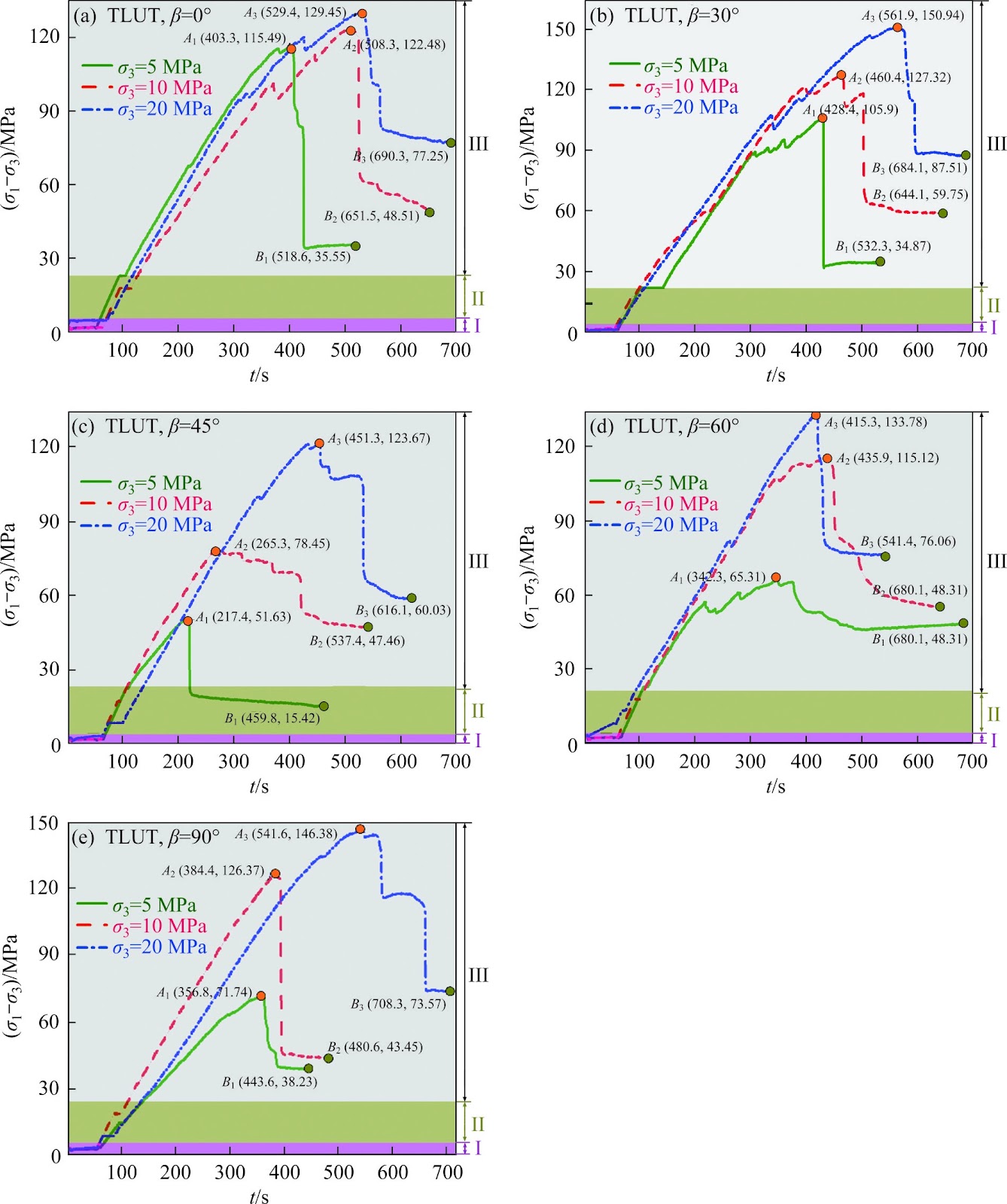
A cohesion loss model for determining residual strength of deep bedded sandstone
Rock residual strength, as an important input parameter, plays an indispensable role in proposing the reasonable and scientific scheme about stope design, underground tunnel excavation and stability evaluation of deep chambers. Therefore, previous residual strength models of rocks established were reviewed. And corresponding related problems were stated. Subsequently, starting from the effects of bedding and whole life-cycle evolution process, series of triaxial mechanical tests of deep bedded s
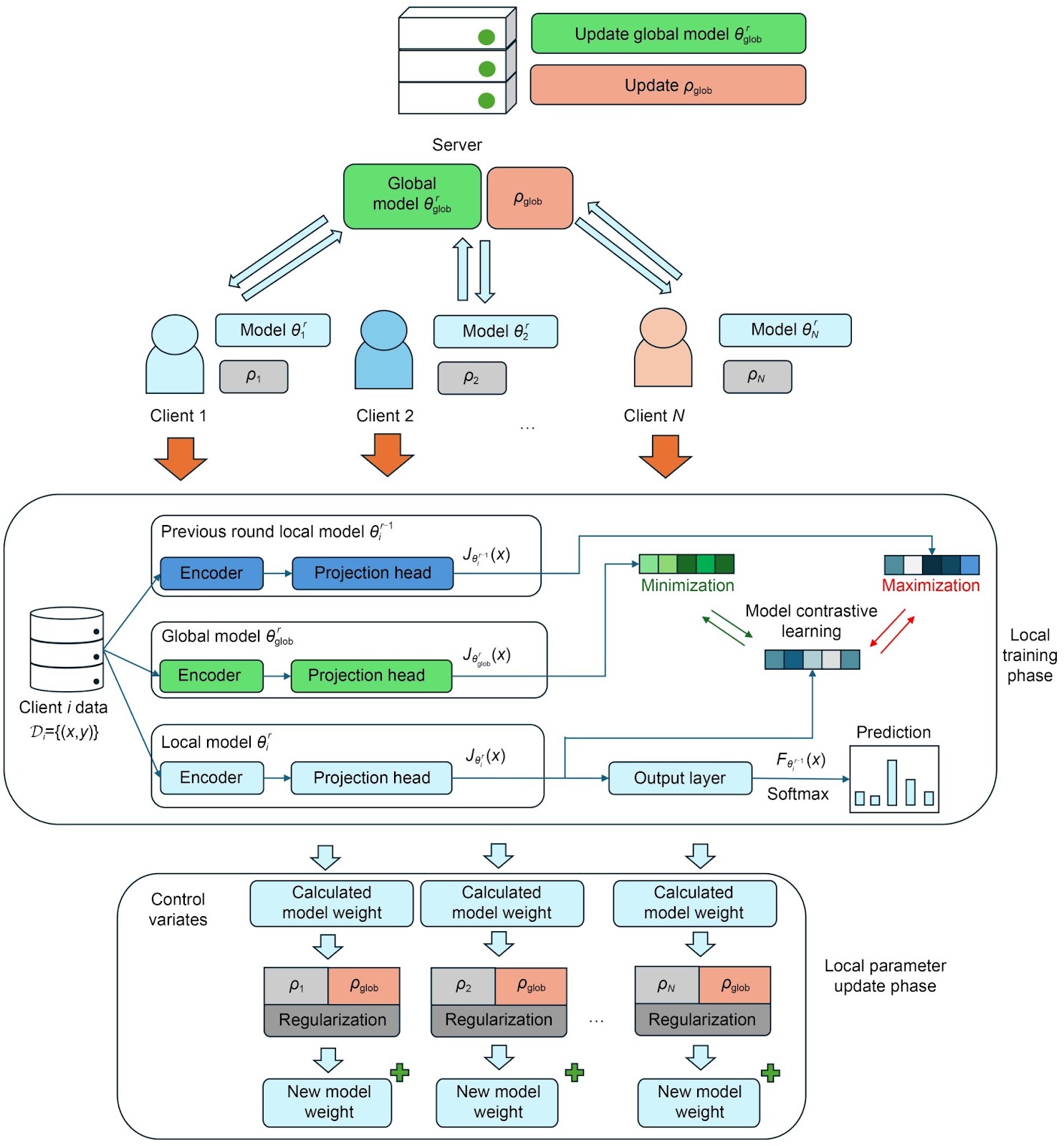
Federated model with contrastive learning and adaptive control variates for human activity recognition
Recent attention to privacy issues demands a communication-safe method for training human activity recognition (HAR) models on client activity data. Federated learning (FL) has become a compelling technique to facilitate model training between the server and clients while preserving data privacy. However, classical FL methods often assume independent and identically distributed (IID) data among clients. This assumption does not hold true in practical scenarios. Human activity in real-world scena